Water Filtration Methods Ranked by Reliability: What Will Actually Keep You Alive

Why Most People Get Water Filtration Wrong
Waterborne illness kills approximately 485,000 people every year worldwide. In a grid-down scenario, that number climbs fast — and it will include people who thought they were prepared. You will die faster from drinking contaminated water than from almost any other survival threat short of a bullet. Three to five days without water. Two weeks or less if you're drinking filth and your gut shuts down.
Most preppers make the same critical mistakes when it comes to water filtration. Here they are, straight:
- Relying on a single method. Every filtration system has a failure point. Filters clog. Tablets run out. UV lights need batteries. One method is a liability.
- Confusing filtration with purification. A filter removes particulates and some pathogens. Purification kills viruses. Most backcountry filters do NOT eliminate viruses like Hepatitis A or Norovirus. This matters enormously in post-disaster environments where sewage contamination is likely.
- Ignoring chemical contamination. If your water source is near industrial sites, agricultural runoff, or urban infrastructure damage, biological threats are the least of your problems. Most filters do nothing against heavy metals, fuel, or pesticides without an activated carbon stage.
- Not pre-filtering turbid water. Running silty, debris-heavy water through a quality filter destroys it fast. A simple bandana or coffee filter pre-stage extends the life of your primary system significantly.
- Stockpiling without testing. Gear fails. If you've never run your filter dry or pushed it to its limits in training, you don't know what you actually have.
The Fundamentals: Water Filtration Methods Ranked by Reliability
Here's every major method you need to know, ranked from most to least reliable for sustained survival use. Real reliability means it works repeatedly, in stress conditions, without access to resupply.
- Boiling — Rank #1No gear required beyond a heat source and a container. Boiling water for a full rolling boil of 1 minute (3 minutes at elevations above 6,500 feet) kills all biological threats — bacteria, protozoa, and viruses. Zero exceptions. It does not remove chemicals or particulates, but for biological safety, nothing is more reliable. If you have fire, you have purification. This is your baseline fallback regardless of what other systems you carry.
- Gravity or Pump Ceramic Filters (0.1–0.2 micron) — Rank #2Systems like the Berkey with Black Berkey elements or the MSR Guardian Pump filter are the gold standard for sustained use. The Berkey handles up to 6,000 gallons per element pair and removes bacteria, protozoa, cysts, heavy metals, and most chemicals. The MSR Guardian is the rare backcountry pump that also neutralizes viruses. These are not cheap — expect $250–$400 for a quality system — but the per-gallon cost is unmatched. Ideal for base camp, home, or vehicle setup.
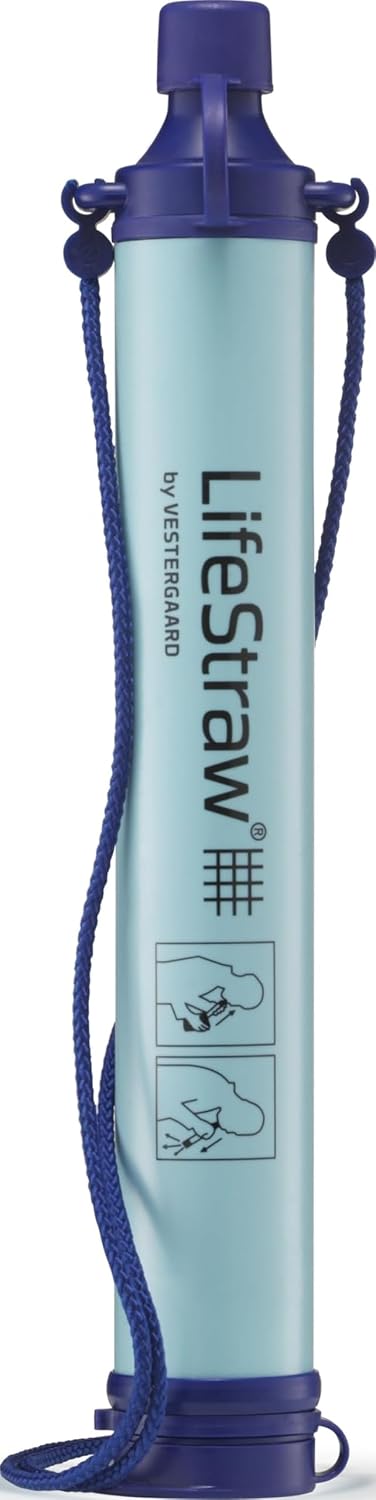
- Hollow Fiber Filters (LifeStraw, Sawyer Squeeze) — Rank #3The Sawyer Squeeze filters down to 0.1 micron and is rated for up to 100,000 gallons. Lightweight, affordable (~$30–$40), and highly effective against bacteria and protozoa. Critical caveat: does NOT remove viruses. Acceptable for wilderness use in North America where viral contamination is low-risk. In urban SHTF or international environments, pair with chemical treatment or UV purification.
- Chemical Treatment (Iodine / Chlorine Dioxide) — Rank #4Aquatabs (sodium dichloroisocyanurate) and Katadyn Micropur tablets (chlorine dioxide) are lightweight, cheap insurance. Chlorine dioxide is superior — it kills bacteria, protozoa, and viruses, including Cryptosporidium with an extended contact time of 4 hours in cold or turbid water. Carry a minimum of 50 tablets per person per week in your kit. Shelf life is 4–5 years sealed. Iodine is a last resort — not safe for pregnant women or people with thyroid conditions, and ineffective against Cryptosporidium.
- UV Purification (SteriPen) — Rank #5UV-C light at the correct wavelength destroys the DNA of pathogens in seconds. The SteriPen Ultra treats 0.5 liters in 45 seconds and runs on a USB-rechargeable battery. It handles viruses — something most filters don't. The weakness is obvious: batteries die, electronics fail, and it does nothing for chemical contamination or turbid water. Always pre-filter turbid water before UV treatment. Useful as a fast, lightweight secondary system, not a standalone primary.
- Solar Disinfection (SODIS) — Rank #6Fill clear PET plastic bottles with water and leave them in direct sunlight for a minimum of 6 hours (2 days if overcast). UV radiation from the sun inactivates most pathogens. It costs nothing and requires no gear. It is slow, weather-dependent, and only effective in clear water. In an absolute resource-zero situation, this works. Otherwise, it's the backup to your backup.

What You Need: The Water Security Checklist
Every serious prepper should have all three tiers covered — home base, mobile kit, and absolute emergency fallback.
- Home Base: Berkey gravity filter system (minimum Big Berkey, 2.25 gallon capacity) + 55-gallon water barrel with hand pump + 30-day minimum stored water supply (1 gallon per person per day)
- Bug Out Bag / Mobile: Sawyer Squeeze or MSR Guardian + 20 Aquatabs or Katadyn Micropur tablets + 2-liter collapsible water reservoir (Platypus or CNOC) + metal water bottle (doubles as boiling vessel)
- Absolute Emergency Layer: Knowledge of boiling, SODIS method, and improvised filtration using layered sand, gravel, and charcoal
- Pre-Filter Materials: Coffee filters, cotton bandanas, or a pre-filter bag — always pre-filter turbid water before your primary system
- Testing kit: A basic water test kit (like those from Amazon or a local hardware store) to check for chemical and heavy metal contamination in local sources
Advanced Tactics: What Separates Prepared from Truly Prepared
Owning gear is entry-level. Here's what the serious operators do:
- Layer your methods every single time. Filter first, then treat chemically or with UV. Two systems in series means near-zero pathogen risk. One system alone has a failure point.
- Map your water sources now. Before anything goes wrong, identify every natural water source within 5 miles of your home and your bug-out route. Know which are downstream of agricultural or industrial land. That intelligence changes which filtration method you deploy.
- Rotate your supplies. Tablets expire. Filters can harbor bacteria if stored wet for extended periods. Flush and dry your hollow fiber filters before storage. Rotate chemical tabs every 4 years.
- Practice improvised filtration. Build a field filter from a 2-liter bottle, gravel, sand, and crushed charcoal from your fire. This removes particulates and improves taste. Follow it with boiling. This is a core skill — not a novelty.
- Understand your Berkey's limits. The standard Black Berkey elements do not remove fluoride. For fluoride removal, add the PF-2 post-filter elements. Know what your system does and does not handle so you're not surprised in the field.

The Bottom Line: Action Steps to Take This Week
- Audit your current water storage. Do you have a minimum of 14 gallons per person stored? If not, fix that first.
- Buy a Sawyer Squeeze or Sawyer Mini this week if you don't already own a portable filter. They're under $40 and there's no excuse.
- Add 50 Katadyn Micropur tablets to every go-bag and your home kit.
- Practice boiling water in the field using your bug-out cooking setup. Confirm it works before you need it.
- Research and test your local water sources. Identify at least two backup sources within walking distance of your home.
- If you don't own a Berkey or equivalent gravity system, start saving for one. This is a non-negotiable home base investment.
The water problem is solved before an emergency, not during one. Get your systems in place, test them under real conditions, and layer your methods. Every single time.
The prepared person doesn't hope the infrastructure holds — they've already built their own.
Want to see these filtration methods tested head-to-head in the field? — we put the gear through real stress tests so you know what actually holds up when it counts.
🛒 Essential Survival Gear
As an Amazon Associate I earn from qualifying purchases.