**How to Run a Bug Out Bag Drill With Your Family (And Why Most Never Do)**

The Clock Is Already Running
FEMA's own data shows that most families have less than 72 hours of supplies on hand — and zero rehearsal for using them under stress. When a wildfire, flood, or grid-down event forces you out of your home, you will not rise to the occasion. You will fall to your level of preparation. If that level is zero, your family pays the price.
A bug out bag drill is not a camping trip. It is a timed, realistic rehearsal of the most critical action you may ever take with your family. Here's how to do it right.
Why Most People Get This Wrong
The vast majority of preppers own a bug out bag. A fraction of them have ever actually grabbed it and moved. Fewer still have done it with their entire family, under time pressure, at 2 a.m. That gap between ownership and execution is where people die.
Here are the most common mistakes families make:
- They've never timed themselves. Most families assume a 15-minute bug out is realistic. The first time they try it, it takes 45 minutes — and that's with no stress, no darkness, and no kids asking questions.
- The bags are packed but never tested. That fire starter at the bottom of the bag? Corroded. The water filter? Dried out and cracked. The emergency cash? Spent on something else six months ago and never replaced.
- Kids don't know their role. Children are not passengers in a survival situation. They are participants. If a 10-year-old doesn't know where their bag is, how to put it on, and where to go, they become a liability instead of an asset.
- There's no designated rally point. Families drill the grab but never the go. If you get separated during evacuation — which happens — nobody knows where to meet.
- Drills only happen in daylight, in good weather, when everyone is rested. Real emergencies don't work that way. If you've never practiced in the dark, you haven't practiced at all.

The Fundamentals: How to Run the Drill Step by Step
Before you run a drill, you need a plan. The drill tests the plan. If you have no plan, you're just making chaos more chaotic.
- Define your threat scenarios. A drill for a house fire looks different than a drill for a regional evacuation order. Pick at least two scenarios and build your drill around them. Common scenarios: structure fire with 3-minute exit window, mandatory evacuation with 15-minute load-out, and off-grid bug out to a secondary location.
- Assign roles to every family member. Adults handle vehicles, communications, and final security sweep. Teenagers carry their own bag plus one critical item (water jug, pet carrier, document bag). Children 8 and up carry their own age-appropriate bag — 10% of their body weight, maximum. Children under 8 are assigned a buddy from the older group.
- Set your rally points — two minimum. Rally Point Alpha: your immediate meeting spot outside the home (end of the driveway, neighbor's mailbox). Rally Point Bravo: your off-property fallback (a specific parking lot, a family member's address 5 miles out). Every person in your family memorizes both addresses and can describe how to get there on foot.
- Run the unannounced drill. Do not tell your family when the drill is happening. Pick a random night — ideally between 11 p.m. and 3 a.m. Set an alarm or bang on walls. Call out the scenario. Start the clock. Your target time for a full family exit should be under 10 minutes for a fire scenario, under 20 minutes for a full vehicle bug out.
- Document everything. Keep a stopwatch running. Note where delays happened. Who forgot their bag? Who couldn't find shoes? Was the vehicle loaded efficiently? Did anyone go back inside for something non-essential? These are your training gaps.
- Debrief immediately. Gather the family — even if it's midnight — and walk through the timeline. No blame. Pure problem-solving. What slowed you down? What worked perfectly? What needs to change before the next drill?
- Repeat monthly, minimum. Competence requires repetition. The first drill will be ugly. By the fourth or fifth drill, your family will move with purpose. That's muscle memory. That's what keeps people alive.
What You Need: The Gear and Skills Checklist
Before you run a drill, every bag needs to be inspected and verified. Here's the non-negotiable minimum per person, per bag:
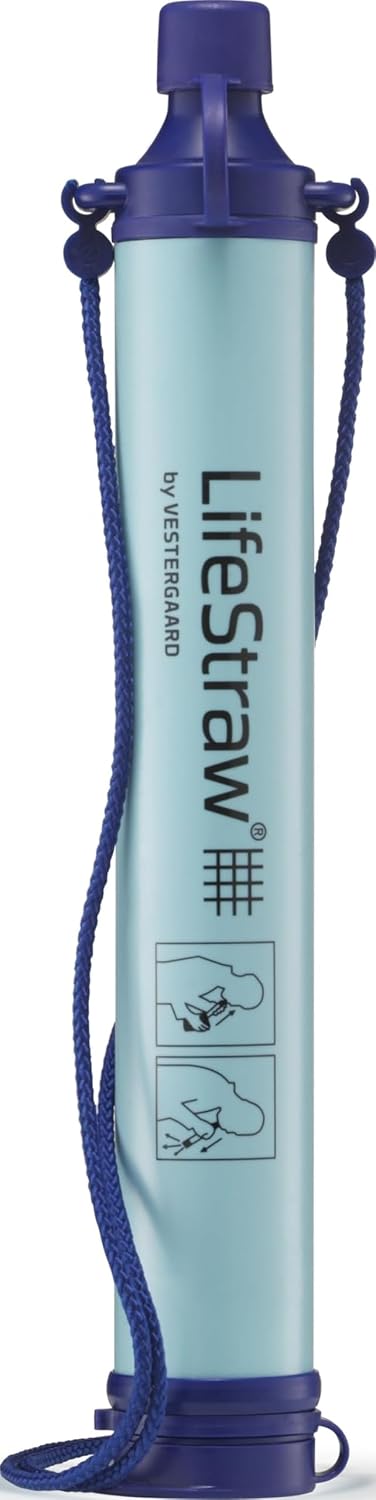
- Water: 1 liter of water in the bag minimum. A Sawyer Squeeze or Katadyn BeFree filter (rated for 100,000 liters) plus a 2-liter collapsible reservoir for sourcing water on the move.
- Food: 3,600 calories minimum. Use S.O.S. Rations bars or Mountain House freeze-dried pouches. High calorie, low weight, no cook required for base calories.
- Shelter: A mylar emergency bivy (SOL Escape Bivvy is the standard), 550 paracord (50 feet), and a compact tarp (8x10 feet, silnylon or poly). Warmth without fire capability.
- Fire: Three ignition sources — a BIC lighter, a ferro rod with a striker (Light My Fire Army model), and waterproof matches in a sealed container. Fire tinder: a commercial fatwood bundle or homemade petroleum jelly cotton balls in a small tin.
- First Aid: A IFAK-level kit at minimum — tourniquet (CAT Gen 7), Israeli bandage, chest seals (Hyfin vented), nitrile gloves, trauma shears, SAM splint, QuikClot gauze, and a 7-day supply of any critical prescription medications. Wrap medications in a waterproof dry bag.
- Navigation: A physical topographic map of your region (USGS 1:24,000 scale) laminated or in a waterproof case. A baseplate compass (Suunto A-10 or Silva Ranger). A written card listing coordinates for all rally points and bug out destinations.
- Communications: A Baofeng UV-5R handheld radio or a Midland T71 GMRS radio per adult. Pre-programmed channels. A hand-crank emergency radio (Kaito KA500) for receiving broadcasts. A list of family contact phone numbers written on paper — not just stored in a phone.
- Documents: Copies of passports, birth certificates, insurance cards, property records, and emergency contacts in a waterproof zipper pouch. Keep a USB drive with digital copies in the bag as backup.
- Light: A headlamp (Black Diamond Spot 400 or Petzl Actik) with spare batteries, plus a backup flashlight. No drill without lights.
- Cash: Minimum $200 in small bills ($1s, $5s, $10s, $20s) in a waterproof envelope. ATMs and card readers fail in disasters. Cash is always king.
- Multi-tool and knife: A full-size fixed blade (Mora Companion or Becker BK2) and a Leatherman Wave or Gerber Center-Drive multi-tool per adult.
Skills checklist — every adult must be able to perform these without looking anything up:
- Start a fire in wet conditions using a ferro rod
- Purify water using a filter and backup chemical treatment (Aquatabs, 1 tablet per liter)
- Apply a tourniquet correctly in under 60 seconds
- Navigate by map and compass to a known rally point
- Set up emergency shelter using a tarp and paracord in under 10 minutes
- Communicate via radio using basic protocols

Advanced Tactics: What Separates the Truly Prepared
Once your family can execute a clean, timed drill, it's time to stress-test the system at a higher level. These are the tactics that move you from basic prepared to genuinely ready.
- Run a degraded drill. Remove one critical item before the drill without telling anyone. Kill the vehicle battery. Take away the primary route. These forced problem-solving moments expose decision-making gaps you cannot find in a clean drill.
- Execute a mobile drill to your bug out location. Don't just get to the car. Drive the full route to your secondary location. Camp there overnight with nothing but your bags. That single exercise will reveal more gaps than ten backyard drills combined.
- Practice communication breakdown protocols. Run a drill where cell phones are prohibited from the start. This forces your family to use radios, pre-planned rally points, and memory — exactly the conditions you'll face when cell towers are down or overloaded.
- Train your children on adult skills. A 12-year-old can learn to use a fire starter, operate a radio, read a map, and apply a pressure bandage. Skill transfer to children is not optional. It is a force multiplier. Run age-appropriate skills sessions monthly alongside your drills.
- Build a 96-hour challenge into your annual calendar. Once per year, your family buys nothing from a store, uses only stored supplies and skills, and simulates a total grid-down scenario at home. This is the most revealing preparation test you can run without leaving your property.
- Account for the vehicle failure scenario. Your bug out plan almost certainly involves a vehicle. Plan for the moment it doesn't start, runs out of fuel, or gets blocked on a clogged evacuation route. Map a 10-mile foot route from your home to Rally Point Bravo. Walk it once. Know the terrain.
The Bottom Line: Action Steps for This Week
Stop planning to prepare. Start preparing. Here are your action steps, in order of priority:
- This week: Inspect every bug out bag in your home. Replace expired food, dead batteries, and corroded gear. Verify your document pouch is current and your cash reserve is intact.
- This week: Write down and memorize both rally points as a family. Quiz your kids. If they can't recite both locations, work on it every day until they can.
- Within 7 days: Run your first unannounced night drill. Time it. Document the gaps. Do not wait for conditions to be perfect.
- Within 30 days: Assign and verify every family member's role and bag. Conduct a skills audit — who in your family can do each skill on the checklist? Build a 60-day training plan to close the gaps.
- Within 90 days: Execute a full mobile drill to your bug out location. Stay overnight. Debrief the next morning with the whole family.
- Ongoing: Run a timed drill every month. Vary the scenario, the time of day, and the conditions. Treat it like a sport your family trains for — because when it matters, it will be.
Preparation is not a purchase. It is a practice. The bag on the shelf means nothing if the family attached to it has never moved under pressure. Start the clock.
🛒 Essential Survival Gear
As an Amazon Associate I earn from qualifying purchases.