The Minimalist Bug Out Bag: Everything You Need in 25 Lbs or Less
Three years ago I watched a man drop his bag on a training exercise in the Cascades. We were six miles in, elevation gain of about 1,400 feet, ambient temp pushing 91 degrees. He sat down on a boulder, pulled off his pack, and just stared at it like it had personally betrayed him. When I picked it up to help, I nearly threw my back out. The thing weighed 54 pounds. He had four changes of clothes, two cast iron pans, a full-size axe, and — I'm not making this up — a board game. He said he wanted to be prepared for anything. He wasn't prepared to walk another mile.
That moment stuck with me because it's not an outlier. I've been running survival courses for over two decades and that scene plays out over and over again with different faces and different gear, but the same result. People build bags for a fantasy scenario instead of the real one. The real one involves you moving fast, possibly injured, possibly with family members in tow, through terrain that doesn't care how much stuff you're carrying. A bug out bag that weighs 54 pounds isn't a survival tool — it's an anchor. At 25 pounds or under, a properly built bag gives you everything you need to survive 72 hours to two weeks depending on your skill set, and it won't destroy your knees getting you there.
This guide is what I'd hand someone who's serious. Not the guy who wants to feel prepared. The one who wants to actually be prepared. There's a difference, and the scale tells you which one you are.
The Mistake Most People Make
The mistake is called gear compensation — the deeply human tendency to substitute equipment for skill and planning. I see it constantly. Someone doesn't know how to start a fire reliably, so they pack four different fire-starting methods. Someone doesn't know how to navigate, so they stuff in two GPS devices, three maps, and a compass they've never calibrated. Someone is afraid of going hungry, so they pack 14 days of freeze-dried meals for a 72-hour scenario. Every single item feels justified in isolation. Collectively, they make the bag unusable.
Here's why gear compensation fails in a real scenario: weight is not just a comfort issue, it is a tactical liability. Every extra pound you carry reduces your speed, increases your caloric burn, stresses your joints, and shortens how far you can travel in a day. In a true bug out situation — wildfire moving toward your neighborhood, civil unrest, flood evacuation — speed and mobility are survival advantages. The person with the 25-pound bag who can cover 15 miles in a day will always outperform the person with the 55-pound bag who covers 6. The second person also arrives exhausted and depleted, which means their decision-making is compromised right when they need it most.
The fix isn't just cutting weight. It's changing how you think. Your bag covers the gaps your skills can't. Your skills should be covering everything else. If you know how to purify water three different ways using materials in your environment, you only need one filter. If you know how to build a debris shelter, you can carry a lighter tarp instead of a four-season tent. The bag serves the human. Not the other way around.
The Fundamentals — Step by Step
- Start with your actual scenario, not a movie scenario. Before you buy a single piece of gear, write down the three most likely reasons you'd need to bug out — wildfire, flood, grid-down civil emergency, whatever is realistic for your geography. Your bag should be built around those scenarios. A person in coastal Florida has different needs than someone in rural Montana. The fundamentals overlap, but the specifics don't.
- Set a hard weight limit and work backward from it. My personal limit is 22 pounds loaded, including water. That gives me buffer. Set your limit at 25 pounds on the scale — not in your head — and weigh every item before it goes in. A kitchen scale works. A postal scale works. Your judgment does not work. People consistently underestimate weight by 30 to 40 percent when estimating by feel.
- Build around the survival priorities in order: shelter, water, fire, food, navigation, medical, communication. That's the sequence your body will need them in under stress. Shelter from the elements can kill you in hours. Dehydration kills in 3 days. Starvation takes weeks. This hierarchy tells you where to spend your weight budget first.
- Allocate your weight budget by category. Here's how I break down a 22 to 25 pound load: shelter system 4 to 5 lbs, water system 2 to 3 lbs, fire kit under 1 lb, food 4 to 6 lbs for 72 hours minimum, first aid and medical 2 lbs, navigation tools under 1 lb, clothing and layering 3 to 4 lbs, tools and miscellaneous 2 lbs. That math works. Anything that pushes past those numbers gets scrutinized hard before it earns a spot.
- Choose dual-purpose items aggressively. A quality fixed-blade knife handles food prep, shelter building, fire prep, and self-defense. A wool buff covers your neck, doubles as a water pre-filter, and keeps your head warm. A 550 paracord bracelet gives you cordage without dedicated weight. Every item that pulls double or triple duty is an item you don't need to add a separate version of.
- Pack in layers, not just by category. Items you need in the first 10 minutes of an emergency — rain gear, headlamp, first aid — go on top or in exterior pockets. Items you need at camp — stove, sleeping system, food — go at the bottom. This sounds obvious. Most people don't do it and waste critical minutes digging through their bag in the dark or in the rain.
- Conduct a full shakeout before you finalize anything. Load the bag to its full weight and walk 5 miles with it. Not in your neighborhood on a flat sidewalk — on terrain with elevation change. Note every pain point. Note every time you needed something and couldn't find it. Note what you reached for and what you never touched. That walk will teach you more than any gear list on the internet, including this one.

What You Actually Need
- Shelter: Lightweight tarp (8x10 ft, silnylon or DCF) and emergency bivy — A quality tarp like the Aqua Quest Guide Tarp at around 28 oz sets up in under 5 minutes in a dozen configurations and handles wind, rain, and snow when rigged correctly. Pair it with a SOL Escape Bivy for retained body heat in cold environments. Together they weigh under 2 lbs and outperform a 6-pound tent for a mobile scenario. Budget: Tarp under $100, bivy under $30.
- Water: Sawyer Squeeze filter and 2-liter capacity in soft flasks — The Sawyer Squeeze filters 100,000 gallons before it needs replacing, weighs 3 oz, and attaches directly to a standard water bottle thread. Carry two 1-liter Hydrapak soft flasks — they compress to nothing when empty, so they cost you no volume when you're moving light. Always carry chemical backup: a small bottle of Aquatabs weighs almost nothing and saves you when your filter freezes or gets dropped. Budget: Sawyer under $30, flasks under $30 each.
- Fire: Ferrocerium rod, waterproof matches, and a BIC lighter — Three fire-starting methods sounds like gear compensation, but these three combined weigh under 4 oz and cover mechanical failure, wet conditions, and cold fingers. A Bayite 4-inch ferro rod will outlast a decade of hard use. Matches in a waterproof case handle the scenarios where your hands are shaking too hard to strike a rod. The BIC is for when everything is going smoothly. Budget: All three under $30 combined.
- Food: 3-day supply at 2,000 calories per day minimum — I carry a mix of Clif Bars, pemmican or meat bars, and two Mountain House meals for morale at night. Calorie-dense, compact, and no cooking required for the bars. The hot meal matters more psychologically after a hard day than people expect — I've seen morale collapse faster than bodies in the field. Total food weight around 4 to 5 lbs. Budget: Under $50 for a 72-hour supply.
- Navigation: Topographic map of your region laminated, and a baseplate compass — A Suunto A-10 baseplate compass costs under $30 and doesn't need batteries. Your phone GPS will die. The laminated topo map of your 50-mile radius costs under $15 to print and laminate at a copy shop. Know how to use both before you need them. This combination weighs under 6 oz and will not fail you. Budget: Under $50 total, long-term investment in learning to use them.
- Medical: Purpose-built IFAK (Individual First Aid Kit) — Not a drugstore kit. A real IFAK includes a CAT tourniquet, Israeli bandage, hemostatic gauze like QuikClot, chest seals, nitrile gloves, and a CPR mask. Add personal medications, blister care, and basic OTC pain relief. A NAR or MyMedic IFAK is a long-term investment in the $60 to $120 range, but it's the item I've seen matter more than any other in the field. Budget: Long-term investment, $60–$120.
- Illumination: Headlamp with extra batteries — A Black Diamond Spot 400 headlamp is under $50, has a red-light mode for preserving night vision, and runs on AAA batteries you can find anywhere. Carry one full extra set of batteries wrapped in electrical tape. Hands-free lighting is non-negotiable. Do not rely on your phone flashlight. Budget: Under $50.
- Tools: Fixed-blade knife and a multi-tool — A Mora Companion Heavy Duty costs under $30 and is one of the most capable field knives I've used in 22 years. It's not sexy. It works. Add a Leatherman Wave or Surge as your multi-tool for pliers, wire cutters, and screwdrivers. Together under 1.5 lbs and they handle the majority of field tasks you'll actually face. Budget: Mora under $30, Leatherman long-term investment $80–$120.
Advanced Tactics (What Separates Survivors)
Pre-planned routes change everything. In training I watched teams with inferior gear consistently outperform better-equipped teams because they had their routes memorized. When stress hits, cognitive function drops hard. The people who had internalized their primary, secondary, and tertiary routes moved with confidence. The people who hadn't stood at intersections second-guessing themselves. Plan three routes out of your area now, walk or drive all of them, and mark rally points every 5 miles. This costs nothing and buys you enormous advantage.
Carry your bag weight on your hips, not your shoulders. This sounds like hiking advice, not survival advice, but it's one of the most tactically significant things I can tell you. A properly fitted pack with the hip belt carrying 70 to 80 percent of the load keeps your shoulders fresh, your posture upright, and your energy output sustainable. Bag fit matters more than bag brand. An expensive pack worn wrong is worse than a cheap pack fitted correctly. Adjust your hip belt so the top of it sits at your iliac crest — the bony point on your hip — and tighten it before you cinch your shoulder straps.
The one thing that changed everything for me was building my bag around a printed packing list I revisit every six months. Gear fails silently. Batteries drain sitting in a drawer. Medications expire. Food goes stale. Water purification tabs have a shelf life. I missed this early in my career and went into a training exercise with a headlamp that had leaked battery acid internally — looked fine, didn't work. Now everything in my bag has a check date. Every six months I pull everything out, inspect it, replace what's degraded, and repack. The bag that saves your life is the one that works when you open it under pressure, not the one that looked good when you packed it two years ago.
Physical fitness is load-bearing gear. A 25-pound bag on a fit person who walks 10 miles a week feels different than a 25-pound bag on someone who's sedentary. I've seen people fail training scenarios not because their gear was wrong but because their body couldn't carry even a light load over distance. Start walking with the pack now, while everything is fine. Add a mile a week. Your legs are the most important piece of gear you own and they require progressive training, not emergency use.
Psychological weight is real and you can manage it. Most survival instructors don't talk about this. I will. In prolonged stress scenarios, the human mind looks for reasons to quit. Familiar items — a photo, a small notebook, a comfort food like instant coffee packets — provide a psychological anchor that costs almost nothing in weight and contributes significantly to decision-making capacity and will to continue. Pack one small comfort item intentionally. Don't apologize for it.

Common Questions
Q: Do I really need to stay under 25 pounds, or is that just an arbitrary number?
A: It's not arbitrary — it's based on sustainable load-bearing for the average adult over multi-day movement. Military load guidelines recommend keeping combat loads under 33 percent of body weight for sustained operations. For a 150-pound person that's about 50 pounds max, but that assumes military conditioning and support systems. For a civilian bug out scenario where you may be moving with family, potentially injured, and operating on reduced sleep and calories, 25 pounds is the sweet spot where most people can sustain movement without breaking down. Go heavier if your fitness level genuinely supports it. Most people's does not.
Q: Should I carry a firearm in my bug out bag?
A: That's a personal and legal decision I can't make for you, but I will say this: if you carry a firearm, it needs to be a tool you've trained with extensively, not a talisman. An untrained person with a firearm under stress is a liability. Weight and legal considerations aside, regular range time and force-on-force training matter more than which gun you choose. If you carry, account for the weight honestly — a loaded handgun adds 1.5 to 3 pounds depending on platform, and that weight comes from somewhere else in your budget.
Q: What bag or pack should I use?
A: For a 25-pound load I recommend a 40 to 50 liter pack with an internal frame and a real hip belt. The Osprey Atmos AG 50, the Mystery Ranch Coulee 40, and the 5.11 Rush 72 are all solid options at different price points. What matters more than brand is fit — go to a store that will let you try it on loaded and walk around. A bag that fits your torso correctly is worth more than a bag with more features that sits wrong. Expect to spend $100 to $250 for a quality pack that will hold up under real use.
Q: Is 72 hours really enough for a bug out bag?
A: The 72-hour figure assumes you're moving to a predetermined location — family property, a friend's house, a cache site — not surviving indefinitely in the wilderness. Your bag gets you there. If you don't have a destination, no bag solves that problem. Extend your food supply to 7 to 14 days if your scenario requires longer movement or if you have no reliable destination, but do it without breaking your weight budget by using higher calorie-per-ounce foods like pemmican, nut butter packets, and dark chocolate rather than bulkier options.
Your Action Plan This Week
- Weigh your current bug out bag — or everything you think you'd grab — on a kitchen scale right now. Write the number down. If you don't have a bag yet, this is where you start. The number either confirms you're on track or tells you exactly how much work you have to do.
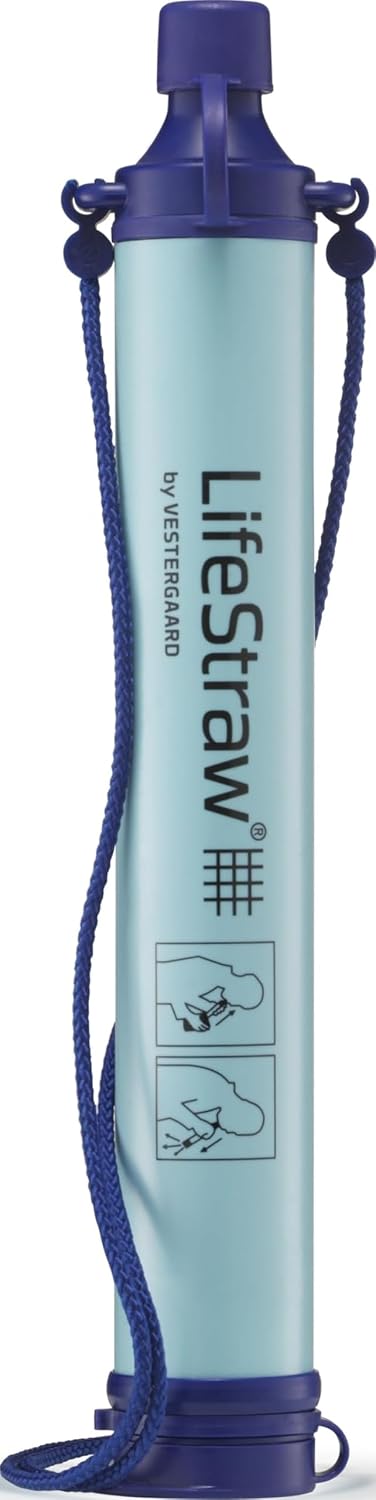
- Get a Sawyer Squeeze or LifeStraw if you don't already own a quality water filter. Fill it from your tap, squeeze it into a cup, and drink it. This isn't just about having the gear — it's about knowing it works and knowing how to use it before you're doing it in the dark next to a creek with shaking hands.
- Print or purchase a topographic map of your immediate region — at minimum a 50-mile radius from your home. Laminate it or put it in a waterproof map case. Mark your home, your three most likely bug out destinations, and two rally points on each route. This costs under $20 and takes one afternoon.
- Do a full inventory of your current first aid supplies and replace anything expired. If you don't own a tourniquet, order a genuine CAT tourniquet this week — not a knockoff, not a substitute. Counterfeits fail. A real CAT costs around $30 and the skill to apply it takes 20 minutes to learn from a YouTube video by a credible source like Stop the Bleed.
- Load your bag to its target weight and walk 5 miles on terrain with some elevation change. Do this before you make any more gear purchases. Your body and your pack will tell you what's wrong faster than any checklist will.
- Identify and write down your three most likely bug out scenarios based on where you live. Look up historical emergencies in your county or region. Build your gear decisions around those scenarios, not around hypothetical collapse scenarios from online forums.
- Set a calendar reminder for six months from today to pull everything out of your bag, check expiration dates, test batteries, inspect gear for wear, and repack. A bag you don't maintain is a bag you can't trust. Trust is the only thing that matters when you actually need it.
A bug out bag isn't a purchase — it's a practice. You build it, you test it, you refine it, and you maintain it the same way you'd maintain anything you depend on to keep you alive. The people who survive hard situations aren't the ones with the most gear or the most expensive kit. They're the ones who know exactly what they have, exactly how to use it, and exactly where they're going. That kind of readiness isn't built in a shopping cart. It's built in the field, in the rain, when everything hurts and you figure out anyway that you have what it takes — because you put in the work when it didn't matter, so you'd be ready for when it does.
About the Author
Marcus Reed is a former Army Ranger with 22 years of survival instruction experience. He runs Red Dawn Survival to share field-tested tactics with the self-reliance community. Every technique here has been tested in real conditions — not a YouTube video.
🛒 Essential Survival Gear
As an Amazon Associate I earn from qualifying purchases.