How to Live on 5 Acres: The Complete Self-Reliance Plan

What 5 Acres Can Actually Do For You
Five acres is not a hobby farm. In the hands of someone who knows what they're doing, it's a complete survival infrastructure — capable of feeding a family, providing clean water, generating heat, and keeping you off the grid indefinitely. Most people waste this land on lawn and good intentions. The serious prepper sees 5 acres as a fully deployable system, and right now — with supply chains still fragile, inflation eating grocery budgets alive, and grid reliability declining — building that system isn't optional anymore. It's the plan.
Understanding What 5 Acres Can Realistically Provide
Before you touch a shovel, you need a clear-eyed breakdown of what this land is actually capable of. Five acres equals 217,800 square feet. That sounds like a lot until you account for your home footprint, infrastructure, access roads, and buffers. Realistically, you're working with 3.5 to 4.5 usable acres once everything is laid out. Here's how to think about the land in functional zones:
- Zone 1 — The House Perimeter (0.25 acres): Herb garden, cold frames, small fruit trees, and medicinal plants. Daily interaction. Everything here should be productive within arm's reach of your back door.
- Zone 2 — Primary Food Production (1.5 acres): Main vegetable garden, annual crops, berry bushes, and a small orchard. This is your calorie engine. Minimum 6,000 square feet of dedicated vegetable growing to feed a family of four year-round.
- Zone 3 — Livestock Area (1 acre): Chickens, rabbits, goats, or pigs depending on your protein strategy. Rotational grazing if you're running ruminants. Never let animals graze the same ground back-to-back.
- Zone 4 — Perimeter and Support Systems (1.5–2 acres): Woodlot for fuel, pollinator strips, food forest edges, water catchment, compost staging, and security buffers. This zone also handles your natural building materials over time.
The mistake most people make is treating these zones as separate projects. They're not. They're one integrated system. Your chickens fertilize your garden. Your woodlot provides mulch for your beds. Your compost feeds the orchard. Design it as a loop, not a list.

The Step-by-Step Build Plan for Full Self-Reliance
This is the sequence that works. Don't skip ahead. Each phase supports the next.
- Secure Your Water First — Everything Else WaitsWater is the non-negotiable foundation. Without a reliable, independent water source, nothing else on this list matters. Start here on day one. Evaluate your options in this order: existing well (ideal — get it tested immediately for bacteria, nitrates, and pH), rainwater harvesting (install a minimum 2,500-gallon above-ground tank or underground cistern connected to your roof gutters — a 1,000 sq ft roof yields roughly 600 gallons per inch of rain), or surface water with a multi-stage filtration setup. Install a hand pump on any existing well as backup. Budget for a gravity-fed drip irrigation system fed by your tank — it'll cut your labor in half and keep plants alive during dry spells without electricity.
- Build Your Soil Before You Plant AnythingMost rural land has been abused — overfarmed, compacted, or stripped. Get a soil test from your county extension office (usually $15–$30). Test for pH, nitrogen, phosphorus, potassium, and organic matter. Ideal vegetable garden soil targets pH 6.0–7.0 and at least 5% organic matter. Build two to three large compost piles immediately — each pile needs to be at least 3 feet x 3 feet x 3 feet to generate sufficient heat. Layer carbon (straw, wood chips, cardboard) and nitrogen (food scraps, animal manure, grass clippings) in roughly a 3:1 ratio by volume. In year one, focus on getting 4 inches of finished compost or aged manure worked into your primary garden beds. You cannot rush soil biology. Feed it constantly.
- Establish Your Food Production in This OrderYear one is about annuals and fast results: tomatoes, potatoes, beans, squash, corn, leafy greens, and root vegetables. These crops give you caloric density quickly. Potatoes alone can yield 10–15 pounds per 10 square feet. Squash and beans are calorie-efficient and store well. Plant a minimum of 200 row feet of potatoes, 100 row feet of beans, and 50 squash plants in your first season if feeding a family of four. Simultaneously, plant your perennials — fruit trees, berry bushes, asparagus, rhubarb — because these take 2–5 years to fully produce and every season you delay is a season of lost yield. Minimum orchard for self-reliance: 4 apple trees, 2 pear trees, 2 plum trees, 20 blueberry bushes, and a 50-foot strawberry bed. These are your long-game calories.
- Set Up Your Livestock System StrategicallyStart with chickens. They are the single most efficient livestock investment on small acreage — low cost, fast reproduction, dual purpose (eggs and meat), and they provide manure for your garden. Start with 12–15 laying hens and 4–6 meat birds per cycle. A basic 8x10 foot coop handles 12 birds comfortably. Add rabbits in year two — a trio (one buck, two does) can produce 180+ pounds of dressed meat annually in a small space. Rabbits also produce the best cold-compost manure available — it goes straight to the garden without burning plants. If your land and local regulations allow, add 2–3 meat goats or a single pig in year three. Pigs are especially valuable as land clearers — they'll break ground and fertilize zones you're preparing for future gardens.
- Develop Your Energy and Heat InfrastructureEven 0.5 acres of managed woodlot can supply a significant portion of your heating needs if managed on a coppice rotation. For serious heat independence, you need 2–3 acres of hardwood. If you don't have that, supplement with a wood-burning rocket mass heater (dramatically more efficient than traditional wood stoves — burns small-diameter wood at 90%+ efficiency) or a high-efficiency EPA-certified wood stove rated for your square footage. For electricity, a basic off-grid solar setup for essential loads — well pump, lighting, communications, and refrigeration — requires a minimum of 2,000 watts of solar panel capacity and 400–600 amp-hours of battery storage (lithium iron phosphate batteries are the current gold standard for off-grid storage). This is a $6,000–$12,000 investment but eliminates your dependence on the utility grid entirely.
- Build Your Food Storage System In ParallelSelf-reliance is not just about producing food — it's about preserving it. You need dedicated cold storage (a root cellar maintains 32–40°F and 90–95% humidity naturally — dig minimum 8x10 feet, 7 feet deep below frost line), canning capacity (pressure canner for low-acid foods, water bath canner for high-acid — have a minimum 12-quart pressure canner and 100+ empty mason jars on hand at all times), a chest freezer as backup (a 20-cubic-foot chest freezer uses approximately 30–40 kWh per month — manageable on solar), and dry storage for grains, legumes, and dehydrated goods in sealed food-grade 5-gallon buckets with oxygen absorbers. Target a one-year food supply before you consider yourself self-reliant.
- Establish Your Security and PerimeterSelf-reliance means nothing if you can't protect what you've built. Your 5 acres should have a clear perimeter — fence line, natural barriers like thorny hedgerows (hawthorn, osage orange, or multiflora rose on the outer perimeter are both productive and impenetrable), and line-of-sight from your primary dwelling. Install motion-activated lighting on all approach paths. Have a layered alert system — dogs are the best early warning technology ever invented. Two livestock guardian dogs patrol a property naturally and will alert to human intrusion at 200+ yards. Know your property boundaries and have a defensible position plan.
Critical Mistakes That Will Sink Your Self-Reliance Plan
These aren't hypothetical. These are the failures we see repeatedly from people who started with good intentions and solid land.
- Trying to do everything in year one. This is the most common and most destructive mistake. People buy 5 acres, get excited, and plant an orchard, build a chicken coop, dig a garden, install solar, and start a goat herd simultaneously. They do all of it poorly and burn out by August. Prioritize: water, soil, annuals, chickens — in that order. Everything else comes in phases. A realistic 3-year buildout is not slow — it's sustainable.
- Underestimating caloric requirements. A family of four needs approximately 8,000–10,000 calories per day combined. Most small garden plans produce volume without calories. Leafy greens are nutritious but calorie-light. Load your production toward potatoes, beans, corn, squash, and grains. These are survival calories. Supplement with animal protein from your livestock. Do the math before you plant.
- No water independence. Relying solely on municipal water or a single well pump with no hand backup is a critical vulnerability. A 4-day power outage leaves you dry. Install a hand pump. Build a rainwater system. Always have redundancy on water.
- Neglecting soil health in favor of planting. Planting in depleted soil produces depleted crops. People who skip the soil-building phase spend years wondering why their yields are poor. The soil is the investment. The seeds are just the deposit.
- Ignoring skill acquisition. Land without skills is just real estate. You need to know how to can, preserve, butcher, save seed, weld, run basic electrical, treat medical emergencies, and defend your property. A well-stocked homestead run by unskilled people is a liability waiting to happen. Take courses. Practice. Drill these skills before you need them under pressure.
- Going it alone. The myth of the lone-wolf survivalist gets people killed. Five acres managed by one person is exhausting and inefficient. Build a tribe — neighbors, like-minded families, a network of people with complementary skills. Mutual aid is not weakness. It's how self-reliant communities have survived throughout history.

What to Do This Weekend
Stop planning and start building. This weekend: walk your property with a notebook and map out your four zones. Identify your water source and calculate your daily household water needs (average household uses 80–100 gallons per person per day — start conserving and harvesting now). Order your soil test. Price out a 2,500-gallon water tank. If you already have chickens and a garden, audit your food storage and calculate how many days you can actually sustain your household on what's on hand. The number will be smaller than you think. That's your mission. Fix it.
🛒 Essential Survival Gear
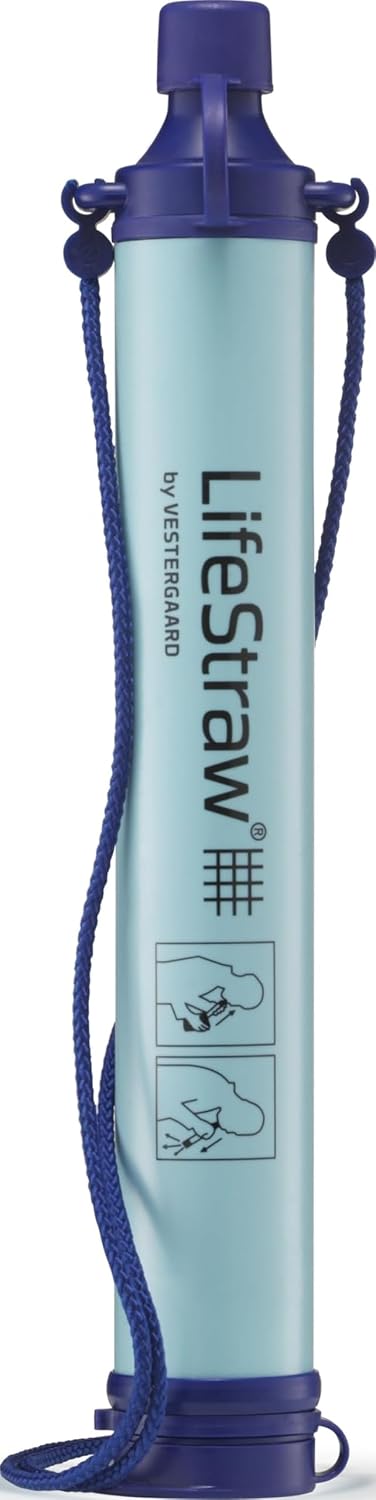
As an Amazon Associate I earn from qualifying purchases.