The Minimalist Bug Out Bag: Why 25 Lbs or Less Could Save Your Life When It Matters Most

The Reality Most People Ignore
Picture this: It's 2 AM. The emergency alert on your phone just screamed at you. A wildfire — or a chemical spill, a grid failure, a civil breakdown — is moving fast and you have 15 minutes to get your family out. You grab the 60-pound monster bag you built two years ago, try to hoist it onto your back, and realize immediately that your 11-year-old can't carry her own weight, your spouse is already loading the kids, and you haven't actually run with this thing since you built it. That bag — the one you were so proud of — becomes an anchor instead of a lifeline.
This is the hard truth that the prepper community doesn't talk about enough: a bug out bag you can't move fast with is a liability, not an asset. Most people build their bags like they're packing for a two-week camping trip with every contingency covered. They think more gear equals more prepared. They are wrong. When SHTF and the clock is running, the person who moves faster, smarter, and lighter wins. Every time.
The 25-pound threshold isn't arbitrary. Military research and wilderness survival data consistently show that sustained mobility — the kind you need over hours and miles — drops off sharply when a load exceeds 25–30% of your body weight. For most adults, 25 pounds is right at that edge. Beyond it, fatigue sets in faster, injury risk climbs, and decision-making degrades. In a survival scenario, all three of those things can kill you.
The minimalist bug out bag philosophy isn't about going cheap or cutting corners. It's about ruthless prioritization — keeping only what directly increases your probability of survival — and building the skills to make lightweight gear work under pressure.
Core Principles and Knowledge Breakdown
Before you touch a single piece of gear, you need to internalize the framework that every serious minimalist preppers operates from. This is the mental architecture everything else is built on.
The Rule of Threes governs what your bag must be able to address, in priority order:
- 3 minutes without air (airway, severe bleeding)
- 3 hours without shelter in a harsh environment
- 3 days without water
- 3 weeks without food
Notice what's at the bottom of that list. Food. Most people pack their bags heavy with freeze-dried meals and protein bars while carrying a flimsy emergency blanket that wouldn't survive a real storm. Flip your thinking. Shelter and water capacity are your survival multipliers. Food is a comfort item until day two.
The core categories for a 25-pound bag, with approximate weight budgets:
- Shelter and warmth: 4–5 lbs — lightweight bivy or tarp system, emergency blanket, paracord
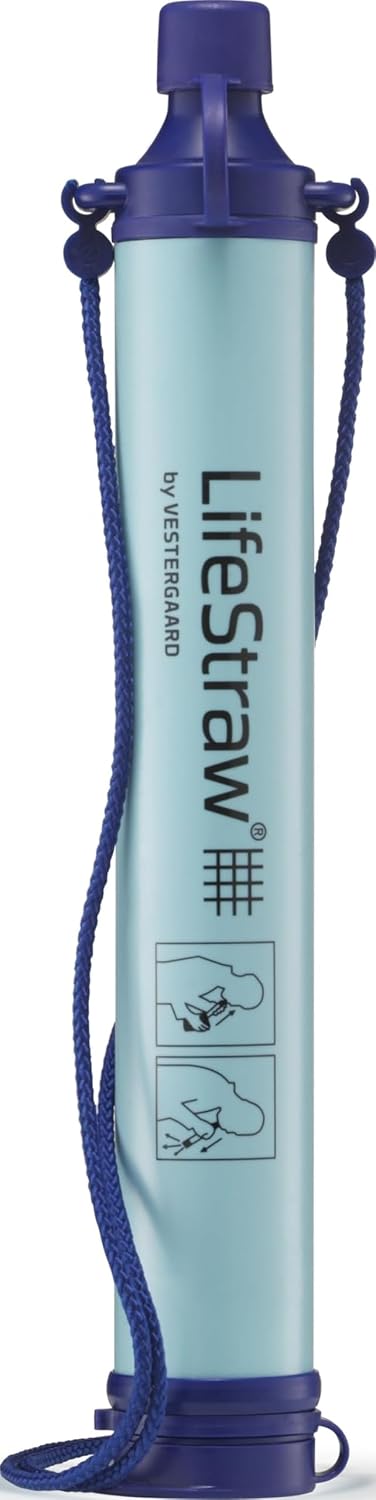
- Water: 3–4 lbs — 1.5L carried, Sawyer Squeeze or LifeStraw, small titanium pot for boiling
- Fire: under 1 lb — ferro rod, windproof lighter, waterproof matches, tinder kit
- Food: 3–4 lbs — high-calorie bars, compact real food for 72 hours
- Navigation: under 1 lb — compass, laminated maps of your region, written rally points
- First aid: 2–3 lbs — tourniquet, Israeli bandage, QuikClot, SAM splint, medications
- Tools and defense: 3–4 lbs — fixed-blade knife, folding saw or multitool, personal protection
- Communication and light: 1–2 lbs — hand-crank radio, headlamp with extra batteries
- The bag itself: 2–3 lbs — quality matters here; a good 30–40L pack runs 2–2.5 lbs
Run those numbers. Done right, you land between 19 and 23 pounds with room to breathe. That remaining weight margin is not for extras — it's your buffer for water weight fluctuation and seasonal additions like gloves or a rain layer.
Skills replace weight. This is the most powerful principle in minimalist preparedness. A person who can read a topo map doesn't need a GPS. A person who can start a fire in rain with a ferro rod doesn't need three backup lighters. Every skill you develop removes an ounce from your bag. The deepest preppers invest in their brain as aggressively as they invest in their gear room.

Building This Into Your Prep Plan
The minimalist BOB doesn't exist in isolation. It's one layer of a larger system, and if you don't understand where it fits, you'll either over-pack it or expect it to do things it was never designed to do.
Your bug out bag is a 72-hour bridge. It gets you from Point A — a compromised location — to Point B, your bug out destination. It is not a long-term survival kit. It is not your homestead-in-a-bag. It is a precision tool for a specific task: rapid, sustained movement to a pre-planned location where deeper resources are waiting.
This means your prep plan must include:
- A defined bug out location (BOL) — whether that's a family member's rural property, a pre-positioned cache site, or a specific wilderness area you've scouted and trained in
- Three routes to get there — primary, secondary, and tertiary, all mapped and walked or driven in advance
- Pre-positioned caches — serious preppers don't carry everything; they cache food, water, and fuel along likely routes
- Family rehearsal — your grab-and-go time should be under 10 minutes; practice it quarterly
When your bag is light and your destination is clear, the chaos of an emergency becomes a drill you've already run in your head a hundred times.
Advanced Level — What Serious Preppers Do Differently
Most preppers build one bag. Serious preppers build a system of loadouts calibrated to different threat profiles and seasons.
They maintain a summer configuration and a winter configuration of the same bag — swapping out a bivy for a lightweight sleeping bag, adding hand warmers, adjusting their fire kit for wet cold conditions. The total weight stays near 25 pounds in both configurations because adding winter gear means deliberately removing lower-priority items.
Serious preppers also conduct load-out audits every six months. Medications expire. Food degrades. Batteries self-discharge. That ferro rod you bought two years ago — when did you actually use it last? If you can't answer that question confidently, it's a gear prop, not a survival tool.
They train with their bags on. A 6-mile ruck with a 22-pound pack once a month tells you more about your actual readiness than any gear spreadsheet. They know their pace, their rest intervals, their weak points — and they train their family members the same way. Their 14-year-old carries their own 15-pound youth bag. Their spouse is equally capable and equipped. Survival is a team sport.
Finally, serious preppers maintain OPSEC around their loadout. They don't broadcast their gear list on social media. In a real grid-down scenario, the person with a visible, well-stocked bag is a target. The person moving quietly and efficiently with a nondescript pack is invisible. That's exactly where you want to be.

Your Action Plan — What to Do in the Next 30 Days
Stop reading and start doing. Here is your 30-day execution roadmap:
- Days 1–3: Weigh every item currently in your bag. Write it down. Total it. Most people discover they're carrying 45–60 pounds. That number should shock you into action.
- Days 4–7: Apply the Rule of Threes filter. For each item, ask: does this directly support air, shelter, water, or food? If not, it needs a serious justification to stay.
- Days 8–14: Research and acquire any critical gaps — especially a quality water filtration system, a real first-aid kit with a tourniquet, and a reliable fire kit. Don't cheap out on these three categories.
- Days 15–20: Identify and map your bug out routes. Drive them. Note chokepoints, alternative paths, and water sources along the way.
- Days 21–27: Conduct a 4-mile loaded ruck with your final bag weight. Bring your family. See what breaks down — physically, logistically, and emotionally. Fix those things.
- Days 28–30: Run a full family drill. Simulate the 2 AM alert. Time yourselves from alarm to out the door. Your goal is 10 minutes or less, bags on, family briefed, vehicles loaded.
Document everything. What worked, what didn't, what hurt. That after-action report is your next iteration's starting point.
🛒 Essential Survival Gear
As an Amazon Associate I earn from qualifying purchases.