The Complete Guide to Building a Rainwater Collection System for Your Homestead

Why This Is Non-Negotiable
Water is the first thing that kills you in a grid-down scenario. Not bullets. Not starvation. Water. The average person dies within three days without it, and if you're running a homestead, your needs multiply fast — livestock, gardens, sanitation, cooking. Municipal water fails. Wells run dry or get contaminated. Streams disappear in drought years.
A properly built rainwater collection system is one of the highest-return investments you can make on your property. It costs a fraction of drilling a well, requires no electricity to operate, and can scale from a single 55-gallon drum to a 10,000-gallon cistern system. If you don't have one, you're one infrastructure failure away from a genuine crisis. That ends today.
What You Need Before You Start
Don't touch a shovel until you've got the following sorted. Rushing this phase is how people end up with leaky, contaminated, or legally problematic systems.
- Legal check: Some states — Colorado and Utah historically — restrict rainwater harvesting. Look up your state's current laws before building. Most states now allow it, but verify first.
- Roof assessment: Metal roofing (galvanized steel or aluminum) is ideal. Asphalt shingles can leach chemicals and introduce debris. If you're on asphalt, you'll need a first-flush diverter and more aggressive filtration. Cedar or clay tile roofs are generally acceptable.
- Collection surface area: Calculate your roof's square footage. Every 1,000 sq ft of roof yields roughly 600 gallons per inch of rainfall. Know your local average rainfall. This determines system sizing.
- Materials list: Food-grade polyethylene storage tanks (IBC totes — 275 or 330 gallon — are the workhorses of homestead systems), PVC pipe (schedule 40), gutter downspout adapters, first-flush diverter kit, mesh gutter guards, bulkhead fittings, spigots, and overflow piping.
- Tools: Hole saw kit, PVC cement and primer, drill, level, shovel or gravel for base preparation.
- Site selection: Place tanks on a solid, level base — compacted gravel or a concrete pad. Elevation matters. Every foot of height above your draw point gives you approximately 0.43 PSI of passive pressure. Place tanks uphill from your garden whenever possible.

The Step-by-Step Process
- Install gutter guards. Before anything else, fit aluminum mesh gutter guards on all gutters feeding your collection downspouts. Leaves, bird droppings, and debris are your enemies. Clean gutters monthly regardless.
- Install a first-flush diverter. This is mandatory, not optional. The first 10–15 gallons off any roof after a dry period carry the highest concentration of contaminants — bird feces, dust, pollutants. A first-flush diverter automatically discards this initial flow before routing clean water to your tank. Commercial kits from Rain Harvesting Supplies work well. You can also DIY one with a vertical PVC standpipe sized at 1 gallon per 100 sq ft of roof area.
- Prepare the tank base. Dig down 4 inches and fill with compacted crushed gravel. Lay concrete pavers or pour a simple concrete pad. Your full IBC tote will weigh over 2,300 lbs — it needs to be level and stable, period.
- Position your IBC tote. Set it uphill from your primary use point. Remove the factory cage bottom if possible and elevate the whole unit on cinder blocks (4–6 blocks minimum, spaced evenly) for additional gravity pressure and to allow a spigot connection at the base.
- Connect downspout to inlet. Run your downspout into the top of the IBC tote using a flexible downspout adapter and PVC pipe. Install an inline screen filter at the inlet — 250-micron mesh minimum. The tote's existing cap opening accepts standard 4-inch fittings with minor modification.
- Install outflow hardware. Use a bulkhead fitting near the base of the tank. Thread in a brass ball valve and connect to your distribution line. Brass valves outlast plastic in UV exposure and repeated use.
- Install overflow piping. Near the top of the tank, install a second bulkhead fitting and route overflow water away from your foundation — ideally to a secondary tank, a swale, or a garden bed. Never let overflow pool near the tank base.
- Cover and secure. IBC totes are semi-translucent. Algae growth is a serious problem in sunlight. Paint the outside with exterior latex paint or wrap with a UV-blocking cover. Secure the lid to prevent debris and mosquito breeding.
- Link multiple tanks. Connect two or more IBC totes at the base using 1-inch PVC pipe with ball valves on each connection. This daisy-chain approach lets you expand capacity incrementally and isolate tanks for cleaning.
Tips from the Field
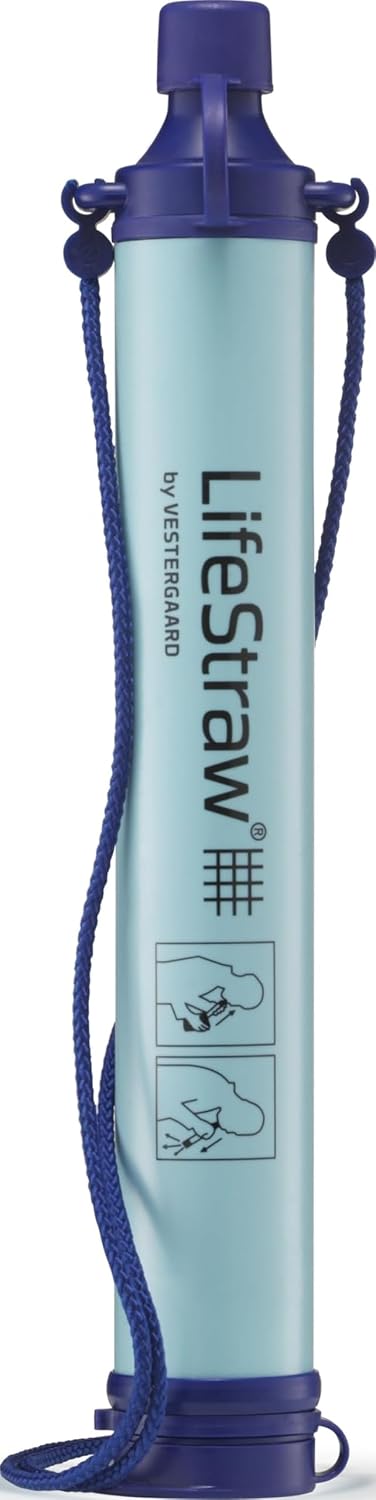
- Filtration before use: Collected rainwater is not automatically safe to drink. For potable use, run it through a quality gravity filter like a Berkey or Sawyer Gravity system, or install a whole-line sediment filter plus UV purifier. For irrigation, it's ready as-is.
- Winterization: In freeze zones, drain tanks before first hard frost or insulate them with foam board and a dark exterior wrap to absorb solar gain. A frozen full tank will crack — it's that simple.
- Debris cleanout: Plan to drain and rinse tanks once a year minimum. Install a low-point drain plug at the very bottom of each tank for sediment flush.
- Pressure boosting: If passive gravity pressure isn't enough for your needs, a 12V RV water pump (SHURflo 2088 series is a proven option) wired to a small solar panel gives you on-demand pressure without grid dependency.
- Natural alternative storage: No budget for IBC totes? Three or four 55-gallon food-grade plastic drums from a car wash or food distributor cost $15–30 each used. They're a legitimate starting point while you scale up.

What to Practice Now: Your 30-Day Skill-Building Plan
- Days 1–3: Research your state's rainwater harvesting laws. Calculate your roof's collection potential using the 0.623 gallon-per-sq-ft-per-inch formula.
- Days 4–7: Audit your gutters. Clean them, identify downspout locations, and measure your optimal tank placement site.
- Days 8–14: Source materials. Find local IBC totes (food-grade only — look for totes that held food-safe products, never chemicals). Order your first-flush diverter kit and filtration hardware.
- Days 15–20: Build Phase 1 — install one IBC tote with first-flush diverter and basic gutter connection. Get water flowing into it.
- Days 21–25: Track a rainfall event. Measure what you collected versus your calculated estimate. Troubleshoot gaps.
- Days 26–30: Plan your expansion. Add a second tank, increase filtration capacity, or integrate your system into your garden irrigation. Document your setup with photos for future reference.
Preparation Is a Lifestyle
You didn't start a homestead to depend on someone else's infrastructure. A rainwater collection system isn't a weekend project you check off a list — it's a living part of your property that you maintain, expand, and rely on. Start with one tank. Learn the system. Then scale it until a week without rain doesn't even make you blink.
The goal is simple: when the water stops running from the tap, your family doesn't notice. Build toward that day, every single week.
🛒 Essential Survival Gear
As an Amazon Associate I earn from qualifying purchases.