**Your Tap Will Run Dry: How to Design and Install a Rainwater Harvesting System Before It's Too Late**

The Reality Most People Ignore
Picture this: It's day four of a regional grid-down event. A cyberattack has crippled the municipal water infrastructure across three states. The shelves at every store within 50 miles were stripped bare by day two. Your family is rationing the last of your stored water — maybe 30 gallons — between four people. You're doing the math and it doesn't add up. Meanwhile, it rained two inches last night. That water ran off your roof, down your gutters, and into the street. Gone. Forever.
This is not a hypothetical for millions of Americans who experienced water crises in Texas during Winter Storm Uri, in Jackson, Mississippi during their catastrophic infrastructure collapse, or across Puerto Rico after Hurricane Maria. Real people. Real families. Real suffering that was entirely preventable with the right systems in place.
Water is the non-negotiable. You can survive weeks without food. You cannot survive more than three days without water — and that assumes you're not exerting yourself in a stressful, labor-intensive survival situation where your body demands even more. Yet the majority of preppers spend their money on freeze-dried food and firearms before they've solved their water problem. That is a fatal prioritization error.
Rainwater harvesting is one of the most powerful, cost-effective, and scalable survival skills you can build into your property. Today, we're going deep on how to design and install a system that actually works — not a novelty barrel under a downspout, but a serious, layered system that can sustain your family through an extended emergency.
Core Principles and Knowledge Breakdown
Before you spend a single dollar on hardware, you need to understand the fundamentals that govern every effective rainwater harvesting system. Skipping this step is how people end up with contaminated water, undersized storage, or systems that fail at the worst possible moment.
Know Your Rainfall Catchment Potential
The formula is simple but powerful: Roof Area (sq ft) × Rainfall (inches) × 0.623 = Gallons Collected. A 2,000 square foot roof catching just one inch of rain yields over 1,200 gallons. That's significant. Pull up your local precipitation averages by month and run these numbers for your property. This tells you what's possible — and whether your storage is sized appropriately to capture meaningful volumes during your rainy season to carry you through dry months.
The Four Core System Components
- Catchment Surface: Your roof is your primary collector. Metal roofing — galvanized, Galvalume, or painted steel — is superior to asphalt shingles, which leach compounds and trap organic debris. If you're building or replacing a roof, make this choice deliberately. Asphalt roofs can still work but require more aggressive filtration.
- Conveyance: Gutters and downspouts move water from your roof to your storage. Oversized gutters (6-inch K-style vs. standard 5-inch) handle high-flow rain events better and reduce overflow loss. Keep them clean. Debris in gutters is debris in your water supply.
- First-Flush Diverters: This is a component most amateur systems skip — and it's a critical mistake. The first flow of water off any roof is the dirtiest: concentrated bird droppings, dust, pollen, atmospheric pollutants, and organic debris. A first-flush diverter automatically discards the first 10–15 gallons per downspout before routing cleaner water to your storage tank. These are inexpensive ($30–60 each) and non-negotiable for any system intended for drinking water.
- Storage Tanks: Your holding capacity determines your resilience. Options range from food-grade polyethylene tanks (250–2,500 gallons, available from farm supply stores), to corrugated galvanized steel tanks used in agricultural settings, to underground cisterns for serious long-term installations. Tank color matters: dark or opaque tanks prevent algae growth. Tanks must be covered to prevent mosquito breeding and to limit evaporation and UV degradation of the water.
Filtration and Purification — Do Not Cut Corners Here
Collected rainwater is not automatically safe to drink. It picks up biological contaminants, heavy metals from roofing materials, and atmospheric pollutants. A proper treatment train for potable water looks like this:
- Pre-Storage Screening: A 30–100 mesh stainless steel screen at the tank inlet keeps out insects, leaves, and coarse debris.
- Sediment Filtration: A 5-micron sediment filter as a first-stage treatment removes fine particulates before water enters your final filter system.
- Carbon Filtration: Activated carbon removes chlorine, volatile organic compounds, and improves taste and odor.
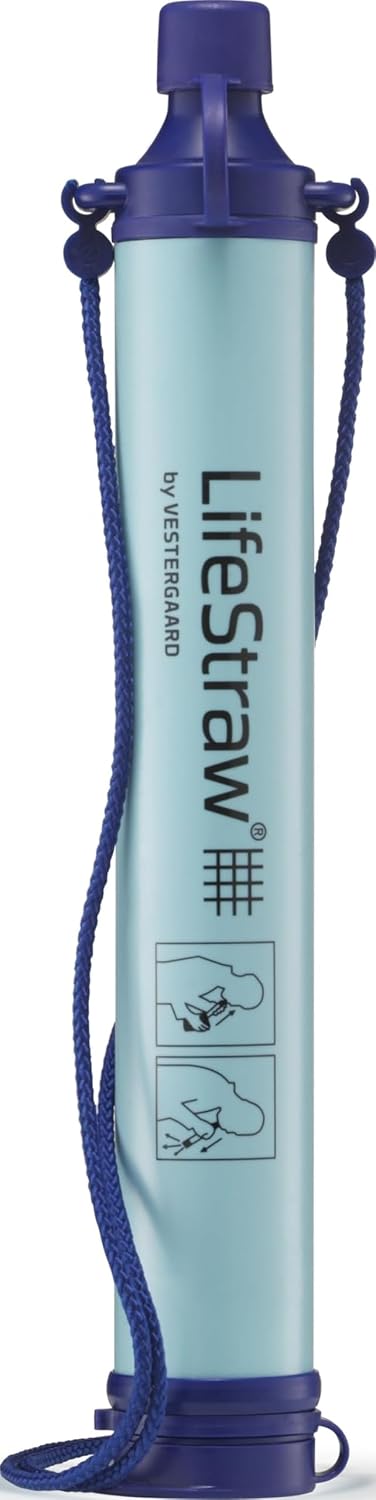
- Ceramic or Hollow-Fiber Membrane Filter: A Berkey-style gravity filter or a 0.1-micron hollow-fiber filter (like those used in Sawyer systems at scale) removes bacteria and protozoa.
- UV Sterilization or Chemical Disinfection: For the highest level of protection, a UV sterilizer (DC-powered units work well in off-grid setups) or careful chemical treatment with unscented household bleach (8 drops per gallon, 30-minute contact time) handles viral contamination.
You do not need to run all collected water through your full potable treatment system. Separate your water uses: unfiltered storage can supply toilets, garden irrigation, and laundry. Treated water is reserved for drinking, cooking, and hygiene. This dramatically extends your treated water supply in an emergency.

Building This Into Your Prep Plan
A rainwater system is not a single purchase. It's a layered infrastructure build that you can develop progressively, even on a tight budget. Here's how to think about the phases:
Phase 1 — Emergency Baseline (Under $300): Install two 55-gallon food-grade barrels connected in series to a single downspout, with a basic first-flush diverter and a screened overflow outlet. This gets you 110 gallons of emergency reserve and gives you hands-on experience with the system before you scale up. It's not enough for a long-term emergency, but it buys time.
Phase 2 — Serious Capacity (Under $1,500): Replace or supplement barrels with a 1,000–2,500 gallon IBC tote or polyethylene tank. IBC totes (Intermediate Bulk Containers) are the sweet spot for cost-effective water storage — you can often find food-grade used totes for $100–200 each. Install proper first-flush diverters on every downspout feeding the system. Add a gravity-fed filtration setup (two-stage Berkey or similar) at the point of use.
Phase 3 — Full Resilience System ($3,000–10,000+): Underground cisterns, multi-tank manifold setups, solar-powered pump systems, and integrated whole-house plumbing that allows your rainwater system to serve as a backup supply. This is where you're genuinely prepared for a long-term grid-down scenario.
Know your local laws. Some states and municipalities regulate rainwater collection — though most restrictions have been loosened significantly in recent years as water scarcity has become a mainstream concern. Texas, for example, actively encourages rainwater collection. Check your state's statutes and, where required, pull the appropriate permits. Operating a legal system protects you from future interference.
Advanced Level — What Serious Preppers Do Differently
There's a significant gap between someone who has a barrel under their downspout and someone who has genuinely solved their family's water problem. Here's what separates the prepared from the prepared-enough:
They Size for Worst-Case Drought Scenarios
Serious preppers don't calculate storage based on average rainfall. They identify the longest historical dry stretch in their region and size their storage to bridge that gap at their full household consumption rate plus a margin. In central Texas, that might be 90+ days. In the Pacific Northwest, perhaps 60. Run the numbers. If you can't bridge your worst-case drought with stored rainwater alone, you build additional redundancy — a well, a pond, or established relationships with neighboring water sources.
They Build Redundant Collection Points
A single catchment point is a single point of failure. Advanced systems capture from multiple roof sections, outbuildings, greenhouses, and even purpose-built collection tarps or paved catchment areas. If one system fails or one tank develops a leak, the others continue to function.
They Integrate with Their Broader Water Strategy
Rainwater is one leg of a three-legged stool. Serious preppers also develop a groundwater source (well or hand-dug well with hand pump), surface water options (stream, pond, or river with appropriate filtration gear), and robust stored water reserves (minimum 14-day supply in sealed containers). Rainwater harvesting replenishes and extends your stored supply — it doesn't replace the other components.
They Maintain Their Systems Religiously
A neglected rainwater system can become a health hazard. Sediment accumulates. Filters clog. First-flush chambers fill and stop functioning. Mosquitoes find a way in. Serious preppers establish quarterly maintenance routines: clean gutters, inspect and flush first-flush chambers, check tank integrity for cracks or UV degradation, replace filter media on schedule, and test water quality at least annually using basic field test kits or lab services.
They Have Documented Everything
In a true emergency, someone else may need to operate your system. Your spouse. Your teenager. A neighbor. Document your system in a laminated binder kept with your system: tank locations, valve positions, filter change schedules, treatment protocols, and emergency bypass procedures. This is not paranoia — it's operational maturity.

Your Action Plan — What to Do in the Next 30 Days
Knowledge without action is worthless. Here is a concrete 30-day sprint to begin building your rainwater resilience:
- Week 1 — Assessment: Calculate your roof's catchment potential using the formula above. Research your local rainfall averages by month. Identify every downspout on your property and map which roof sections they drain. Check your state and local laws on rainwater collection. Identify the location for your primary storage tank — it needs to be accessible, shaded if possible, and positioned to allow gravity flow or easy pump access.
- Week 2 — Phase 1 Installation: Purchase two food-grade 55-gallon barrels (check Craigslist, Facebook Marketplace, or local farm supply stores) and a pre-made first-flush diverter kit for your primary downspout. Install this week. Get your hands dirty. Learn how the system behaves in real conditions. You'll immediately identify issues you couldn't see on paper.
- Week 3 — Filtration Setup: Acquire your gravity filtration system. A quality two-filter Berkey setup runs approximately $250–350 and is capable of filtering 6,000+ gallons per filter element. Position it where you'll actually use it. Run your first batch of collected rainwater through the full treatment process and test it with a basic TDS meter and water quality test strips.
- Week 4 — Planning and Budgeting Phase 2: Based on what you've learned from Phase 1, plan your Phase 2 expansion. Price out IBC totes, additional first-flush diverters, and any plumbing components needed. Set a specific budget and timeline. Tell someone you trust about your goal — accountability accelerates action.
Thirty days from now, you will either have a functional emergency water collection system and a clear roadmap for expansion — or you'll still be one grid disruption away from crisis. The choice you make this week is the choice you'll either be grateful for or regret when the moment comes.
The Bottom Line on Self-Reliance
The people who survive extended emergencies aren't the ones with the most gear in their garage. They're the ones who built real, functional systems into their lives before the crisis arrived — people who looked at every resource around them, including the rain falling on their roof, and refused to let it go to waste.
You cannot control when the grid fails, when the municipal water system is compromised, or when the next natural disaster rolls through your area. But you can control whether your family has water when it does. That's what self-reliance actually means: removing your family's survival from the hands of systems you don't control, and placing it firmly in your own. Start building. Start now.
🛒 Essential Survival Gear
As an Amazon Associate I earn from qualifying purchases.