**Your Body Is Dying Before You Know It: Recognizing and Treating Dehydration When There's No Doctor Coming**

The Stakes Are Real — And Most People Aren't Ready
It's day two after a grid-down event. You've been hauling gear, managing stress, and pushing hard. The adrenaline masked it. The cooler temperatures made you feel fine. Then someone in your group stops walking, says they feel dizzy, and sits down in the dirt. Their lips are cracked. Their eyes are sunken. Their skin doesn't snap back when you pinch it. You just lost your most capable team member — and the threat that took them down wasn't a bullet, a storm, or a predator. It was water. Or rather, the lack of it.
Dehydration is one of the most common, most preventable, and most underestimated killers in any survival scenario. People die from it on day hikes. They collapse from it in backyard emergencies. And in a prolonged SHTF situation, it will thin the herd fast among people who thought they were prepared. This article is your deep-dive field guide — the kind of knowledge that separates the serious prepper from the one who bought a bag and called it done.
The Reality Most People Ignore
Here's the hard truth: by the time you feel thirsty, you're already 1–2% dehydrated. That doesn't sound like much until you understand that a 2% drop in body water causes measurable cognitive decline, reduced physical performance, and the beginning of a cascade that can turn dangerous fast. At 5–8% dehydration, you're looking at severe weakness, headaches, nausea, and confusion. At 10% or above, you're entering organ failure territory. The human body is roughly 60% water. You are a water-dependent machine operating in a world that will drain you constantly.
What makes this even more dangerous in a survival scenario is that the conditions that create dehydration also impair your ability to recognize it. Heat, exhaustion, stress, and fear all cloud judgment. A person who is moderately dehydrated will often insist they feel fine right up until they don't. This is why every serious prepper needs to know the external signs — the ones you can observe in yourself and others — because you cannot rely on thirst alone.
Most mainstream survival content stops at "drink more water." That's not enough. You need to understand the physiology, the progression, the field assessment techniques, and the treatment protocols that actually work when you're miles from help and resources are limited.

Core Principles and Knowledge Breakdown
Know the Signs — Early, Moderate, and Severe
Dehydration presents in stages, and catching it early is the difference between a manageable problem and a life-threatening emergency. Drill these into your memory and into your family's awareness.
- Early Stage (Mild — 1–3% fluid loss): Thirst, slight dry mouth, darker yellow urine, minor fatigue, and reduced focus. This is the warning window. Act here and you prevent everything below.
- Moderate Stage (3–6% fluid loss): Headache, significant fatigue, dry skin, decreased urination, muscle cramps, irritability, dizziness when standing, and sunken eyes. This person needs to stop moving and start rehydrating immediately.
- Severe Stage (7%+ fluid loss): Confusion, rapid heart rate, rapid breathing, extreme weakness, no urination, very sunken eyes, skin that doesn't return to normal when pinched (called poor skin turgor), and in extreme cases, unconsciousness. This is a medical emergency even when there's no medical system to call.
The Urine Color Test
This is your simplest real-time hydration monitor. Pale yellow means you're good. Dark yellow or amber means you're falling behind. Brown or orange means you're in serious trouble and you need to address it immediately. Teach every member of your group to check. It takes two seconds and gives you actionable data.
Skin Turgor Test
Pinch the skin on the back of the hand or the abdomen and release. In a well-hydrated person, the skin snaps back instantly. In a dehydrated person, it holds the tent shape for one, two, or more seconds. The longer it takes, the worse the dehydration. This is a technique used by field medics and it's one you need to practice until it's automatic.
Field Treatment Protocol
Treatment depends on severity and your available resources. Here's the framework:
- Stop the drain first. Get out of direct sun. Reduce physical exertion. Remove unnecessary gear that's causing heat buildup. You cannot rehydrate someone who is still actively losing fluid faster than you can replace it.
- Oral rehydration for mild to moderate cases. Clean water is your foundation. But electrolytes matter as much as volume. Plain water in large quantities without electrolytes can actually make things worse — a condition called hyponatremia, where sodium levels drop dangerously low. Sip water consistently rather than gulping large amounts. The gut can only absorb so much at once.
- Oral Rehydration Salts (ORS). This is one of the most important items in any field medical kit and one of the most overlooked. WHO-formula ORS packets have saved millions of lives in disaster zones worldwide. The recipe if you're making it yourself: 1 liter of clean water, 6 level teaspoons of sugar, and half a teaspoon of salt. Stir until dissolved. This solution is absorbed faster than plain water and replaces critical electrolytes simultaneously.
- Severe cases — position and priority. If someone is confused or unconscious, do not attempt to force fluids orally — aspiration is a real risk. Lay them on their side, keep them cool, and prioritize evacuation or IV fluid access if you have trained personnel in your group. This is the scenario where a wilderness first responder certification in your group pays for itself.
Building This Into Your Prep Plan
Knowledge without systems fails under stress. The goal is to build hydration awareness and dehydration response into your daily prepping habits so it becomes automatic when things get hard.
Water Storage First
FEMA recommends one gallon per person per day. That's a bare minimum for survival. For preppers operating in heat, doing physical work, or managing sick or elderly family members, plan for 1.5–2 gallons per person per day. Store in food-grade containers — 55-gallon drums for stationary storage, 5-gallon jugs for rotational use. Date and rotate your supply. Water doesn't expire but containers degrade and contamination can occur over time.
Filtration and Purification
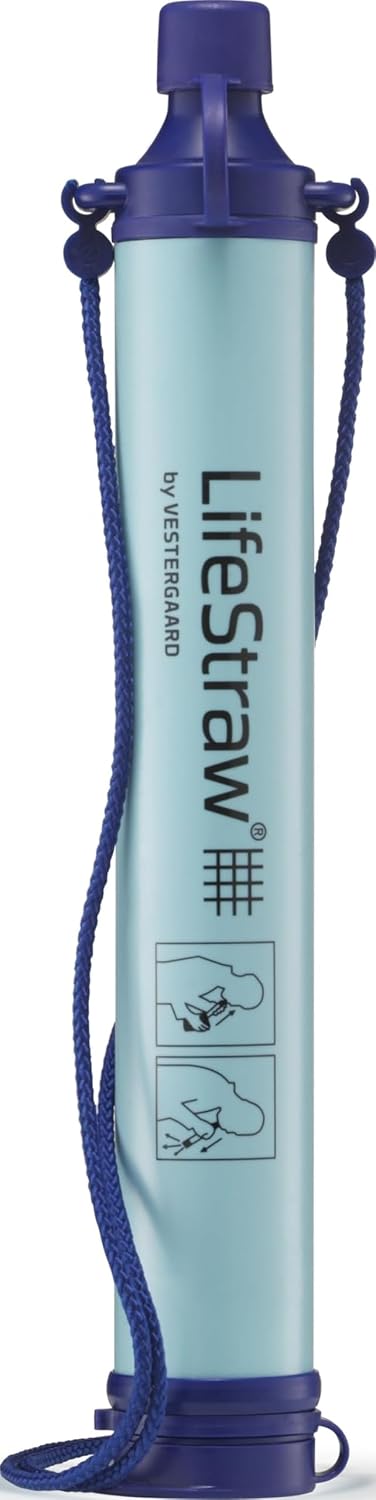
Your stored water is a buffer. Your filtration system is your long-term survival. Every serious prepper needs layered water solutions: a quality gravity-fed filter like a Berkey or Sawyer Select for base camp, a personal inline filter like a Sawyer Squeeze or LifeStraw for mobility, water purification tablets for emergency redundancy, and the knowledge to boil water as a last resort. Stack your capabilities so no single point of failure leaves you without clean water.
Electrolyte Supplies in Every Kit
Your bug-out bag, your car kit, your home medical supply — all of them should contain ORS packets or electrolyte powder. Nuun tablets, DripDrop, or Pedialyte powder packets are compact, affordable, and potentially life-saving. Budget at minimum 3–5 packets per person per kit and rotate them on a 12-month cycle.

Advanced Level — What Serious Preppers Do Differently
There's a gap between people who know about survival and people who are genuinely prepared for it. Here's what the serious end of the prepper community does that most people don't.
IV Fluid Capability
This is advanced territory and comes with real responsibility. Some preppers, particularly those with medical backgrounds or who have pursued wilderness medical training, stock normal saline (0.9% NaCl) or lactated Ringer's solution along with IV administration supplies. Used correctly on a severely dehydrated person who cannot take oral fluids, this can be the difference between life and death. This is not a starter skill — take a Wilderness First Responder (WFR) course, take an IV therapy course, and train with your gear before you need it. But know it exists and work toward it.
Monitoring Hydration Proactively
High-end preppers don't wait for symptoms. They track water intake as part of their daily operational rhythm — especially in high-stress, high-exertion scenarios. Some use electrolyte monitoring strips or basic urinalysis strips to get real data. Others use structured hydration schedules — drink X ounces every Y minutes during activity regardless of thirst. Building this discipline in regular life means it's automatic when the stakes are real.
Knowing Your Environment's Dehydration Multipliers
Heat and physical exertion are obvious, but serious preppers know all the factors: altitude (increases respiratory water loss significantly), dry cold air, illness with fever or vomiting, high-protein or high-sodium food consumption, caffeine and alcohol (both diuretics), and psychological stress which increases cortisol and affects fluid regulation. Your water plan needs to account for your specific geography, climate, and scenario — not just a generic baseline.
Group Medical Roles
In a prepared group or mutual aid network, someone should own the medical role with proper training. Wilderness First Responder, EMT, or Combat Lifesaver training all cover fluid management and dehydration assessment in depth. The prepper who invests in this training becomes an irreplaceable asset to any survival group. If you haven't invested in formal medical training yet, that needs to move to the top of your skill development list.
Your Action Plan — What to Do in the Next 30 Days
Information without action is just entertainment. Here's your 30-day execution plan to genuinely level up your dehydration preparedness.
- Week 1 — Audit your water storage. Calculate your household's actual daily water need based on realistic scenario conditions. Identify gaps. Order what you need. If you don't have a quality filtration system, research and purchase one this week.
- Week 1 — Teach your household the urine color test and skin turgor test. Sounds basic. Most families have never discussed it. Five minutes of instruction could save a life.
- Week 2 — Build your electrolyte supply. Add ORS packets or quality electrolyte powder to every kit in your home, every vehicle, and every bug-out bag. Write the field ORS recipe on a laminated card and store it with your first aid supplies.
- Week 2 — Research WFR courses in your area. You don't have to register this month, but identify the training, know the cost, and put it on your 90-day plan. This is not optional for serious preppers.
- Week 3 — Run a hydration scenario drill. During a weekend work session in your yard or garden, practice the full assessment protocol on family members. Simulate identifying early and moderate dehydration. Practice mixing ORS. Make it a training exercise, not a conversation.
- Week 4 — Review and document. Write a simple one-page hydration SOP (Standard Operating Procedure) for your household. Assessment steps, treatment steps, supply locations, thresholds for elevating to emergency protocols. Keep it in your medical binder. Review it quarterly.
The Bottom Line on Self-Reliance
The unprepared person waits for symptoms and hopes someone else knows what to do. The prepared person has already assessed the risk, built the skills, stocked the supplies, and trained the people they love. Water is not a secondary concern in survival — it is the primary biological requirement of every human being in your care. When systems fail and help isn't coming, the family that survives is the one where someone knew what cracked lips and sunken eyes meant, and knew exactly what to do about it without hesitation.
That person needs to be you. Start tonight.
🛒 Essential Survival Gear
As an Amazon Associate I earn from qualifying purchases.