When the Ground Shakes and the Sky Turns Green: The Complete Natural Disaster Prep Guide Serious Preppers Can't Ignore

The Reality Most People Ignore
It was 5:04 a.m. on January 17, 1994, when the Northridge earthquake tore through Los Angeles with 20 seconds of pure destruction. Sixty people died. Over 9,000 were injured. More than 125,000 were displaced from their homes. FEMA took days to arrive in force. In those early hours — and for many, those early days — families were completely on their own.
That's not a horror story. That's a blueprint for why you're reading this right now.
The uncomfortable truth about natural disasters is not that they're rare — it's that most people treat them like they're rare. The average American lives in or adjacent to a high-risk zone for at least one major natural disaster type. Earthquakes. Hurricanes. Tornadoes. Floods. These aren't abstract threats. They are statistical certainties playing out in slow motion across this country every single year. The only question is whether your name is on the list of prepared or unprepared when one arrives at your door.
FEMA's own data suggests that only 39% of Americans have an emergency plan. That means six out of ten of your neighbors are banking on good luck and government response times. You already know that's a losing bet. So let's talk about what it actually takes to survive when the sky falls.
Core Principles and Knowledge Breakdown
Before you buy a single piece of gear, you need to understand the nature of what you're preparing for. Each major natural disaster type has a distinct behavioral profile, and your response must match it precisely. Treating a flood the same way you treat a tornado will get people killed.
Earthquakes — The Invisible Ambush
Earthquakes offer zero warning. You go from drinking your morning coffee to structural collapse in under 60 seconds. This means all your preparation must be done in advance — there is no prep window once it starts. Your home is both your greatest asset and your greatest threat. Gas lines rupture. Water mains break. Roads crack and bridge overpasses fail. In the aftermath, fires triggered by ruptured gas lines often cause more destruction than the quake itself, as was witnessed in the 1906 San Francisco earthquake.
- Know your home's construction type — wood frame structures survive better than unreinforced masonry
- Secure heavy furniture, water heaters, and bookshelves to wall studs
- Know where your gas shutoff is and keep a wrench nearby
- Practice Drop, Cover, and Hold On — and teach every family member
- Identify safe zones in every room — away from windows, exterior walls, and heavy overhead objects
Hurricanes — The Enemy You Can See Coming
Hurricanes are the most predictable of the major disaster types, which makes failing to prepare for one completely inexcusable. You typically have 48 to 72 hours of warning — sometimes more. Hurricane Katrina made landfall August 29, 2005, and the warning had been issued days earlier. The failure wasn't intelligence. It was preparation and execution. A Category 4 or 5 storm brings sustained winds exceeding 130 mph, catastrophic storm surge, and flooding that can persist for days. The key decisions are evacuation vs. shelter-in-place, and that decision needs to be made early — not when the roads are already gridlocked with panic.
- Know your storm surge zone — this is often more deadly than wind
- Pre-determine your bug-out route with two alternates
- Harden your home with hurricane shutters or plywood pre-cuts stored in your garage
- Have 14 days of water and food minimum — grid power can be out for weeks
- Understand that re-entry after a major hurricane can be restricted for days
Tornadoes — Violence in Minutes
Tornado Alley stretches from Texas to Nebraska, but tornadoes have touched down in all 50 states. The 2011 Joplin, Missouri tornado killed 158 people in minutes and leveled an entire section of a city. Warning times average 13 minutes — if you're lucky enough to have a warning at all. Tornadoes demand immediate, decisive action. There is no time for deliberation. You need a pre-established shelter, a plan your family has drilled, and the discipline to execute it without hesitation.
- Identify your safest interior room on the lowest floor — interior bathroom, closet, or storm cellar
- A NOAA weather radio is non-negotiable — it will alert you when your phone won't
- Mobile homes offer zero protection — have an alternative shelter plan if you live in one
- Flying debris is the primary killer — protect your head and neck with mattresses, helmets, or body armor
Floods — The Slow-Moving Killer That People Underestimate
Floods are the most common and deadliest natural disaster in the United States. Six inches of moving water can knock you down. Two feet can sweep away your vehicle. Flash floods in particular are infamous for catching people completely off guard — the water can arrive faster than you can react. The critical mistake people make with floods is waiting too long to evacuate because the threat doesn't feel immediate. If you're debating whether to leave, you've already waited too long.
- Never attempt to drive through flooded roads — Turn Around, Don't Drown is not a slogan, it's a survival rule
- Know your property's flood history and FEMA flood zone classification
- Keep important documents in waterproof containers at height, not ground level
- Flood waters carry sewage, chemicals, and biological hazards — treat all exposure seriously

Building This Into Your Prep Plan
Knowing the threats is step one. Building a layered, functional response system is where preparation actually lives. Start with these foundational elements that apply across all four disaster types.
The 72-Hour Kit Is Your Floor, Not Your Ceiling
Everyone talks about the 72-hour bug-out bag like it's the finish line. It's not. It's the bare minimum that gets you to safety in the short window before infrastructure collapses. Your kit should include water (one gallon per person per day), high-calorie food that requires no cooking, a first aid kit with trauma capability, copies of critical documents, cash in small bills, medications, and communication tools including a battery-powered or hand-crank weather radio.
Water Is Your Most Critical Resource
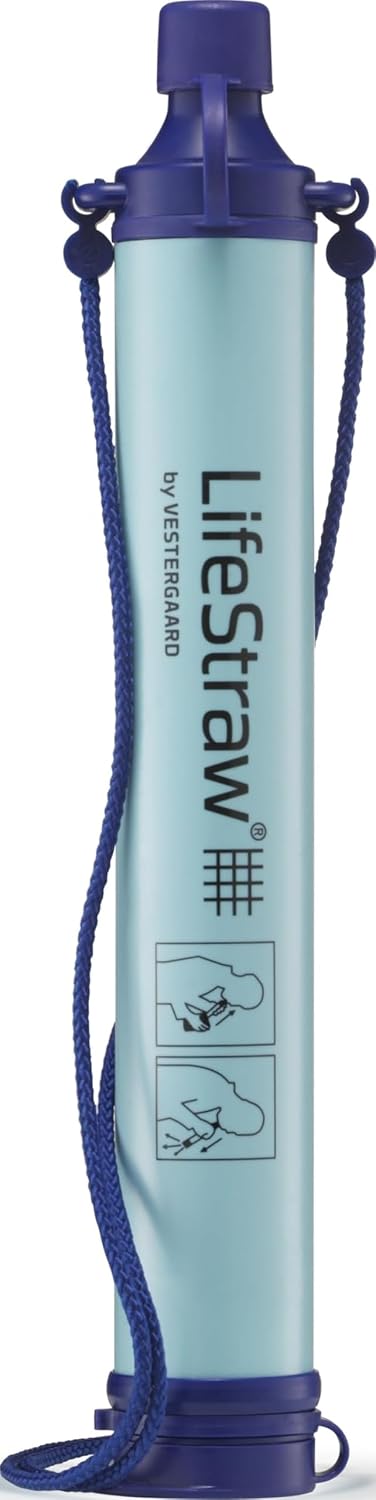
Municipal water systems fail after earthquakes, hurricanes, and floods — often contaminated before they fail. You need stored water and the ability to purify more. Store a minimum of two weeks' supply for your household. Invest in a quality gravity filter like a Berkey or Sawyer system, and understand how to use purification tablets and boiling as backups. Collect rainwater during hurricane prep windows. Water is non-negotiable.
Communication and Situational Awareness
When the grid goes down, so does most communication. A NOAA weather radio with battery backup is mandatory. A handheld ham radio (after getting your Technician license) dramatically expands your situational awareness. Establish family communication plans with out-of-state contacts — it is often easier to call out of state than locally after a disaster. Designate two rally points: one near your home and one outside your neighborhood.
Document Protection and Financial Prep
Disasters destroy paperwork. Keep waterproof copies of birth certificates, insurance policies, property deeds, medical records, and identification in your go-bag and a fireproof safe at home. Have cash — ATMs and card readers will be down. Small bills only. Know your insurance coverage before disaster strikes, not after.
Advanced Level — What Serious Preppers Do Differently
The basics keep you alive. The advanced work keeps you operational, independent, and capable of helping others when the world goes sideways.
Structural Hardening and Home Assessment
Serious preppers don't just stock supplies — they assess and harden their physical environment. This means earthquake retrofitting for older homes, installing a whole-home generator with automatic transfer switch, reinforcing garage doors against hurricane winds (they are often the weakest point in a structure), and elevating utilities and electrical panels in flood-prone areas. These investments pay dividends that no gear purchase can match.
Multiple Bug-Out Routes — Mapped and Driven
Having a bug-out plan that lives only in your head is not a plan. Serious preppers have physically driven their primary and alternate evacuation routes. They know which roads flood first, which bridges fail, and which alternate paths lead to higher ground. They have paper maps — because GPS fails — and they've briefed every family member old enough to drive on those routes.
Medical Readiness Beyond the Basic Kit
First aid training matters more than any piece of gear. Enroll in Stop the Bleed, CPR/AED, and wilderness first aid courses. Understand how to manage crush injuries, which are common in earthquake scenarios. Learn to identify and treat hypothermia, which kills flood survivors who make it out of the water. Build your medical kit around trauma first — tourniquets, hemostatic gauze, chest seals, and pressure bandages — before you worry about aspirin and band-aids.
Community Networks and Local Intelligence
The most prepared preppers know their neighbors. Not because it's warm and fuzzy — because a network of prepared people is exponentially more resilient than any individual. Know who in your neighborhood has medical training, who has a generator, who has elderly or disabled family members who will need help. Join your local CERT (Community Emergency Response Team). These connections become survival infrastructure when disaster strikes.
Skills Over Gear — The Hierarchy That Matters
Gear is perishable, losable, and limited. Skills travel with you. Learn to navigate by map and compass. Learn basic structural assessment so you can determine if a building is safe to enter after an earthquake. Learn to shut off utilities at the source. Learn water purification through multiple methods. These skills cost time, not money, and they deliver returns no amount of Amazon purchases can replace.

Your Action Plan — What to Do in the Next 30 Days
Enough theory. Here's your 30-day operational roadmap. Move through this with discipline.
- Days 1–5 — Threat Assessment: Research which natural disasters are statistically most likely in your specific county. FEMA's hazard maps are publicly available. Know your enemy before you build your defense. Identify your flood zone, tornado frequency data, and seismic risk rating.
- Days 6–10 — Documentation and Communication Plan: Gather and waterproof-copy all critical documents. Build your family communication plan. Designate your out-of-state contact. Establish two rally points and confirm every family member knows them cold.
- Days 11–15 — Water and Food Baseline: Build to a minimum 14-day supply of water and shelf-stable food for your household. Prioritize water first. Purchase or assemble a quality filtration system. Audit your current supplies for expiration dates.
- Days 16–20 — Go-Bag and Home Kit Assembly: Build or audit your 72-hour bags for every family member. Ensure they are personalized — medications, comfort items for children, pet needs. Review your home first aid kit and upgrade to trauma capability.
- Days 21–25 — Home Hardening: Walk your home with fresh eyes. Secure top-heavy furniture. Locate and label utility shutoffs. Pre-cut and label plywood for windows if in a hurricane zone. Check your smoke and CO detectors. Inspect your basement for flood risk.
- Days 26–30 — Skills and Drills: Run a family disaster drill. Walk through your tornado shelter protocol. Drive your bug-out routes. Sign up for a Stop the Bleed or first aid course. Purchase a NOAA weather radio if you don't have one and test it today.
The Bottom Line on Self-Reliance
No government agency, no emergency hotline, and no well-meaning neighbor is going to be there in the first minutes, hours, or sometimes days after a serious natural disaster. That window — that terrifying, chaotic, unforgiving window — belongs entirely to you. What you've done before that moment is the only thing that determines what happens inside it.
Preparedness is not paranoia. It is the highest expression of love for your family. It is the deliberate, disciplined decision to refuse victimhood. The ground will shake again. The storms will come again. The rivers will rise. And when they do, the only question that matters is whether you are the person who panics and waits — or the person who acts, leads, and protects.
Start tonight. Not tomorrow. Tonight.
🛒 Essential Survival Gear
As an Amazon Associate I earn from qualifying purchases.