Water Storage for Long-Term Survival: How Much You Actually Need to Keep Your Family Alive

The Reality Most People Ignore
The municipal water system fails. A cyberattack, a catastrophic pipe rupture, a prolonged grid-down event — pick your scenario. It doesn't matter how it happens. What matters is this: the average American household has less than 48 hours of drinking water on hand. FEMA recommends three days. Serious preppers know that three days is a fantasy number designed to make bureaucrats feel good. Real emergencies don't resolve in 72 hours. Hurricanes Katrina and Harvey proved that. The Texas winter storm of 2021 proved that. History keeps handing us the same lesson, and most people keep failing the test.
The hard truth is that water is the single most critical prep you can make, and it is the most neglected. People spend thousands on firearms, freeze-dried food, and tactical gear — then have a single case of bottled water sitting in the garage. That is not preparation. That is the illusion of preparation. And in a real crisis, illusions get people killed.
Core Principles and Knowledge Breakdown
Before you buy a single container or filter, you need to understand the math. The baseline human water requirement is one gallon per person per day for drinking and basic sanitation. That is the absolute floor — the number that keeps you alive under sedentary conditions in a temperate climate. The moment you factor in real-world variables, that number climbs fast.
- Physical exertion: If you are hauling wood, working a garden, or bugging out on foot, your body needs 2–3 gallons per day minimum.
- Heat and humidity: Summer in the Southeast or Southwest? Double your estimate. Heat casualties happen fast when hydration slips.
- Medical needs: Elderly family members, nursing mothers, children, and anyone with a health condition requires additional water reserves.
- Sanitation and hygiene: Washing hands, basic wound care, and cooking add another 1–2 gallons per person daily if you want to avoid secondary infections and disease outbreaks.
- Pets and livestock: A 70-pound dog needs roughly half a gallon per day. Chickens, goats, and larger animals multiply your requirement significantly.
Run the real calculation for your household. A family of four, including one small child and one elderly parent, with a dog, working through a summer emergency, needs a minimum of 15–20 gallons per day when you account for all uses. For a 30-day supply at that rate, you are looking at 450–600 gallons. Most preppers have 50. That gap is where people start making desperate decisions.
You also need to understand water beyond storage. There are three categories every serious prepper works with simultaneously: stored water, filtration and purification capability, and sourcing knowledge. Storage buys you time. Filtration extends your timeline indefinitely if you have access to a natural source. Sourcing knowledge means you know where the nearest stream, pond, or aquifer is before you are in crisis mode — not after.

Building This Into Your Prep Plan
Start with the containers. Not all storage solutions are equal, and using the wrong vessel will contaminate your supply and make it unusable. Here is the hierarchy of proven water storage options:
- 55-gallon blue poly barrels: The workhorse of serious water storage. Food-grade, stackable, and durable. Two of these give a family of four roughly a week's supply at minimum usage. Store them on pallets off concrete floors to prevent chemical leaching.
- WaterBOB or Aquatank2 bathtub bladders: Inexpensive, flat-storage solutions that fill your bathtub in an emergency and hold up to 100 gallons. These are not for permanent storage — they are emergency surge capacity when you have advance warning of a crisis.
- Food-grade IBC totes (275–330 gallons): The choice for homesteaders and serious long-term preppers. One IBC tote costs $100–$200 used and provides a foundation that changes the game. Make sure you source food-grade totes that previously held water or food products, never chemicals.
- Smaller HDPE jugs and 5-gallon containers: These are for portability and distribution. Keep a rotation of these throughout the home so water is accessible without moving heavy barrels.
Water treatment matters as much as storage. Even clean tap water will develop bacterial growth over time. Add unscented liquid chlorine bleach (8.25% sodium hypochlorite) at a rate of 8 drops per gallon before sealing your containers. Rotate your stored water every 6–12 months. Label every container with the fill date — no exceptions.
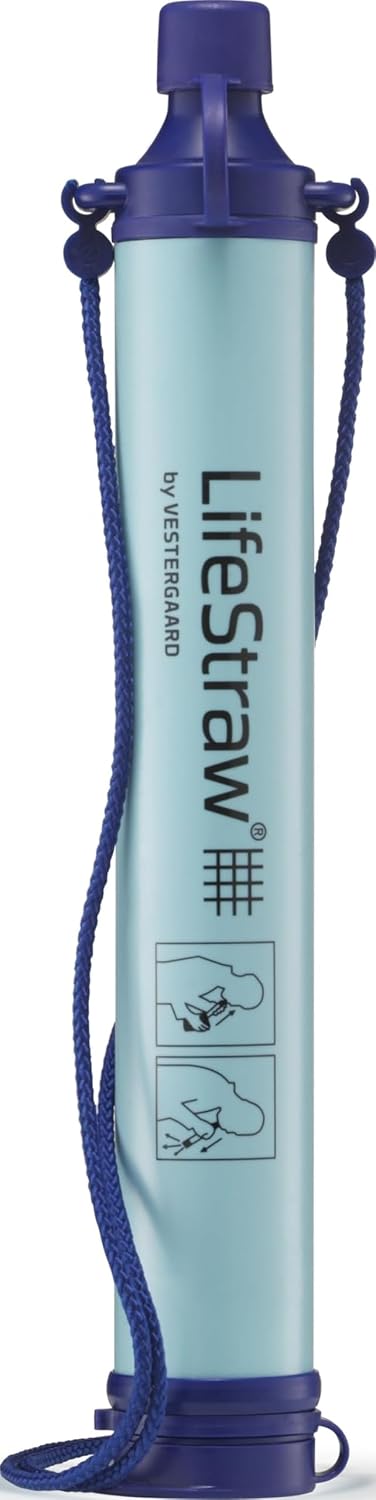
Your filtration toolkit should include at minimum: a Sawyer Squeeze or LifeStraw for individual-use portability, a Berkey countertop gravity filter for home-base operations, and a supply of water purification tablets as a redundant backup. These three tiers cost under $300 combined and represent the difference between a manageable crisis and a catastrophic one.
Advanced Level — What Serious Preppers Do Differently
The preppers who sleep soundly at night are not the ones with the most stored water. They are the ones who have built renewable water systems that do not depend on their stockpile holding out. That is the real endgame.
Rainwater harvesting is legal in most states and can yield significant volume during the right seasons. A 1,000 square foot roof with just one inch of rainfall produces over 600 gallons of collectible water. Install gutters that feed into food-grade collection tanks, then run that water through a quality filtration and purification system before use. This is not complicated. It is basic homesteading infrastructure that pays dividends in every long-term scenario.
Well systems — either hand-pump or solar-powered — are the gold standard for off-grid water independence. If you own property, a drilled well with a Simple Pump or Bison Pump hand-pump backup means grid failure never threatens your water supply. This is a significant investment, but it is arguably the highest-ROI infrastructure project a prepper can undertake.
Serious preppers also conduct regular water audits. They test stored water with basic test strips quarterly, inspect containers for integrity, verify their filtration media is within service life, and physically locate their nearest natural water sources with GPS coordinates recorded. Knowledge, systems, and hardware working together — that is the advanced tier.

Your Action Plan — What to Do in the Next 30 Days
Stop reading and start executing. Here is your 30-day water security sprint:
- Days 1–3: Calculate your household's true daily water requirement using the variables above. Write the number down. That number is your target.
- Days 4–7: Purchase and fill two 55-gallon barrels with treated tap water. You now have a baseline. Label them with fill dates.
- Days 8–14: Acquire a Berkey filter or equivalent gravity-fed system and a case of water purification tablets. Add a Sawyer Squeeze or similar portable filter for each go-bag in the household.
- Days 15–21: Identify your nearest natural water sources within 2 miles of your home. Walk them. Know them. Map them. This costs nothing and could save everything.
- Days 22–28: Research rainwater harvesting regulations in your state. Price out a collection system or a hand-pump well option. Begin the planning phase for your long-term renewable water source.
- Days 29–30: Conduct a full audit of everything you now have in place. Gaps identified during this audit become your next 30-day mission.
This is not overwhelming. This is a sequence. Follow the sequence. Every action builds on the last, and 30 days from now your family's water security will be unrecognizable compared to where you started today.
The Bottom Line
Self-reliance is not a hobby. It is a responsibility — the oldest and most fundamental responsibility a person carries for their family. Water is the foundation of everything. You cannot eat, you cannot administer first aid, you cannot maintain the hygiene that keeps a survival situation from becoming a public health catastrophe without it. Build your water system now, while the taps still run and the stores are still open. Because the moment a real crisis hits, the window to prepare slams shut — and the only thing that will matter is what you already had in place. Be the person who built that foundation. Your family is counting on you to be exactly that person.
🛒 Essential Survival Gear
As an Amazon Associate I earn from qualifying purchases.