Water Storage for Long-Term Survival: Exactly How Much You Need and How to Do It Right

The Number That Could Kill You
Most preppers have a stockpile of food, a weapons cache, and a bug-out bag ready to go. Ask them how much water they have stored and you'll get a vague answer. That vagueness will get you killed. Water is not optional. It is not something you figure out later. The human body begins to break down within 24 to 48 hours without it — cognitive function drops, decision-making deteriorates, and physical capacity crumbles. In a grid-down scenario, when municipal water stops flowing, you have hours — not days — to act before dehydration starts working against you. If you haven't done the math on your water storage and locked in a real system, this article is for you. Read it. Then act on it this weekend.
Breaking Down the Math: What Your Body Actually Needs
The rule you've probably heard is one gallon per person per day. That number comes from FEMA and emergency management guidelines, and it is a bare minimum baseline — not a comfortable target. Here's what that gallon actually covers:
- Drinking: Approximately half a gallon (64 oz) for basic hydration in mild conditions
- Sanitation and hygiene: The remaining half gallon for handwashing, wound cleaning, and basic personal hygiene
That's survival mode. That's not cooking a meal, not cleaning dishes, not bathing, and not accounting for any physical labor beyond sitting still in a cool room. Real life in a grid-down situation looks nothing like that. Here's how water demand actually scales:
- Mild climate, sedentary activity: 1 gallon per person per day
- Moderate activity or warm climate: 2 to 3 gallons per person per day
- Heavy labor, hot climate, or sick individuals: 4 to 5 gallons per person per day
- Nursing mothers or young children: Add 0.5 to 1 extra gallon per day
- Small livestock or pets: A medium-sized dog needs roughly half a gallon per day; goats and chickens need 1 to 2 gallons combined per day minimum
Run that math for your household. A family of four doing moderate activity — hauling wood, securing a perimeter, cooking on a camp stove — needs roughly 8 to 12 gallons per day. Over 30 days, that's 240 to 360 gallons. Over 90 days — the gold standard for serious preppers — you're looking at 720 to 1,080 gallons for one family. Let that number sink in. Now let's talk about how to actually store it.

Step-by-Step: Building a Real Water Storage System
A real water storage system has three tiers: immediate access reserves, bulk long-term storage, and renewable sourcing capability. You need all three. One without the others is a plan with holes in it.
Tier 1: Immediate Access — Your First 72 Hours
This is your quick-grab supply. It covers the first 72 hours while you assess the situation and decide whether to shelter in place or bug out.
- Pre-filled water jugs: Use HDPE plastic containers rated for food and water storage. Look for the recycling symbol with the number 2 inside. Avoid thin, single-use water bottles for long-term storage — they're fine for a bug-out bag but degrade quickly. Store a minimum of 15 to 20 gallons per person in this tier.
- 7-gallon Aqua-Tainer jugs: These are a solid choice for Tier 1. Stackable, durable, and widely available at Walmart or sporting goods stores for around $15 each. Fill with tap water, add 8 drops of unscented liquid chlorine bleach (6% sodium hypochlorite) per gallon, seal tight, label with the date, and store in a cool, dark location.
- Water rotation schedule: Tap water stored properly in sealed containers lasts 6 to 12 months. Set a calendar reminder every 6 months to rotate and refill. This is non-negotiable. Stale, contaminated water stored in degrading containers is a liability, not an asset.

Tier 2: Bulk Long-Term Storage — Your 30 to 90 Day Reserve
This is where most preppers drop the ball because the containers are expensive and the logistics are inconvenient. Do it anyway.
- 55-gallon food-grade barrels: The backbone of any serious water storage system. Blue polyethylene barrels are the industry standard. Each barrel runs $25 to $75 depending on whether you buy new or reconditioned. For a family of four targeting a 90-day supply at a conservative 2 gallons per person per day, you need roughly 720 gallons — that's 13 filled barrels. Start with 4 to 6 and build from there. A water barrel bung wrench and a hand-siphon pump are required accessories.
- WaterBOB or emergency bathtub bladders: These are 100-gallon polyethylene bladders that fill directly in your bathtub and can be stored flat until needed. At around $30 each, they're an affordable supplement. If you get advance warning of a disaster, fill every tub in your home immediately. Municipal water pressure drops fast once emergency conditions are declared.
- Intermediate Bulk Containers (IBCs): 275 or 330-gallon totes that are commonly used in agriculture and industry. Reconditioned food-grade IBCs run $150 to $300 each. One IBC tote gets you nearly 5 months of drinking water for one person at 2 gallons per day. Two totes in a sheltered outdoor area can cover a family of four for 60 to 90 days on drinking water alone. These are the highest value per gallon storage option available.
- Treatment for stored bulk water: For 55-gallon barrels, add approximately 1/3 teaspoon (roughly 16 drops) of unscented liquid chlorine bleach per gallon when filling with treated municipal water. For IBC totes, scale up accordingly. Use a water testing kit — available at any hardware store for under $15 — to verify chlorine levels stay between 1 and 4 parts per million.
Tier 3: Renewable Sourcing — The System That Never Runs Out
Storage alone is a temporary solution. For true long-term survival, you need the ability to collect, filter, and purify water continuously.
- Rainwater collection: A 1,000-square-foot roof surface can collect approximately 600 gallons of water from a single inch of rainfall. Install gutters if you don't have them, use food-grade collection barrels at every downspout, and run water through a pre-filter (a mesh screen to catch debris) before storage. In many states this is legal and encouraged — check your local regulations.
- Gravity filter systems: A Berkey Water Filter (Big Berkey or Royal Berkey) is the gold standard for homestead water purification. It handles sediment, bacteria, viruses, heavy metals, and most chemical contaminants. The Black Berkey elements have a rated lifespan of 3,000 gallons each, and a system comes with two elements. This is a one-time investment of $300 to $400 that will outlast most disasters.
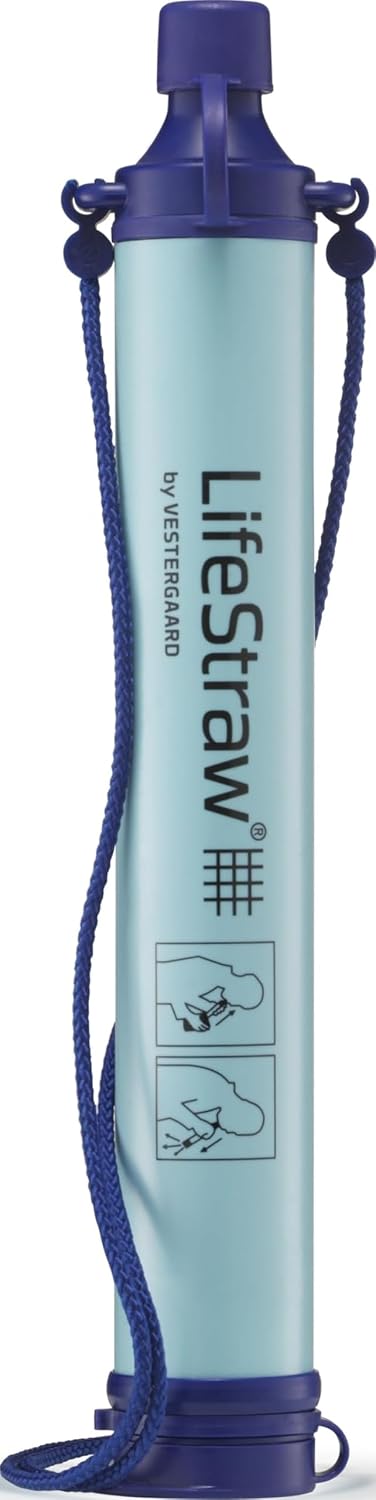
- Backup purification: Have at minimum one backup method — iodine tablets, LifeStraw filters, or a portable water purifier like the Sawyer Squeeze. These are failsafes, not primary systems. Iodine tablets treat 1 quart per tablet; store 300 to 500 tablets per person as a minimum backup supply.
- Well water: If you have a well, invest in a hand pump or solar-powered pump that functions without grid power. The Bison Pump and Simple Pump are well-regarded brands built for exactly this scenario. A well is a force multiplier for your entire water plan.
Common Mistakes That Will Compromise Your Water Supply
Even experienced preppers make these errors. Identify them now and fix them before a crisis forces you to.
- Storing water directly on concrete floors: Concrete can leach chemicals into plastic containers over time, especially in temperature-fluctuating environments. Place barrels and containers on wooden pallets or rubber matting. This is a $20 fix that protects hundreds of gallons of water.
- Ignoring temperature extremes: Water stored in a garage or shed in a climate with hot summers or freezing winters is a problem. Heat accelerates chemical leaching from plastic and promotes bacterial growth. Freezing causes containers to crack. Store in a climate-controlled basement or interior space whenever possible. If outdoor storage is unavoidable, insulate containers and account for expansion when containers approach freezing temperatures.
- Relying on a single container type: Putting all 500 gallons in one IBC tote means one contamination event or structural failure wipes out your entire reserve. Distribute your supply across multiple container types and sizes.
- No rotation discipline: Water stored without a dated label and a rotation schedule is water you cannot trust. Label every container with the fill date and the next scheduled rotation date. Use a permanent marker. Make it a habit.
- Forgetting water for non-drinking purposes: Wound care, disinfecting surfaces, cooking, and sanitation all consume water. People consistently underestimate this category. Budget separately for sanitation water — even gray-water collection systems (washing water reused for flushing) can offset this demand significantly.
- Not testing stored water before you need it: You don't want to discover your water has gone bad during a crisis. Test stored water with a basic home water testing kit every 6 months. It takes 5 minutes and gives you confidence in your supply.
- Skipping the renewable tier entirely: A static storage plan with no replenishment capability is a countdown timer. Once your stored supply is exhausted, you have nothing. The rainwater collection setup and filtration system are what turn a temporary survival situation into a sustainable one.
What to Do This Weekend
Pick one action and execute it. If you have zero water storage, go buy four 7-gallon Aqua-Tainer jugs, fill them with tap water, treat them with bleach, label them with today's date, and put them somewhere accessible. That's 28 gallons — a start. If you already have basic storage, this weekend you do the math for your household, identify the gap between what you have and what you need for 90 days, and order your next two 55-gallon barrels. If your storage is dialed in, audit your filtration tier — test your Berkey elements, check your iodine tablet count, and inspect every container for cracks or seal failures. Water is the one resource where there is no improvising when it runs out. The work happens now, before you need it. Get after it.
🛒 Essential Survival Gear
As an Amazon Associate I earn from qualifying purchases.