Water Filtration Methods Ranked by Reliability: What Actually Keeps You Alive

Why Most People Get This Wrong
Waterborne illness kills. The CDC estimates that contaminated water causes over 7 million illnesses in the United States every single year — and that's during normal times, with functioning infrastructure. When the grid goes down, that number explodes. Most preppers stock a few cases of bottled water and call it a plan. That's not a plan. That's a delay.
The single biggest mistake people make with water preparedness is confusing filtration with purification. These are not the same thing, and treating them like they are will get you killed. Here's the breakdown:
- Filtration removes physical particles, sediment, protozoa, and some bacteria by passing water through a physical medium. It does NOT reliably remove viruses.
- Purification kills or neutralizes biological threats including viruses — through chemical treatment, UV light, or boiling.
- Most consumer filters on the market do not purify. They filter. Read the label. Know the difference before your life depends on it.
The second mistake is single-point dependency. One method. One piece of gear. One failure point. In a real emergency, gear breaks, chemicals run out, and batteries die. Redundancy is not paranoia — it's basic operational logic. If you only have one water solution, you have no water solution.
The third mistake is ignoring source water quality. Trying to filter agricultural runoff or heavy-metal-contaminated water with a basic trail filter is wishful thinking. Know your source. Match your method to the threat. Different contamination profiles require different solutions.
The Fundamentals: Water Filtration Methods Ranked by Reliability
Here are the primary water treatment methods ranked from most to least reliable in a grid-down, sustained emergency scenario. Reliability here accounts for consistency, coverage of threats, longevity, and failure risk.
- Boiling — Rank #1No gear required beyond fire and a container. Boiling water at a rolling boil for 1 full minute (3 minutes at elevations above 6,500 feet) kills 100% of biological pathogens — bacteria, protozoa, and viruses. This is the gold standard when fuel is available. Limitations: it doesn't remove chemical contaminants, heavy metals, or sediment. Always pre-filter visibly dirty water through cloth before boiling. Fuel dependency is the primary weakness in a long-term scenario.
- Gravity-Fed Ceramic or Hollow Fiber Filters — Rank #2Units like the Berkey filtration system with Black Berkey elements or the Doulton ceramic filter gravity systems are workhorses. No power required. Flow rate is slow but consistent. The Black Berkey elements filter down to 0.2 microns, removing bacteria, protozoa, sediment, chlorine, heavy metals, and some pharmaceuticals. They do not eliminate viruses reliably in all conditions. Filter lifespan is approximately 3,000 gallons per element pair before replacement is needed. These are the best long-term stationary solution for a homestead or bug-in scenario. Stock at minimum two sets of replacement elements.
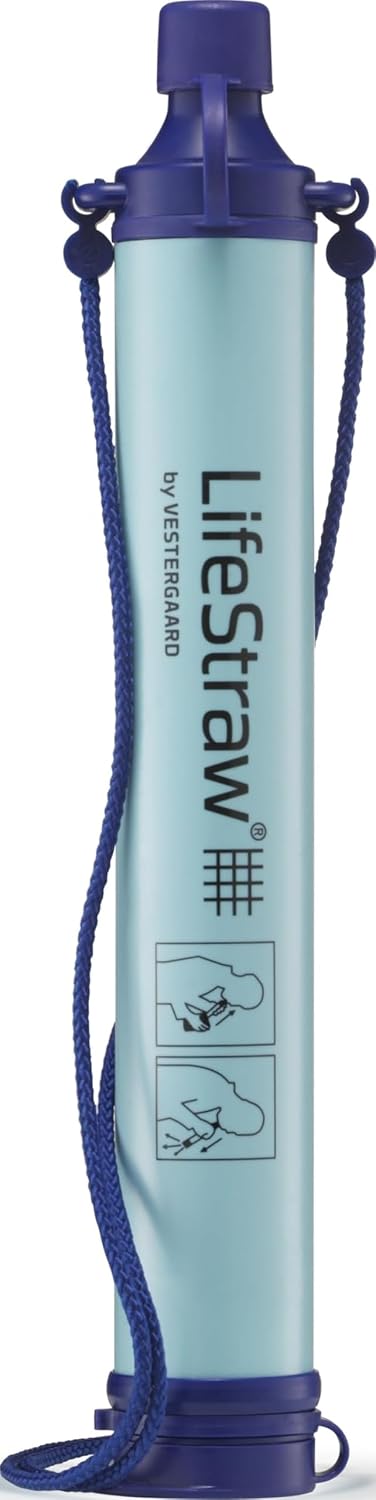
- Squeeze and Inline Hollow Fiber Filters — Rank #3The Sawyer Squeeze and Sawyer Mini are field-proven. The Squeeze filters to 0.1 microns — removing nearly all bacteria and protozoa with a rated lifespan of 100,000 gallons. Lightweight, affordable (under $40), and backflushable with a syringe. Limitation: does not remove viruses, chemicals, or heavy metals. The Katadyn BeFree is another strong option at 0.1 microns with a higher flow rate. These belong in every bug-out bag and vehicle kit. Carry two — they're cheap insurance.
- Chemical Treatment — Rank #4Iodine tablets, chlorine dioxide tablets (Aquatabs, Potable Aqua), and liquid bleach are lightweight and effective against bacteria, protozoa, and — critically — viruses. Chlorine dioxide is superior to iodine and standard chlorine because it's effective against Cryptosporidium even in cold water. Dosing: 2 drops of unscented 6–8.25% sodium hypochlorite (household bleach) per liter of clear water, or follow tablet packaging. Wait time is 30 minutes for clear water, longer for cold or turbid water. Shelf life is the limitation — bleach degrades significantly after 6–12 months. Chlorine dioxide tablets have a shelf life of approximately 4 years sealed. Stock 200+ tablets per person as backup to mechanical filtration.
- UV Purification — Rank #5The SteriPen Adventurer Opti and similar UV devices destroy pathogens at the DNA level — effective against bacteria, protozoa, and viruses in 90 seconds per liter. Highly effective in clear water conditions. Battery dependency is the critical weakness. Always carry spare batteries or a solar-charging solution. UV does not remove chemical contaminants, heavy metals, or sediment — pre-filter turbid water first or the UV light cannot penetrate effectively. Treat this as a complement to mechanical filtration, not a standalone solution.
- Reverse Osmosis — Rank #6RO systems push water through a semi-permeable membrane filtering down to 0.0001 microns — removing nearly everything including viruses, heavy metals, fluoride, and most chemicals. This is the most thorough filtration method available for home use. The weakness: it requires pressure (typically 40–80 PSI), produces significant wastewater (3–5 gallons wasted per gallon filtered), and is not portable. A countertop or under-sink RO unit is a serious upgrade for any homestead. In a grid-down scenario, gravity-fed RO setups exist but flow is extremely slow. Best used as a primary system pre-disaster, with stored filtered water ready when pressure is unavailable.
- Improvised Field Filtration — Rank #7When all else fails, you build what you have. A DIY filtration column using layers of grass or cloth, crushed charcoal (not briquettes — natural wood charcoal), coarse sand, and fine sand layered in a container with drainage holes can significantly reduce turbidity, sediment, and some contaminants. This is a pre-treatment method, not a standalone purification solution. Always follow with boiling or chemical treatment. This skill could save your life when you have nothing else. Practice building one before you need it.

What You Need: The Water Preparedness Checklist
Build your water system in layers. No single item covers every scenario. Here's the minimum viable setup for a household of two adults:
- Stored water: Minimum 1 gallon per person per day for 30 days = 60 gallons stored. Use food-grade 5-gallon or 55-gallon barrels treated with water preserver concentrate (extends shelf life to 5 years).
- Primary home filter: Berkey Big Berkey (2.25 gallon capacity) or similar gravity ceramic system with 2 sets of spare elements. Or a countertop RO system with spare membrane and filter set.
- Bug-out portable filter: 2x Sawyer Squeeze or Katadyn BeFree per person, with backflush syringes. Store in your bag and vehicle.
- Chemical backup: 200 chlorine dioxide tablets (Aquatabs or Potable Aqua Plus) per person. 2 bottles of unscented liquid bleach rotated annually.
- UV device: 1x SteriPen with lithium batteries and 2 sets of spare batteries, or a solar charger-compatible model.
- Boiling vessels: Stainless steel pot minimum 2-liter capacity. Never boil in aluminum for long-term use. Include a metal camp cup for individual use.
- Pre-filter materials: Coffee filters, bandanas, and a fine-mesh cloth for sediment removal before any filtration or purification method.
- Testing strips: Basic water quality test strips to assess contamination type. Won't tell you everything but gives you actionable intel.
Advanced Tactics: What Separates the Truly Prepared
You've got the basics. Now let's talk about what the serious preppers do that most people overlook.
- Multi-stage treatment as standard practice. Never rely on one method alone. The professional standard is: pre-filter (cloth/coffee filter) → mechanical filter (Sawyer/Berkey) → chemical or UV treatment. This layered approach covers nearly every biological threat regardless of source. Build this habit now so it's automatic under stress.
- Map your water sources before you need them. Know every natural water source within 5 miles of your home and bug-out route. Streams, springs, ponds, irrigation canals. Assess contamination risks for each — agricultural runoff, industrial proximity, high-traffic areas. Different sources require different treatment protocols. A pristine mountain spring needs less intervention than a suburban retention pond.
- Rainwater harvesting with proper setup. A 1,000 square foot roof collects approximately 600 gallons per inch of rainfall. A basic food-grade IBC tote (275–330 gallons) and a first-flush diverter system gives you ongoing water collection that requires minimal treatment. Screen all collection points to prevent insect breeding. Store in dark containers to prevent algae. Always filter and treat before drinking.
- Water container rotation discipline. Stored water goes stale and containers degrade. Rotate stored water every 6–12 months if untreated, every 5 years if treated with preserver. Label every container with fill date. Check container integrity for cracks, odors, and UV degradation annually.
- Know your heavy metal and chemical threats. Mechanical filters and boiling do not remove lead, arsenic, nitrates, or industrial chemicals. If you're near a mining area, industrial facility, or rely on well water, get your source water tested annually through a state-certified lab. If chemical contamination is a risk, your primary solution is RO or activated carbon block filters rated for specific contaminants. Know what you're dealing with.
- Cold weather filter storage. Hollow fiber filters are permanently damaged if they freeze while wet. If temperatures drop below freezing, store your Sawyer inside your sleeping bag or inner garment layer at night. A ruined filter in a winter emergency is a death sentence. Mark your filters with a red tag reminding yourself — Do Not Freeze.

The Bottom Line: Action Steps to Take This Week
Reading is not preparation. Here's what you do in the next seven days:
- Day 1: Audit your current water supply. How many gallons do you have stored? How long does that actually last at 1 gallon per person per day? Write the number down. If it's less than 30 days, identify what storage containers you need and order them today.
- Day 2: Order a Sawyer Squeeze filter and a pack of 50 chlorine dioxide tablets if you don't already own them. This is under $50 and covers your immediate portable and chemical backup needs.
- Day 3: Practice the boiling method. Collect water from an outdoor source, pre-filter through a bandana, boil for 1 minute, let cool, drink. Do the full process. Know how long it takes. Know how much fuel you burn.
- Day 4: Identify your local water sources on a map. Walk or drive to at least one. Assess contamination risks. Note access difficulty. This is reconnaissance. Do it now, not when you're desperate.
- Day 5: Review your chemical backup. Check bleach expiration dates. Rotate if older than 12 months. Ensure you have clear written dosing instructions stored with your supplies — not just in your head.
- Day 6: Build a DIY filtration column with materials you have on hand. Grass, charcoal from your fire pit, sand, and a plastic bottle. Practice the skill. Understand its limitations. This takes 30 minutes and could be the skill that saves you.
- Day 7: Write a one-page water emergency plan. Source locations, treatment protocols, storage quantities, and a restock trigger point. Laminate it. Store it with your supplies. Brief every member of your household on it.
Water is not a secondary concern. It is the primary concern. You can survive 3 weeks without food. You get 3 days without water — and that's under ideal conditions. Your entire preparedness posture collapses without a layered, tested, redundant water system. This week, close that gap.
🛒 Essential Survival Gear
As an Amazon Associate I earn from qualifying purchases.