Urban Shelter in a Crisis: How to Find, Evaluate, and Secure Refuge When the City Turns Against You

Why Most People Get This Wrong
When a city crisis hits — earthquake, grid collapse, civil unrest, catastrophic flooding — the majority of people do one of two things: they stay put in a compromised structure hoping someone rescues them, or they bolt into the street with no plan and get swallowed by chaos. Both are losing moves. Urban shelter selection is one of the most misunderstood and under-trained skills in the preparedness community, and that gap kills people.
Here are the most common and most dangerous mistakes preppers and civilians alike make when it comes to urban shelter in a crisis:
- Defaulting to home without assessing structural integrity. Your apartment or house can become a death trap after seismic activity, fire, or flooding. Staying in a compromised structure because it's familiar is comfort-seeking behavior, not survival behavior.
- Heading to official shelters immediately. Government-run emergency shelters are frequently overcrowded, poorly supplied, and in some crisis scenarios, actively dangerous. They should be your last resort, not your first move.
- Choosing visibility over security. Most people gravitate toward open, well-lit spaces when stressed. In a real urban crisis, visibility means exposure. You want defendable, not discoverable.
- Ignoring vertical positioning. Ground-floor spaces flood, get breached first during civil unrest, and offer zero observation advantage. Middle floors in solid structures are almost always superior.
- No pre-scouting done before the crisis. If you're identifying shelter options for the first time when things are already bad, you are already behind. Every minute spent searching under pressure is a minute of exposure.
- Underestimating the shelter duration. Most people plan for one or two nights. Real crises can mean weeks of displacement. Your shelter solution needs to scale with time, not just get you through one bad night.
The Fundamentals: How to Find and Secure Urban Shelter Step by Step
Urban shelter isn't complicated — but it requires a clear decision framework executed without hesitation. Work through these steps in order.
- Assess your current location first. Before you move anywhere, stop and evaluate. Is your current structure structurally sound? Is it on fire, flooding, or in a blast/impact zone? Can you defend it? Can you exit it safely? If the answer to the first two questions is yes and you can answer the last two satisfactorily, staying put — what preppers call sheltering in place — may be your best immediate option.
- Identify your threat environment. Urban crises are not monolithic. A grid-down blackout requires different shelter logic than a riot situation or a post-earthquake rescue scenario. Know what you're sheltering from: human threats, environmental exposure, chemical/biological hazard, or structural collapse risk. Your shelter must address the primary threat first.
- Apply the BLISS evaluation framework. Borrowed from military field craft and adapted for urban environments: Blend in (don't stand out), Low silhouette (avoid rooftops or exposed positions), Irregular shape (avoid perfectly square, obvious structures that read as occupied), Secluded (minimally trafficked), Small signature (no visible fire, light, noise, or smell leaking out). Every candidate shelter should be mentally scored against these criteria.
- Target building types in this priority order:
- Reinforced concrete structures — parking garages (upper interior levels), commercial office buildings, municipal buildings
- Brick or masonry construction — pre-1970s commercial buildings often have exceptional wall mass
- Large retail spaces with rear stockrooms — defensible, stocked, multiple egress points
- Industrial or warehouse spaces — large footprint, minimal windows, hard to breach casually
- Hotels — designed for extended human occupation, often have backup power, laundry, food storage
- Conduct a rapid structural assessment before entry. Look for: diagonal cracks in exterior walls (structural failure indicator), doors or windows that no longer sit square in their frames (foundation shift), visible lean or tilt, standing water at the foundation. Any of these are red flags. Don't enter a questionable structure.
- Clear the space before you commit. Never assume a structure is empty. Move through it systematically — room by room, checking closets, bathrooms, and blind corners. If you encounter other occupants, assess threat level immediately. Not everyone sheltering is hostile, but you never assume.
- Establish layered security at your chosen location. This is non-negotiable:
- Barricade your primary entry point — wedge chairs under door handles, use heavy furniture, or use a door bar security device
- Identify and secure or monitor all secondary access points — windows, skylights, adjoining rooms with shared walls
- Set up a simple perimeter alert system — trip lines with cans, motion-activated battery alarms, or even simple string bells
- Establish a rally point and an escape route before you get comfortable
- Control your signature from day one. No visible light after dark — blackout curtains or heavy tarps over windows. No open cooking smells if avoidable. Noise discipline when threats are present. Your survival depends on not advertising your presence to people who would take what you have.

What You Need: The Urban Shelter Kit
If you're bugging in to an urban structure — your own home or an improvised location — you need specific gear that addresses the unique demands of city-based shelter. This isn't your backcountry kit. This is purpose-built for hard floors, no utilities, and human threat environments.
Core Shelter Supplies:
- Heavy-duty contractor trash bags (3 mil, 55-gallon) — minimum 20 bags. Blackout, moisture barrier, waste management, temporary roof patching
- Painter's plastic sheeting (6 mil, at least 10x25 ft roll) — window covering, room partitioning, ground moisture barrier
- Duct tape — 4 rolls minimum, no exceptions
- Emergency mylar blankets — 4-person minimum supply. These aren't just for warmth; they reflect infrared and can defeat basic thermal observation
- Sleeping pads (closed-cell foam, 3/4 inch minimum thickness) — concrete and hard floors destroy sleep quality and body heat within hours
- Compact sleeping bag rated to 20°F — even in warm climates, urban structures lose heat rapidly without HVAC
Security and Access Supplies:
- Portable door bar alarm (models from Master Lock or similar) — fits most standard door widths, combines physical barrier with 120dB alert
- Window/door alarm sensors (battery-powered, adhesive-mount) — 6-pack minimum, covers all entry points
- Paracord (550 lb rated) — 100 ft minimum. Trip lines, gear lashing, emergency lowering if needed
- Folding pry bar — entry into locked spaces you have legitimate need to access, plus improvised door brace
- Headlamps with red light mode — 2 per person, red light does not compromise night vision and is harder to spot at distance. Keep extra AA or AAA batteries (12-pack minimum per lamp)
Essential Support Supplies:
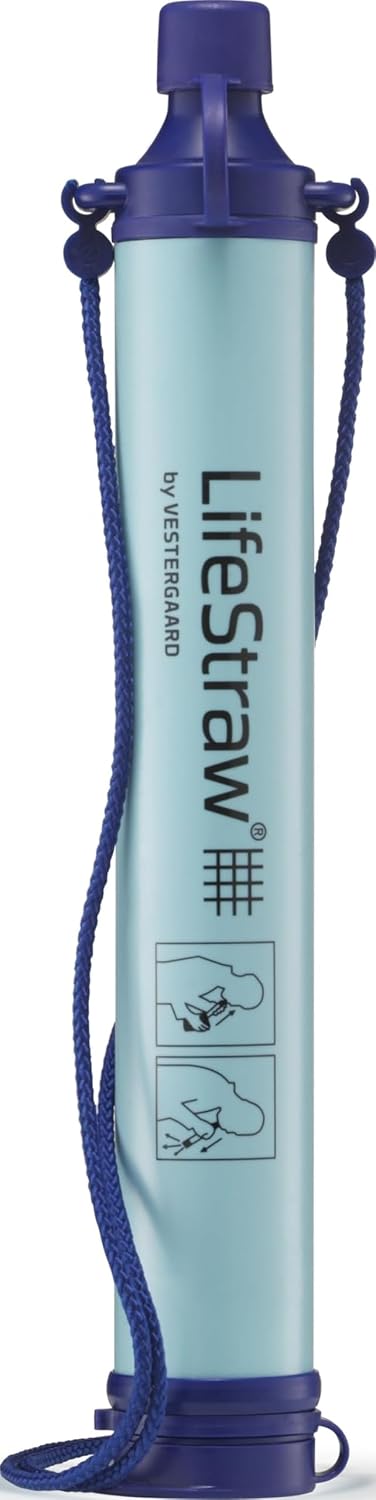
- Water — minimum 1 gallon per person per day. For a 72-hour kit: 3 gallons per person. For a 2-week urban shelter scenario: water filtration becomes critical (LifeStraw or Sawyer Squeeze at minimum)
- High-calorie, no-cook food — bars, jerky, nuts, hard cheeses. At least 2,000 calories per person per day
- Basic first aid kit rated for trauma — tourniquet (CAT or SOFTT-W), Israeli bandage, hemostatic gauze, chest seal, SAM splints
- N95 masks — 20 minimum. Post-disaster urban air is genuinely toxic: concrete dust, ash, chemical particulates
- Work gloves (leather palm, medium weight) — broken glass and debris are everywhere in a crisis environment
Advanced Tactics: What Separates the Prepared from the Merely Ready
Having gear is the entry point. Thinking operationally is what keeps you alive past day three.
- Pre-crisis reconnaissance is your force multiplier. Walk or drive your likely crisis zones now, before anything happens. Identify three to five candidate shelter locations within one mile of your home and your workplace. Note access points, structural type, water sources, and nearest threats (gas stations, liquor stores, pharmacies — all high-looting-risk in civil unrest). Write it down. Store it in your kit.
- Understand the population flow. In a city crisis, people move in predictable patterns — toward perceived safety, food, water, and communication. Avoid those flow lines. Move perpendicular to the crowd when possible. Your shelter should not be on a primary evacuation or movement corridor.
- Establish a 72-hour rotate policy. Never assume one shelter is your permanent solution. Conditions change. Threats find you. Have a minimum of two backup shelter locations identified before you settle in, and mentally establish triggers that tell you it's time to move: sustained hostile activity within 200 yards, water supply depletion, structural compromise, or compromise of your location's secrecy.
- Use deliberate deception. Make your shelter look unoccupied from the outside. Leave debris in front of the primary entrance. Approach and exit via secondary routes. Don't establish a visible beaten path to your door.
- Manage shelter companions deliberately. A group of more than six in an urban shelter becomes difficult to manage, supply, and keep quiet. Vet anyone who joins your shelter group with the same seriousness you'd apply to a business partner. They bring capability or they bring problems — often both.
- Think about sanitation from hour one. Failed sanitation has ended more survival situations than violence has. Establish a dedicated waste area away from your living and food storage space. 5-gallon bucket with tight-fitting lid, heavy-duty bags, and kitty litter or sawdust for odor and biological containment. This is not optional.
- Communications awareness. A hand-crank or battery-powered NOAA weather radio (Midland ER310 or similar) keeps you informed of official emergency broadcasts without requiring cell service. Situational awareness is a force multiplier — knowing that a certain area is being evacuated or that utilities are being restored changes your entire calculus.

The Bottom Line: Action Steps to Take This Week
Reading this doesn't prepare you. Doing these things does.
- Scout your area this weekend. Identify three viable alternative shelter locations within one mile of your home. Write them down with specific notes on access, structure type, and threat exposure.
- Build a dedicated urban shelter kit. Using the supply list above, assemble a kit that lives in a single bag or tote. Keep it where you can grab it in under 90 seconds.
- Purchase and install one door bar alarm in your home this week. Practice using it in low light. This is your first line of security whether you're sheltering in your own home or an improvised location.
- Conduct a structural walk-through of your home. Know which rooms are strongest, which windows are most exposed, and where your secondary exit points are. Do this sober, during daylight, with a critical eye.
- Run one 24-hour blackout drill. No utilities, no grid power, minimal movement, noise discipline. You will immediately discover the gaps in your shelter plan that theory never reveals.
- Stock water now. Fill your bathtub using a WaterBOB insert (holds up to 100 gallons) and add a Sawyer Squeeze or comparable filter to your kit. Water is always the first constraint in an urban shelter scenario.
- Document your shelter plan. Write it in plain language and give a copy to every member of your household or survival group. Plans that live only in your head die with your ability to communicate them under stress.
🛒 Essential Survival Gear
As an Amazon Associate I earn from qualifying purchases.