Urban Shelter in a Crisis: How to Find, Evaluate, and Secure a Safe Position When the City Goes Dark
Why Most People Get This Wrong
When a city crisis hits — earthquake, grid failure, civil unrest, or a cascading infrastructure collapse — the average person's instinct is to either stay put and hope for the best or immediately flee without a plan. Both responses are wrong, and both can get you killed.
Here's where the fatal errors stack up:
- Defaulting to home without evaluating its viability. Your apartment or house may be structurally compromised, in a high-risk flood zone, surrounded by hostile crowds, or sitting directly on top of a gas leak. Home is not automatically safe. It's just familiar.
- Targeting obvious locations. Community centers, churches, schools, and government buildings are the first places panicked masses flood. High population density means high competition for resources, higher disease transmission risk, and unpredictable human behavior under stress. Avoid these in the first 48–72 hours unless you have no other option.
- Ignoring the vertical dimension. Most people think horizontally — they move block to block. In urban environments, going vertical (upper floors of stable structures) or underground (parking garages, transit tunnels) can offer dramatically better protection depending on the threat.
- Failing to assess before committing. Walking into a building without clearing it is one of the most dangerous things you can do. Structural instability, carbon monoxide buildup, existing occupants, and compromised utilities can turn a shelter into a death trap.
- Treating shelter as a single decision. Urban shelter is a dynamic problem. A location that's safe on day one may be compromised by day three due to fire spread, flooding, power loss, or shifting crowd dynamics. You need primary, secondary, and tertiary shelter options pre-identified.
The bottom line: most people treat urban shelter as an afterthought. Prepared people treat it as a tactical problem with a systematic solution.
The Fundamentals: How to Find and Secure Urban Shelter Step by Step
Urban shelter selection follows a hierarchy of priorities: safety, security, sustainability. Work through each step in order.
Step 1: Threat Assessment Before You Move
Before you go anywhere, spend 5–10 minutes gathering information. What is the actual threat? A chemical spill demands different shelter logic than civil unrest or a structural earthquake. Know your threat before you pick your shelter type.
- Listen to battery-powered AM/FM or NOAA weather radio for official alerts
- Check wind direction — critical for chemical, smoke, or airborne hazards (move crosswind or upwind)
- Look for secondary threats: fire spread, flooding from broken mains, downed power lines
Step 2: Evaluate Your Current Position First
Before abandoning where you are, run a rapid structural and situational assessment:
- Check for visible cracks in load-bearing walls, ceilings, or foundations — hairline cracks are normal; wide diagonal cracks are not
- Smell for gas leaks — if you detect any sulfur/rotten egg odor, exit immediately and do not use any electrical switches
- Check for water intrusion at basement level if flooding is a risk
- Assess your exterior exposure — are you ground floor on a main street during unrest? That's a liability
Step 3: Select Your Shelter Category
Urban shelter options fall into three categories:
- Hardened structures: Concrete or masonry buildings, parking garages (avoid top floors), basements of commercial buildings. Best for ballistic protection and weather. Worst for flooding risk.
- Elevated positions: Upper floors (4th–8th floor range is ideal — high enough for visibility and crowd deterrence, low enough to evacuate on foot). Best for security and situational awareness. Worst for fire or structural failure.
- Concealed positions: Warehouses, industrial buildings, back-street commercial units. Best for staying off the radar. Require the most security work.
Step 4: Clear and Secure the Location
Never assume an empty building is safe or unoccupied. Before you settle:
- Approach from a concealed angle and observe for 5–10 minutes before entry
- Announce yourself loudly before entering — you do not want a surprise confrontation
- Move through methodically, checking all rooms, closets, stairwells, and roof access points
- Identify all entry and exit points — you need at least two viable exits at all times
- Once clear, secure your primary entry: door wedges, paracord trip lines, improvised barricades using furniture or pallet racking
- Establish a watch schedule if you have a group — minimum 2-hour rotations
Step 5: Establish Your Perimeter
- Use noise-makers on secondary entry points: empty cans with gravel, bells, anything that creates an alert
- Block line-of-sight into your position from the street — hang dark fabric, close blinds, position furniture to break sight lines
- Do not use lights visible from the exterior at night — light discipline is critical in a civil disorder scenario
- Establish a rally point 1–2 blocks away in case you need to evacuate quickly

What You Need: Urban Shelter Kit Checklist
Your urban shelter kit needs to be portable (72-hour bag minimum) and purpose-built. Here's what matters:
Structural and Security Tools
- Door wedge set — rubber wedges, 4–6 pack, for securing inward-opening doors
- 550 paracord — minimum 100 feet for trip lines, lashing barricades, rigging early warning systems
- Heavy-duty zip ties — 50–100 count, 8-inch minimum length
- Carabiner clips — 6–10 for rigging improvised systems
- Duct tape — 2 rolls, for sealing gaps in a chemical/smoke threat scenario
- Pry bar or Halligan tool — for forced entry into a viable shelter or for escape
Environmental Control
- Emergency Mylar blankets — 4–6 per person (retain 90% of body heat, can double as window blackout material)
- Sleeping bag rated to 20°F — one per person regardless of season; urban environments lose heat faster than expected without HVAC
- Tarp — 8x10 foot minimum — for improvised room partitioning, weather protection in a compromised structure
- N95 masks or P100 respirators — minimum 10 per person for smoke, dust, and airborne contaminants
- Plastic sheeting — 6 mil thickness, 10x10 foot rolls — for sealing windows and door gaps against airborne hazards
Light and Power
- Headlamp with red-light mode — 2 per person, extra AA or AAA batteries for 72+ hours
- Chemical glow sticks — 12-hour duration, 10–20 count (no fire risk, no electrical dependency)
- Small solar charger with 20,000mAh battery bank — for maintaining communication device charge
Communication and Navigation
- Handheld NOAA weather radio — battery or hand-crank
- Paper maps of your city and region — laminated or in a waterproof sleeve
- GMRS or FRS radios — 2-pack minimum for intra-group communication
Water and Sanitation
- Water — 1 gallon per person per day, 72-hour minimum supply (that's 3 gallons per person in your shelter kit)
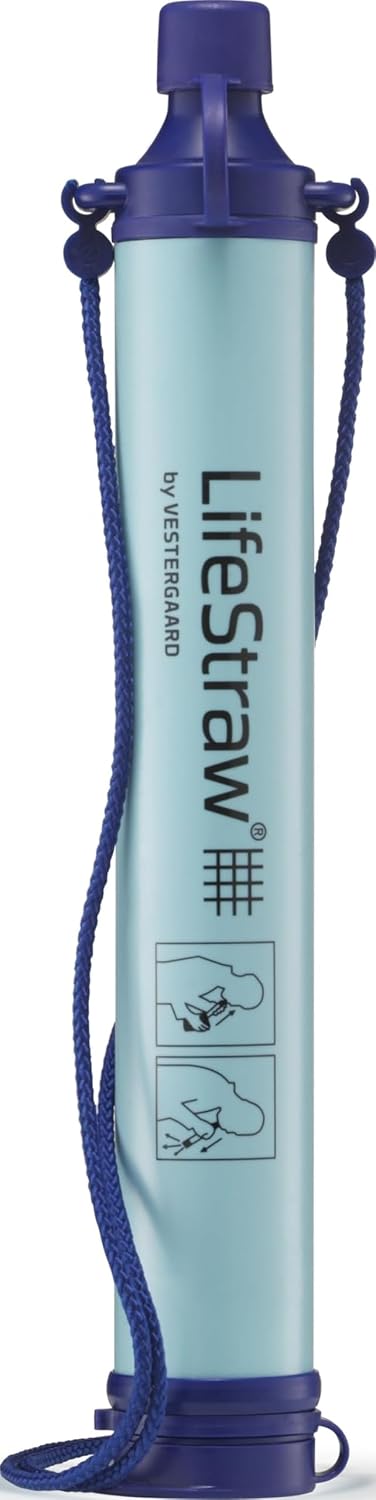
- Sawyer Squeeze or LifeStraw Mission filter — for sourcing water from urban water features, tanks, or standing water
- Sanitation kit — heavy-duty waste bags, kitty litter, portable toilet seat for bucket — human waste management in a compromised structure is a serious health issue within 24 hours
Advanced Tactics: What Separates the Prepared from the Pretenders
Getting the basics right keeps you alive. These advanced tactics keep you ahead.
Pre-Map Your Urban Area Now, Not During the Crisis
Open Google Maps or a city GIS viewer today and identify the following within a 2-mile radius of your home and workplace:
- Concrete parking structures (3+ levels, multiple exits)
- Large-footprint commercial or industrial buildings set back from main streets
- High-rise buildings with ground-floor access — note which have 24/7 security (avoid) and which are office-only (better)
- Underground transit stations and their emergency exits — know where they surface
Create a written shelter plan with at minimum three locations, rated primary, secondary, and tertiary. Include route options that avoid major arterials.
Understand Human Crowd Dynamics
People in crisis move predictably. They move toward major roads, toward government buildings, toward grocery stores and pharmacies. They avoid industrial areas, they avoid going vertical, and they avoid the unfamiliar. Your ideal shelter is in the places the crowd is not going. Study the likely crowd flow from your home and work location and deliberately position your shelters against that grain.
Noise and Light Discipline
In a civil disorder scenario, a lit window or the smell of cooking food is an advertisement. Train yourself and your group before a crisis:
- No visible light after dark — use interior rooms only or blackout windows completely
- Minimize cooking smells — cold rations for the first 24–48 hours if security is uncertain
- Minimize noise — no generator use, no loud conversation, keep children calm with pre-prepared distraction kits
- Establish a communication signal with any outside contacts before the crisis — a simple check-in schedule via radio or pre-set signal
Structural Failure Warning Signs
Know when to leave. These are non-negotiable evacuation triggers:
- Audible creaking or popping from structural members
- Doors or windows that suddenly jam or gaps that appear in wall-to-ceiling joints
- Visible tilting or settling of the floor or exterior walls
- Water intrusion rising faster than 1 inch per hour in a flooding scenario
- Any smell of gas or burning that you cannot identify and isolate
Have your go-bag packed and within arm's reach at all times. A 90-second evacuation is only possible if you've rehearsed it.
The Two-Person Rule
Never clear a building, scout a route, or perform any high-risk task alone. Minimum two people at all times when operating outside your secured position. One person acts, one person watches. This is not preference — this is doctrine.

The Bottom Line: Action Steps to Take This Week
Knowledge without action is just entertainment. Do these things before you need them:
- This weekend: Walk or drive a 2-mile radius around your home and workplace. Physically identify three potential shelter locations. Note their structural type, access points, and proximity to water sources.
- This week: Build or audit your 72-hour urban shelter kit against the checklist above. Fill the gaps. A Mylar blanket 4-pack costs under $10. A set of door wedges costs under $8. There is no excuse.
- This week: Print and laminate paper maps of your city and your surrounding region. Mark your shelter locations, your rally points, and your primary and alternate bug-out routes.
- This month: Establish a communication plan with your household members and your trusted network. Agree on rally points, check-in schedules, and decision triggers for when to shelter-in-place versus when to move.
- Ongoing: Run a 72-hour shelter-in-place drill at home at least once per year. Kill the power, live off your kit, and find out where your plan has holes before a real crisis reveals them for you.
Urban shelter is not glamorous. It does not trend on social media. But when a city crisis compresses time and options, the person who has already solved this problem in their head — and in their kit — is the one who walks out the other side intact.
🛒 Essential Survival Gear
As an Amazon Associate I earn from qualifying purchases.