The Minimalist Bug Out Bag: Everything You Need in 25 Pounds or Less
Why 25 Pounds Is the Magic Number
Most preppers build bug out bags they can barely lift. A 45-pound pack looks impressive on a shelf. It becomes an anchor around your neck when you're moving fast through rough terrain for six hours straight. The hard truth is this: a bag you can't carry efficiently will get you killed faster than a bag that's missing a few comfort items. The minimalist bug out bag isn't about being cheap or cutting corners — it's about understanding that mobility is survival. When SHTF, the person who can move 15 miles in a day consistently will outlast the person who collapses after five miles under a mountain of gear they thought they needed. Twenty-five pounds is the threshold where most adults — including those who aren't elite athletes — can sustain movement over multiple days without breaking down. Everything in this article is built around that number, that reality, and that mission: get out, stay alive, reach safety.
The Core Concept: Weight Categories and the Survival Priority Stack
Before you throw a single item into a bag, you need a framework. Professional military units and serious survival instructors use a priority stack — a ranked order of what keeps you alive. Your gear selection should follow the same logic. Here's the survival priority stack that drives every decision in a minimalist BOB:
- Priority 1 — Shelter and Temperature Regulation: Exposure kills faster than thirst, hunger, or almost anything else. If your core temperature drops or spikes, you're dead in hours.
- Priority 2 — Water: Without water, you're looking at 3 days maximum, often less under stress and exertion. Dehydration degrades decision-making long before it kills you.
- Priority 3 — Fire: Fire is shelter, water purification, signaling, and morale. A multi-role tool that earns its weight ten times over.
- Priority 4 — Navigation: Getting lost turns a 2-day bug out into a 2-week ordeal — or a death sentence.
- Priority 5 — Food: You can survive 3 weeks without food. It's the lowest priority, but caloric fuel keeps your mind sharp and your legs moving.
- Priority 6 — Medical and Security: Injuries and threats are situational but can be immediately fatal. Compact solutions only.
Now apply weight budgets to each category. Your total budget is 25 pounds. The bag itself should weigh no more than 2 to 3 pounds empty — look at purpose-built packs like the Mystery Ranch Coulee 25 or Kifaru pouches. That leaves you 22 to 23 pounds of carry capacity. Distribute it like this:
- Shelter and sleep system: 6–7 lbs
- Water system: 2–3 lbs
- Fire kit: under 1 lb
- Navigation: under 0.5 lbs
- Food (72-hour supply): 4–5 lbs
- Medical and security: 2–3 lbs
- Clothing and misc tools: 3–4 lbs
This isn't a suggestion. This is a budget. Treat it like one. Every item you add over weight means something else gets cut or your mobility suffers.

Step-by-Step: Building Your 25-Pound Bug Out Bag
Pull everything out onto a table. Use a kitchen scale — not guesswork. Weigh every single item. Most people are shocked how quickly weight accumulates. Here's how to build each category right.
- Shelter and Sleep System (target: 6–7 lbs)For three-season use, a lightweight bivy sack combined with a compact emergency blanket and a 40°F synthetic sleeping bag hits around 5 to 6 pounds. The SOL Escape Bivvy at 8.5 oz paired with a Sea to Summit Spark SP2 sleeping bag at around 1.8 lbs is a serious ultralight setup. Add a lightweight silnylon tarp — something like the Aqua Quest Guide Tarp at 24 oz — and you have full overhead protection. Skip the tent. Tents are heavy, slow to pitch, and visible. A tarp and bivy combo is faster, lighter, and more tactically sound.
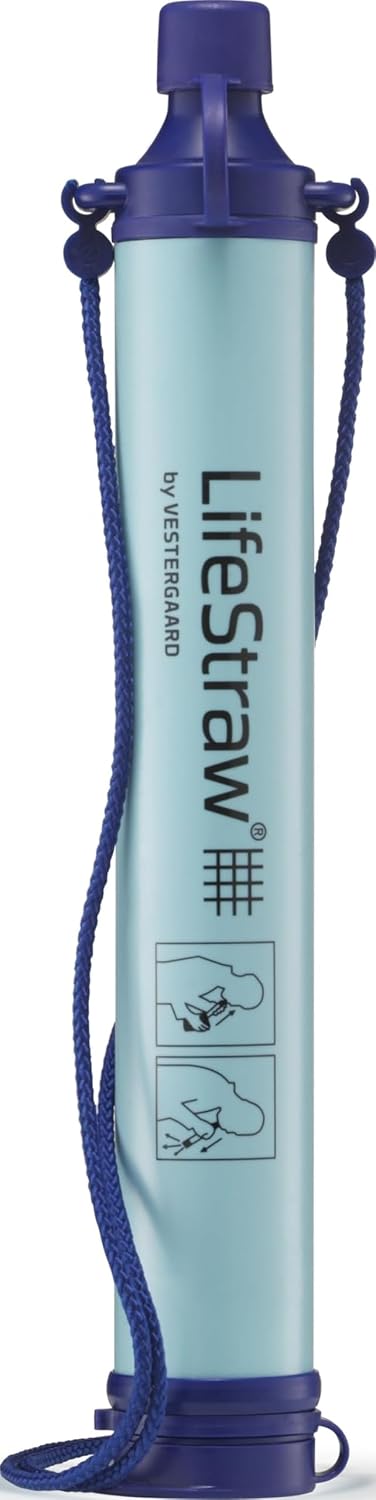
- Water System (target: 2–3 lbs)Carry a 2-liter hydration bladder filled at departure — that's roughly 4.4 lbs of water weight but it's non-negotiable starting fuel. For filtration, the Sawyer Squeeze at 3 oz is the gold standard. Back it up with 20 iodine tablets (less than 1 oz) for chemical treatment as a failsafe. A 32-oz stainless steel single-wall bottle lets you boil water and doubles as a cooking vessel, weighing around 6 oz. Total system weight without water: approximately 12 oz. With 2 liters of water: just over 5 lbs. Plan water resupply every 4 to 6 hours of movement and know your route's water sources before you leave.
- Fire Kit (target: under 1 lb)Three ignition methods, no exceptions. A BIC lighter (0.5 oz), a ferrocerium rod with striker (1–2 oz), and waterproof storm matches in a sealed container (1 oz). Add a small Altoids tin of petroleum jelly-soaked cotton balls — they light instantly even in wet conditions and burn for 4 minutes each. Tinder is the weak link most people forget. Carry enough to guarantee a fire in bad conditions. Total kit: under 6 oz.
- Navigation (target: under 0.5 lbs)A USGS 1:24,000 topographic map of your bug out area, laminated or in a waterproof case, weighs around 2 oz. A quality baseplate compass — the Suunto A-10 at 1.4 oz — rounds it out. Know how to use both before you need them. A dead phone battery, a jammed GPS, or an EMP event makes this the most important half-pound in your bag. Pre-mark your primary and two alternate routes on that map before you ever pack it.
- Food (target: 4–5 lbs for 72 hours)You need roughly 1,800 to 2,500 calories per day under exertion. For 72 hours that's 5,400 to 7,500 calories. Pack calorie-dense, no-cook options to save weight and time. A solid loadout: 6 Clif Bars (1,500 cal, 15 oz), 4 packets of Justin's almond butter (700 cal, 6.4 oz), 3 packets of instant oatmeal with a Mountain House meal or two (2,000–2,500 cal, 12–18 oz), and a small bag of mixed nuts and jerky (1,500 cal, 12 oz). That gets you to roughly 6,200 calories at under 4 lbs. Prioritize caloric density over volume. Avoid anything requiring significant cooking time — fuel and time are tactical assets.
- Medical Kit (target: 1.5–2 lbs)Build a focused kit, not a hospital. Essentials: a CAT tourniquet (2.7 oz) worn accessible on the bag's shoulder strap, a compressed gauze roll for wound packing (2 oz), Israeli bandage (3 oz), nitrile gloves x4 pairs (2 oz), medical tape (1.5 oz), blister treatment (Moleskin, 1 oz), ibuprofen and antihistamine in a small zip bag (1 oz), and a SAM splint (4 oz). Total: approximately 18 oz. Skip the elaborate kits with gear you haven't trained on. A CAT tourniquet and wound-packing gauze you know how to use saves more lives than a $300 kit you can't operate under stress.
- Tools and Miscellaneous (target: 3–4 lbs)A fixed-blade knife between 4 and 6 inches — the Mora Companion at 4.1 oz is hard to beat for the price. Fifty feet of 550 paracord at 5 oz. A headlamp with red-light mode and two sets of spare batteries (Petzl Tikka, 3 oz). Duct tape — 10 feet wrapped around a small piece of cardboard (2 oz). A compact multi-tool like the Leatherman Skeletool at 5 oz. A small notepad and two pens. That totals approximately 30 oz. For clothing, layer smart: pack a moisture-wicking base layer shirt and pants, a lightweight insulating midlayer (fleece or puffy jacket), rain shell, one spare pair of socks, and a wool watch cap. Lay these out and weigh them — synthetic and merino wool options will come in well under 3 lbs combined.
Common Mistakes That Will Compromise Your Bug Out
Most bug out bags fail before they're ever used. Here's where preppers consistently go wrong and how to fix it before it costs you.
- Mistake 1: Never actually wearing the loaded pack. A bag feels manageable sitting in a closet. Put it on and walk 5 miles. Right now. You'll discover hip belt fit, hot spots, balance problems, and whether your actual fitness level matches your theoretical plan. Fix it: Do a loaded ruck at least once a month. Minimum 5 miles. Identify problems while there's time to solve them.
- Mistake 2: Packing redundant comfort items instead of redundant critical systems. Three changes of clothes and no water filter. A deck of cards but one lighter. Get your priorities straight. Fix it: Lay every item on a table, categorize it by survival priority, and eliminate anything that doesn't serve the top six priorities — or carry it only if it replaces something heavier.
- Mistake 3: Not waterproofing internal contents. Rain, stream crossings, and condensation will destroy electronics, matches, and documents. Fix it: Use dry bags or heavy zip-lock bags inside every category of gear. A 2-liter dry sack for your sleep system, gallon zip-locks for food and medical, a small waterproof pouch for fire and navigation gear. Add minimal weight, major protection.
- Mistake 4: Relying on gear you've never used in the field. A water filter is useless if you've never practiced the backflush procedure. A ferro rod fails if you've never practiced striking it to produce a coal. Fix it: Use your BOB gear on every camping trip, day hike, or weekend practice session. The gear should feel like a natural extension of your hands, not a puzzle to solve in an emergency.
- Mistake 5: No pre-planned route. Bugging out with a bag and no destination is just an expensive camping trip. Fix it: Define a primary bug out location, a secondary, and a tertiary. Pre-walk or pre-drive your primary route. Mark waypoints and water sources on your map. Tell a trusted contact your plan and expected arrival timeline.
- Mistake 6: Ignoring bag fit and ergonomics. A poorly fitted pack creates pressure points that become debilitating injuries over distance. Fix it: Get your torso length measured at an outdoor gear shop. Use a pack with an adjustable suspension system. Load 80% of weight close to your spine and above your hips. Adjust shoulder straps, hip belt, and load lifters before every use.

What to Practice This Weekend
Pack your bag to its current state and weigh it. Write down the number. Then take it outside and walk 8 miles. Not a stroll — a purposeful ruck at pace. When you get back, identify the three things that hurt you the most: weight, fit, or missing capability. Fix one of those three things before next weekend. Then do it again. The minimalist BOB is not a project you finish. It's a system you continuously refine through honest field testing. The bag that saves your life won't be the one you built — it'll be the one you earned.
🛒 Essential Survival Gear
As an Amazon Associate I earn from qualifying purchases.