The Mental Edge That Separates Survivors From Victims: Psychology of Survival Under Pressure

When the Mind Breaks Before the Body Does
Picture this: It's 11 PM, a massive ice storm has knocked out power to your entire county. Roads are impassable. Your heat is gone. Your kids are asking questions you don't have answers to yet. You have supplies — but your hands are shaking, your chest is tight, and your brain is screaming at you to panic. This is the moment that separates the prepared from the merely equipped. Because here's the brutal truth nobody in the prepper community talks about enough: gear doesn't save you. Your mind does. Every piece of kit in your bug-out bag is useless if your psychology collapses under pressure.
The Reality Most People Ignore
We spend thousands of dollars on freeze-dried food, water filtration systems, first aid kits, and firearms. We read field manuals. We bookmark YouTube channels on wilderness survival. And yet the single most important survival tool — the one between your ears — gets almost zero dedicated training time. That's a catastrophic gap in most prep plans.
Military survival schools have known this for decades. The U.S. Air Force SERE program — Survival, Evasion, Resistance, and Escape — was built on one foundational discovery from World War II POW studies: the soldiers who survived weren't always the strongest or the most technically skilled. They were the ones who maintained psychological control when everything around them was chaos.
In real survival scenarios — whether that's a wildfire evacuation, a prolonged grid-down situation, a home invasion, or getting lost in backcountry wilderness — most people experience what researchers call cognitive tunnel vision. Your brain, flooded with cortisol and adrenaline, literally narrows its focus. You lose access to your memory banks. Training you thought you had becomes inaccessible. You freeze. You make terrible decisions. You follow the crowd off a cliff.
The 2018 Thai cave rescue brought this into sharp focus for the world. Twelve boys and their soccer coach survived 18 days in a flooded cave. The coach, a former Buddhist monk, used meditation and controlled breathing to keep the boys calm and alive. It wasn't their gear. It was their mental framework. That's not a soft concept — that's a survival force multiplier.

Core Principles of Survival Psychology
If you want to build real mental toughness, you need to understand the architecture of it. This isn't motivational poster territory. This is functional psychology with life-or-death applications.
1. The Rule of Threes — For Your Mind, Not Just Your Body
You've heard the survival rule of threes: 3 minutes without air, 3 hours without shelter in extreme conditions, 3 days without water, 3 weeks without food. Apply this framework to your mind. You can survive approximately 3 seconds of pure panic before it starts costing you. After that, every second of uncontrolled panic is burning energy, clouding judgment, and increasing your risk of making a fatal mistake. Your first job in any crisis is not to solve the problem — it's to stop the mental bleed.
2. STOP — The Foundational Survival Protocol
Adopted from wilderness survival doctrine, STOP stands for Stop, Think, Observe, Plan. When crisis hits, the instinct is to move — to do something, anything. That instinct kills people. A hunter who realizes he's lost in the backcountry and immediately starts charging through brush will be dead before the search party launches. The one who stops, controls his breathing, takes stock of what he knows and what he has, and makes a deliberate plan — he's the one they find alive. Drill this protocol until it's reflex.
3. Stress Inoculation — You Cannot Train What You Won't Practice
Your nervous system doesn't know the difference between a real threat and a highly realistic simulation. Special operations units use this principle relentlessly — they train in stress, fatigue, confusion, and degraded conditions so that when those conditions appear in the field, the brain doesn't treat it as novel. Novel threats trigger deeper panic. Familiar conditions, even terrible ones, trigger trained responses. This is why a firefighter can walk into a burning building calmly while you or I would freeze at the door.
4. Controlled Breathing — The Fastest Neurological Reset Available
Box breathing — inhale 4 counts, hold 4 counts, exhale 4 counts, hold 4 counts — is used by Navy SEALs, elite athletes, and trauma surgeons to manually engage the parasympathetic nervous system and override the panic response. It works in 60 to 90 seconds. It costs nothing. It requires no gear. And most preppers have never practiced it once. That's a failure of preparation, plain and simple.
5. The Will to Survive Is Not Automatic
This one hits hard: research on survival scenarios consistently shows that people with a clear reason to survive — a child to protect, a mission to complete, a deep personal conviction — dramatically outperform those who don't. Viktor Frankl wrote about this from the most extreme possible data set: Nazi concentration camps. His conclusion was that meaning was the primary determinant of survival. Know your why. Write it down. Make it visceral. It will carry you when nothing else can.
Building Mental Toughness Into Your Prep Plan
Here's where we get practical. Mental toughness isn't a personality trait you either have or don't have. It's a skill set you build through deliberate practice, just like marksmanship or land navigation.
- Conduct realistic scenario drills at home. Kill the power for a weekend. Don't cheat. Eat from your food storage, use your water supply, navigate by flashlight. The discomfort you feel is training data for your nervous system. Your family's reactions during the drill will tell you everything about who needs more preparation — mentally and logistically.
- Train physically under stress. Physical fitness directly correlates with stress resilience. The cardiovascular system and the nervous system are deeply linked. People who train hard — who push through discomfort regularly — build a higher baseline tolerance for chaos. A 5-mile ruck with a loaded pack isn't just fitness. It's mental conditioning.
- Practice decision-making under fatigue. Make your training decisions when you're tired. Go through your bug-out plan at midnight after a hard workout. Run through your home defense protocol when you're sleep-deprived. If you can only think clearly when you're rested and comfortable, you are not prepared.
- Build and review your Immediate Action Drills. These are pre-decided, pre-rehearsed responses to specific scenarios — fire in the home, grid-down power outage, medical emergency, forced evacuation. When your brain is overwhelmed, it reaches for familiar patterns. Give it good patterns to reach for. Write them down, review them monthly, and practice them as a family.

Advanced Level — What Serious Preppers Do Differently
Most preppers stop at gear and skills. The truly serious ones go further. They build psychological infrastructure that holds up under sustained, long-duration pressure — not just acute crises.
They study historical collapse scenarios. Reading firsthand accounts from people who lived through the Argentine economic collapse, the Siege of Sarajevo, or Hurricane Katrina isn't morbid — it's intelligence gathering. Ferfal's Surviving the Economic Collapse and Selco's accounts from the Bosnian war are required reading for serious preppers. These accounts give your brain a realistic template for what extended SHTF actually looks like, which reduces novelty-triggered panic when things go wrong.
They build community deliberately. Lone wolf survival is a fantasy. Human beings are tribal animals. Isolation under stress is a psychological killer — it was used as a torture method in the 20th century for good reason. Serious preppers build trusted networks: neighbors who share their values, like-minded families with complementary skills, mutual aid agreements. When you have people depending on you and people you can depend on, your psychological resilience multiplies exponentially.
They have a spiritual or philosophical anchor. This isn't about religion per se — though for many preppers, faith is a genuine force multiplier. It's about having a worldview that gives suffering context and meaning. People who collapse psychologically in crisis often do so because the chaos feels arbitrary and meaningless. People who hold up often do so because they have a framework that makes hardship understandable, even purposeful. Build yours before you need it.
They debrief and adapt. After every drill, every close call, every real-world stressor, serious preppers analyze what happened — not to assign blame but to extract lessons. What did the stress response feel like? Where did decision-making degrade? What protocol failed? What held up? This is how you build a personal, calibrated understanding of your own psychological responses — which is infinitely more valuable than generic advice.
Your Action Plan — What To Do In The Next 30 Days
Stop reading and start building. Here is your 30-day mental toughness protocol:
- Week 1 — Baseline Assessment. Conduct a family drill — pick a scenario (power outage, evacuation, medical emergency) and run it unannounced. Document the emotional and behavioral responses honestly. Where did panic show up? Who froze? Who stepped up? This is your starting point.
- Week 1 — Learn Box Breathing. Practice 5 minutes of box breathing every morning this week. That's it. Just build the habit. By the end of the week, you will have a neurological tool you can deploy in seconds under extreme stress.
- Week 2 — Write Your Immediate Action Drills. Sit down and write out your household's response to 5 specific scenarios: fire, medical emergency, grid-down, forced evacuation, and home intrusion. Make them specific, step-by-step, and assign roles to each family member. Laminate them and store them in your emergency binder.
- Week 2 — Start a Physical Stress Training Protocol. If you're not already training physically, start this week. Three days of cardiovascular stress and one day of loaded carries. You don't need a gym. You need a pack and hard ground.
- Week 3 — Consume Historical Survival Accounts. Read or listen to at least one firsthand account of societal disruption. Take notes. Ask yourself: what mental frameworks kept that person alive? What decisions were fatal for others?
- Week 3 — Identify Your Why. Write a one-page document — just for yourself — that articulates clearly who and what you are fighting to protect. Be specific and honest. Keep it somewhere you'll see it.
- Week 4 — Stress Inoculation Drill. Run a 48-hour reduced-comfort exercise. Limited food (from your storage), no internet, restricted power use, early wake times, physical tasks each day. This is not comfortable. It is not supposed to be. It's a controlled exposure that calibrates your nervous system and your family's resilience.
- Week 4 — Build or Strengthen One Community Tie. Reach out to one neighbor, friend, or family member who shares your values. Have a direct conversation about mutual aid. Plant a seed. Community doesn't build itself — you have to do the work.
The Final Word on Protecting What Matters
Your family's survival is not guaranteed by the gear in your garage or the food in your pantry. Those things matter — but they are the body of preparedness, not the soul. The soul is mental toughness. It's the ability to look at a collapsing situation, breathe deliberately, think clearly, make good decisions, and keep moving when every instinct screams at you to give up. That capacity is built in the quiet hours before the crisis hits — in the drills, the hard training, the honest self-examination, and the deliberate cultivation of a mind that does not break under pressure. Nobody is coming to save your family. That responsibility is yours. Own it. Train for it. Build the mind that can carry the weight when everything depends on it. The time to start is not when the storm arrives. The time is now.
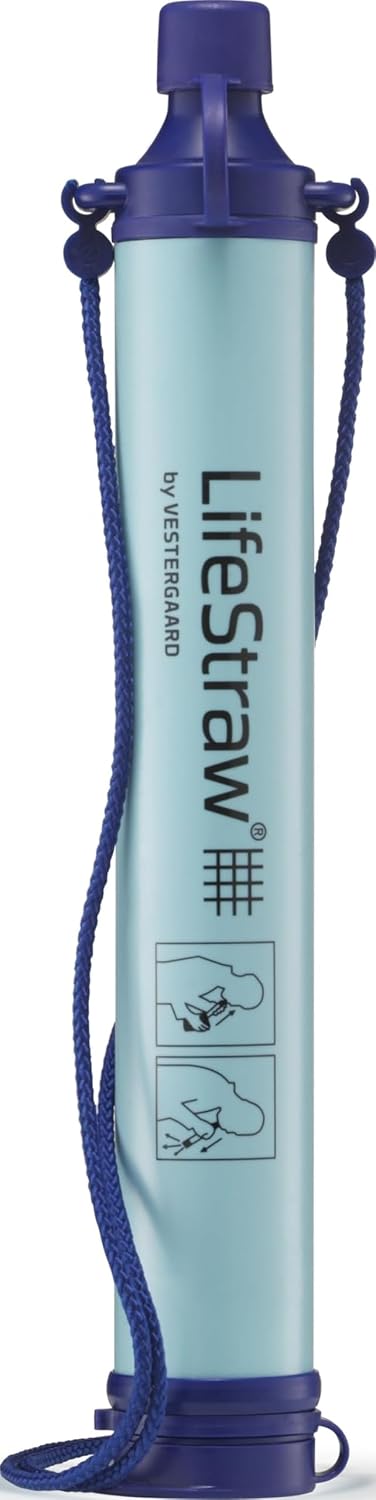
🛒 Essential Survival Gear
As an Amazon Associate I earn from qualifying purchases.