The Complete Guide to Water Storage for Long-Term Survival: How Much You Really Need

The Complete Guide to Water Storage for Long-Term Survival: How Much You Really Need
Three days. That's how long you have before dehydration starts shutting your body down for good. No food? You've got weeks. No shelter? Depends on the climate, but you've got hours to days. No water? You're already on the clock. In a grid-down, SHTF, or long-term emergency scenario, water is not a luxury — it is the single most critical resource you need to secure before anything else. Your food stores, your bug-out bags, your communications gear — none of it matters if you can't maintain hydration for yourself and your family.
Most Americans are one broken municipal pipe away from a serious crisis. City water depends on electrical pumps, chemical treatment facilities, and an aging infrastructure that is one major disaster away from failure. If you haven't built a serious, layered water storage and sourcing system, you are exposed. Let's fix that today.
Section 1: What You Need Before You Start — Prerequisites, Gear, and Materials
Before you start filling containers and calling it done, you need to understand what a real water storage system requires. This isn't about tossing a few cases of bottled water in your garage. That's a Band-Aid. We're building a system designed to sustain life through an extended emergency — think 30 days minimum, 90 days ideally, and indefinite sustainability through collection and purification.
Calculate Your Baseline Need First
The standard FEMA recommendation is one gallon per person per day. That's survival-level — barely enough for drinking and basic sanitation. In reality, factor in the following:
- Drinking: At minimum, half a gallon per adult per day. In hot climates or during physical exertion, this jumps to a full gallon or more.
- Cooking: Add another half gallon per person per day for food prep and boiling.
- Sanitation: Hand washing, wound care, basic hygiene — budget at least one additional gallon per person per day.
- Children, elderly, and nursing mothers require more. Pets need water too — typically one ounce per pound of body weight daily.
A realistic baseline for one adult is 2 gallons per day. A family of four needs a minimum of 8 gallons per day. For a 90-day supply, that's 720 gallons. That number should make you sit up straight.
Gear and Containers You'll Need
- Food-grade water barrels: 55-gallon blue polyethylene barrels are the industry standard. Look for BPA-free, HDPE plastic rated for long-term water storage. Brands like WaterBOB, Augason Farms, and Emergency Essentials carry quality options. You'll need a bung wrench and a hand pump or siphon kit to access them.
- Stackable water containers: 5-gallon and 7-gallon stackable containers from companies like WaterBrick or Scepter Defense are excellent for modular storage and portability. These are especially useful if space is limited or you anticipate needing to move.
- WaterBOB or Aquapod: These are bathtub liners that can hold up to 100 gallons in an emergency. They're single-use and cheap — keep at least two on hand.
- Water treatment supplies: Unscented liquid chlorine bleach (8.25% sodium hypochlorite), water purification tablets (Aquatabs or Potable Aqua), and a quality filtration system like the Berkey countertop filter or Sawyer Squeeze inline filters.
- Testing kit: Pool test strips work in a pinch to check chlorine levels. For comprehensive testing, use a home water quality testing kit from a brand like Safe Home.
Section 2: The Process — Building Your Water Storage System Step by Step
This is where most preppers cut corners and pay for it later. Follow this process to build a layered, redundant water storage system that can sustain your household through a long-term emergency.
- Step 1 — Establish your storage target. Run the math for your household using the formula above. Write it down. A family of four targeting 90 days needs approximately 720 gallons of stored water. That's roughly 13 standard 55-gallon barrels. Most households can realistically store 3–5 barrels in a basement, garage, or utility space, giving you a 15–30 day supply. That's your foundation — build on it.
- Step 2 — Source and clean your containers. Purchase new food-grade barrels or source used ones that previously held food-grade liquids only — never chemical or non-food products. Clean all containers with a mild bleach solution (1 tablespoon of unscented bleach per gallon of water), rinse thoroughly, and allow to air dry before filling.
- Step 3 — Fill with treated water. Municipal tap water already contains chlorine and can be stored directly. If you're filling from a well or other source, treat first. For each 55-gallon barrel, add approximately 1/4 teaspoon of plain unscented liquid chlorine bleach (8.25%) before sealing if filling with municipal water that has already been sitting. If using well water, add 1/2 teaspoon per 55 gallons. Seal barrels tightly with a bung wrench.
- Step 4 — Store correctly. Location matters. Keep barrels off concrete floors — use wooden pallets or barrel stands, as concrete can leach chemicals into plastic over time. Store in a cool, dark location away from direct sunlight, chemicals, and gasoline. Temperature fluctuations degrade container integrity over time. Ideal storage temperature is between 50–70°F.
- Step 5 — Label and date everything. Use a permanent marker or label maker. Write the fill date and planned rotation date on every container. Stored water treated with bleach is generally safe for 6–12 months. Rotate your supply — use old water for non-drinking purposes and refill.
- Step 6 — Build your secondary collection system. Long-term survival requires more than stored water. Install a rainwater collection system — even a basic 50-gallon rain barrel connected to your downspout gives you a passive resupply. In a true long-term scenario, identify and map all natural water sources within a 2-mile radius of your home: streams, ponds, lakes, and seasonal sources. Never rely on these without purification.
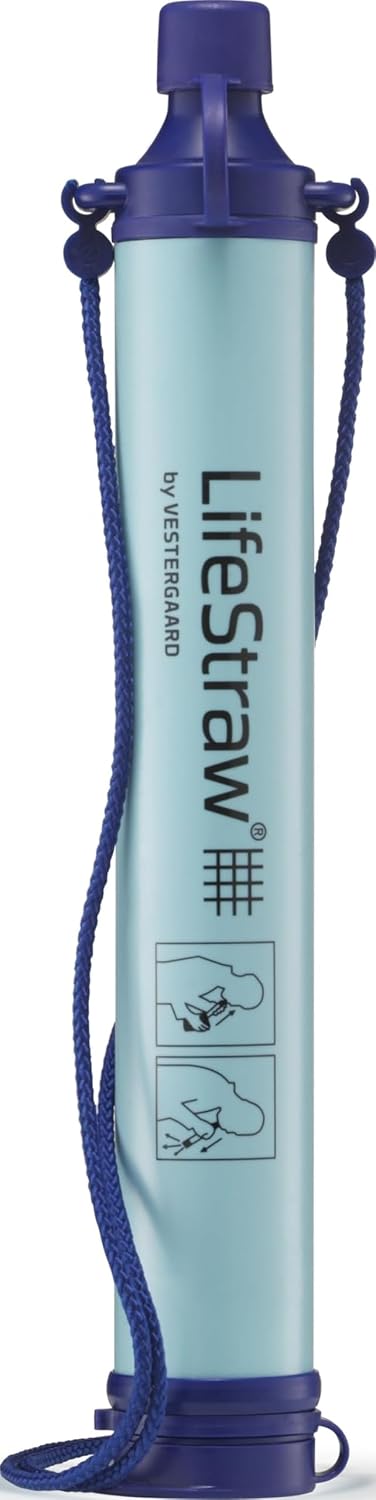
- Step 7 — Set up your purification chain. Every water source outside your sealed storage should be run through a multi-step purification process: (1) pre-filter through a cloth or bandana to remove particulates, (2) run through a quality gravity filter like a Berkey or LifeStraw Mission, (3) treat with bleach or purification tablets as a final kill step. This layered approach handles biological, chemical, and particulate threats.

Section 3: Tips from the Field — Real-World Adjustments That Make the Difference
Theoretical planning only gets you so far. Here's what actually matters when the situation gets real:
- Your water heater is an emergency reservoir. A standard 40–80 gallon water heater holds safe, drinkable water. Know how to access it — locate the drain spigot at the bottom and have a food-grade hose ready to connect. In an emergency, this is an immediate 40+ gallon supply you already own.
- Bleach has a shelf life. Liquid chlorine bleach loses potency over time — roughly 20% per year. Buy fresh bleach and rotate it annually. Better yet, stock calcium hypochlorite pool shock (granular, 68–78% concentration) — it stores for years and a single 1-pound container can treat thousands of gallons of water. Use 1/8 teaspoon per gallon.
- Hand pumps beat gravity in certain scenarios. If your 55-gallon barrels are stored in a space where you can't tip or siphon them easily, a quality hand pump (Sureseal or similar) is worth every penny. Practice using it before you need it.
- Heat increases consumption dramatically. In a summer SHTF scenario with no air conditioning, your water consumption can double or triple. If you're doing manual labor, add another gallon per person per day. Your 90-day math needs a summer adjustment factor built in.
- Know your region's natural water table. A hand-dug or drilled well is the ultimate long-term solution for homesteaders. If you own property, invest in understanding your water table depth. A manual pump well (Bison Pumps or Simple Pump brands are excellent) can give you indefinite water supply independent of the grid.
- Solar water disinfection (SODIS) is a legitimate last resort. Clear plastic or glass bottles filled with water and left in direct sunlight for 6+ hours (longer if cloudy) will kill most biological pathogens using UV radiation. This is a real method endorsed by the WHO. Not ideal, but better than drinking unfiltered water.
Section 4: What to Practice Now — Your 30-Day Water Preparedness Plan
Reading about water storage means nothing if you don't act. Here's a concrete 30-day plan to get your system operational:
- Days 1–3: Run your household water consumption calculation. Be honest — account for every person, pet, and use case. Write your 30-day, 60-day, and 90-day storage targets on paper and post them where you'll see them.
- Days 4–7: Purchase your initial container inventory. Start with two 55-gallon barrels and a bung wrench kit, or 10–12 WaterBrick stackable containers if space is limited. Order or purchase water purification tablets and a spare bottle of fresh bleach.
- Days 8–10: Set up your storage location. Build or buy barrel stands, clear the space, ensure the area is dark and temperature-stable. Fill and treat your first containers. Label and date everything.
- Days 11–14: Locate and catalog all natural water sources within 2 miles of your home. Drive the routes. Note seasonal reliability. Identify primary and backup sources.
- Days 15–20: Set up a rainwater collection system. Even a single 50-gallon barrel connected to a downspout is a starting point. Check your local regulations — some states have restrictions on rainwater collection, though most allow basic residential use.
- Days 21–25: Test your purification system end-to-end. Collect water from a natural source (a nearby stream or pond), pre-filter it, run it through your gravity filter, and treat it. Drink it. Build confidence in your system before you depend on it under stress.
- Days 26–30: Audit your water heater — locate the drain valve, confirm it's operational, and have a food-grade hose staged nearby. Review your total stored volume against your targets and identify gaps. Set a calendar reminder to rotate water every 6 months.

Final Word: Preparation Is a Lifestyle, Not a One-Time Event
Filling a few barrels and calling yourself prepared is the first step — not the finish line. Water security is a living system that requires ongoing maintenance, rotation, and adaptation. Municipal systems fail. Droughts happen. Contamination events occur. The prepper who built their system five years ago and never touched it is operating on false confidence.
Revisit your water plan every six months. Rotate your stored supply. Test your filters. Walk your local water sources. Update your math as your household changes. The discipline to maintain your preps is what separates the truly prepared from the people who just own a lot of gear. Water is life — treat your water storage with that level of seriousness, and it will take care of you when everything else falls apart.
Stay prepared. Stay dangerous. Stay alive.
🛒 Essential Survival Gear
As an Amazon Associate I earn from qualifying purchases.