The Complete Guide to River Navigation: Using Waterways to Travel and Escape When the Grid Goes Dark

Why River Navigation Is a Non-Negotiable Survival Skill
When the roads are jammed, patrolled, washed out, or simply too dangerous to travel, rivers don't care. They keep moving. They've been moving long before there were highways, and they'll keep moving long after those highways become traps. In a true grid-down, bug-out, or civil unrest scenario, waterways become the original interstate system — and the people who know how to use them will have a massive tactical advantage over those white-knuckling a steering wheel on a choked two-lane road.
History backs this up. Every major military retreat, every pioneer migration, every escape from hostile territory relied heavily on rivers. Lewis and Clark didn't do it because it was scenic. They did it because water moves you faster, leaves less scent trail, allows you to travel at night with minimal light, and often cuts through terrain that would be impossible on foot.
What happens if you don't have this skill? You're stuck to the road network. You're predictable. You're visible. In a collapse scenario, predictability gets you killed, robbed, or worse. If you can't read a river, launch a loaded boat in moving water, or navigate by current and landmark, you're leaving one of the most powerful escape tools on the table. That ends today.
What You Need Before You Start
River navigation isn't something you improvise on Day 1 of a crisis. You need gear staged, knowledge loaded, and at least basic water skills already in your body. Here's what that looks like:
- Watercraft: Your primary option should already be selected. A packraft (Alpacka Raft or similar) is the gold standard for bug-out portability — they pack down to backpack size and handle Class I–III water. Alternatives include a canoe (Old Town Discovery 158 is a proven workhorse), a kayak, or even a Jon boat if you're bugging out from a fixed location. Know your river system — flatwater vs. whitewater changes everything.
- Paddle and backup: A breakdown kayak paddle (Werner or Aqua-Bound) stores easily. Always carry a spare paddle or at minimum a solid wooden pole for shallow pushing.
- PFD (Personal Flotation Device): A Type III inflatable PFD is compact enough to be practical. Non-negotiable. Rivers kill fast when things go wrong.
- Dry bags and waterproof cases: All critical gear — maps, fire kit, comms, first aid, food — goes in dry bags. Sea to Summit and SealLine make excellent options. Your firearm goes in a waterproof Pelican case or a dedicated waterproof holster like those from Safariland's dry series.
- Topographic maps and waterproof map case: Download USGS topo maps for your entire river corridor. Print them on waterproof paper or laminate them. Do not rely on digital-only. A Suunto A-10 baseplate compass lives in your PFD pocket permanently.
- River-specific knowledge: Before crisis hits, obtain a copy of your state's river guide or American Whitewater Association maps for your regional rivers. Know water levels (USGS waterdata.usgs.gov), dam locations, portage requirements, and put-in/take-out points along your route.
- Repair kit: Packraft patch kit, duct tape, marine-grade epoxy stick. A small hand pump. Know how to field-repair your vessel before you need to.

The Process: Step-by-Step River Navigation in a Survival Scenario
- Pre-launch intelligence gathering: Before you ever touch water, you need information. What is the current water level? Is it flood stage or dangerously low? High water moves faster but hides hazards. Low water exposes rocks and creates strainers. Check your last-known gauge reading mentally or on a pre-downloaded offline app like Gaia GPS with USGS overlays. Identify your put-in point, your destination take-out, and at least two emergency exit points along the route.
- Scout before you commit: If you're unfamiliar with a section of river, walk the bank first. Look for strainers (submerged logs or debris that water flows through but a body won't), hydraulics (recirculating water below drops that can hold a boat or person), and sweepers (trees fallen into the river from the bank). These three hazards kill more river travelers than anything else. Mark them mentally. Plan your line around them before you're in the current.
- Gear load and balance: Pack your boat low and centered. Heavy items — food, water, ammo — go low and amidships. If you're in a canoe, keep your center of gravity below the gunwale line. Lash everything in. In a capsize, a floating dry bag you can swim to beats a sunken pack every time.
- Launch smart: Enter the water from an eddy — that calm, back-flowing water behind a point of land or large rock. Ease in, get stable, then ferry angle out into the main current. Never launch broadside into fast current unprepared. Use a high brace with your paddle to stabilize if current catches you sideways.
- Reading moving water: The fastest water is the deepest channel — often called the thalweg. Follow it on flatwater for speed. On technical water, read the V-shapes: a downstream V (pointing with the flow) indicates the clean line through a rapid. An upstream V means a rock or obstacle. Dark, smooth water means depth. White water means turbulence, rocks, or aeration — respect it.
- Navigation by landmark: On rivers, you navigate by feature, not grid. Match your topo map to the river's bends, tributary confluences, cliff lines, and bridges. Count tributaries joining from left or right to track your position. A river bend that matches your map's contour lines keeps you oriented even at night with minimal light.
- Night travel: Rivers allow nighttime movement when road travel would be suicidal. Move slowly, stay in the main channel, and use sound to detect hazards — you'll hear rapids well before you see them. Use a red-light headlamp to preserve night vision and avoid detection. Tuck into an eddy at the first sign of technical water and wait for dawn.
- Portaging: When water becomes impassable — major rapids, dams, log jams — you portage. Get to the bank, unload your boat, and carry everything around the obstacle. Scout the re-entry point thoroughly. A portage that takes 45 minutes is infinitely better than a swim in a hydraulic. Know your dam locations before you launch — they are non-negotiable portages.
- Take-out and concealment: When you reach your destination or need to stop, pull into an eddy well upstream of your exit point. Carry your boat fully off the bank and into brush. Invert it or cover it with vegetation. A boat on a riverbank advertises your presence. In a hostile environment, that matters.
Tips from the Field: Real-World Adjustments
- Current is your engine — use it: Even on a slow river, a 2 mph current means 48 miles in 24 hours of travel with minimal effort. Paddle in the morning and evening. Drift and rest mid-day. Let the river do work while you conserve calories.
- Cold water kills faster than you think: In water below 60°F, cold shock can incapacitate you within minutes of immersion. A wetsuit or drysuit isn't luxury gear — it's survival equipment on spring rivers. At minimum, wool base layers under a rain jacket plus a PFD buy you critical time to self-rescue.
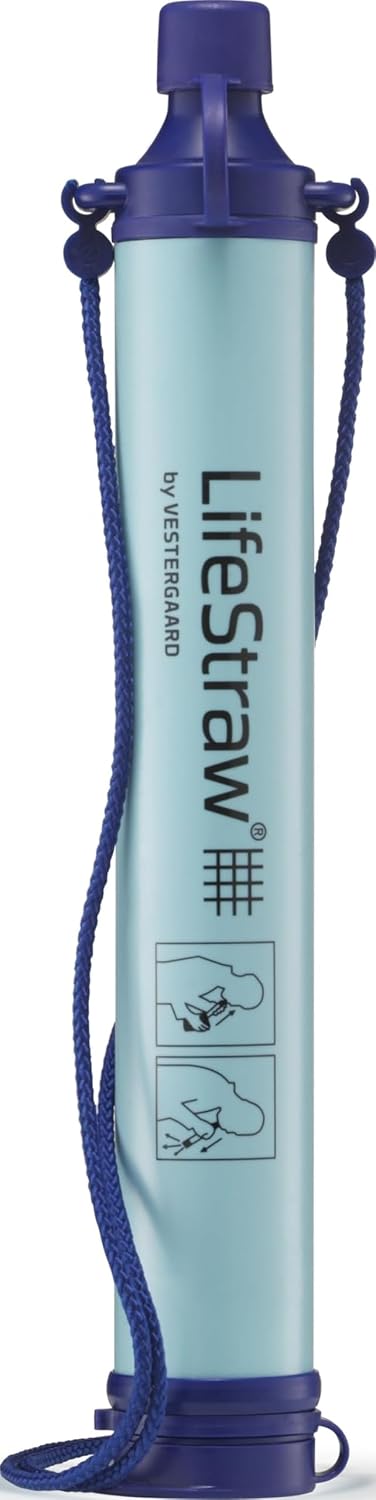
- The river is a resource, not just a road: While traveling, you're moving through the best water source available. Run it through a Sawyer Squeeze or Katadyn BeFree filter before drinking. Rivers concentrate fish — a compact trotline or small gill net set overnight at camp provides protein with zero effort while you sleep.
- Avoid bridges where possible: In a civil unrest or grid-down scenario, bridges are choke points. They're where people congregate, set up checkpoints, or ambush. Approach every bridge slowly, scout it from a distance, and use heavy shoreline vegetation to pass through unseen if possible.
- Know your river's personality: Western rivers run cold, fast, and technical with snowmelt. Midwestern rivers run slower, murkier, and flood dramatically. Eastern rivers vary wildly by gradient. Your tactics adjust to the water you're on — there is no one-size-fits-all river strategy.
- Natural alternatives when gear fails: No boat? A log raft of dry timber lashed with paracord can float gear across or down slow water. A poncho stuffed with dry leaves or sealed around gear creates an emergency float bag. A wooden pole cut from riverbank hardwood becomes your paddle, push pole, and depth-sounder.
- River noise is your friend: Moving water masks sound — your movement, your voice, your camp sounds. Set up camp within earshot of moving water when security is a concern. The ambient noise degrades anyone's ability to hear your presence.

What to Practice Now: Your 30-Day River Navigation Skill Plan
Talking about river navigation is worthless without repetition on actual water. Here's how to build this skill in 30 days starting this weekend:
- Days 1–5 — Map study: Pull USGS topo maps for every navigable waterway within 50 miles of your home. Trace your bug-out routes. Identify put-in points, take-outs, dam locations, major hazards, and tributary markers. Print and waterproof them. Brief your family or group on the routes.
- Days 6–10 — Flatwater skills: Get your chosen watercraft on the nearest calm body of water. Practice launching and landing, paddling forward and backward, bracing, and intentional capsizing in a controlled environment. Capsize drills in warm, shallow water are how you build the reflex to stay calm in cold, fast water.
- Days 11–15 — Moving water introduction: Find a slow-moving local river section rated Class I. Run it multiple times. Practice reading water, entering and exiting eddies, and ferrying across current. Bring your loaded bug-out bag to feel how weight changes handling.
- Days 16–20 — Night navigation drill: Run a familiar flatwater section at dusk and into dark. Navigate by landmark and sound only. This will expose exactly how much your visual competence compensates for your actual river-reading skill.
- Days 21–25 — Full scenario run: Execute a one or two-day river bug-out simulation on your actual planned route. Carry full gear. Practice portaging around one obstacle. Set camp on the bank. Run the morning departure with a loaded boat. Debrief hard afterward.
- Days 26–30 — Skills consolidation and gear audit: Fix everything the scenario exposed. Repack dry bags based on what you actually needed access to first. Service your watercraft. Update your maps with new intelligence. Brief anyone in your group who wasn't there.
Preparation Is a Lifestyle, Not a Checkbox
River navigation is one of those skills that separates the people who've actually prepared from the people who've merely thought about it. You cannot watch a YouTube video and expect your hands to know what to do when a Class II rapid catches you sideways with 80 pounds of gear and no room to make mistakes. The river demands respect, and respect is earned through repetition — before you need it.
Get on the water now, while stakes are low and the learning is cheap. Invest in the right gear, memorize the right routes, and run those routes until they're instinct. When roads are locked down, when the grid is dark, and when every obvious path is compromised, that river running behind your property or through your county isn't just scenery — it's your way out. Know it. Use it. Own it.
Preparation isn't a project you finish. It's a standard you maintain. Get on the water.
🛒 Essential Survival Gear
As an Amazon Associate I earn from qualifying purchases.