The Bug Out Bag Checklist That Could Save Your Family's Life (Complete Beginner's Guide)

The Reality Most People Ignore
Imagine it's 2 AM. Your phone screams an emergency alert. A wildfire is moving toward your neighborhood at 60 miles per hour, a chemical plant just exploded three miles away, or floodwaters are rising faster than anyone predicted. You have 15 minutes — maybe less. What do you grab? Where do you go? Does every member of your family know the plan?
Most people freeze. They scramble for car keys, grab a phone charger, maybe stuff some clothes into a duffel bag, and leave half of what they actually need sitting on the kitchen counter. That's not a survival plan. That's panic with a bag.
Here's the hard truth that the mainstream preparedness community dances around: most people are completely unprepared to leave their home in an emergency and sustain themselves for even 72 hours. FEMA recommends a 72-hour kit as a bare minimum. That's three days. Three days of food, water, shelter capacity, and medical supplies. And yet the majority of American households couldn't pull that off if their lives depended on it — which, in a real SHTF scenario, they absolutely do.
This isn't about fear. It's about clarity. You reading this right now already have the right instinct. You just need the roadmap. Let's build it together.
Core Principles and Knowledge Breakdown
Before we get into the gear list, understand this: a bug out bag isn't a shopping cart. It's a life support system that you carry on your back. Every single item needs to earn its place. Weight is your enemy over distance. Redundancy on critical systems is your friend.
The foundational framework for any serious bug out bag is built around what survival instructors call the Rule of Threes:
- You can survive 3 minutes without air or in icy water
- You can survive 3 hours without shelter in a harsh environment
- You can survive 3 days without water
- You can survive 3 weeks without food
This hierarchy tells you exactly how to prioritize your packing. Shelter and warmth come before water. Water comes before food. Most beginners pack it backwards — they throw in granola bars and forget a rain tarp.
Your bag should also follow the principle of one is none, two is one for critical systems. Fire starting, water purification, navigation — these need redundancy. A lighter and a ferro rod. A filter straw and purification tablets. A compass and a printed paper map of your region.
Now let's break down the actual checklist by category:
Water and Hydration
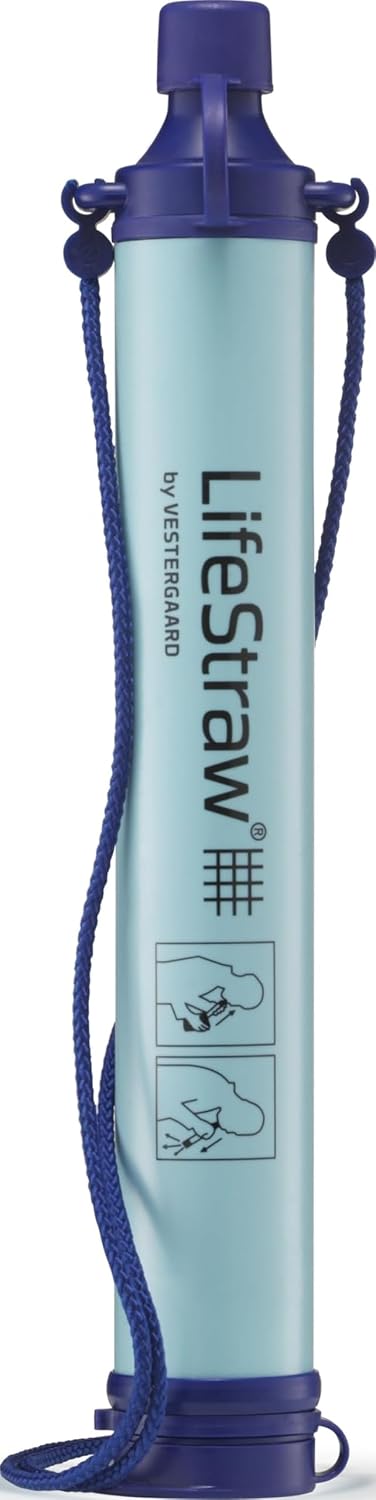
- Sawyer Squeeze or LifeStraw Mission water filter (filters up to 100,000 gallons)
- Water purification tablets as backup (Aquatabs or iodine tablets)
- 2-liter collapsible water bladder for carrying filtered water
- Stainless steel water bottle — doubles as a pot to boil water
Shelter and Warmth
- Emergency Mylar bivvy or sleeping bag rated below expected temperatures
- Lightweight 8x10 tarp with 50 feet of 550 paracord
- Wool or synthetic base layer — cotton kills in wet and cold conditions
- Rain poncho — doubles as shelter material in a pinch
Fire Starting
- BIC lighter (two of them — they're cheap and reliable)
- Ferro rod with a striker
- Waterproof tinder: petroleum jelly cotton balls or commercial fire starters
Food and Nutrition
- 2,000-2,500 calories per day minimum for 72 hours
- Mountain House freeze-dried meals (lightweight, calorie-dense, 25-year shelf life)
- High-calorie bars like Datrex or Mayday rations
- Compact folding stove with fuel tablets for heating water and meals
First Aid
- Tourniquet — CAT or SOFTT-W (this is non-negotiable if you have children)
- Israeli bandage for wound packing
- Nitrile gloves, medical tape, gauze rolls
- Personal prescriptions — minimum 7-day supply rotated regularly
- Basic OTC medications: ibuprofen, antihistamines, anti-diarrheal
Navigation and Communication
- Laminated topographic map of your county and surrounding areas
- Quality baseplate compass (Silva or Suunto)
- Battery-powered or hand-crank emergency radio
- Printed list of emergency contacts and rally points
Tools and Utility
- Fixed-blade knife — Morakniv Companion is excellent quality for under $20
- Multi-tool (Leatherman Wave or equivalent)
- Headlamp with extra batteries (lithium batteries perform in cold)
- Duct tape — wrapped around a pencil to save space
- Permanent marker and waterproof notepad
Documents and Cash
- Waterproof pouch with copies of: ID, passport, insurance cards, deed/lease
- $200-$500 in mixed bills — ATMs go dark when the grid goes down
- USB drive with encrypted digital copies of important documents

Building This Into Your Prep Plan
The list above gives you the what. Now let's talk about the how — because building a competent bug out bag isn't just about Amazon orders. It requires strategic thinking about your specific situation.
Start with a threat assessment. What are the actual emergencies most likely to affect your area? If you're in Tornado Alley, your priorities differ from someone on the Gulf Coast prepping for hurricanes or a Californian preparing for wildfire evacuation. Your bag needs to reflect your regional reality, not a generic internet checklist.
Next, build your bag in layers of priority. Don't try to buy everything at once. In your first month, focus on water, shelter, and fire. In month two, build out your first aid and food supply. Month three, refine your navigation and communication tools. This approach prevents overwhelm and allows you to actually test each system as you add it.
Pack for who is actually in your group. A single adult has very different needs than a family with a toddler, an elderly parent, or a pet. Children need age-appropriate calorie-dense snacks, comfort items to reduce panic, and their own small day pack with essentials if they're old enough to carry one. Elderly family members may need mobility aids or additional medical supplies. Account for everyone.
Establish your bug out locations in advance — at minimum two, in different directions from your home. Know the routes to get there. Know alternate routes when main roads are gridlocked. Practice the drive. The middle of a disaster is not the time to be reading road signs.
Advanced Level — What Serious Preppers Do Differently
Gear is the entry point. Skills and systems are what separate the prepared from the people who just think they're prepared.
They train with their gear before they need it. A serious prepper doesn't just pack a first aid kit — they've taken a Stop the Bleed course and know how to apply that tourniquet correctly in under 60 seconds. They've done a shake-out hike with a fully loaded bag to understand the real weight and identify what gets cut. They've built a fire with their ferro rod in rain, not just on a sunny afternoon in the backyard.
They maintain a vehicle bug out kit in addition to their bag. This includes a fuel jerry can, jumper cables, a vehicle trauma kit, maps, and a change of clothes. If you're bugging out by vehicle — and statistically most of us will be — your car needs to be as prepared as your bag.
They have a communication plan that doesn't depend on cell towers. A pair of GMRS radios with a repeater capability, or even a basic HAM radio license, can be the difference between finding separated family members and losing them entirely. Cell networks collapse in major disasters within hours. Plan around that reality.
They rotate and audit their bags twice a year. Set a calendar reminder every six months. Pull everything out. Check expiration dates on food and medications. Replace batteries. Verify that clothing and gear still fit family members — especially children who grow fast. A bag that hasn't been audited in two years is a bag full of false confidence.
They integrate self-defense into their plan. This is a conversation many beginners avoid, but it's one serious preppers have honestly. A disaster scenario can turn a calm neighborhood into a very different environment within 48 to 72 hours. Whether your choice is a firearm, pepper spray, or a defensive blade, you need a plan and you need the training to execute it under stress.
Your Action Plan — What to Do in the Next 30 Days
Stop waiting for the perfect moment to start. There is no perfect moment. There is only now, and later — and later might be too late. Here's your 30-day roadmap:
- Days 1-3: Conduct a threat assessment for your area. Write down the top three most likely emergency scenarios. Identify two bug out locations and two routes to each.
- Days 4-7: Purchase your water and shelter priorities. A Sawyer filter, water purification tablets, a quality tarp, and paracord. These items alone could save your life. Budget: approximately $60-$80.
- Days 8-14: Build your fire kit and acquire a fixed-blade knife and headlamp. Practice starting a fire with your ferro rod at least five times before this period ends. Practical skill, not shelf decoration.
- Days 15-21: Build out your 72-hour food supply and first aid kit. Take a Stop the Bleed course — many are offered free by local hospitals and fire departments. This skill applies in car accidents, not just disasters.
- Days 22-28: Assemble your documents, cash, and navigation tools. Purchase a regional topographic map and laminate it. Brief every adult in your household on the rally points and communication plan.
- Days 29-30: Do a full pack-out. Load your bag and walk two miles with it. Identify what's uncomfortable, what's missing, and what can be cut. Write a short debrief. Schedule your first six-month audit.
Share the plan with your family. Hold a 30-minute family meeting. Walk through scenarios. Assign roles. Make sure your kids know what to do if an emergency happens while you're at work. The plan only works if everyone knows the plan.
The Bottom Line on Self-Reliance
At its core, building a bug out bag is an act of love. It's the physical declaration that you refuse to leave your family's safety to chance, to government response times, or to the hope that nothing bad ever happens. History has proven, over and over again — in hurricanes, wildfires, earthquakes, grid failures, and societal breakdowns — that the people who survive and protect their families are the ones who prepared before the crisis, not during it.
You don't get a practice run. Build your bag. Learn the skills. Make the plan. Your family is counting on you to be the person who was ready when it mattered most.
🛒 Essential Survival Gear
As an Amazon Associate I earn from qualifying purchases.