The Best Survival Firearms for Preppers: What You Actually Need When Everything Falls Apart

The Reality Most People Ignore
The power grid goes down on a Tuesday night. By Thursday, grocery store shelves are stripped bare. By Saturday, people who were your neighbors are now desperate strangers making dangerous decisions. This isn't a movie plot — it's a compressed version of what happened in New Orleans after Katrina, in Venezuela as the economy collapsed, and in countless other real-world scenarios that most people dismiss as too extreme to plan for. That dismissal is exactly what gets people killed.
The hard truth is this: a firearm is not a symbol of aggression — it is a tool of last resort that can mean the difference between your family surviving and becoming a statistic. Most preppers spend months stockpiling food and water, but they treat their firearms selection like an afterthought. That is a lethal mistake. Your defensive and hunting capabilities need to be chosen, trained, and maintained with the same discipline as every other element of your survival plan.
Core Principles and Knowledge Breakdown
Before we talk specific platforms, you need to understand the governing principles of survival firearms selection. This isn't about what looks cool on Instagram. This is about what keeps you alive when the rule of law is temporarily — or permanently — suspended.
The Four Core Roles of a Survival Firearm:
- Home and property defense — stopping a threat at close to medium range inside or immediately around your home or retreat
- Hunting and food procurement — taking small and large game reliably to supplement or replace your stored food supply
- Bug-out mobility — a lightweight, packable option you can carry during a forced evacuation without slowing you down
- Perimeter and area security — extended-range capability for defending a homestead, farm, or group retreat
No single firearm excels at all four roles. That is why serious preppers think in terms of a tiered battery — a deliberate collection of firearms that covers every critical scenario. Here are the platforms that earn their place in that battery:
The 12-Gauge Shotgun — The Most Versatile Survival Tool You Can Own. A pump-action 12-gauge like the Mossberg 500 or Remington 870 is arguably the single most valuable firearm a prepper can own. With birdshot, it harvests small game and birds. With buckshot, it stops a home invasion at room-clearing distances with devastating effectiveness. With slugs, it reaches out to 75-100 yards on deer-sized game or a serious threat. Ammunition is universal, widely available, and inexpensive to stockpile. If you only own one firearm right now, make it a pump-action 12-gauge.
The .22 LR Rifle — The Workhorse Nobody Respects Enough. A Ruger 10/22 or Henry lever-action in .22 LR is not glamorous, but it is indispensable. Ammunition is compact and lightweight — you can carry 500 rounds in a jacket pocket. It is quiet relative to centerfire cartridges, easy for all members of your family to operate accurately, and perfectly calibrated for small game hunting. Squirrels, rabbits, and birds will be major protein sources in a long-term grid-down scenario. Do not underestimate this platform.
The Semi-Automatic Rifle — Your Defense and Security Backbone. An AR-15 in 5.56 NATO or a quality AK-pattern rifle in 7.62x39mm gives you extended-range defensive capability, magazine capacity, and parts availability that no other platform matches. In a scenario where you are defending a property against multiple threats, a pistol or shotgun puts you at a serious disadvantage. The AR-15 platform in particular benefits from massive aftermarket support, making repairs and customization straightforward even in degraded conditions.
The Handgun — Your Constant Companion. A full-size or compact handgun in a common caliber — 9mm is the current gold standard for availability, capacity, and manageable recoil — is what you carry on your body every single day. A Glock 17 or 19, Smith and Wesson M&P, or Sig Sauer P320 are all proven, reliable platforms. Your handgun is not your primary defensive weapon. It is the weapon you use to fight your way back to your primary defensive weapon. Treat it accordingly.

Building This Into Your Prep Plan
Owning these firearms is the beginning of the process, not the end. A firearm sitting in a closet with no training behind it is not a survival asset — it is a liability. Here is how you build firearms capability into a real preparedness framework:
- Standardize your ammunition. Every firearm in your battery should feed from a caliber you are actively stockpiling. Minimum baseline: 1,000 rounds of defensive/utility ammunition per platform, plus dedicated training ammunition. Rotate your stock.
- Establish a maintenance protocol. Every firearm should be cleaned and inspected on a regular schedule, not just after range sessions. A dirty firearm in a high-stress situation is a malfunction waiting to happen.
- Secure your firearms responsibly. Quality safes and lockboxes are non-negotiable, especially in homes with children. Quick-access safes near your bed give you defensive access without compromising safety.
- Train with every member of your household. Your spouse and older children need to be able to operate your defensive platforms under stress. One capable shooter is a single point of failure. A trained family is a formidable unit.
Advanced Level — What Serious Preppers Do Differently
The prepper who has been doing this for a decade thinks differently about firearms than the person who just bought their first rifle last month. Here is what separates the truly prepared from those who just have gear:
They train for degraded conditions. Low-light shooting is a fundamental skill that most range sessions never address. The majority of home invasions and grid-down confrontations will happen in poor lighting. Invest in quality weapon-mounted lights and train regularly in reduced-light environments. This single skill gap separates prepared people from those who just own guns.
They think about parts and repairs. Serious preppers stockpile critical spare parts for their primary platforms — firing pins, extractor springs, recoil springs, and basic tools. They know how to perform field-level maintenance without a gunsmith. For an AR-15, this means owning a complete lower parts kit and upper parts kit as spares. For a Glock, it means having spare trigger springs and extractor components. When there is no gun store open and no UPS truck coming, your ability to diagnose and fix a malfunction is everything.
They understand legal and ethical frameworks deeply. Serious preppers know their state's self-defense laws, use-of-force continuums, and storage requirements cold. They do not treat firearms as a casual hobby — they treat them with the gravity they deserve. Being legally and morally grounded in your use of force decisions is as critical as marksmanship.
They build community, not just a personal arsenal. A single family with excellent firearms capability is vulnerable. A neighborhood or group retreat with multiple trained shooters, coordinated communication, and assigned roles is a survivable unit. The lone wolf approach has a poor historical track record. Train with trusted people in your network.

Your Action Plan — What to Do in the Next 30 Days
Reading about this is worthless without action. Here is your concrete 30-day plan:
- Days 1-5: Conduct a complete audit of your current firearms battery. Identify gaps against the four core roles outlined above. If you have no firearms at all, prioritize purchasing a pump-action 12-gauge and at minimum 200 rounds of mixed ammunition this week.
- Days 6-10: Schedule a formal training course. Look for defensive firearms courses from certified instructors — USCCA, NRA defensive courses, or local professional instructors. Put money down and commit to a date. Knowledge without training is trivia.
- Days 11-20: Begin building your ammunition stockpile systematically. Set a monthly budget specifically for ammunition acquisition and stick to it. Store ammunition properly — cool, dry, and secure.
- Days 21-25: Review and upgrade your secure storage. Every firearm should be secured when not on your person. If you have children in the home and no quick-access safe near your bed, fix that this week.
- Days 26-30: Introduce your household to each platform in your battery. Start with safe handling, move to dry-fire practice, and schedule live-fire range time for every capable member of your family. Document what you have, where it is, and make sure trusted people in your household know as well.
The Bottom Line
Self-reliance is not a political statement — it is a moral responsibility to the people who depend on you. The world has never guaranteed safety to anyone who was not willing to provide it for themselves. The families who survive catastrophic disruptions are not the ones who hoped it would never happen. They are the ones who prepared as if it was inevitable — and trained as if their lives depended on it, because they do. Build your battery, train relentlessly, and never apologize for being the person your family can count on when the world stops being predictable.
🛒 Essential Survival Gear
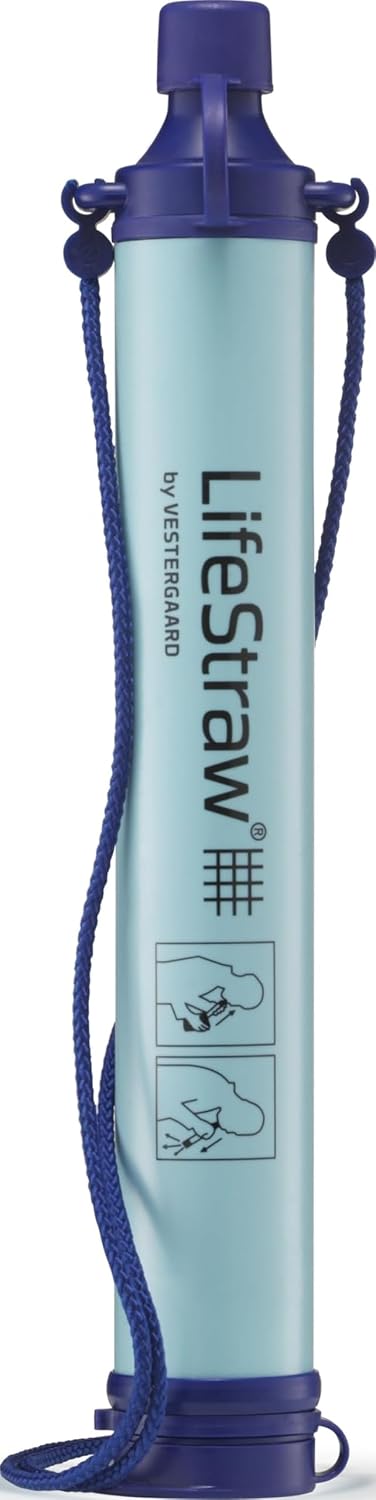
As an Amazon Associate I earn from qualifying purchases.