The $50-a-Month Prepper Plan: Build a Serious Survival Stockpile Without Breaking the Bank

Why Budget Prepping Is the Most Important Prepping
Most people never start prepping because they think it requires a bunker, a generator, and a five-figure gear budget. That's a lie that gets people killed. The truth is that consistent, disciplined spending of just $50 a month — roughly $1.65 a day — will build you a legitimate 3-month survival foundation inside a year. Inflation is cutting into every paycheck. Supply chains are still fragile. The window to prepare cheaply is closing. Start now, spend smart, and build something real.
Understanding the Core Pillars of Budget Prepping
Before you spend a single dollar, you need to understand what you're actually building toward. Survival preparedness breaks down into five non-negotiable categories. Every dollar you spend should serve at least one of these:
- Water: 1 gallon per person per day minimum. A family of four needs 90 gallons for a 3-week emergency.
- Food: Calorie-dense, shelf-stable items with 2–5 year minimum shelf life.
- First Aid: Trauma-capable kit, not just Band-Aids.
- Energy and Light: Flashlights, batteries, fire-starting tools.
- Security and Information: Communication tools and the means to protect your supplies.
Your $50 rotates through these categories monthly. You don't blow it all on one thing. You build systematically. Think of it as stacking bricks, not buying a house all at once.

The Month-by-Month $50 Breakdown
Here's a repeatable, practical spending framework. Adjust for your family size, but keep the structure.
- Month 1 — Water ($45) + Fire ($5): Buy six 7-gallon water storage containers (around $7 each at Walmart or online). That's 42 gallons. Fill them from your tap. Add two BIC lighters and a box of waterproof matches. Done. You now have two weeks of water and reliable fire-starting.
- Month 2 — Food Foundation ($50): Hit Costco, Sam's Club, or a discount grocery store. Buy 25 lbs of white rice (~$12), 20 lbs of dried pinto beans (~$14), 4 lbs of oats (~$6), 1 large container of salt (~$3), and a 4-pack of multivitamins (~$10). Store in 5-gallon buckets with gamma seal lids ($3–5 each). That's 30+ days of caloric baseline for one adult.
- Month 3 — First Aid ($50): Skip the pre-made drugstore kit. Build your own. Buy a CAT tourniquet ($30), a pack of QuikClot gauze ($12), a box of nitrile gloves ($6), and a CPR face shield ($3). This is a trauma kit. It handles the bleeds that actually kill people in emergencies.
- Month 4 — Light and Power ($50): Two quality flashlights such as the Fenix E12 or similar (~$20 each), a 12-pack of AA batteries (~$8), and two emergency candles rated for 80+ hours (~$6). You now have reliable light for 60+ days.
- Month 5 — Food Depth ($50): Repeat Month 2 with variations. Add canned goods: 12 cans of tuna (~$15), 12 cans of beans (~$10), peanut butter ($12), and honey ($8 for a 2-lb jar). Honey never expires. Peanut butter is 190 calories per serving.
- Month 6 — Communications and Info ($50): Buy a hand-crank NOAA weather radio with USB charging port (~$30), a local paper map set from your state DOT website (often free or $5), and a small notepad with pencils for grid-down record keeping. With remaining budget, add a backup whistle and signal mirror combo kit (~$10).
Repeat the cycle. By month 12, you have a 3-month food and water supply, a solid trauma kit, reliable light sources, and communication tools. All for $600 — less than a car payment.
Common Mistakes That Waste Money and Leave You Exposed
- Buying gear before food and water: A $200 tactical backpack means nothing if you have three days of groceries in your house. Basics first, every time.
- Ignoring rotation: Canned food and stored water degrade. Date everything with a black marker. Rotate older stock into your regular meals. First in, first out.
- Storing food without knowing how to cook it: Dry beans take 1–2 hours of boiling and significant fuel. Practice cooking your stored food now, on your regular stove, so grid-down prep isn't a surprise.
- Buying freeze-dried "survival meals" on a budget: At $8–12 per pouch for 2 servings, this is the most expensive way to store calories. Rice and beans give you 10x the calories per dollar. Save freeze-dried for your bug-out bag, not your primary stockpile.
- No inventory system: You think you have more than you do. Keep a handwritten log on your pantry door. Update it every time you add or remove something.

Your Weekend Assignment
This weekend, spend $50 and execute Month 1 of this plan. Buy two 7-gallon water containers, fill them, label them with today's date, and store them somewhere cool and dark. Add a lighter to every room in your house. That's it. You just went from zero to having two weeks of water and reliable fire-starting tools. Small actions, compounded over time, build the kind of preparedness that actually matters when things go sideways. Start today. Not next month.
🛒 Essential Survival Gear
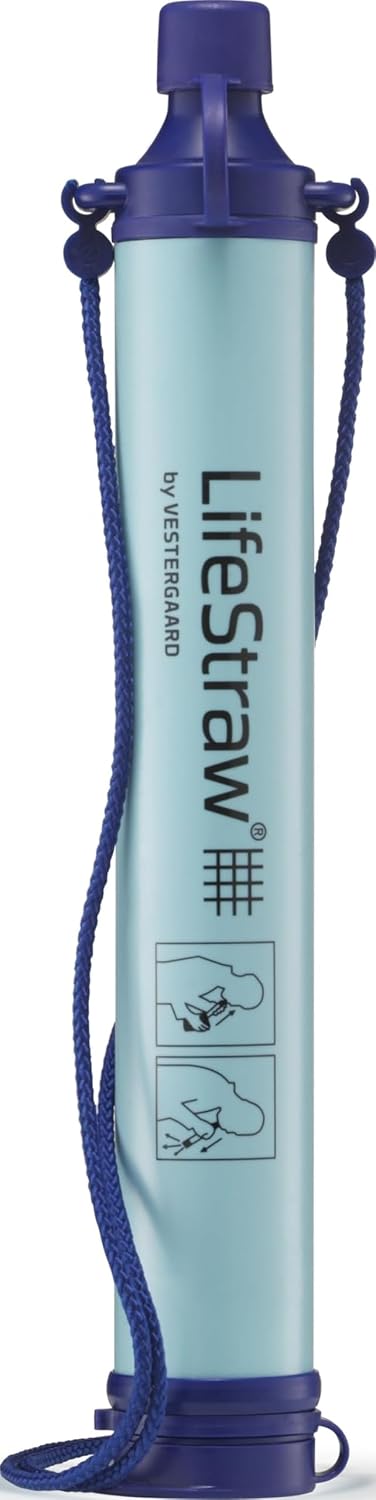
As an Amazon Associate I earn from qualifying purchases.