The 10 Most Likely SHTF Scenarios and Exactly How to Prep for Each One

Why Most Preppers Are Prepping for the Wrong Things
Most people preparing for collapse are building bunkers for nuclear war while ignoring the disasters that will actually hit them. The grid doesn't go down because of an EMP — it goes down because of an ice storm. You don't lose your home to a civil war — you lose it to a flood or wildfire. Smart preppers train and stock for probability first, then severity. This list ranks the 10 most statistically likely SHTF scenarios and gives you a concrete action plan for each one. No theory. No Hollywood fantasy. Just what's coming and what you do about it.
The 10 Most Likely Scenarios — Broken Down
Before we get into prep specifics, understand this: most of these scenarios share a core survival overlap — water, food, shelter, security, and medical. Building your base preps around that overlap means you're never starting from zero, no matter what hits. The scenarios below are ordered by likelihood, not severity.
- 1. Extended Power Grid Failure — Ice storms, hurricanes, and infrastructure decay knock out power for days to weeks. FEMA estimates the average major outage lasts 3–7 days, but regional disasters can stretch that to 3 weeks or more.
- 2. Severe Weather Events — Tornadoes, hurricanes, blizzards, and flooding. These are the most common disaster triggers in North America by a wide margin.
- 3. Economic Collapse / Hyperinflation — Gradual but devastating. Think Argentina 2001 or Venezuela 2016 — store shelves empty, currency worthless, supply chains broken.
- 4. Pandemic / Public Health Crisis — We already lived one version. The next could be worse. Transmission control, medical supply shortages, and quarantine lockdowns are the primary threats.
- 5. Wildfire — Over 70,000 wildfires burn across the U.S. annually. Fast-moving fires can outrun vehicles. Evacuation with 15–30 minutes notice is the real scenario.
- 6. Earthquake — Infrastructure destruction, trapped people, no utilities, and no emergency response for 72+ hours in major events. Highly regional but catastrophic.
- 7. Civil Unrest / Social Breakdown — Riots, looting, and localized violence following any of the above scenarios. Post-Katrina New Orleans is your case study.
- 8. Water Supply Contamination — Chemical spills, pipe failures, or infrastructure attack. Flint, Michigan showed how long authorities will lie to you about water safety.
- 9. Supply Chain Collapse — Just-in-time delivery means most grocery stores carry only 3 days of inventory. A trucking strike, fuel shortage, or port shutdown empties shelves fast.
- 10. EMP / Cyberattack on Infrastructure — Lowest probability on this list but highest severity. Power, banking, communications, and water treatment can all fail simultaneously.

Step-by-Step Prep Plan for Each Scenario
Here's your actionable framework. Each scenario gets a primary prep focus and a specific gear or supply target.
- Extended Power Grid FailureYour first 72 hours are the critical window before most people panic. Target: 30-day power independence. Get a 2,000-watt dual-fuel generator minimum and rotate 10 gallons of stabilized gasoline (use Sta-Bil at 1 oz per 2.5 gallons). Add a 100Ah lithium battery bank with a 200-watt solar panel for silent, long-term power. Stock LED lanterns, a propane camp stove with 20 lbs of propane, and a battery-operated weather radio. Keep your freezer above 85% full — a full freezer holds temp 48 hours without power versus 24 hours for a half-empty one.
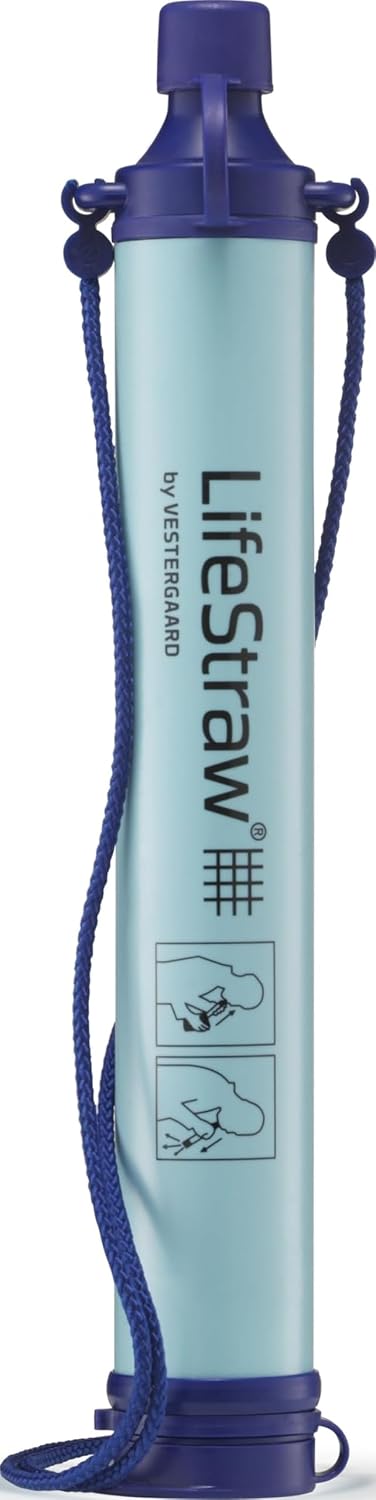
- Severe Weather EventsPrep is shelter-in-place or bug-out depending on the threat. For shelter-in-place: reinforce an interior room, stock it with 72 hours of water (1 gallon per person per day), food, first aid, and communication tools. For bug-out: your go-bag must be ready to grab in under 90 seconds. Include copies of critical documents in a waterproof bag, $500 cash in small bills, a 3-day food supply, water filtration (Sawyer Squeeze or LifeStraw), a change of clothes, and a trauma kit. Know your two exit routes before the storm season starts.
- Economic Collapse / HyperinflationThe prep here is long-term food and barter goods. Build a 6-month food storage minimum. Focus on calorie-dense staples: white rice (25 lb bags), dry beans (25 lb bags), rolled oats, pasta, canned meat, and cooking oil. Store at least 2,400 calories per person per day. Add hard assets: silver coins (1 oz rounds), hand tools, seeds, and alcohol. Keep 30–90 days of cash at home. Pay off debt aggressively — in a collapse, fixed debt becomes a weapon used against you.
- Pandemic / Public Health CrisisIsolation and medical supply redundancy are your twin defenses. Stock N95 masks (minimum 50 per person), nitrile gloves (200 count boxes), isopropyl alcohol (90%+, 2 gallons), and prescription medications with a 90-day buffer. Build a 30-day quarantine supply so you never have to enter a store during an outbreak. Learn basic wound care, fever management, and dehydration treatment. A pulse oximeter ($25) and blood pressure cuff are non-negotiable monitoring tools.
- WildfireSpeed is your only prep. Pre-load your vehicle every fire season. Keep go-bags in the car, not just the house. Maintain a defensible space of 100 feet around your structure — clear dry brush, trim trees 10 feet from your roof, and remove wood piles from against exterior walls. Sign up for your county's emergency alert system today. When the alert fires, you leave. Every minute of debate costs you separation distance from a fire that can move at 14 mph in high winds.
- EarthquakePost-quake survival is about the first 72 hours without any outside help. Strap your water heater to the wall — it's your emergency water reserve (40–80 gallons). Store a wrench near your gas shutoff and know how to use it. Keep work gloves and a pry bar accessible, not buried under gear. Store water in WaterBOB liners (100-gallon bathtub bladders) or in 55-gallon food-grade barrels. Assume roads are impassable and no responders are coming. Have a designated family meeting point two blocks from your home and one outside your neighborhood.
- Civil Unrest / Social BreakdownThe three-part answer: don't look like a target, build community now, and have a defensive posture. Keep your home profile low — no visible preps, no bragging about your stockpile. A steel-core exterior door with a quality deadbolt (Medeco or Schlage B60N minimum) and door jamb reinforcement kit is your first line. Know your neighbors. A small trusted group is exponentially safer than a lone family. Train with your home defense tools regularly and legally. Situational awareness isn't paranoia — it's pattern recognition.
- Water Supply ContaminationStore water now, filter everything during the event, and purify as a backup. Target: 2 weeks of stored water per person (14 gallons minimum, 28 gallons preferred). Use food-grade 5-gallon containers or a 55-gallon drum. For filtration: a Berkey countertop filter handles biological, chemical, and heavy metal contamination — it's the standard for a reason. Backup with iodine tablets and a Sawyer filter. Never assume your stored tap water is indefinitely safe — rotate every 6–12 months and date every container.
- Supply Chain CollapseYour grocery store is not your pantry. Build a real pantry. The baseline is a 90-day rotating food supply stocked from everyday purchases — buy two, use one. Focus on shelf-stable proteins: canned tuna, chicken, sardines, and legumes. Add vitamins (multivitamin, Vitamin C, D3) because nutrient deficiency shows up at the 30-day mark in crisis diets. Grow something — even a small container garden of tomatoes, peppers, and herbs reduces dependency and builds skill. Seed banks from non-GMO suppliers are a one-time investment with multi-year returns.
- EMP / CyberattackIf this happens, every other scenario happens simultaneously. Prep for it by prepping deep on all the above. Specifically: keep a Faraday cage (a metal trash can with a tight lid lined with cardboard) containing backup electronics — a hand-crank radio, a basic backup phone, spare solar charge controllers, and spare communication gear. Store physical maps of your region. Have a long-term off-grid plan — 6 to 12 months of food, a water source on your property, and the ability to heat and cook without electricity or gas delivery.
The Mistakes That Will Get You Killed
Most prepper failures aren't gear failures. They're planning failures. Avoid these.
- Prepping alone. Solo survival is a Hollywood myth. One person cannot maintain security, medical care, and supply management through an extended crisis. Build your tribe before you need it.
- Buying gear you haven't trained with. A Glock in a drawer you've never fired is liability. A filter you've never assembled in the dark is useless. Use everything you own before you need it.
- Ignoring medication and medical preps. Most people in a 30-day crisis will face a medical issue before a security issue. Stock antibiotics (fish mox amoxicillin as a backup), trauma supplies (Israeli bandages, QuikClot gauze, tourniquets), and take a Wilderness First Aid course — it's a weekend, not a commitment.
- Not having a bug-out location. If you plan to stay home through every scenario, you will eventually be forced out under the worst possible conditions. Know where you're going and have supplies pre-positioned there.
- Relying on digital records. When the grid goes down, so does everything on your phone. Print and waterproof-bag your insurance documents, medical records, IDs, and emergency contacts. Keep them in your go-bag.
- Skipping water and going straight to food. Humans die of dehydration in 3 days. Starvation takes weeks. Water storage is your first and most critical prep, and it's also the most commonly neglected because it's heavy and unsexy. Do it anyway.
- One-scenario thinking. Preppers who build their entire plan around one threat are one surprise away from being completely unprepared. The core preps — water, food, shelter, medical, security — cover 80% of every scenario on this list. Build the foundation first.

Your Weekend Mission
Pick the two most likely scenarios for your region — not the most exciting ones, the most probable ones. This weekend, do one concrete thing for each. Store 14 gallons of water. Test your generator under load. Build your go-bag and time yourself getting out the door. Identify your two evacuation routes and drive them both. Talk to one neighbor about mutual aid. The difference between a prepper and a survivor is that a survivor has already practiced. Get to work.
🛒 Essential Survival Gear
As an Amazon Associate I earn from qualifying purchases.