Situational Awareness: The Zero-Cost Survival Skill That Keeps You Alive When Everything Goes Wrong

Why Situational Awareness Is the Foundation of Every Other Survival Skill
The majority of people who die in violent encounters, disasters, and survival situations had warning signs they never noticed. Studies on violent crime show that attackers specifically select targets who appear distracted, unaware, and disengaged from their environment. Situational awareness isn't a military buzzword — it's the difference between going home and not going home.
Why Most People Get This Wrong
Most people think situational awareness means being paranoid, jumpy, or constantly scanning for threats like a movie action hero. That's not it. That kind of hypervigilance will exhaust you inside of 48 hours and make you useless when a real threat appears. Here's where the real failures happen:
- They rely on their phone. Head down, earbuds in, completely disconnected from the environment around them. You are a soft target the moment that screen comes on in a public space.
- They confuse familiarity with safety. "I've walked this route a hundred times." Criminals and disasters don't care about your routine — in fact, they count on it.
- They ignore baseline behavior. They don't know what normal looks like, so they can't recognize when something is wrong. If you've never studied how people normally move through a space, you won't notice when one person moves differently.
- They wait until they feel scared. By the time fear registers, you are already behind the threat curve. The goal is to identify problems before fear becomes necessary.
- They don't practice — ever. Situational awareness is a perishable skill. If you're only activating it when you think you might need it, you're too late.
- They think gear replaces awareness. A $600 tactical flashlight won't save you if you didn't see the threat coming. Gear augments awareness. It does not replace it.
The hard truth: Most people walk through their daily lives at what military and law enforcement professionals call Condition White — completely unaware, reactive, and dependent on luck. That's not a survival strategy. That's a liability.

The Fundamentals: How Situational Awareness Actually Works
The most practical framework for situational awareness comes from Colonel Jeff Cooper's Color Code system. It was developed for combat but applies directly to everyday life and emergency preparedness. Here's how to use it:
- Condition White — Unaware: You're relaxed and oblivious. Appropriate only in your own secured home. Never acceptable in public, unfamiliar terrain, or during any SHTF scenario.
- Condition Yellow — Relaxed Alert: This is your daily operating baseline. You are calm, not anxious, but your eyes are moving. You are aware of exits, of the people around you, of what is normal. This costs you nothing physically or mentally. Train yourself to live here.
- Condition Orange — Specific Alert: Something has triggered your attention. A person's body language is wrong. A vehicle is moving too slowly. A crowd is shifting suddenly. You have a specific focus and you are mentally preparing to act. Your hand may move closer to a tool. You are identifying exits.
- Condition Red — Action: The threat is confirmed. You are moving. This is not the time to think — it's the time to execute decisions you already made in Condition Orange.
The goal is to spend your life in Yellow, move to Orange when warranted, and have a plan ready so that Red becomes execution, not panic. Here's how to build that baseline awareness step by step:
- Establish baseline behavior everywhere you go. Walk into a room and spend 10 seconds observing. How are people moving? What is the noise level? Where are the exits? Where are the chokepoints? This takes 10 seconds and costs nothing.
- Identify exits immediately. Every restaurant, every building, every vehicle you enter — identify at least two ways out. Make this automatic. It takes 5 seconds.
- Watch hands and eyes. Hands hold weapons. Eyes telegraph intent. A person looking at you, then at your belongings, then back at you is running a pre-attack pattern. A person with hands hidden in a waistband in warm weather is worth watching.
- Trust your gut — then verify. The human subconscious processes threat information faster than your conscious mind. If something feels wrong, it may already be wrong. Don't dismiss that signal. Verify it by looking harder.
- Use your peripheral vision. Don't stare directly at what concerns you — you'll tip off a watching threat and lose the wider picture. Keep your focal point neutral while your peripheral vision tracks movement.
- Manage your digital distractions. Phone in public goes in a pocket or bag. One earbud out at minimum. Notifications off unless operational. You cannot process two environments at once.
- Learn to read terrain, not just people. In wilderness or disaster scenarios, awareness shifts to the environment. Cloud formations, animal behavior, water sounds, wind shifts — nature signals everything if you're paying attention.
What You Need: Skills, Tools, and Practices That Sharpen Awareness
Situational awareness is primarily a skill, not a gear purchase. But there are tools and practices that make it sharper and more sustainable. Here's your checklist:
Skills to Develop:
- Study body language — read "The Gift of Fear" by Gavin de Becker. Non-negotiable reading for anyone serious about personal security.
- Train in at least one self-defense discipline for 6 months minimum. Not because you'll use it daily — because it rewires how you read physical conflict before it starts.
- Take a CERT (Community Emergency Response Team) course through FEMA. Free, practical, and teaches threat recognition in disaster environments.
- Learn basic land navigation with a map and compass — specifically USGS 7.5-minute topographic maps for your region. GPS fails. Paper doesn't.
- Practice the memory game: after leaving any location, reconstruct it. How many people were there? What were they wearing? What was the layout? This trains active observation.
Practical Tools That Support Awareness:
- Quality EDC flashlight: 500–1000 lumens minimum, pocket-sized. Streamlight ProTac 1L-1AA or similar. Darkness is the enemy of awareness.
- Compact mirror or signal mirror: Allows you to see around corners without exposing yourself. Standard 2x3 inch signal mirror. Doubles as emergency signaling.
- Analog watch: Keeps you time-aware without pulling out your phone. Casio G-Shock series — shock resistant, water resistant to 200m, battery life up to 10 years on solar models.
- Small notebook and pen: Write down plates, descriptions, times. Memory degrades fast under stress. Rite in the Rain No. 135 (3.5x5 inch) is weatherproof and fits in a cargo pocket.
- Scanner app or dedicated radio: Baofeng UV-5R ($25–30) programmed with local emergency and weather frequencies. Situational awareness extends to information — know what's happening before you walk into it.
Daily Practices That Build the Habit:
- Every morning: check local news, weather, and any active law enforcement advisories for your area. 5 minutes. No excuses.
- Weekly: walk a new route, eat at a new location, enter an unfamiliar building. Adapt your awareness practice to new environments.
- Monthly: run a tabletop scenario. Pick a location you frequent. Mentally walk through a threat scenario — fire, active threat, medical emergency. Where do you go? What do you do?

Advanced Tactics: What Separates the Truly Prepared
Once the fundamentals are automatic, you move into the tactics that give you a genuine edge in high-threat or post-disaster environments.
- Pre-mission intelligence. Before you go anywhere significant — a new city, a crowd event, an unknown area — research it. Google street view the routes. Identify hospitals, police stations, and defensible structures. Know before you go.
- Control your position. In any room, sit or stand with your back to a wall and your face toward the primary entrance. This is not paranoia — it's positioning. You cannot react to what you cannot see.
- Develop a communication dead-drop plan. If comms go down, where does your family meet? What are the fallback locations? Level 1: primary meeting point within 1 mile. Level 2: secondary point within 5 miles. Level 3: rally point outside the area. Everyone in your household must know this without looking it up.
- Learn counter-surveillance basics. If you believe you are being followed — on foot, change direction three times. If someone follows all three direction changes, you have a problem. In a vehicle, make three right turns. A full square means a tail. Then go to a populated, well-lit location — not home.
- Map your networks, not just your terrain. In a grid-down situation, your awareness must extend to your community. Who has medical training within a 1-mile radius? Who has a generator? Who will be an asset and who will be a liability? Know this before it matters.
- Practice situational awareness under stress. Train in elevated heart rate states — right after a hard run or during a timed exercise. Cognitive function degrades under stress. The only way to maintain awareness when your adrenaline spikes is to have practiced it at elevated arousal levels.
- Leverage your night vision. Your eyes take 20–30 minutes to fully dark-adapt. Never walk out of a brightly lit building into a dark threat environment without giving your eyes time to adjust. In a power outage scenario, this is the difference between functional and blind.
The Bottom Line: Action Steps to Take This Week
No more theory. Here is your 7-day implementation plan:
- Day 1: Order "The Gift of Fear" by Gavin de Becker. Start reading it this week. It will permanently change how you process threat information.
- Day 2: Program your Baofeng or smartphone scanner app with local emergency frequencies. NOAA Weather Radio station for your region is mandatory. Write the frequencies on a card in your wallet.
- Day 3: Sit down with everyone in your household and establish your three-level communication and rally point plan. Write it down. Laminate it. Each person carries a copy.
- Day 4: Run the memory drill. Go somewhere public — coffee shop, hardware store, park. Spend 15 minutes. Leave. Write down everything you observed: number of people, clothing, exits, anything unusual. Review and improve.
- Day 5: Walk every route you commonly use and identify the chokepoints, ambush points, and safe havens. Do this on foot. You cannot see these details at 40mph.
- Day 6: Purchase a Rite in the Rain notebook and keep it on your person. Start logging daily observations. Date, location, anything that seemed out of baseline. This builds pattern recognition over time.
- Day 7: Run your first tabletop scenario. Pick your workplace or a public space you frequent. Work through a fire scenario and a medical emergency scenario. Identify gaps in your plan and address them.
Situational awareness costs you nothing but attention — and in return, it gives you the one thing no amount of gear can buy: time to act before it's too late.
The prepared person doesn't hope for the best and pray they get lucky — they see what's coming, they make a decision, and they act. That is the difference between a survivor and a statistic.
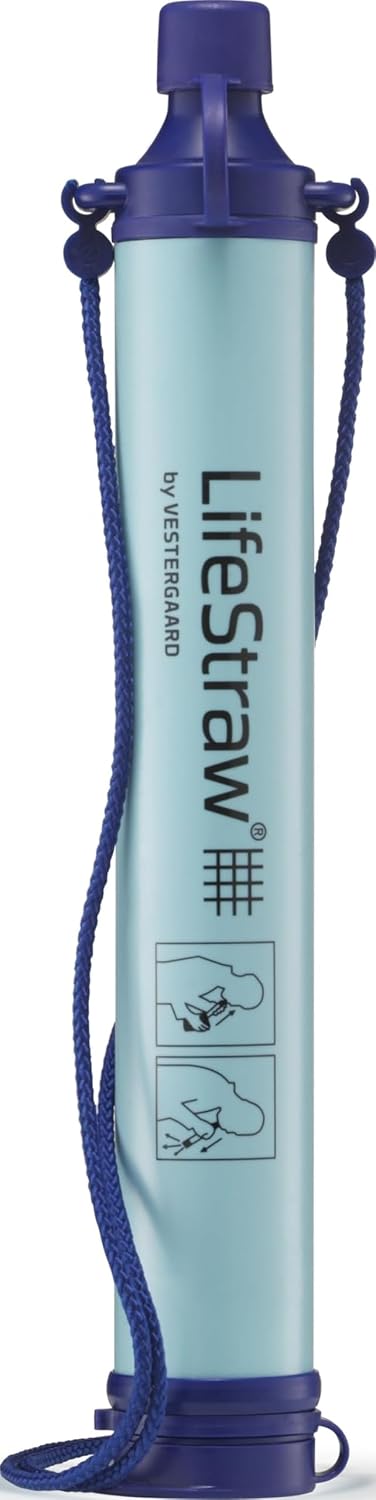
🛒 Essential Survival Gear
As an Amazon Associate I earn from qualifying purchases.