Pemmican: The Lost Survival Food That Could Save Your Family When Everything Else Runs Out

The Reality Most People Ignore
Imagine day fourteen of a grid-down scenario. Your freeze-dried meals are gone. The grocery stores were stripped bare on day two. Your family is looking at you — and your prep plan has a gaping hole in it that you never saw coming. This is the moment most preppers are completely unprepared for, and it's the moment that pemmican was literally engineered to prevent.
Pemmican is not a trending superfood or a bushcraft novelty. It is the most calorie-dense, shelf-stable, nutritionally complete survival food ever created by human beings. Indigenous peoples of North America relied on it for centuries. Arctic explorers carried it on expeditions lasting months. The Hudson's Bay Company once traded it like currency. And today, most preppers don't even know how to make it.
That is a serious problem. If your food storage plan doesn't include pemmican — or at least the knowledge and supplies to make it — you have a critical gap in your readiness. Tonight, we fix that.
Core Principles and Knowledge Breakdown
Pemmican is, at its core, three ingredients: dried lean meat, rendered fat, and optionally dried berries. That simplicity is deceptive. The ratios, the process, and the quality of each component determine whether you end up with a shelf-stable survival superfood or a rancid brick that'll make your family sick.
Here's what you need to understand before you make your first batch:
- The meat: Use only lean cuts. Fat content in the meat itself will go rancid quickly. Beef, venison, elk, and bison are ideal. Slice it thin — no thicker than a quarter inch — and dry it completely until it snaps like a cracker. A food dehydrator set to 160°F works well. So does a low oven or a proper solar dehydrator if you're off-grid.
- The rendering: Kidney fat, also called suet, is the gold standard. It renders cleaner, lasts longer, and has a more neutral flavor than other fats. Render it slowly over low heat until all moisture is cooked out. Any remaining water in your fat is the enemy — it introduces spoilage. You'll know it's done when the crackling sinks and the fat runs clear.
- The ratio: The traditional ratio is roughly 50% rendered fat to 50% powdered dried meat by weight. Grind your dried meat to a powder using a blender, food processor, or even a stone mortar in a true primitive scenario. Mix the warm liquid fat into the meat powder until fully saturated. It should hold its shape when pressed.
- The additions: Dried berries — saskatoon berries, blueberries, or cranberries — add carbohydrates, flavor, and vitamin C. This is not decoration. In a long-term survival situation, vitamin C deficiency is a real threat. Keep berry additions to roughly 10-15% of total volume to preserve shelf life.
Press your finished mixture into bars, blocks, or roll into balls. Store in a cool, dark place in breathable cloth or sealed containers. Made correctly, pemmican can last 1 to 5 years at room temperature and potentially decades when frozen. A single pound delivers roughly 3,500 calories — nearly two full days of energy for an active adult.

Building This Into Your Prep Plan
Knowledge without application is just entertainment. Here's how pemmican fits into a serious prepper's food storage architecture:
- Layer your food storage. Your 72-hour kit needs fast calories — energy bars, jerky, trail mix. Your 30-day supply needs variety and nutrition. Your long-term reserve, the stuff that carries you through a true SHTF collapse, needs pemmican. It belongs in that third tier alongside rice, beans, and freeze-dried staples.
- Calculate your needs. A single adult doing moderate physical work in a survival scenario needs approximately 2,500 to 3,500 calories per day. Pemmican at 3,500 calories per pound means roughly one pound per person per day of hard activity. For a family of four over 30 days, that's 120 pounds of finished pemmican. Start there and work backward to how much meat and fat you need to source.
- Source your inputs now. Don't wait until deer season or a cattle harvest. Order quality beef suet from a local butcher — many give it away or sell it cheap. Buy grass-fed lean beef in bulk, slice it, and start dehydrating this weekend. The skill compounds with practice.
- Build your equipment list. You need a reliable food dehydrator, a quality kitchen scale, a large heavy-bottomed pot for rendering, a blender or hand-crank grain grinder, and cheesecloth for straining fat. None of this is expensive. A solid dehydrator costs under $80 and is one of the highest-ROI pieces of prep gear you can own.
Test your finished product before you store fifty pounds of it. Eat it on a day hike. Carry it on a camping trip. Know what it tastes like, how your body processes it, and whether your family will eat it under stress. That last point matters more than most people admit.
Advanced Level — What Serious Preppers Do Differently
Competent preppers make pemmican. Serious preppers build systems around it. Here's what separates the intermediate prepper from the truly prepared:
- They hunt or raise their own protein source. Dependence on store-bought meat is a supply chain vulnerability. A homesteader with cattle or a prepper who fills their deer tag every season has raw materials that don't require a functioning economy. Learn to field-dress, butcher, and process your own animals. Pemmican becomes a byproduct of a larger self-reliance system.
- They master fat sourcing. Bear fat, lard from heritage breed pigs, and duck fat are all viable rendering materials. Each behaves differently. Bear fat, used by many indigenous pemmican makers historically, has exceptional cold-weather performance. Diversify your fat sources so you're not dependent on any single animal or supply chain.
- They document their recipes. Serious preppers keep a written, laminated recipe card in their kit. In a high-stress scenario, you want procedure, not memory. Note your ratios, your drying times, your rendering temperatures. Treat it like a field manual, because that's exactly what it is.
- They practice primitive production. What happens when your dehydrator has no power? Serious preppers practice sun-drying meat on a rack, using a reflector oven, or smoking thin strips over a low fire. They've rendered fat over an open flame. They've ground dried meat with a flat stone. These aren't hypotheticals — they're skills you drill so that power grid failure doesn't end your food production capability.
- They build community knowledge. One person can make pemmican. A community that can make pemmican is resilient. Teach your neighbors. Run a homestead skill day. Share the recipe. A prepared community is exponentially harder to break than isolated individuals hoarding supplies.

Your Action Plan — What to Do in the Next 30 Days
Stop reading survival content and start producing survival capability. Here is your 30-day pemmican mission plan:
- Week 1 — Source and learn. Visit a local butcher and acquire two pounds of beef suet and three pounds of lean beef round. Watch two videos on rendering fat and dehydrating meat. Read the USDA guidelines on safe meat drying temperatures. Buy a kitchen scale if you don't have one.
- Week 2 — First production batch. Slice your beef thin, dry it completely, render your suet, and make your first one-pound batch of pemmican. Press it into bars. Label it with the date and ingredients. Eat a piece. Assess the texture, flavor, and your body's response.
- Week 3 — Refine and scale. Adjust your ratios based on your first batch. Add dried blueberries or cranberries to a portion of your second batch. Produce three to five pounds this week. Vacuum seal or wrap tightly and store in a cool, dark location.
- Week 4 — Integrate and plan. Calculate how much pemmican your family needs for a 30-day supply and a 90-day supply. Build that number into your quarterly prep goals. Identify your ongoing meat and fat sources. Teach one family member the process so it isn't a single point of failure.
This isn't complicated. It isn't expensive. It is, however, exactly the kind of patient, methodical preparation that separates families who survive disruption from those who don't.
Self-reliance is not a hobby. It is a commitment — to your children, to your spouse, to every person under your protection. The world does not owe your family a functioning supply chain or a grocery store with full shelves. You are the failsafe. Start acting like it. Make the pemmican. Build the skill. Protect your people.
🛒 Essential Survival Gear
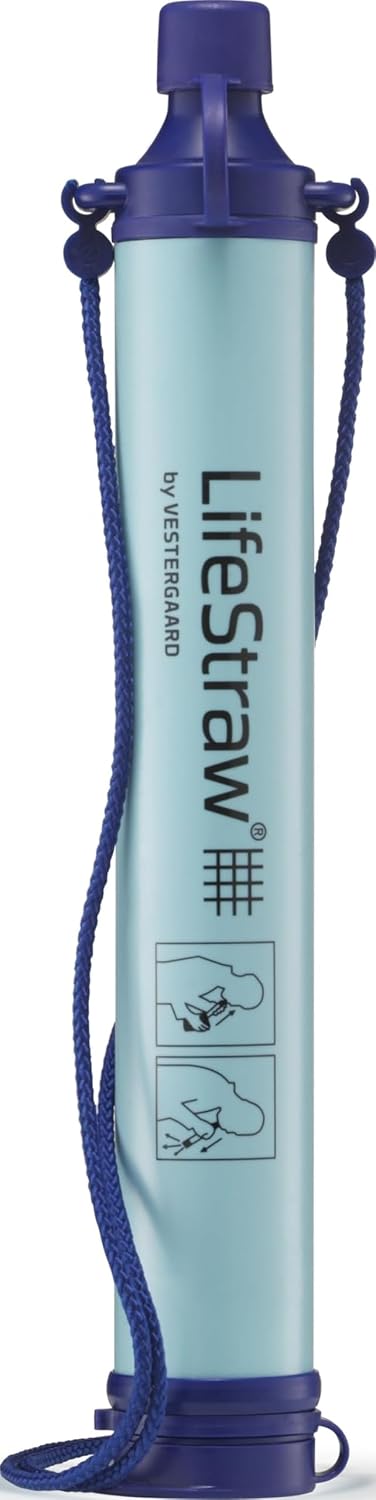
As an Amazon Associate I earn from qualifying purchases.