Pandemic Preparedness: What COVID Taught Us and What the Next One Will Demand

The Reality Most People Ignore
In March of 2020, the shelves went empty in 72 hours. Toilet paper, hand sanitizer, canned goods, bottled water — gone. People who had been living paycheck to paycheck with a three-day food supply in their pantry suddenly found themselves staring down a weeks-long lockdown with nothing in reserve. Hospitals ran out of masks. Supply chains buckled. And the governments telling everyone to "stay calm" couldn't even get basic protective equipment to frontline workers.
Here's the hard truth: COVID-19 was not the worst-case scenario. It was a dress rehearsal. The infection fatality rate, while serious, was manageable compared to what history has delivered — the 1918 Spanish Flu killed an estimated 50 to 100 million people worldwide at a time when the global population was a fraction of what it is today. Epidemiologists aren't fear-mongering when they warn about H5N1 bird flu variants, engineered pathogens, or the next zoonotic spillover event. They're reading the same historical record the rest of us should be studying.
Most people learned nothing from COVID. They stocked up on toilet paper for a week, complained about masks, and then went right back to zero preparation the moment restrictions lifted. That is not you. That is not why you're here. The people who truly get it — the ones who understand that biological events are one of the most statistically likely large-scale SHTF scenarios — they're building systems right now, while everyone else is distracted.
Let's talk about what that actually looks like.
Core Principles and Knowledge Breakdown
Pandemic preparedness is different from other survival scenarios because the threat is invisible, the timeline is extended — often months, not days — and the danger multiplies through social contact. You can't shoot a virus. You can't bug out to the woods and wait it out with a week's worth of food. This demands a specific, layered approach built on five foundational principles.
Principle 1: Isolation is your first line of defense. During a serious outbreak, the ability to shelter in place for an extended period — 60 to 90 days minimum — is the difference between exposure and survival. This isn't about paranoia. It's about keeping your family out of public spaces during peak transmission windows. That means having enough supplies to genuinely disappear from the supply chain when it matters most.
Principle 2: Medical intelligence matters more than gear. Understanding how diseases spread, what your body's immune response looks like, how to recognize early symptoms, and how to implement basic quarantine protocols inside your own home are skills that no piece of equipment can replace. Study transmission vectors — airborne, droplet, fomite, fecal-oral. Know the difference. It determines your entire defensive posture.
Principle 3: Your supply chain is a vulnerability. Every trip to the grocery store during a pandemic is a calculated risk. Every delivery person at your door is a potential exposure point. Preppers who already had deep food storage, water filtration systems, and home medical supplies in place in 2020 didn't have to make those risk calculations. Build the supply chain redundancy before you need it.
Principle 4: Community is a force multiplier — and a liability. Trusted, prepared neighbors who share skills and resources are an extraordinary asset. Unprepared people who are panicking are a risk. Know which relationships in your network are genuine preparedness partnerships and invest in those. COVID showed us that community-level coordination — mutual aid, shared watches, coordinated supply runs — dramatically increased resilience.
Principle 5: Psychological endurance is underrated. Extended isolation, fear, economic pressure, and the monotony of lockdown cracked a lot of people. Mental health is a survival resource. Have plans for maintaining routine, purpose, physical activity, and connection during a prolonged shelter-in-place situation. Families that thrived during COVID had structure. Families that fell apart had chaos.

Building This Into Your Prep Plan
Pandemic preparedness isn't a separate category from general prepping — it's an enhancement of it. If you've already built out your food storage, water supply, and first aid capabilities, you're ahead of 95% of the population. But biological events require specific additions and protocols that go beyond the standard prep checklist.
Medical Supply Stockpile — The Non-Negotiables:
- N95 respirators: Not surgical masks. Not cloth coverings. Properly fitted N95 or P100 respirators for every family member, with enough supply for a 90-day event. Learn how to conduct a proper fit test.
- Nitrile gloves: Minimum 500 pairs per household. These are cheap in bulk and used constantly in any serious medical situation.
- Eye protection: Full-seal goggles, not safety glasses. Mucous membrane exposure is a real transmission pathway.
- Tyvek suits or disposable coveralls: For anyone who must go outside during peak outbreak conditions.
- Pulse oximeters: COVID taught us that silent hypoxia — dangerously low oxygen levels without obvious symptoms — is a killer. A $25 pulse oximeter can tell you when someone needs emergency care before they feel critically ill.
- Thermometers, blood pressure cuffs, and a basic patient monitoring kit: You need to be able to assess your family's status without going to a clinic.
- Oral rehydration salts: Many pandemic illnesses cause fluid loss. Dehydration kills faster than the disease in some cases.
- Broad-spectrum antibiotics: These won't fight viruses, but they will fight the secondary bacterial infections — pneumonia, sepsis — that kill pandemic patients. Talk to a preparedness-minded physician about antibiotic stockpiling options.
Food and Water for Extended Isolation:
- Minimum 90-day food supply per person — focus on calorie-dense, nutritionally complete staples: rice, beans, oats, freeze-dried proteins and vegetables, cooking oils, salt, and vitamins.
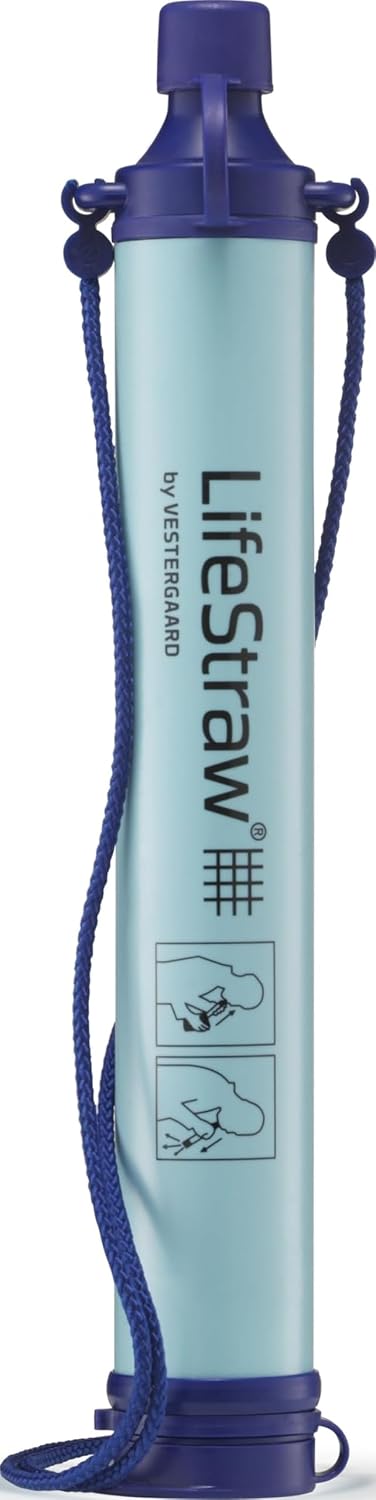
- A water filtration system capable of processing contaminated water — municipal water treatment can fail during extended crises. A gravity filter like a Berkey, combined with stored water and the knowledge to source and purify from alternative supplies, covers your bases.
- Seed stock for a kitchen garden. Extended pandemics that disrupt supply chains mean you need food production capability, not just food storage.
Decontamination Protocols:
- Designate a decontamination zone — typically a garage or mudroom — where anyone re-entering the home after outside exposure removes PPE, disinfects, and changes clothes before entering living spaces.
- Stock disinfectant concentrates. Bleach is cheap and effective. Know the dilution ratios for surface disinfection versus water treatment.
- UV-C sanitizing wands for high-touch items that can't be wiped down with liquid disinfectant.
Advanced Level — What Serious Preppers Do Differently
There's a tier of pandemic preparedness that goes beyond stockpiling gear. This is where mindset, skill, and systems thinking separate the genuinely prepared from the people who just have a lot of stuff in their basement.
They study medical protocols, not just gear lists. Serious preppers invest in books like The Merck Manual, Where There Is No Doctor, and Emergency War Surgery. They take Wilderness First Responder courses. They understand triage, symptom progression, and when to escalate care. During COVID, people who understood what early respiratory distress looked like got to the hospital in time. People who didn't waited until it was too late.
They build isolation rooms inside their homes. A dedicated quarantine space — a room with a separate ventilation path if possible, its own supply of PPE and basic medical equipment, and a communication system — allows you to care for a sick family member without exposing the rest of your household. COVID drove home how quickly entire families could be wiped out when one person brought it home and there was no isolation protocol.
They maintain operational security. During COVID, people who visibly had abundant supplies became targets for resentment and, in some areas, theft. Serious preppers don't advertise their readiness. They don't post their pantry on social media. They don't tell unprepared neighbors what they have. This isn't selfishness — it's security.
They have a communications plan that doesn't depend on the internet. Extended pandemics can cause civil unrest, infrastructure stress, and supply disruptions that take down internet and cell service. HAM radio, encrypted messaging apps cached offline, and pre-arranged communication protocols with trusted contacts ensure you can coordinate when the digital grid is unstable.
They've thought through the economic dimension. COVID demonstrated that financial preparedness is pandemic preparedness. People who had emergency funds, diversified income streams, and minimal debt survived the economic disruption without having to choose between safety and a paycheck. Cash reserves, precious metals, and barter-capable supplies — seeds, ammunition, hand tools, medicine — are pandemic assets just as much as N95 masks.

Your Action Plan — What to Do in the Next 30 Days
Stop reading and start doing. Here is your 30-day pandemic preparedness sprint. Prioritize in this order:
- Week 1 — Medical audit: Inventory every medical supply in your home right now. Identify every gap against the non-negotiable list above. Order N95 respirators, nitrile gloves, a pulse oximeter, oral rehydration salts, and a quality digital thermometer this week. These are cheap, they last years, and you will not regret having them.
- Week 2 — Food and water inventory: Calculate exactly how many days of food your household currently has. Be honest. Most families have 7 to 14 days if they're lucky. Set a target of 90 days and build toward it systematically. This week, add at least 30 days worth of core staples: rice, beans, oats, canned proteins, cooking oil, and a quality multivitamin supply.
- Week 3 — Protocols and skills: Write out your household pandemic response plan. Where is your quarantine room? What is your decontamination protocol at the door? Who in your network do you coordinate with and what are your communication channels? Take an online first aid or emergency medical response course this week. At minimum, get certified in CPR and basic first aid if you aren't already.
- Week 4 — Drill and test: Run a 48-hour shelter-in-place simulation with your family. Use only what you have stored. Identify your gaps — in supplies, in morale, in routine, in communication. A drill that exposes weaknesses now is infinitely more valuable than discovering them during an actual event. Debrief your family afterward and build a specific improvement list.
Beyond 30 days, continue building your food supply toward that 90-day target, invest in a quality water filtration system, and schedule regular skill-building — first aid training, HAM radio licensing, and hands-on medical courses. This is a progression, not a checklist you complete once.
The Bottom Line on Self-Reliance
COVID was a warning shot. The next pandemic — whether it's a novel influenza strain, a weaponized pathogen, or something we haven't named yet — will not give you the same grace period that the early months of 2020 provided. The people who are going to protect their families are the ones who treated that warning seriously and built real, functional preparedness systems while the window was open.
You cannot outsource your family's survival. Not to the government. Not to the hospital system. Not to FEMA. Not to the grocery store. The moment you genuinely internalize that truth — not as a political statement but as a practical reality — you will stop treating preparedness as optional and start treating it as the most important ongoing project in your life. Build the skills. Build the supplies. Build the systems. Your family is counting on you to be the one who was ready.
🛒 Essential Survival Gear
As an Amazon Associate I earn from qualifying purchases.