Nuclear Attack Survival: What You Actually Do in the First 24 Hours

Understanding the Nuclear Threat — It's Not What Hollywood Taught You
Most people think a nuclear attack means instant death for everyone. That's wrong, and that false belief is going to get people killed who could have survived. The reality is that the vast majority of casualties in a nuclear event are not caused by the initial blast — they're caused by radiation exposure in the hours and days afterward, exposure that is almost entirely preventable with the right actions taken fast. The window between detonation and lethal radiation accumulation is measured in minutes. What you do in those minutes determines whether you live or die. This isn't theory. This is based on documented survivor data from Hiroshima, Nagasaki, and nuclear testing programs. The physics doesn't care about your politics or your feelings. Learn this now, practice it, and be ready.
The Nuclear Survival Framework: Blast, Fallout, and the 7-10 Rule
Before we get into actions, you need to understand what you're actually dealing with. A nuclear detonation produces three primary kill mechanisms: the initial blast wave, thermal radiation (the flash and heat), and nuclear fallout. If you're close enough to the blast to be killed by the shockwave or the fireball, there's nothing in this article that will help you. But that zone — the immediate kill radius — is smaller than most people assume. A 1-megaton warhead has a fireball radius of roughly 1 mile and a severe blast damage radius of about 5 miles. Beyond that, your survival odds climb sharply — if you act correctly.
Fallout is your primary enemy if you're outside the immediate blast zone. Fallout is radioactive debris — dirt, building materials, and other particles that were sucked up into the mushroom cloud and are now descending back to earth. These particles emit gamma radiation, which penetrates walls and bodies. The critical number to memorize is the 7-10 Rule: for every 7-fold increase in time after the explosion, radiation intensity decreases by a factor of 10. What this means practically:
- 1 hour after detonation: radiation is at peak levels
- 7 hours after detonation: radiation has dropped to 10% of peak
- 49 hours (about 2 days): radiation is at 1% of peak
- 2 weeks: radiation is at approximately 0.1% of peak — survivable exposure with limited movement
This is why shelter-in-place is not giving up — it's winning. The longer you stay inside a quality shelter during those first 24-48 hours, the less total radiation dose your body absorbs. Time, distance, and shielding are the three tools that keep you alive.
Distance matters exponentially. Moving even a few miles away from the detonation point dramatically reduces your exposure. But only attempt to evacuate if you can do so before fallout arrives — typically within 15-20 minutes of the blast in many scenarios. If you can't get at least 10 miles out in that window, you are better served by sheltering in place immediately.
Shielding is measured in mass. The more dense material between you and fallout particles, the better. Concrete, brick, and earth are your best friends. A basement in a multi-story brick or concrete building cuts your radiation exposure by a factor of 200 or more. Even the center of a large office building on an upper floor cuts exposure significantly compared to being outside.

Step-by-Step: What You Do from Detonation Forward
- Identify the flash immediately and take cover. If you see a blinding flash and you're still alive, you're likely outside the immediate kill zone. Drop to the ground behind any solid cover — a concrete wall, a vehicle, a ditch. The blast wave travels at roughly 1,000 feet per second. If the detonation was 5 miles away, you have about 26 seconds before the wave hits. Do not stand and watch. Get down and cover your head with your arms.
- Assess your location within 60 seconds. Are you indoors or outdoors? If outdoors, where is the nearest substantial structure with a basement? Identify it and move toward it immediately. You have a window of roughly 10-20 minutes before fallout begins to descend, depending on wind speed and distance from the detonation.
- Get inside — choose your shelter by quality, in this order:
- Best: Underground subway tunnels, basement of a multi-story concrete or brick building, underground parking garage with overhead concrete floors
- Good: Interior rooms of a large brick or concrete building, away from windows and exterior walls
- Acceptable: Center of a large wood-frame building on the ground floor, interior bathroom or closet
- Last resort: Your car with windows up, parked under a highway overpass or inside a parking structure
- Seal the space — but don't panic about airtightness. Close all windows, doors, and fireplace dampers. Turn off HVAC systems, fans, and anything that draws outside air in. Use duct tape and plastic sheeting to cover gaps around doors and windows if you have them. You're not building a perfect seal — you're dramatically reducing the amount of fallout particles that enter the space. Even a 70-80% reduction in particle infiltration is significant. If you have N95 or P100 respirators, wear them during the sealing process.
- Strip and bag outer clothing if you were outdoors. Radioactive fallout particles adhere to clothing and skin. Remove outer layers — coat, shirt, pants — and seal them in a plastic bag or leave them outside the shelter area. Then wash exposed skin with soap and water for a full 3-5 minutes. Do not scrub — gentle washing removes particles without abrading skin and driving them in. Blow your nose, gently wipe eyes with a clean wet cloth, and rinse your mouth.
- Inventory your supplies immediately. You need to know what you have before you need it. Prioritize:
- Water: Minimum 1 gallon per person per day. Fill bathtubs, sinks, and any available containers NOW, before water pressure drops. Sealed containers are preferred — if water was exposed to fallout, it's contaminated.
- Food: Sealed canned goods and packaged food are safe. Do not eat food that was uncovered outdoors after the blast.
- Potassium Iodide (KI): 130mg tablets for adults, 65mg for children 3-18, 32mg for infants. KI protects the thyroid from radioactive iodine — one specific component of fallout. It does NOT protect the rest of your body from radiation. Take it only if directed by emergency management or if you have confirmed nuclear detonation and no evacuation option. Do not take it prophylactically days in advance.
- Communication: A hand-crank or battery-powered NOAA weather radio is critical. Emergency broadcasts will tell you when it's safe to move, where to go, and what areas to avoid.
- Shelter in place for a minimum of 24 hours — 48 is better. Based on the 7-10 Rule, radiation drops 90% in the first 7 hours. But your goal is to absorb as little cumulative dose as possible. Every hour you stay inside during those first two days matters. If you have a dosimeter or radiation detector, use it to monitor levels inside your shelter versus what broadcasts are reporting outside.
- Establish shelter hygiene protocols. Designate one area near the entry point as a decontamination zone. Anyone entering from outside removes and bags outer clothing here. Establish a latrine protocol if water is limited. Rotate sleep schedules if space is cramped. Maintain calm — panic increases cortisol, impairs decision-making, and can destabilize a group shelter situation.
- Plan your exit — don't leave without information. Wait for official all-clear broadcasts or confirmed radiation readings from a personal detector showing levels below 2 mR/hr (milliroentgens per hour) sustained for several hours. Have a bug-out destination pre-selected that is at least 50-100 miles upwind from major population centers or military targets. Know two routes to get there.
Common Mistakes That Will Get You Killed
Mistake #1: Evacuating after fallout has already started. This is the deadliest error people make. If you're driving through a fallout zone, your vehicle provides minimal shielding. You are accumulating lethal doses while sitting in traffic next to thousands of other panicking people. If you can't make clean distance in 15 minutes, you shelter. Period.
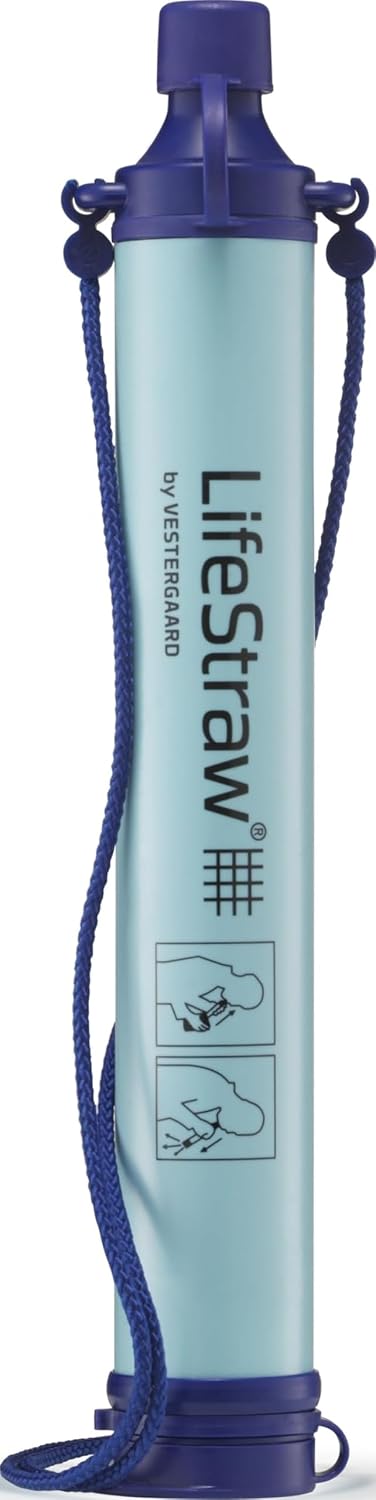
Mistake #2: Assuming water from taps is safe without filtering. Tap water drawn from municipal systems shortly after a blast is generally considered safer than surface water, because most water treatment infrastructure pulls from underground sources or sealed reservoirs. However, this changes over time as systems fail. Store what you have now and treat any questionable water. Radiation does NOT make water radioactive — but fallout particles suspended IN water are dangerous. A quality ceramic or gravity filter rated to remove particulates will remove fallout particles. Reverse osmosis is even better. Standard carbon filters alone are not sufficient.
Mistake #3: Relying on KI as your primary protection. Potassium Iodide is one tool for one specific threat — radioactive iodine uptake by the thyroid. People treat it like a radiation cure-all. It is not. Your primary protection is mass shielding, time, and distance. KI supplements those measures — it doesn't replace them.
Mistake #4: Opening doors and windows to "check" the outside. Every time you breach your shelter, you bring fallout particles inside. If you absolutely must go outside during the first 48 hours — to retrieve supplies, move to better shelter, assist an injured person — cover every inch of skin, wear a respirator or N95 mask at minimum, and decontaminate completely before re-entering your shelter space.
Mistake #5: Having no pre-positioned supplies. You will not have time to gather supplies after a detonation. The shelter-in-place kit needs to already exist. At minimum, every home should have: 14 gallons of stored water per person, a 2-week supply of sealed food, a hand-crank radio, a basic first aid kit, N95 masks, plastic sheeting and duct tape, and KI tablets. If you don't have these items pre-staged, you are not prepared — you are hoping.
Mistake #6: Believing your cell phone will work. A nuclear detonation — particularly an airburst designed to maximize EMP effect — can disable electronics across hundreds of miles. Cell towers will be overwhelmed or destroyed. Your smartphone is a liability you're counting on that may not function. A battery-powered or hand-crank AM/FM/NOAA radio with fresh batteries stored in a Faraday bag or metal container is your communication lifeline.
Mistake #7: Ignoring the psychological threat. Panic kills in nuclear scenarios by driving people into the open, triggering fights over resources, and causing decision paralysis. Brief your family on the plan now. Walk through the shelter-in-place procedure until it's automatic. Children especially need pre-drilled responses — not because you're frightening them, but because preparation removes fear and replaces it with action.

What to Practice This Weekend
This weekend, do three things. First, identify the two best shelter locations within one mile of your home, your workplace, and your kids' school. Know which buildings are concrete or brick, which have basements, and how fast you can reach them on foot. Second, inventory your current shelter-in-place kit against the checklist in this article. Write down what's missing and order it this week — KI tablets, plastic sheeting, duct tape, and a hand-crank NOAA radio are all available online for under $100 total. Third, walk your family through the first 10 minutes of a nuclear response: flash, drop, assess, move, seal, strip, wash. Time it. If it takes more than 8 minutes, practice again. The physics of nuclear survival are unforgiving — but they're also knowable. Know them.
🛒 Essential Survival Gear
As an Amazon Associate I earn from qualifying purchases.