MRE vs Freeze-Dried vs Canned: Which Emergency Food Actually Keeps You Alive

The Bottom Line Before We Start
When the grid goes down, your pantry becomes your lifeline. Most preppers make the mistake of stockpiling whatever's cheapest or most convenient without understanding the critical tradeoffs between their options. MREs, freeze-dried meals, and canned goods each have a specific place in a serious food storage strategy — and using the wrong one at the wrong time can mean the difference between thriving and scrambling. This is not a matter of preference. It's logistics, calories, shelf life, and operational reality. Know your tools before you need them.
Breaking Down the Three Food Storage Options
MREs (Meals Ready to Eat) were engineered by the U.S. military for one purpose: keep soldiers operational in the field with zero infrastructure. Each MRE delivers approximately 1,200–1,300 calories and is completely self-contained. You get an entree, side dish, crackers, spread, dessert, accessory pack, and a flameless ration heater (FRH) that uses a magnesium-iron powder reaction — just add 1–2 ounces of water and it heats your meal to around 100°F in 12 minutes. No fire required. No stove required. That's the core advantage.
Shelf life on genuine military MREs is typically 3–5 years at 80°F (27°C), but storage temperature matters enormously. At 60°F (16°C), shelf life extends to 10+ years. At 100°F (38°C), you're looking at 18 months before quality degrades significantly. Commercial MREs from brands like XMRE, Ameriqual, or Sopakco follow similar curves. A full case contains 12 meals and weighs approximately 20 pounds.
Freeze-Dried Food is the premium tier of long-term food storage. The freeze-drying process removes 98–99% of moisture from food while preserving nutritional integrity and flavor far better than heat-based preservation. Brands like Mountain House, Wise Company, and Augason Farms are the industry standard. A single serving typically runs 200–400 calories, and a full-day supply in a #10 can (about 96 oz) provides roughly 2,000–2,500 calories depending on the product. The catch: you need water to rehydrate — typically 1 to 2 cups per serving — and ideally hot water for best results, though cold water works in a pinch with a longer soak time of 20–30 minutes.
Shelf life is where freeze-dried food dominates everything else. Properly sealed in oxygen-free #10 cans, quality freeze-dried food lasts 25–30 years. Mylar-pouched varieties run 5–7 years once opened, so plan accordingly. Cost is the downside — a 72-hour emergency kit from Mountain House runs $50–$80 per person. A 1-year supply for one adult can cost $1,500–$3,000 or more depending on the brand and calorie targets.
Canned Goods are the working backbone of any serious food storage program. This is what most households already have in some quantity, and with strategy, it becomes a powerful system. Standard commercially canned foods — vegetables, beans, meats, soups — last 2–5 years from the production date, though the USDA confirms most remain safe well beyond the "best by" date if the can is intact and undamaged. High-acid foods like tomatoes and citrus last 12–18 months for best quality. Low-acid foods like canned meats, corn, and beans can remain safe for 5+ years.
The critical advantage of canned food is that it requires no water, no preparation equipment, and in many cases no heating. A can of beans is a can of beans. Open it and eat. For a true grid-down scenario — no power, no water, no fuel — canned goods are often your most immediately deployable resource. A standard #10 industrial can holds roughly 6–7 cups of product. A case of 24 standard 15 oz cans of mixed beans runs $25–$35 and delivers approximately 9,000–12,000 calories.

How to Build Your Tiered Food Storage System
The right answer is not one type of food — it's all three, deployed strategically across three operational tiers. Here's how to build it.
- Tier 1 — Bug Out and 72-Hour Kits (MREs): Load your bug out bag with 6–9 MREs per person. That's 3 days of full military-style rations with no prep required. Target bags weighing no more than 30–35 lbs total including water, gear, and food. MREs run about 3.5 lbs each, so 6 MREs adds 21 lbs — factor that into your weight budget carefully. Rotate MREs every 3 years if stored at average room temperature.
- Tier 2 — Short-to-Medium Term Shelter-in-Place (Freeze-Dried + MREs): For a 2-week to 3-month disruption where you're staying put but have limited infrastructure, freeze-dried food is your primary option. Stock a minimum of 2,000 calories per person per day. For a family of four over 90 days, that means roughly 720,000 calories — plan accordingly and use a spreadsheet to track it. Pair with a propane camp stove (minimum two 1-lb canisters per week) or a wood-burning rocket stove as your primary heat source. Store water or have filtration capacity: you'll need 1 gallon per person per day minimum, with freeze-dried meals consuming an additional 1–2 cups per meal on top of drinking water needs.
- Tier 3 — Long-Term Sustenance (Canned Goods + Freeze-Dried): This is your deep larder. Build a rotating stock of canned goods targeting a 6-month to 1-year supply minimum. Use the First In, First Out (FIFO) method — newer cans go behind older ones. Keep a dated inventory log. Target calorie-dense canned items: canned meats like chicken (200–250 cal/can), canned beans (300–400 cal/can), canned vegetables (50–100 cal/can), and canned soups (150–250 cal/can). Budget roughly $600–$900 to stock 6 months of canned food for one adult at 1,800 calories per day if bought on sale and in bulk.
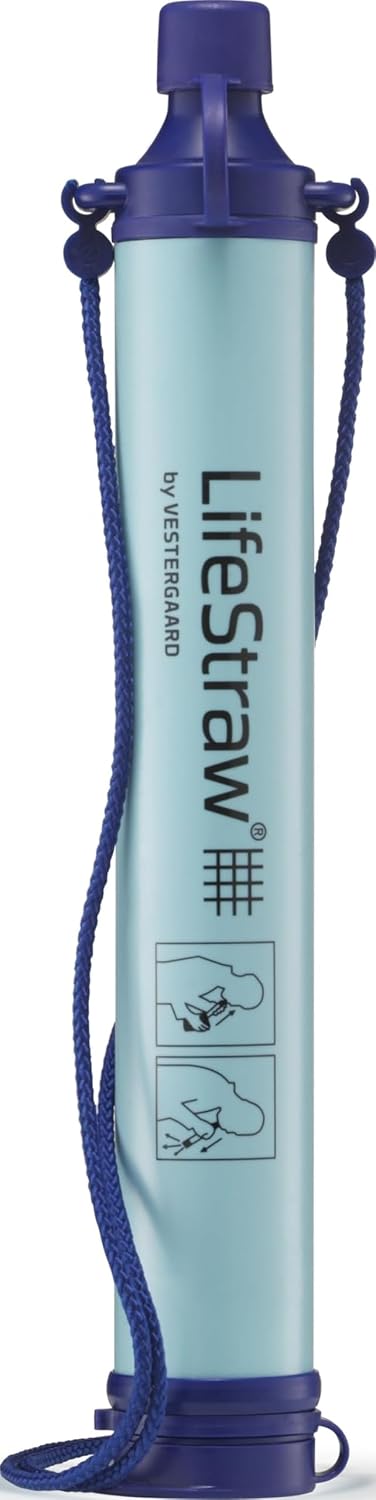
- Water planning is non-negotiable: Store a minimum of 1 gallon per person per day. For 30 days for two people, that's 60 gallons. Use food-grade 5-gallon jerry cans or a 55-gallon drum with a hand pump. Add a quality gravity filter like a Berkey or Sawyer Squeeze as backup. Without water, your freeze-dried food is dead weight.
- Calorie audit your plan: Most prepper food plans are calorie-deficient. An adult doing moderate physical work during a crisis needs 2,500–3,500 calories per day, not 1,200. Recalculate your stockpile against real numbers, not optimistic estimates. You will be working harder than you think when SHTF.
- Nutritional balance matters more than you think: Pure calorie counting isn't enough. You need protein (minimum 50–60g per day), fats, and key vitamins. MREs are nutritionally engineered and balanced. Freeze-dried meals vary — check the label. Pure canned good diets can be deficient in fats and vitamins A, D, and B12. Stock a 6-month supply of quality multivitamins and consider adding canned fish (tuna, sardines, salmon) for omega-3s and protein density.
Critical Mistakes That Will Get You Into Trouble
- Buying food you don't eat: If your freeze-dried rotation consists of meals you'd never touch under normal circumstances, you won't eat them under stress either. Appetite fatigue is real — soldiers on long MRE rotations lose weight because they stop eating palatable food. Test every product before you stockpile it in bulk. Buy a sample kit first.
- Ignoring storage temperature: This kills shelf life faster than anything else. Storing MREs in a hot garage in Texas effectively cuts their life by 60–70%. Every storage location should stay below 70°F (21°C) consistently. Basements and interior closets are your best bet. Thermal fluctuations also degrade food faster than steady moderate warmth.
- No rotation system: Buying and forgetting is the most common prepper failure. A 3-year-old MRE that you've never checked and a can of soup that expired in 2019 are not assets — they're liabilities you don't know about yet. Physically audit your storage every 6 months. Pull the oldest items into your regular diet and replenish the back of the stock. This also means you're regularly eating and testing your preps, which matters.
- Underestimating water needs for freeze-dried food: Preppers frequently stock 6 months of freeze-dried food and 2 weeks of water. The math doesn't work. Rehydrating freeze-dried meals at 1.5 cups per serving, three times a day, for one person adds up to approximately 4.5 cups — over a quart — just for food preparation per day. That's on top of drinking water. Build your water storage and filtration capacity first, then build your freeze-dried supply.
- Relying solely on MREs long-term: MREs are operational field rations, not designed for sustained multi-month consumption. They're high in sodium (averaging 1,500–2,500mg per meal), calorie-dense, and low in fiber. Extended MRE-only diets cause digestive issues, including the infamous "MRE constipation" that military personnel know well. Use them as a tactical tool, not your entire strategy.
- Forgetting manual can openers: This one is almost embarrassing to list, but it happens. You have 200 cans of food and a P-38 military can opener as your only backup. Stock at least three quality manual can openers per household. A good OXO or Kuhn Rikon runs $10–$15 and is worth every cent. Keep one in your bug out bag, one in the kitchen, one in your storage area.
- Single-source purchasing: Supply chains break during crises. If you bought everything from one brand or one retailer, you have single points of failure. Diversify: mix brands, mix can sizes, mix product types. This also protects you against batch-specific quality issues and gives you more flexibility in portions and preparation.

What to Do This Weekend
This weekend, do a hard audit of what you actually have stored. Pull everything out. Check dates. Weigh your MRE bag. Count your cans. Tally your calories honestly against the real daily requirement of 2,500 calories per person. Then calculate your water supply against your freeze-dried food quantity. The gaps you find are the gaps that kill you in an actual emergency. Pick the biggest hole in your system and start filling it Monday morning — whether that's ordering a case of Mountain House, hitting the grocery store for a 30-can run, or finally stocking that second 55-gallon water drum. Don't plan to plan. Fix one thing this week.
🛒 Essential Survival Gear
As an Amazon Associate I earn from qualifying purchases.