Lone Wolves Die First: How to Build a Survival Community That Actually Has Your Back

The Hard Truth About Going It Alone
Picture this: It's day nine after a catastrophic grid failure. Your generator is running low on fuel, your neighbor just knocked on your door asking for food, and your teenager just came down with a fever that needs antibiotics you don't have. You've got the gear. You've got the food storage. But right now, what you desperately need is a network — a doctor two streets over, a mechanic who can keep your truck running, a farmer outside of town who can trade eggs for labor. The lone wolf fantasy looks great on paper until reality kicks the door in. The uncomfortable truth is this: no single person or family can survive a long-term collapse alone. History doesn't lie, and the preppers who live through genuine catastrophe don't do it solo.
The Reality Most People Ignore
The prepping community has a serious blind spot, and it's costing people their edge. Too many serious preppers spend thousands of dollars on freeze-dried food, water filtration systems, and tactical gear — and then they sit alone in their houses, guarding it all like dragons on a hoard. That's not preparedness. That's hoarding with anxiety.
Let's look at real historical collapses for context. During the Siege of Sarajevo in the 1990s, which lasted nearly four years, the people who survived weren't the ones with the most stockpiled goods. They were the ones embedded in tight, trust-based community networks. They traded skills. They shared watch duties. They pooled medical knowledge. They looked out for each other's children. Selco Begovic, a survivor who has since become a well-known voice in the prepping world, has said it plainly: community was the single most important survival factor he witnessed.
Closer to home, look at how communities responded after Hurricane Katrina, the 2021 Texas winter storm, or any number of regional disasters. The neighborhoods that fared best weren't the wealthiest — they were the ones where people already knew each other, already had informal communication networks, and were already in the habit of helping one another. Community is infrastructure. And most preppers are building a house while ignoring the foundation.
There's also a tactical reality that's hard to ignore. You cannot maintain 24-hour security on a property by yourself or even with a single family. You can't perform surgery on yourself. You can't be everywhere at once. A network of ten trusted, skilled people multiplies your capabilities exponentially. A community of twenty-five makes you nearly unstoppable in a localized crisis scenario.

Core Principles and Knowledge Breakdown
Before you start knocking on doors and handing out your bug-out plans, understand that building a legitimate survival community requires structure, philosophy, and careful vetting. This isn't about making friends — it's about building an operational unit. Here are the core principles that serious preppers apply:
- Skills over stuff: When evaluating potential community members, prioritize what they can do over what they own. A nurse with a camping tent is worth more than a guy with a gun safe and no practical skills. Identify gaps in your own skill set first — medical, mechanical, agricultural, communications — and then actively seek people who fill those gaps.
- Trust is built slowly and verified: Never rush integration. A solid community develops over months and years, not weeks. Trust is earned through consistent behavior, shared experience, and demonstrated reliability. Vetting isn't paranoia — it's operational necessity.
- Operational security (OPSEC) remains critical: Not everyone in your extended network needs to know everything. Use a tiered information system. Inner circle members know your primary bug-out location. Outer circle members know how to reach you and what your general plans are. Casual network members know only that you're a resource for mutual aid.
- Skill diversity is non-negotiable: A well-rounded survival community covers the following disciplines — emergency medicine and first aid, food production and preservation, water sourcing and purification, communications (ham radio operators are gold), mechanical repair, security and self-defense, construction and shelter building, and navigation. If your group is heavy on tactical skills and light on medical knowledge, you've got a dangerous gap.
- Shared values, not identical politics: You don't need a community of clones. You need people who share core values around self-reliance, family protection, personal responsibility, and mutual aid. Political disagreements won't matter when you're managing a water filtration system together after a flood.
Understanding group dynamics is equally important. Groups larger than about 150 people — Dunbar's Number — become difficult to manage on a trust basis. For a true survival community, you're looking at a core group of 8 to 25 people who are deeply integrated, with a broader network of 50 to 150 who can be called on for specific needs. Keep your inner circle tight and your outer network wide.
Building This Into Your Prep Plan
Community building doesn't happen by accident — you have to be intentional and systematic about it. Here's how to start weaving it into your existing preparedness framework:
- Map your existing network: Start with who you already know. Family, neighbors, church members, coworkers, fellow hobbyists. Write them down. Next to each name, note what skills they have that would be valuable in a crisis. You'll be surprised how much latent capability exists in your current circle.
- Join existing groups with organic overlap: Ham radio clubs, local shooting ranges, homesteading groups, volunteer fire departments, community emergency response teams (CERT), hunting clubs, and farmer's markets are all natural gathering places for self-reliant people. You're not showing up to recruit — you're showing up to belong, learn, and contribute. Let relationships build naturally.
- Host skills-based gatherings: Organize low-key events that attract like-minded people. A backyard canning workshop. A first aid refresher class. A neighborhood fire-starting demonstration for kids. These events build social bonds and help you identify serious people versus casual hobbyists without anyone having to wave a flag.
- Create a mutual aid agreement: Once you've identified your core group, formalize things with a simple mutual aid framework. Who does what in a crisis? What resources can each household contribute? What's the communication protocol? This doesn't need to be a military operations order — even a single page of agreed-upon roles and contact methods dramatically increases your group's effectiveness.
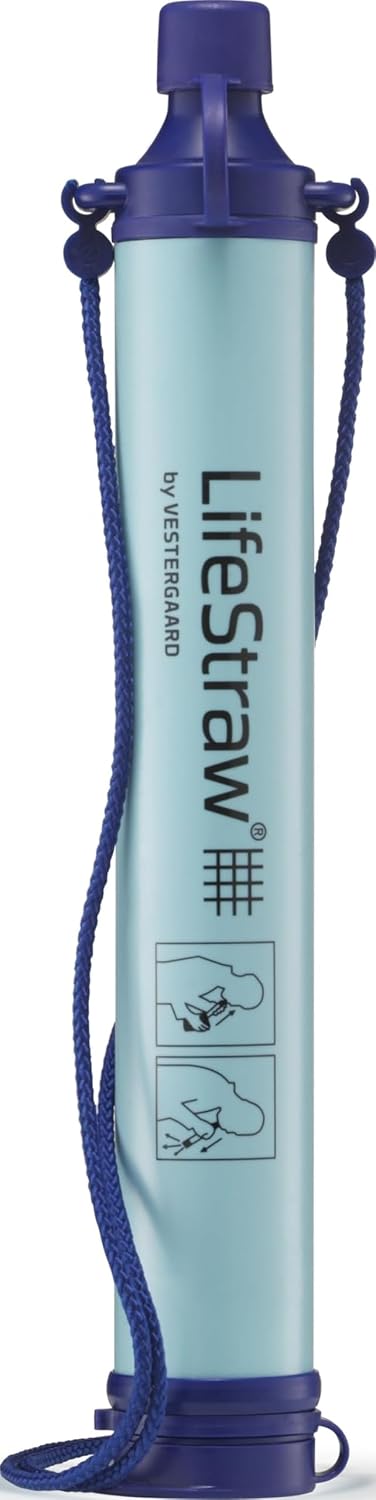
- Integrate community prep into your gear planning: Start thinking in multiples. Buy an extra water filter for a neighbor who can't afford one. Stock an extra trauma kit. Invest in communications gear — a good set of GMRS radios or a ham radio setup — that your inner circle can share. When you make your community stronger, you make yourself stronger.

Advanced Level — What Serious Preppers Do Differently
Once you've built the foundation, the serious work begins. Preppers who operate at an advanced level treat their community the way a Special Forces team treats their unit — with ongoing training, clear roles, redundancy planning, and ruthless honesty about gaps and weaknesses.
They conduct regular group exercises. Not just solo bug-out drills in the backyard. Coordinated group scenarios. What happens if communication goes down for 48 hours? Can your group execute a predetermined rally plan without contact? Run the drill and find out. Every failure in a drill is a lesson that costs nothing. The same failure in a real crisis can cost everything.
They invest in group communications infrastructure. A well-prepared community has a layered communications plan. Cell phones as primary, GMRS radios as secondary, ham radio as tertiary, and physical dead drop locations or pre-agreed signal systems as final fallback. At minimum, every inner circle member should have a programmed GMRS radio on the same channels and know the check-in protocol.
They cross-train relentlessly. The medic trains with the mechanic. The farmer teaches food preservation to the security-minded members. Cross-training eliminates single points of failure. If your only medical person is incapacitated, someone else needs to step up. That only happens if training has already happened.
They build physical infrastructure together. Advanced prep communities work on shared physical projects — a community water well, a shared root cellar, a reinforced meeting point, a shared seed bank. These projects deepen trust, create shared investment, and produce real capability. There's no stronger bond than building something together that might one day save your lives.
They have hard conversations proactively. What happens to children if parents are incapacitated? What are the rules around resource distribution in a prolonged crisis? Who has decision-making authority in an emergency? These conversations are uncomfortable in peacetime and absolutely critical in crisis. Do them now, while everyone is calm and rational.
Your Action Plan — What to Do in the Next 30 Days
Stop reading and start doing. Here's your 30-day community-building sprint:
- Days 1–5: Conduct your network audit. List every person you know who demonstrates self-reliance, practical skills, or serious-mindedness. Don't judge yet — just list. Aim for 20 names minimum.
- Days 6–10: Identify the three most critical skill gaps in your current prep plan. Medical? Communications? Agricultural? Mechanical? Now look at your list and identify who partially fills those gaps. Make contact — not as a prepper recruiting speech, but as a neighbor or friend reaching out.
- Days 11–15: Attend or organize one skills-based community event. It can be as simple as inviting three families over to walk through basic first aid together. Low-key, practical, and relationship-building.
- Days 16–20: Research local CERT training, ham radio clubs, or homesteading groups in your area. Sign up for something. Show up. Be present, be useful, and keep your mouth shut about your full level of preparation until trust is established.
- Days 21–25: Have one genuine, honest conversation with your most trusted neighbor or family member about mutual aid. Not a prepper manifesto — just an honest conversation about the value of helping each other in tough times. Plant the seed.
- Days 26–30: Draft a simple one-page mutual aid plan for your household. Define your communication protocol, your rally point, and what resources you can contribute to a community effort. Share it with your inner circle. Refine it together.
Thirty days. Small, consistent actions. Community is built in exactly the same way all great things are built — one intentional day at a time.
The Bottom Line
Self-reliance doesn't mean isolation. The most self-reliant people in history — the mountain men, the homesteaders, the wartime resistance fighters — all understood that real strength comes from trusted community. Your family's survival in a genuine long-term crisis will depend not just on your gear and your skills, but on the people standing next to you. Start building that community now, while the world is still calm, while there's still time to vet, to train, and to trust. Because when the crisis arrives, you won't have time to make new friends — you'll only have the people you've already built something with. Protect your family by protecting your community. That's the real work of a serious prepper.
🛒 Essential Survival Gear
As an Amazon Associate I earn from qualifying purchases.