How to Live on 5 Acres: The Complete Self-Reliance Plan

Why This Is Non-Negotiable
Five acres. That's roughly the size of four city blocks, and it's enough land to feed a family, generate power, collect water, raise animals, and never depend on a grocery store again — if you know what you're doing. If you don't, it's just an expensive lawn that slowly drains your resources while the grid keeps you on a leash.
Most people who "move to the country" end up more dependent than they were in the suburbs. They buy land without a plan, throw up a garden, and call it homesteading. Then the first hard winter hits, the well pump fails, the garden gets wiped by a late frost, and they're driving 45 minutes to Walmart three times a week. That's not self-reliance. That's rural cosplay.
A true self-reliance plan on 5 acres means you've mapped every square foot with intention — food production, water security, energy independence, shelter resilience, and a defensive perimeter. This guide is how you build that plan from the ground up. No fluff, no shortcuts.
What You Need Before You Start
Before you plant a seed or drive a fence post, you need infrastructure intelligence. You must understand what you're working with at a deep level. Skipping this step is how people waste thousands of dollars and years of effort.
- Soil test: Get a full soil analysis from your county extension office or use a kit like the Luster Leaf Rapitest. You need to know your pH, nitrogen, phosphorus, potassium, and organic matter content. Every decision about what you grow depends on this.
- Topographic map of your property: Mark high ground, low ground, natural water flow, frost pockets, and wind corridors. Free tools like the USGS National Map or OnX Maps work well for this.
- Water source assessment: Do you have a well? What's the depth? What's the static water level? Is there a natural spring, creek, or pond? Know your water table before you plan anything else.
- Sun exposure mapping: Walk the property at different times of day across different seasons. Mark where you get full sun (6+ hours), partial sun, and shade. This dictates garden placement and solar panel positioning.
- Legal and zoning review: Know your county's regulations on rainwater collection, livestock, outbuildings, and composting toilets before you build anything. Ignorance isn't protection from code enforcement.
- Tools and equipment baseline: You need at minimum a BCS walk-behind tractor or a compact tractor like a Kubota B series, a quality chainsaw (Stihl MS 271 or equivalent), hand tools (digging forks, broad forks, hoes, shovels), and a reliable truck with towing capacity.

The Complete Self-Reliance Plan: Step by Step
Break your 5 acres into functional zones. This is a concept borrowed from permaculture, but it's not just theory — it's an operational layout that reduces your labor and maximizes output.
- Zone 1 — The House and Immediate Perimeter (0–100 feet):This is your most intensively managed zone. Place your kitchen garden here — herbs, greens, tomatoes, peppers, root vegetables. Raised beds with a mix of quality topsoil and compost work best if your native soil is poor. Install a rainwater collection system off your roof gutters using food-grade 275-gallon IBC totes. In most climates, a 1,500 square foot roof can collect 900+ gallons per inch of rain. Add a first-flush diverter and a sediment filter before the tank. Keep a minimum 3-month food supply stored inside the house — freeze-dried buckets, bulk grains in Mylar bags with oxygen absorbers inside 5-gallon buckets, and canned goods on rotation.
- Zone 2 — The Working Farm (0.5–2 acres):This is where your main food production lives. Dedicate at least half an acre to annual crops — corn, beans, squash (the Three Sisters work for a reason), potatoes, winter squash, and root vegetables that store well. Fence this zone hard — 5-foot welded wire with an electric hot wire on the outside to stop deer and predators. Add a small orchard of dwarf or semi-dwarf fruit trees on the eastern or southern edge — apples, pears, plums, and a few pawpaws if you're in a temperate zone. These take 3–5 years to produce but require minimal labor once established. Include a chicken run and coop sized for 12–20 birds. Chickens give you eggs, meat, and critical pest control. A small goat pen for 2–4 dairy goats adds milk, cheese, and butter to your caloric picture.
- Zone 3 — The Resource Zone (2–4 acres):This is your woodlot, grazing area, and foraging ground. Manage your trees for firewood on a coppicing rotation — cut hardwoods like oak, hickory, and ash on 7–10 year cycles. You need roughly 3–5 cords of firewood per winter in cold climates; plan your woodlot accordingly. If you have open ground here, rotate a few pigs through it in temporary electric fence paddocks — pigs are land-clearing machines that also convert forage into protein. Plant a food forest understory with elderberry, hazelnut, raspberry, and blackberry. These are low-maintenance and high-calorie insurance crops.
- Zone 4 — The Outer Perimeter (4–5 acres):Your buffer zone, observation posts, and defensive layer. This is where you plant thorny hedgerows — hawthorn, osage orange, and multiflora rose create barriers that slow human and animal intrusion. Post your property clearly. Know your sightlines from the house. If you're serious about security, this zone should have natural choke points that funnel foot traffic past observable positions. Place motion-activated trail cameras (Browning Strike Force or similar) at key entry points and check them regularly.
- Energy Independence:Start with solar. A 3–5 kW off-grid solar array with a quality battery bank (Battle Born lithium or Rolls Surrette lead-acid) and a Victron or Outback charge controller is a realistic starting point for a homestead. Add a backup generator — propane is more stable for long-term storage than gasoline. A wood gasifier or a micro-hydro system (if you have moving water on the property) adds serious resilience. Learn to do without high-draw appliances. A chest freezer, LED lighting, a water pump, and communications equipment should be your power priorities.
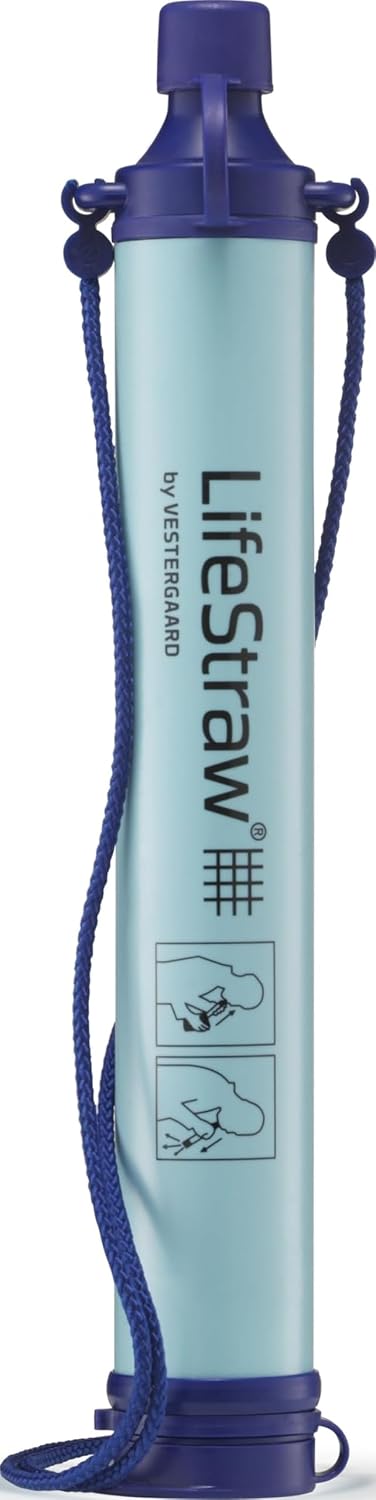
- Water Redundancy:Never depend on a single water source. Your stack should look like this: primary well with hand pump backup (Bison or Simple Pump are the gold standard), rainwater collection system, a pond or cistern if possible, and knowledge of the nearest natural water source on your property. Invest in a gravity-fed ceramic filter system like a Berkey for potable water regardless of your source. Treat all surface water before consumption.
Tips from the Field
- Don't try to do everything in year one. Prioritize in this order: water security, food production, energy, then redundancy. People who try to build everything at once build nothing well.
- Heirloom seeds only for your main garden. Store a 3-year supply of heirloom seed in a sealed container in your freezer. Hybrid and GMO seeds don't reliably reproduce true-to-type. Seed Savers Exchange and Baker Creek are solid sources.
- Your animals will test your fencing before a predator does. Build fences stronger than you think you need. A strand of electric fence doesn't fix a poorly built perimeter — it's a supplement, not a substitute.
- Neighbors matter more than you think. In a genuine SHTF scenario, a community of 5–10 trusted families working coordinated 5-acre parcels is exponentially more resilient than a lone wolf on a single plot. Build relationships with your closest neighbors now, during normal times.
- Document everything. Keep a farm journal — what you planted, when, what yielded, what failed, and why. Year three on your property, that journal will be worth more than any how-to book.
- Medical preparedness is a land skill too. If you're 45 minutes from a hospital, you are your own first responder. A wilderness first aid course and a well-stocked trauma kit (Israeli bandages, tourniquets, chest seals, SAM splints) are non-negotiable additions to any homestead.
- Learn to read weather on your property. Every 5 acres has its own microclimates. Low spots frost earlier. South-facing slopes warm faster. Wind from certain directions precedes storms. That knowledge comes from observation over time, not from an app.

What to Practice Now: Your 30-Day Skill-Building Plan
Whether you're already on your land or still planning, this 30-day plan builds the core competencies that separate prepared homesteaders from wishful thinkers.
- Days 1–5: Water audit. Calculate your household's daily water consumption. Identify every water source on or near your property. If you have a well, test the hand pump backup. If you don't have one, price one out and order it.
- Days 6–10: Food production inventory. Map your current garden space. Calculate calories per square foot for your primary crops. Identify gaps in your seed supply and order heirloom replacements. Build or expand at least one raised bed.
- Days 11–15: Energy assessment. Spend 24 hours tracking every amp you consume. Identify what you can cut and what's critical. Price out a basic solar-plus-battery backup for your critical loads. If you heat with wood, split and stack your next season's supply now.
- Days 16–20: Security and perimeter walk. Walk your entire property boundary. Identify gaps in fencing, sightlines from your home, and entry choke points. Install at least one trail camera. Take an inventory of your defensive tools and their condition.
- Days 21–25: Animal systems. If you have livestock, audit your feed storage and calculate how many weeks of feed you have on hand. If you don't have animals yet, spend this time researching breeds suited to your climate and building a housing plan.
- Days 26–30: Medical and communications drill. Inventory your trauma kit. Take or re-watch a wound care module. Test your off-grid communication plan — HAM radio, GMRS, or FRS. Run a 48-hour grid-down simulation on your property to identify the gaps in your system before a real emergency does it for you.
Preparation Is a Lifestyle, Not a One-Time Event
Living on 5 acres and calling yourself self-reliant isn't something you achieve — it's something you practice, refine, and rebuild every single season. The homesteaders who make it through hard times aren't the ones with the most gear. They're the ones who've been paying attention, staying humble, and doing the work quietly while everyone else waited for the right moment to start.
Your land doesn't care about your intentions. It rewards your labor, your observation, and your consistency. Start where you are. Build what you can. Then build more. The time you spend getting serious about self-reliance on your land today is exactly the margin that keeps your family fed, warm, and secure when the world gets complicated. Don't waste it.
🛒 Essential Survival Gear
As an Amazon Associate I earn from qualifying purchases.