How to Find Water in the Wilderness When You Have Nothing

Why Most People Get This Wrong
The moment most people realize they're out of water in the wilderness, they make decisions that accelerate their death. Panic drives them uphill, away from water sources. They drink from stagnant pools without purification. They wait too long before searching. They waste energy — and sweat — by moving too fast in the heat of the day. These aren't small mistakes. In a dry environment at 90°F, you can be incapacitated by dehydration in as little as 6 to 8 hours without water. You don't have time to guess wrong.
Here are the most common and deadly mistakes people make:
- Waiting until they're thirsty to search. Thirst is already a symptom of dehydration. By the time your mouth is dry, your decision-making is already impaired.
- Moving uphill to get a better view. Water flows downhill. Always. Moving up costs energy and takes you further from your most likely source.
- Drinking any water they find without treating it. Giardia, cryptosporidium, and E. coli can drop you within 24 hours. Trading dehydration for a waterborne illness in the wilderness is a death sentence.
- Ignoring vegetation and animal signs. Nature gives you a roadmap to water. Most people walk right past it.
- Fixating on rivers and streams only. In arid terrain, surface water may not exist. There are other ways to collect water that require zero tools.
- Burning through water reserves in the first hours. If you have any water left, ration it. Half a liter spread over four hours is survivable. Drinking it all in the first 30 minutes is not.
Recognizing these mistakes before you're in the situation is the difference between walking out of the wilderness and not walking out at all.
The Fundamentals — How to Find Water Step by Step
Water follows predictable patterns. Terrain, vegetation, animal behavior, and atmospheric conditions all point toward it if you know what you're reading. Work through this process in order.
- Stop moving and assess your environment. Find shade immediately. Sit down. Regulate your breathing. Calm decision-making at this stage can extend your survival window by hours. Look around you — what terrain features do you see? Are you in a valley, on a ridge, in a flat plain?
- Move downhill and look for convergence points. Water drains to low points. Valleys, ravines, canyon bottoms, dry riverbeds — these are your primary targets. Even a dry streambed holds promise. Dig 12 to 18 inches down at the outer bend of a dry riverbed where sediment is soft. Water often flows underground long after the surface has dried out.
- Read the vegetation. Lush, green vegetation in an otherwise dry landscape is your best visual signal. Look specifically for:
- Cottonwood and willow trees — these are water indicators in North America. Their roots need consistent moisture. If you see them, water is within 10 to 20 feet of the surface.
- Cattails and bulrushes — these grow directly in or immediately adjacent to standing or moving water.
- Bright green grass patches in an otherwise brown landscape — follow them.
- Moss on rocks — often found on the shaded, damp side of boulders near water seeps.
- Track animal activity. Animals need water daily, and they know where it is. Look for:
- Game trails converging into a single path — this usually leads to water.
- Bird flight patterns at dawn and dusk — birds fly toward water in the evening and away in the morning. Watch for repeated directional movement.
- Insects — bees rarely fly more than 3 to 4 miles from a water source. If you see bees, you're close.
- Fresh animal tracks in soft soil — follow them downhill.
- Check rock formations and cliff faces. Water seeps through cracks in rock, especially in areas with limestone or sandstone geology. Look for dark staining on cliff faces, green moss at the base of rock walls, or dampness around large boulders. Press your hand against the rock — if it feels cool and slightly damp, dig or scrape at the base.
- Collect dew and atmospheric moisture. If you're in a location with morning dew, use any absorbent material — clothing, bandana, even large leaves — to wipe down grass, rocks, and vegetation before the sun rises. Wring the material into a container or directly into your mouth. A single hour of dew collection in a dew-heavy environment can yield 500ml to 1 liter of water.
- Build a solar still if you're stationary. This is a last resort, low-yield method, but it works. Dig a hole approximately 3 feet wide and 2 feet deep. Place a container in the center. Cover the hole with a clear plastic sheet (if available) and weigh the edges down with dirt. Place a small rock in the center of the sheet directly above the container. Condensation will collect on the underside of the plastic and drip into the container. Expect 200 to 500ml over 24 hours. Improve output by placing green vegetation inside the hole before covering.
- Use transpiration bags. Tie a clear plastic bag around a leafy branch — not a poisonous plant — and seal the opening around the branch with cordage or tape. Leave it in direct sunlight. The tree pulls moisture from the ground and transpires it through the leaves into the bag. After several hours, you can collect 100 to 250ml of clean, drinkable water without purification. This is one of the most underrated wilderness water techniques available.

What You Need — Skills and Gear Checklist
The article title says "when you have nothing" — and that's the reality you may face. But there's a baseline of gear that every person who ventures into the wilderness should carry. If you have even some of these, your chances of staying hydrated increase dramatically.
Minimum Carry Gear (Every Time):
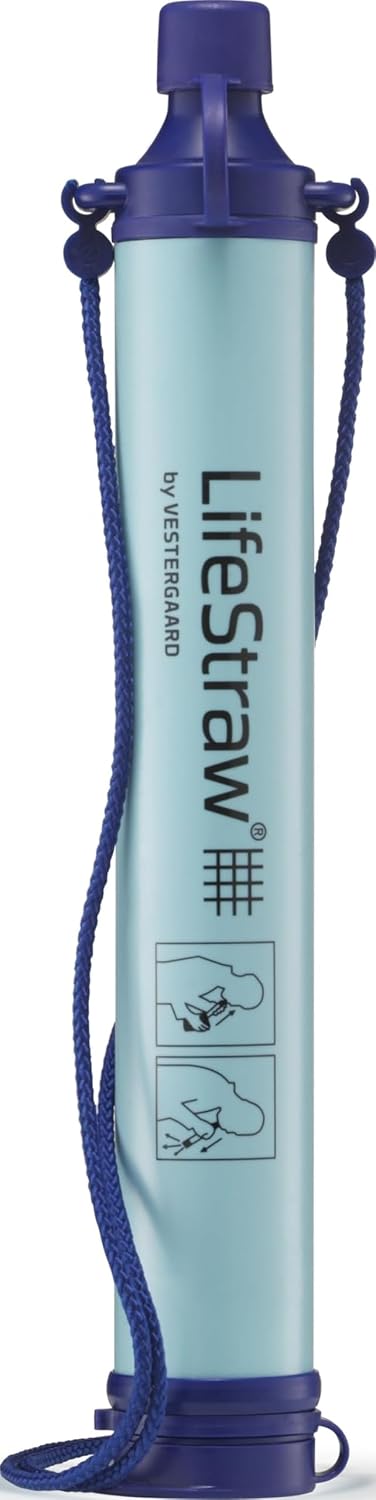
- Water filtration — Sawyer Squeeze or LifeStraw: Compact, lightweight, and capable of filtering 100,000+ gallons. No excuse not to carry one. Weight: under 3 oz.
- Iodine or chlorine dioxide tablets: Potable Aqua tablets treat 1 liter per tablet in 30 minutes. Carry at least 50 tablets. Backup for your filter.
- Metal canteen or stainless steel water bottle (32 oz minimum): Can be used to boil water — your most reliable purification method. Plastic bottles cannot be boiled.
- Clear plastic sheeting or heavy-duty contractor bags (2–3): Used for solar stills and transpiration bags. Weighs almost nothing. Invaluable.
- Bandana or microfiber cloth: Dew collection, pre-filter for sediment, multiple uses.
- Paracord (at least 50 feet): Securing transpiration bags, building collection systems.
- Fire-starting capability: Boiling is your fallback purification. Carry a Bic lighter, waterproof matches, and a ferro rod — all three.
Skills You Must Have Before You Go:
- Ability to identify local water-indicating vegetation for your region
- Reading topographic maps — knowing how to find drainages and valley features
- Building a functional solar still from memory
- Boiling water properly (rolling boil for 1 minute; 3 minutes above 6,500 feet elevation)
- Reading animal tracks and game trail convergence patterns
- Assessing dehydration symptoms in yourself and others
Advanced Tactics — What Separates Prepared from Prepared
Basic water finding gets you through. Advanced knowledge keeps you ahead of the situation so you never reach desperation mode.
- Pre-mission water mapping. Before any wilderness outing, download topographic maps of your area. Identify all blue lines (streams), blue shapes (lakes, ponds), and low-elevation drainage features within a 5-mile radius of your planned route. Mark them. Know them before you leave. Apps like CalTopo and onX Maps allow you to download offline topo maps. Use them.
- Understand your terrain's geology. Limestone and volcanic rock hold groundwater differently than granite. Desert environments often have tinajas — natural rock basins that collect rainwater. In the American Southwest, learning to identify these formations can mean the difference between life and death. Research the geology of wherever you're going.
- Night collection tactics. In dry desert environments, atmospheric moisture drops significantly at night and condenses on cool surfaces. Set out metal containers, tarps, or any reflective surface in open areas before sleeping. In coastal or high-humidity environments, you can collect significant amounts of water this way. A 6x8 foot tarp can collect over 1 liter in a single high-humidity night.
- Dig at the base of cliff shadows. In desert terrain, the north-facing base of large rock formations and cliffs receives less sun. Moisture evaporates more slowly here. Digging 12 to 24 inches at these locations frequently reveals damp soil or seeping water.
- Cactus water — with caveats. Barrel cactus fluid is the most commonly cited source, but it's high in oxalic acid and can cause nausea and diarrhea — which accelerates dehydration. Prickly pear pads, however, can be sliced open and the mucilaginous interior chewed for hydration. It's not efficient, but in an emergency, it provides some moisture without the toxic risk of barrel cactus.
- Signal your location near water. If you're in a survival situation, find water and stay near it. Rescuers know to check water sources. Moving constantly while dehydrated kills people. Establish a position near a water source, build signal fires during the day (green vegetation on a fire produces dense white smoke visible for miles), and conserve energy.
- Know your dehydration milestones. At 1% body weight loss in water, performance drops. At 2%, decision-making degrades. At 5–8%, you'll experience severe weakness and confusion. At 10–15%, you're approaching organ failure. A 180-pound person loses roughly 1 pound (about 500ml) of water per hour during moderate activity in 85°F heat. Do the math. Know where you are on that scale at all times.

The Bottom Line — Action Steps to Take This Week
Reading this is worthless if you don't translate it into action. Here's what you do in the next seven days:
- Buy a Sawyer Squeeze filter today if you don't own one. They run $25 to $35 and fit in a shirt pocket. There is no excuse not to own one.
- Purchase 100 Potable Aqua iodine tablets and split them between your EDC bag, vehicle, and bug-out bag. Under $10.
- Pick up a stainless steel 32 oz canteen or Nalgene-style bottle rated for boiling. Not plastic. Not aluminum with a liner. Bare stainless steel.
- Practice building a solar still in your backyard. Not theoretically. Physically dig the hole, stretch the plastic, set the container. Know that it works before you need it.
- Download and print topographic maps of the wilderness areas within 50 miles of your home. Mark water sources. Laminate them or store in a waterproof case.
- Learn three water-indicating plant species native to your region. Take 30 minutes this week to research what grows near water in your specific geography — cottonwood in the West, sycamore in the Southeast, black willow in the Midwest. Know your terrain.
- Run a 24-hour water discipline drill. Reduce your water intake to 1.5 liters over a 24-hour period while going about normal life. Understand what mild dehydration feels like physically. This trains your mind to recognize the onset before it becomes critical in the field.
There is no substitute for preparation done before the emergency. Every skill you build now, every piece of gear you carry, every scenario you've mentally rehearsed shortens the gap between crisis and solution.
Self-reliance isn't a philosophy — it's a set of skills you either built before the moment of need or you didn't.
🛒 Essential Survival Gear
As an Amazon Associate I earn from qualifying purchases.