How to Choose the Right Bug Out Location: The Decision That Will Define Your Survival

Why Most People Get This Wrong
FEMA estimates that fewer than 40% of Americans have any emergency evacuation plan at all. Of those who do, the vast majority have made the same critical error: they've picked a destination based on comfort, not survival logic. When the grid goes down, when civil order collapses, or when a natural disaster renders your neighborhood uninhabitable, a vague plan to "head to the mountains" or "go to Uncle Dave's place" is not a bug out location. It's wishful thinking with a gas tank attached.
Here are the most common mistakes that will get you killed:
- Choosing location based on ownership alone. Having a cabin in the woods means nothing if it sits 300 miles away and every road leading to it is gridlocked or hostile.
- Ignoring population density vectors. Your BOL that feels remote on a calm Tuesday will be overrun when 50,000 people from the nearest metro are all heading in the same direction.
- Single-route dependency. If you have one road in and one road out, you don't have a bug out location — you have a trap.
- Failing to account for seasonal access. A location unreachable in winter, flood season, or after a wildfire isn't a location. It's a liability.
- No pre-positioned supplies. Carrying everything on your back or in your vehicle is a plan that fails the moment you're ambushed, break down, or exhaust your fuel.
- No community or defense plan. A lone individual holding a remote property is not secure. They're a target.
Stop building your plan on assumptions. Start building it on ground truth.
The Fundamentals: How to Evaluate and Choose Your Bug Out Location
Choosing the right BOL is an intelligence-gathering exercise before it's anything else. Follow this process methodically.
- Define your threat matrix first. Are you planning for a regional natural disaster, a grid-down scenario, civil unrest, or a longer-term societal collapse? Each threat has different range, timing, and resource requirements. Your BOL selection must match your most likely threats, not your most exciting hypotheticals.
- Establish your distance parameters. The ideal BOL sits within 50–150 miles of your primary residence. Close enough to reach on a single tank of fuel or on foot within 72 hours. Far enough to escape regional disaster zones. Beyond 200 miles, your plan starts requiring too many variables to hold together under pressure.
- Conduct a topographic analysis. Use USGS topo maps and Google Earth before you ever set foot on a property. You're looking for:
- Elevation advantage — high ground improves security and observation
- Natural water sources within 500 feet (springs, streams, or wells)
- Natural defensive barriers (ridgelines, water features, dense terrain)
- South-facing slopes in northern climates for passive solar advantage
- Minimum two viable approach and egress routes
- Water is non-negotiable. You need a reliable, year-round water source on or immediately adjacent to your property. A stream that runs dry in August is not a water source. A hand-dug well without proper casing is not reliable. Minimum viable standard: one established water source plus one secondary backup. Test it. Know the flow rate. Know what's upstream.
- Assess food production potential. Your BOL needs arable land — minimum 1/4 acre of workable soil per person for basic caloric production. Test the soil. Identify existing food-producing plants, trees, and wildlife corridors. A location with zero agricultural potential forces you into a pure cache-dependency model, which fails the moment your stores run out.
- Map your routes — all of them. Identify primary, secondary, and tertiary routes. Walk them. Drive them in different seasons. Know the choke points, the bridges that will flood, the roads that turn to mud. Pre-load offline maps on your phone and a dedicated GPS unit. Keep printed topo maps in your vehicle at all times.
- Verify legal access and ownership clarity. Squatting on public land during an emergency has serious risks — displacement, confrontation, legal exposure post-crisis. Owned property with clear title, or a formal agreement with a trusted property owner, is always preferable.

What You Need: The Pre-Positioned BOL Supply Checklist
A bug out location without pre-positioned supplies is just a campsite. Minimum viable cache at your BOL should include:
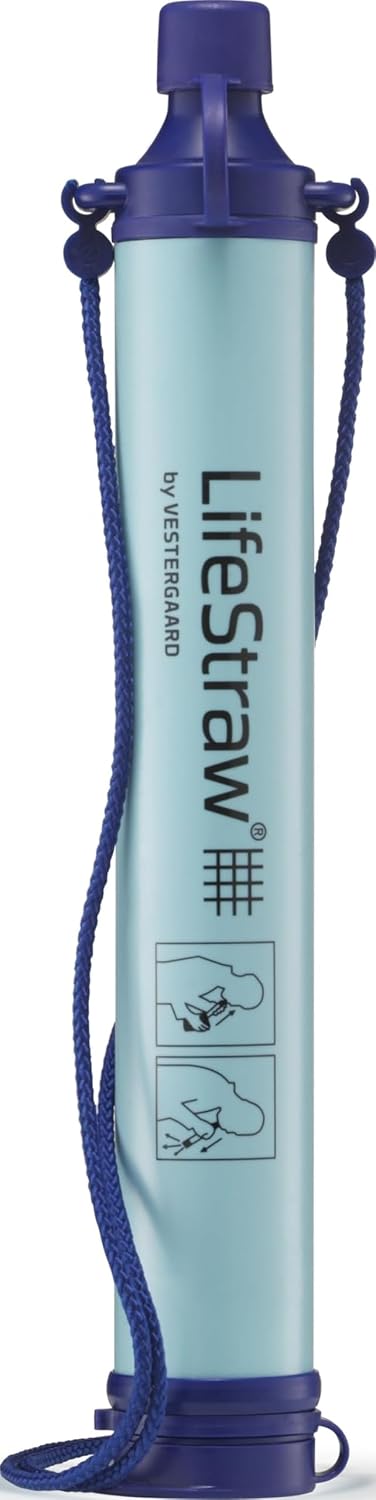
- Water: 30+ gallons of stored water per person plus a gravity filter system (Berkey or equivalent) and water purification tablets (minimum 200 tablets)
- Food: 90-day supply of calorie-dense, long-shelf-life food (freeze-dried, rice, beans, canned goods) stored in rodent-proof, moisture-resistant containers
- Fuel: 20–40 gallons of stabilized fuel (Sta-Bil treated) in approved containers for generators or vehicles
- Medical: Expanded trauma kit — Israeli bandages, tourniquets (CAT or SOFTT-W), chest seals, QuikClot gauze, plus a 30-day prescription medication reserve if applicable
- Tools: Hand tools for shelter repair and food production — axe, bow saw, shovel, hoe, and basic carpentry tools
- Communication: Battery-powered or hand-crank NOAA weather radio, plus a set of pre-programmed GMRS radios for group coordination
- Security: Perimeter alert systems — at minimum, paracord tripwire with audible alarm canisters on all approach vectors
- Power: 200W+ solar panel setup with a 100Ah lithium battery bank for basic electronics and communication charging
Advanced Tactics: What Separates the Truly Prepared
Most preppers stop at location selection and caching. The ones who survive long-term crises do three things differently:
- They build a tribe, not a lone wolf plan. Identify 4–8 trusted, skilled individuals who will consolidate at your BOL. Assign roles before the crisis — medical, security, logistics, food production. A group of capable people with defined responsibilities is exponentially more survivable than a well-stocked individual.
- They conduct quarterly rehearsals. A plan untested is a plan untested. Run full bug out drills — grab your bags, load your vehicles, drive your primary route, arrive at your BOL. Time it. Find the failures before they find you. Do this every three months, in every season.
- They layer their security posture. Passive security first — natural barriers, concealment, limited visibility from roads. Then active measures — defined watch schedules, clear fields of observation, pre-identified defensive positions. A hardened perimeter is built before you need it, not after someone knocks on your door at 2 AM.
- They establish communication protocols. Set predetermined radio check-in times, challenge-and-response codes, and fallback rally points if the primary BOL is compromised. Assume your primary plan will fail at some point. Have a Plan B location identified and communicated to your group.

The Bottom Line: Action Steps to Take This Week
Stop theorizing. Start executing. Here is what you do in the next seven days:
- Pull a 150-mile radius map around your home. Identify three candidate BOL zones based on low population density and natural terrain features.
- Research land ownership and access for each candidate zone using county GIS maps (most are free online).
- Drive to your top candidate this weekend. Evaluate water access, terrain, and route options on the ground.
- Inventory what supplies you currently have that could be pre-positioned. Identify the top three gaps and order them within 30 days.
- Have one honest conversation with one trusted person about being part of your bug out group. Build your tribe now, not during a crisis.
The window between "I should plan this" and "I wish I had planned this" closes without warning.
Self-reliance isn't a lifestyle choice — it's the only insurance policy that pays out when everything else fails.
If you want to see this process broken down on real terrain with real gear, subscribe to the Red Dawn Survival YouTube channel — we walk you through BOL scouting, route planning, and cache setup in the field, not from behind a desk. The link is in the menu. See you out there.
🛒 Essential Survival Gear
As an Amazon Associate I earn from qualifying purchases.