How to Choose the Right Bug Out Location: The Decision That Could Save Your Family's Life

The Reality Most People Ignore
Picture this: It's 2 AM. The grid has been down for 36 hours. Civil unrest is spreading from the city center outward, and your neighborhood — the one you swore you'd never have to leave — is no longer safe. You grab your bag, load your family into the truck, and then it hits you like a sledgehammer: you have nowhere to go. You have a bag. You have supplies. You have no destination.
This is the single most common and most catastrophic gap in modern prepping. People spend hundreds — sometimes thousands — of dollars on gear, food storage, and firearms, yet they have never once driven out to scout a location where their family could actually survive a prolonged crisis. A bug out bag without a bug out location is just a very expensive backpack. The bag gets you moving. The location keeps you alive.
Most preppers are stuck in a fantasy where bugging out means hitting the woods and figuring it out. That's not survival. That's camping with consequences. The wilderness does not care about your YouTube training montage. Cold, wet, hungry, and scared is a combination that breaks people — even trained people — faster than any threat they were originally running from. You need a real plan, a real place, and the real skills to make it work. Everything else is wishful thinking.
Let's fix that tonight.
Core Principles and Knowledge Breakdown
Choosing a bug out location is not about finding the most remote cabin in the mountains or the most defensible ridge line. It's about finding the intersection of sustainability, accessibility, security, and resourcefulness. Miss one of those pillars and your location becomes a liability instead of an asset. Here's how to evaluate each one with the seriousness it deserves.
Distance and the 72-Hour Rule
Your bug out location should be reachable within 72 hours under worst-case conditions — on foot if necessary. Most people underestimate how fast infrastructure collapses. Roads get gridlocked. Bridges get closed. Fuel disappears from pumps within hours of a serious regional event. If your BOL is 400 miles away and you're counting on a full tank and open highways, you are not prepared. You are hopeful. Aim for a location between 50 and 150 miles from your primary residence, with multiple route options that avoid major population corridors.
Water Access Is Non-Negotiable
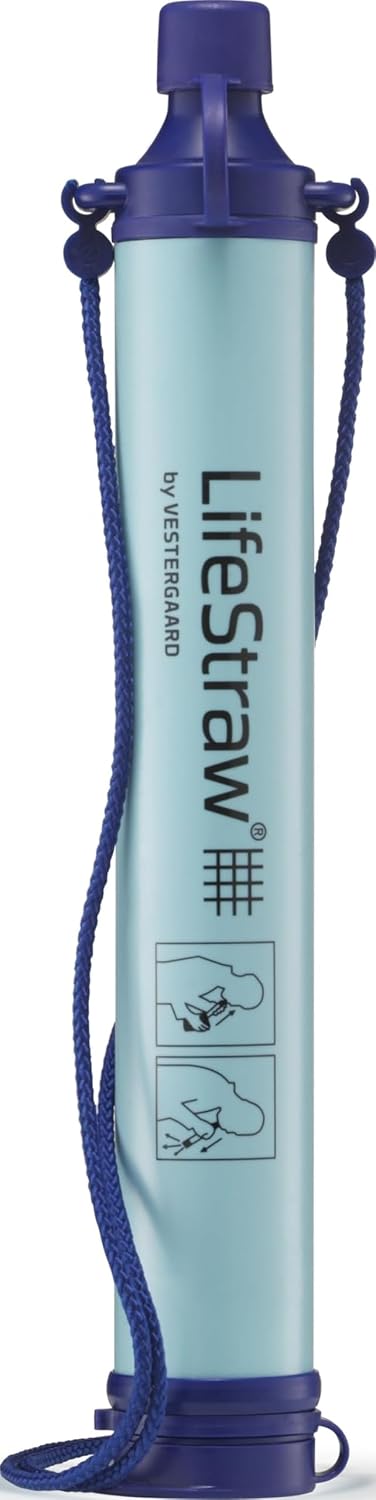
If your location doesn't have a reliable, year-round water source, cross it off the list. Period. You can store food. You can hunt. You cannot manufacture water. Look for properties or areas with springs, streams, rivers, or a high water table suitable for a hand-dug or drilled well. Gravity-fed spring systems are the gold standard — no pumps, no power dependency, no mechanical failure. A Sawyer Squeeze or Berkey filtration system handles purification, but only if there's raw water to process in the first place.
Defensibility Without Paranoia
You don't need a fortress. You need a position that gives you awareness and time. Look for natural chokepoints — locations with limited approach routes, elevated sight lines, and natural barriers like rivers, ridgelines, or dense tree lines. A location that backs up against a steep hillside or body of water reduces the number of directions a threat can come from. Think tactically, but also think realistically. Most threats in a SHTF scenario are opportunistic, not military-grade. A location that's hard to find is often more valuable than one that's easy to defend.
Resource Richness
Can the land feed you? Evaluate your potential BOL for game density, soil quality, growing season length, firewood availability, and foraging potential. A property with mixed hardwoods, a south-facing slope for gardening, and a creek running through it is exponentially more valuable than a cleared flat lot with a shed on it. Learn to read topographic maps and satellite imagery before you ever set foot on a location. Tools like Google Earth and onX Maps let you do serious reconnaissance from your kitchen table.
Legal Considerations
This one trips people up. Squatting on public land during a crisis might seem viable, but National Forests and State Parks will be flooded with displaced people within days. If you don't own the land or have a documented agreement with someone who does, your BOL is not secure. The best scenarios involve ownership, a trusted family member's rural property, or a formal written agreement with a landowner — possibly in exchange for labor, supplies, or mutual defense commitments.

Building This Into Your Prep Plan
Knowledge without structure is just trivia. Here's how you take the principles above and turn them into an actual operational plan your family can execute under stress.
- Identify three candidate locations. Never build your plan around a single point of failure. Scout at least three potential BOLs at different distances — a close option (under 25 miles), a mid-range option (50–100 miles), and a far option (100–150 miles). Each serves a different threat profile and timeline.
- Map multiple routes to each location. For every candidate, identify at least three distinct routes using different road types — highways, county roads, and off-road or trail paths. Drive each one. Note fuel stops, bridge crossings, chokepoints, and alternative detours. Store physical maps in your vehicle. GPS fails. Paper doesn't.
- Pre-position supplies. A BOL with nothing waiting for you is just a destination. Cache food, water filtration gear, fuel, medical supplies, tools, and ammunition at your location or along your route. Even a basic buried cache of freeze-dried food and a medical kit can be the difference between surviving the first week and not making it past day three.
- Establish communication protocols. If your family gets separated during a bug out, how do they find each other? Designate rally points along each route. Establish radio communication using a family set of BaoFeng UV-5R handhelds or GMRS radios. Set a communication schedule — times when everyone checks in on a designated channel. Practice this before you need it.
- Run a dry drill. At least once a year, execute a full bug out drill. Set a realistic timer — 15 minutes to load and leave — and drive your primary route to your primary BOL. Spend 48 hours there operating from your supplies only. You will discover gaps in your plan that no amount of theorizing ever would have revealed.
Advanced Level — What Serious Preppers Do Differently
Once you've covered the fundamentals, the gap between a prepared family and a truly resilient one comes down to depth. Serious preppers don't just have a destination — they have an operational survival infrastructure.
They Build Community, Not Just Compounds
The lone wolf fantasy dies fast. One person cannot maintain security, gather food, manage medical needs, and keep morale alive simultaneously. The most survivable BOL setups involve a trusted group of 8–15 people with complementary skills — a medical professional, a mechanic, an experienced farmer, someone with military or law enforcement background, and people with serious hands-on trade skills. Start those conversations now, with people you actually trust, before a crisis gives you no time for vetting.
They Invest in Infrastructure
A serious BOL has physical improvements: a wood-burning stove or rocket mass heater, a hand pump well or gravity spring system, raised bed gardens already established, a root cellar or cool storage for food, and a defensible perimeter with natural and constructed barriers. These things take time and money to build, which is exactly why serious preppers start years before they think they'll need them. The best time to build a root cellar was five years ago. The second best time is this weekend.
They Train for the Location Specifically
They know the land. They've hunted it, hiked it in every season, mapped its water sources in both wet and dry years, and identified its weaknesses. They've slept there in January. They know where the mud gets impassable and where the snow drifts block the road. This intimate knowledge of terrain is a tactical and logistical advantage that no amount of gear can substitute for.
They Have Legal and Financial Documentation Secured
Property deeds, wills, vehicle titles, identification documents, medical records, and financial account information are all stored in waterproof, fireproof containers at the BOL and in a portable grab document wallet in the bug out vehicle. When systems go down, whoever has documentation has power. Don't leave this to chance.

Your Action Plan — What to Do in the Next 30 Days
Stop reading and start doing. Here is a concrete 30-day action plan to move from concept to operational readiness on your bug out location strategy.
- Days 1–5: Open Google Earth and onX Maps. Identify five candidate areas within your target radius. Evaluate each for water sources, land cover, approach routes, and proximity to population centers. Narrow your list to three.
- Days 6–10: Drive to each candidate location. Walk the land. Identify water sources, defensible positions, and resource richness firsthand. Take photos and notes. Evaluate access roads in your current vehicle.
- Days 11–15: Select your primary BOL. If you don't own it, initiate a conversation with the landowner or the family member whose property it is. Draft a written agreement if needed. Begin identifying what infrastructure or supplies need to be put in place.
- Days 16–20: Map and drive all three routes to your primary BOL. Purchase physical topo maps and road atlases covering the entire corridor. Store one set in your vehicle, one at home, one at your BOL.
- Days 21–25: Begin pre-positioning supplies. At minimum: a 30-day supply of freeze-dried or canned food, a quality water filter (Sawyer or Berkey), a basic trauma first aid kit, a fire starting kit, and hand tools. Store in weatherproof containers on-site.
- Days 26–30: Conduct your first family drill. Set a 15-minute bug out timer. Load the vehicle. Drive the route. Spend at least one overnight at the BOL using only what you've cached. Debrief as a family. Fix what broke. Schedule the next drill in 90 days.
Self-reliance is not a hobby. It is a responsibility. When you chose to have a family, you accepted the obligation to protect them — not just from the everyday, but from the unexpected, the catastrophic, and the scenarios that most people refuse to even consider until it's too late. Choosing the right bug out location is one of the most significant decisions you will ever make as a provider and protector. It is not glamorous work. It is not exciting gear shopping or YouTube training. It is slow, deliberate, unglamorous preparation that most people will never bother with — and that is exactly why it will matter when the moment comes. Do the work. Scout the land. Build the plan. Your family is counting on you to be the person who already figured this out before everyone else started panicking.
🛒 Essential Survival Gear
As an Amazon Associate I earn from qualifying purchases.