How to Build a Get Home Bag for Your Work Commute

Why a Get Home Bag Is Non-Negotiable
Every single workday, millions of Americans drive, take transit, or walk to jobs that put them anywhere from 5 to 50 miles from home. Most of them are carrying nothing but a laptop bag and a travel mug. That's a catastrophic failure of planning — and when the grid goes down, the roads lock up, or a regional emergency forces you off your normal route, those people become a burden on the system instead of a self-sufficient individual making it home to their family.
A Get Home Bag (GHB) is not a Bug Out Bag. Don't confuse the two. A Bug Out Bag is designed to sustain you for 72 hours or more while you leave an area permanently. A Get Home Bag is a mission-specific kit built around one objective: getting you from your workplace back to your home or primary retreat location under degraded conditions. That mission window is typically 12 to 36 hours, depending on your commute distance.
What happens if you don't have one? You're the person in dress shoes walking 22 miles on a highway shoulder in January with no water, no light, no map, and no plan. You're dependent on strangers, government shelters, or luck. None of those are survival strategies. This is your fix.
What You Need Before You Start
Before you throw gear into a bag and call it done, you need to do your homework. A GHB built without context is just an expensive backpack. Start with these prerequisites:
- Know your commute distance: Measure it in miles, not minutes. Use Google Maps or a paper map to identify your actual distance from work to home. Assume no car. Assume you're walking.
- Map your routes: Identify at least three alternate routes home that avoid major highways, bridges, and population choke points. Print these on paper. Your phone battery is not a survival plan.
- Know your terrain: Urban, suburban, rural — each changes what you need. Urban environments mean crowds, civil unrest risks, and less opportunity to filter water from natural sources. Rural routes mean exposure, longer distances between resources, and potential wildlife concerns.
- Assess your physical condition honestly: A person who can walk 5 miles without issue is in a different position than someone who sits at a desk all week. Your fitness level directly affects how much weight you can reasonably carry and how far you can travel in a day.
- Choose the right bag: You want a low-profile, comfortable daypack in the 20-30 liter range. Avoid military-style MOLLE bags in bright colors if you want to move without drawing attention. Brands like 5.11 Tactical, Osprey, or Mystery Ranch make excellent options. If budget is tight, a plain muted-color hiking pack from any sporting goods store works fine.

The Process: Building Your Get Home Bag Step by Step
Build your bag in layers — critical survival priorities first, comfort and support items second. Every item must earn its place. If you can't justify why it's in the bag, it doesn't go in the bag.
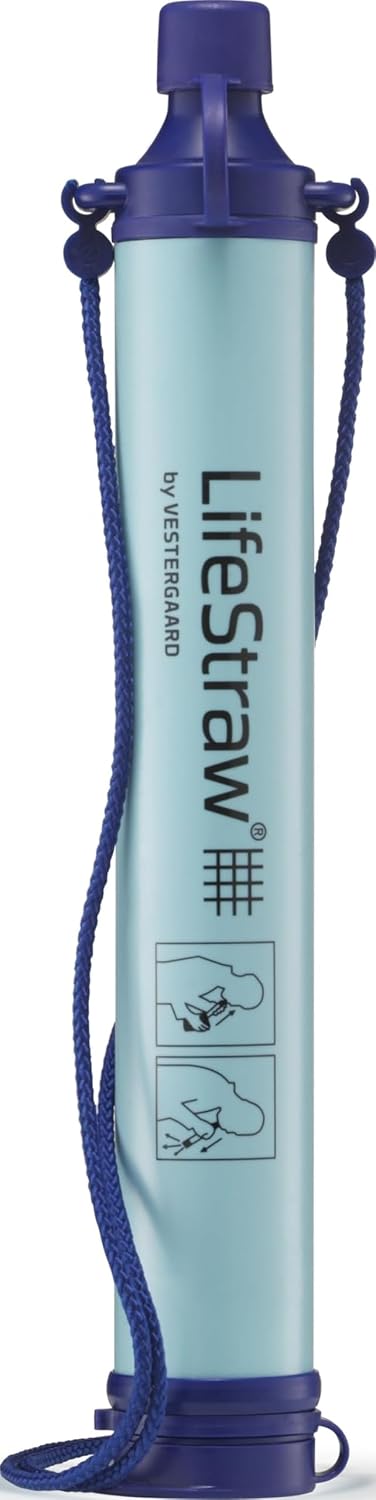
- Step 1 — Water and Water ProcurementWater is priority one. Even on a 12-hour trek, dehydration degrades decision-making and physical performance fast. Pack a 32 oz stainless steel water bottle — it doubles as a vessel for boiling water if needed. Add a Sawyer Squeeze or LifeStraw filter for drinking from streams, puddles, or found sources. Include a few water purification tablets (iodine or chlorine dioxide) as a backup. If you're in a suburban or urban environment, you'll find water in gas stations, office buildings, and eventually natural sources as you move out.
- Step 2 — Food and CaloriesYou won't starve on a 24-hour walk home, but you will bonk hard without calories if you're pushing miles under stress. Pack 2,000 to 2,500 calories in compact, high-energy foods. Best options: Clif Bars or similar energy bars, peanut butter packets, beef jerky, trail mix with nuts and dried fruit, and emergency ration bars like those made by Datrex or SOS. These are calorie-dense, require no preparation, and have long shelf lives. Rotate every 6-12 months.
- Step 3 — Navigation ToolsPack a laminated paper map of your region with your home, workplace, and alternate routes already marked in permanent marker. Add a baseplate compass — a Suunto A-10 or Silva Ranger costs under $30 and will outlast any electronic device. Don't rely on your phone for navigation in a grid-down scenario. Dead battery, broken screen, or no signal makes it useless.
- Step 4 — Fire StartingEven in a get-home scenario, fire can save your life — for warmth, signaling, or water purification. Pack a Bic lighter (two of them), a ferrocerium rod like the Bayite or Light My Fire brand, and a small waterproof container of tinder tabs or cotton balls soaked in petroleum jelly. Natural tinder alternatives include dry birch bark, cattail fluff, and dead grass — know what grows along your commute corridor.
- Step 5 — Shelter and WarmthYou may need to stop and shelter for a night, especially if injured or if conditions are dangerous after dark. Pack a Mylar emergency bivy sack — not just a blanket, but a full bivy that wraps around your body. These weigh next to nothing and retain up to 90% of body heat. Add a lightweight tarp (a Grabber All-Weather Space Blanket or a simple 8x10 poly tarp with cord) for overhead cover. In colder climates, swap the bivy for a lightweight sleeping bag or add a wool buff and glove liners.
- Step 6 — First AidBuild or buy a kit that handles trauma and field medicine, not just office boo-boos. Include: nitrile gloves, gauze pads, Israeli bandage or CAT tourniquet, medical tape, moleskin for blisters, ibuprofen and antihistamine, SAM splint, tweezers, and an Israeli bandage or QuikClot gauze for serious bleeding. Blisters and foot issues will end your walk home faster than almost anything else — include extra socks and address hot spots immediately.
- Step 7 — LightingPack a quality headlamp — hands-free lighting is non-negotiable when you're navigating terrain in the dark. The Black Diamond Spot or Petzl Tactikka are reliable, affordable choices. Add a small handheld flashlight as backup and a set of spare batteries. Avoid cheap flashlights — they fail at the worst moment.
- Step 8 — Communication and InformationInclude a battery-powered or hand-crank emergency radio (Midland or Kaito make good compact options) for receiving NOAA weather alerts and emergency broadcasts. Write key phone numbers — family, out-of-state contact, meeting point — on a laminated card in your bag. Don't rely on your phone's contact list if the device is dead or damaged. Add a small notepad and pencil.
- Step 9 — Self Defense and ToolsThis is personal and jurisdiction-dependent. At minimum, carry a quality fixed-blade or folding knife — a Morakniv Companion or ESEE 3 are excellent field knives. Add a glass breaker and seatbelt cutter if you commute by car. If you're licensed to carry, your everyday carry firearm comes with you. A collapsible baton or tactical pen may be options in restrictive areas. The point is: don't be helpless in a crowd that's panicking.
- Step 10 — Comfort and Morale ItemsDon't ignore the human element. Include a change of socks and underwear, a lightweight poncho, a buff or Shemagh scarf (multi-use: warmth, dust protection, bandage), and work gloves if your commute involves any rural terrain. A small amount of cash in small bills rounds out the kit — ATMs go down in grid failures and cash remains king in early-stage emergencies.
Tips From the Field
- Keep it at work, not in your car. Your car may be inaccessible, impounded, or stuck in gridlock. The bag needs to be within reach the moment you decide to move on foot. Under your desk, in a locker, or in a closet at your workplace is ideal.
- Dress the part when it matters. Keep a pair of broken-in walking shoes or trail runners at work. The moment you decide to walk home, you change out of dress shoes immediately. Blisters from inappropriate footwear have ended walks home in the first three miles.
- Go light on weight. Target a final bag weight of 15 to 25 pounds maximum. Heavier than that and you're slowing yourself down over distance. Every item gets weighed against its utility-to-weight ratio.
- Don't look like a target. In a chaotic urban environment, a tactical-looking bag with patches and gear hanging off it marks you. Go gray. Plain bag, plain clothes. Move confidently but don't advertise your resources.
- Seasonal rotation is mandatory. Your summer GHB and your winter GHB should look different. Add hand warmers, a heavier layer, and chemical toe warmers in winter. Reassess every October and every April at minimum.
- Pre-walk your routes. On a weekend, walk at least one of your alternate routes home. You'll discover things no map shows you — fences, dead ends, waterways, dog farms, neighborhood dynamics. Ground truth beats map reading every time.

What to Practice Now: A 30-Day Skill-Building Plan
Gear is only half the equation. Skills and conditioning make the gear usable under stress. Here's your first 30 days:
- Week 1 — Physical Baseline: Walk 3 to 5 miles every other day in your actual commute shoes or trail runners. Track your pace. Identify any foot or joint issues early. On Day 7, walk with your loaded GHB for the full distance.
- Week 2 — Navigation Drill: Pull out your paper map and physically trace your three alternate routes. Drive or walk one of them this week. Identify water sources, open spaces for shelter, and potential choke points. Practice shooting a compass bearing from two landmarks near your workplace.
- Week 3 — Fire and Water: On a weekend afternoon, go somewhere appropriate and practice starting a fire with only your ferrocerium rod and natural tinder. Time yourself. Then filter water through your Sawyer Squeeze from a standing water source. Understand your tools before you need them under duress.
- Week 4 — Full Dress Rehearsal: On a weekend, pack your GHB, put on your walk-home shoes, and walk the first 5 miles of your primary alternate route. Evaluate: How does the bag feel? Do your feet hurt? Did you use your map? What's missing? What can you cut? Adjust your kit based on real data, not theory.
After Month 1, continue building: take a first aid course, take a basic navigation course, run your walk-home scenario annually with seasonal variations. The skills compound. The confidence compounds. Your margin for survival compounds.
Preparation Is a Lifestyle, Not a One-Time Event
Building your Get Home Bag this weekend is a start — and a good one. But a bag sitting in a corner that you haven't checked in 18 months, with expired food, dead batteries, and a route you've never walked is little better than nothing. Preparation is maintenance. It's rotation schedules. It's walking your routes. It's keeping your fitness up. It's staying informed about local threats and infrastructure vulnerabilities.
The people who survive disruptions — real ones, not the theoretical kind — are the people who treated readiness as a permanent habit, not a project they completed once. Your GHB is a living system. Treat it that way, and it will bring you home when the grid fails, the roads lock up, and everyone else is standing on a highway on-ramp wondering what to do next.
You'll already be walking.
🛒 Essential Survival Gear
As an Amazon Associate I earn from qualifying purchases.