How to Build a 72-Hour Bug Out Bag From Scratch: The Complete No-Excuses Guide for Serious Preppers
The Hard Truth Most People Aren't Ready to Hear
Hurricane Katrina hit landfall on August 29, 2005. Within 48 hours, over 1,800 people were dead, tens of thousands were stranded on rooftops, and the government's response was — by every honest measure — catastrophically slow. People who thought they had time to grab their things, people who thought help was coming, people who had no plan, no bag, and no way out — they paid the price in suffering that is almost unimaginable. The difference between those who made it out and those who didn't often came down to one thing: preparation that happened before the disaster, not during it. Your 72-hour bug out bag is not a hobby project — it is a lifeline, and if you don't have one built and ready right now, your family is at risk.
The Reality Most People Ignore
Let's call it what it is. Most people who call themselves preppers have a half-filled backpack in a closet somewhere with a few granola bars, a flashlight with dead batteries, and maybe a rain poncho still in the plastic wrapper. That is not a bug out bag. That is a false sense of security — and in a real emergency, a false sense of security is more dangerous than no preparation at all, because it stops you from taking the threat seriously.
Here's what FEMA actually recommends: three days of self-sufficiency minimum. That means 72 hours of water, food, shelter capability, first aid, communication, and navigation — without relying on any external infrastructure. No power grid. No grocery stores. No cell towers. No police response. Just you, your gear, and your knowledge against whatever scenario forced you out of your home.
The scenarios that require a bug out bag are not hypothetical. They happen every single year across this country:
- Wildfires — California, Oregon, and Colorado have seen entire communities evacuated in under an hour with zero warning
- Flooding and hurricanes — The Gulf Coast, the Southeast, and increasingly the Midwest face catastrophic flood events that cut off roads within minutes
- Chemical or industrial disasters — A train derailment in East Palestine, Ohio in 2023 forced thousands to evacuate with little notice and toxic air quality
- Civil unrest and infrastructure collapse — Increasingly real scenarios in a world where grid failures, cyberattacks, and social instability are documented threats
You need a bag that is ready to grab in under two minutes and sustain your family for three days minimum. Everything else is noise.

Core Principles and the Complete Knowledge Breakdown
Before you buy a single piece of gear, you need to understand the five pillars of survival — because your bag must address every single one of them. No exceptions.
- Water — The human body can survive three weeks without food, but only three days without water. In a bug out scenario, dehydration can compromise your judgment within hours. Your bag must carry at minimum one liter of water per person per day, plus the means to purify more.
- Food — You need calorie-dense, lightweight, no-cook-required food for three days. Think high-calorie survival bars, freeze-dried meals (if you can boil water), jerky, nuts, and trail mix. Aim for 1,500–2,000 calories per adult per day.
- Shelter — Exposure kills faster than almost anything else. A quality emergency bivy, a compact tarp, or a lightweight tent rated for three seasons is non-negotiable. Pair it with an emergency mylar blanket as a backup.
- Fire — Fire means warmth, water purification, cooking, signaling, and psychological stability. Carry multiple ignition sources: a BIC lighter, waterproof matches, and a ferro rod at minimum.
- Security and communication — This means navigation tools (physical map and compass — not just your phone), a signal mirror, a whistle, and depending on your situation and legal right, personal defense.
Now let's build the actual bag. Here is a complete, category-by-category breakdown:
The Complete Build List
The Bag Itself — Choose a 40–60 liter backpack with a sturdy frame and hip belt. Molle webbing is a bonus. Look at brands like 5.11 Tactical, Osprey, or Mystery Ranch. Your bag should distribute weight comfortably enough that you can carry it for 10+ miles on foot.
Water and Hydration
- Two 1-liter Nalgene bottles or a hydration bladder (CamelBak)
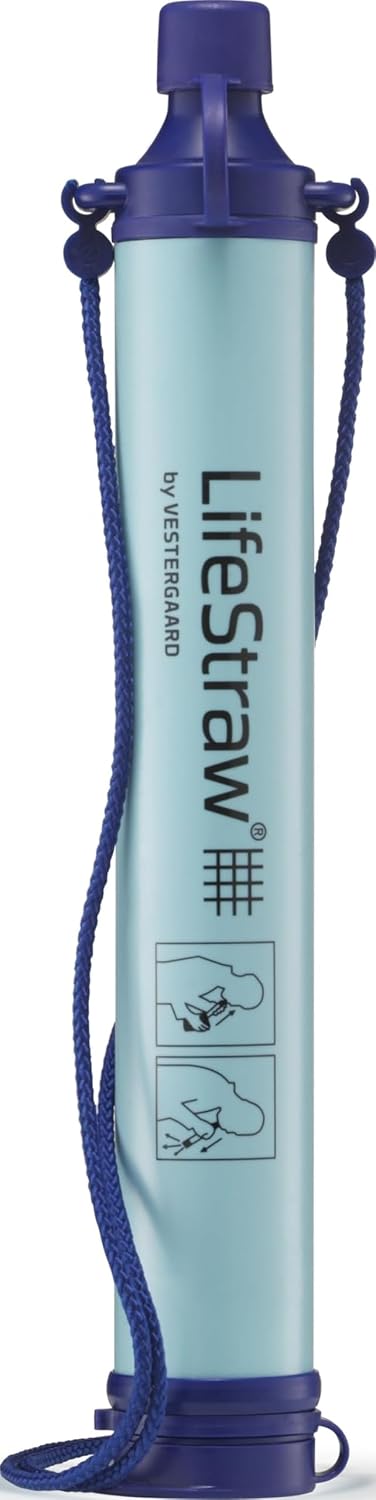
- LifeStraw or Sawyer Squeeze water filter
- Water purification tablets (Aquatabs or iodine) as backup
- Collapsible water container for camp use
- Stainless steel cup or pot for boiling
Food
- 2,400-calorie emergency survival bars (Mainstay or Datrex) — one per person
- Freeze-dried meals (Mountain House): four to six pouches per adult
- Jerky, peanut butter packets, trail mix, hard candy for morale
- Lightweight camp stove (MSR PocketRocket) and fuel canister
- Spork and camp utensils
Shelter and Sleep
- Lightweight tent or heavy-duty tarp with paracord (550 lb, 50 feet minimum)
- Emergency bivy sack (SOL Escape Bivy recommended)
- Mylar emergency blankets (two per person)
- Compact sleeping bag rated to 30°F or lower depending on your region
- Ground pad or foam sleeping pad for insulation from cold ground
Fire Starting
- BIC lighters (two minimum)
- Waterproof matches in sealed container
- Ferro rod with striker
- Fire tinder: fatwood sticks, petroleum jelly cotton balls, commercial fire starters
First Aid
- Pre-built trauma kit including tourniquet (CAT or SOFTT-W), Israeli bandage, chest seals, hemostatic gauze
- Standard wound care: bandages, antiseptic wipes, medical tape, moleskin for blisters
- Medications: pain relievers, antihistamines, anti-diarrheal, prescription meds (30-day supply minimum)
- Nitrile gloves, CPR face shield
- Know how to use everything in this kit before the emergency happens
Navigation and Communication
- Topographic maps of your region and likely bug out routes — printed and laminated
- Quality compass (Silva or Suunto)
- Signal mirror and whistle
- Hand-crank or solar emergency radio (Midland ER310)
- Handheld GMRS/FRS radio for family communication
- Backup battery bank for phone
Tools and Miscellaneous
- Fixed-blade knife and multi-tool (Leatherman Wave or similar)
- Headlamp with extra batteries (Black Diamond Spot)
- Duct tape, zip ties, safety pins
- N95 masks and goggles for chemical/smoke scenarios
- Cash in small bills (ATMs will be down)
- Copies of important documents in a waterproof bag: ID, insurance, birth certificates, bank info
- Hygiene kit: toothbrush, soap, toilet paper, hand sanitizer

Building This Into Your Prep Plan
Building the bag is only half the work. A bag sitting in a closet that nobody knows how to use is dead weight. Your prep plan must include these elements:
- Location: Your bag should be in the same place every single day — ideally near your primary exit point. Every adult in your household needs to know exactly where it is.
- Bug Out Routes: Identify three separate routes out of your immediate area. One primary, two alternates. Know where road chokepoints are. Practice driving them. Know where you're going — a secondary location, a family member's home, or a pre-scouted campsite.
- Communication Plan: What happens if your family is separated? Designate a rally point and a check-in protocol. Write it down and put a copy in every bag.
- Maintenance Schedule: Check your bag every six months. Rotate food. Replace batteries. Check medication expiration dates. A bag that hasn't been checked in two years is unreliable.
- Skill Development: Gear without skill is just weight. Take a first aid course. Practice fire starting in the rain. Learn to read a topo map. Run a backpacking trip with your bug out load to see how your body handles it.
Advanced Level — What Serious Preppers Do Differently
Once your basic 72-hour bag is solid, serious preppers take it to the next level. Here's what separates the truly prepared from the crowd:
- They have multiple bags at multiple locations — one at home, one in the vehicle, one at the office. The get-home bag in your car is a different but equally important piece of the puzzle.
- They plan for their entire group — Every family member has age-appropriate gear and a role. Children carry their own water and food. Elderly members have modified kits. Everyone participates.
- They test their gear under stress — Not just in the backyard, but on multi-day trips in real weather. You need to know what breaks, what's too heavy, and what you actually need versus what felt important at the store.
- They have a layered defense plan — Bug out is the last resort. Serious preppers also have a shelter-in-place plan, a 30-day food supply at home, and a bug out location already established and stocked.
- They train with their tools — A tourniquet you've never applied under pressure will fail you. A compass you've never navigated with is decoration. Train constantly. Train realistically.
- They account for scenario-specific needs — Urban bug out vs. wilderness bug out require different gear priorities. Know your most likely scenarios and build accordingly.
Your Action Plan — What to Do in the Next 30 Days
Stop reading and start doing. Here is your 30-day build plan:
- Week 1: Purchase your backpack, two water bottles, a LifeStraw filter, water purification tablets, and a six-pack of BIC lighters. These are your immediate survival essentials and cost under $100 combined.
- Week 2: Build your food supply. Purchase survival bars and at least four freeze-dried meal pouches per person in your household. Add a stainless steel cup and a lightweight stove.
- Week 3: Address shelter and fire. Add a quality emergency bivy or sleeping bag, a tarp with paracord, and a ferro rod. Purchase or assemble a quality first aid and trauma kit.
- Week 4: Complete your navigation and communication setup. Print and laminate your local topo maps. Buy a compass and practice using it. Set up your family communication plan in writing. Add your documents, cash, and hygiene kit.
- Beyond 30 days: Sign up for a first aid or wilderness survival course. Run a weekend camping trip with only your bug out bag. Evaluate. Adjust. Train harder.
This is a buildable, achievable plan. The only thing standing between your family and true preparedness is your willingness to act right now.
The Bottom Line on Self-Reliance
Nobody is coming to save you. Not in the first 72 hours of a real disaster — not reliably, not fast enough, and not with your family's specific needs in mind. The government will do what it can. Neighbors will help when they're able. But the only person guaranteed to be there for your family is you. A fully built, tested, and maintained 72-hour bug out bag is not paranoia — it is one of the most profound acts of love and responsibility you can perform for the people who depend on you. Build the bag. Learn the skills. Run the drills. Because when it matters, preparation is the only currency that buys safety.
🛒 Essential Survival Gear
As an Amazon Associate I earn from qualifying purchases.