How to Build a 1-Year Food Storage Supply on a Budget
The Hard Truth About Food Security
FEMA recommends a 72-hour emergency kit. That's three days. The average grocery store has roughly 72 hours of inventory on its shelves before it's stripped bare in a regional crisis. If you're only prepped for 72 hours, you're not prepped — you're just delayed. A 1-year food supply isn't paranoia. It's the minimum threshold for genuine self-reliance, and you can build it without wrecking your finances.
Why Most People Get This Wrong
The prepping community is full of well-intentioned people who waste hundreds of dollars and still end up with an unusable food supply. Here's where they fail:
- Buying what they don't eat. Stocking up on freeze-dried meals you've never cooked means you're storing food your family will refuse in a crisis. Stress, illness, and upheaval kill appetite for unfamiliar food. Store what you already eat.
- Ignoring caloric density. Most people dramatically underestimate how many calories they need per day. Active adults doing manual labor or dealing with crisis-level stress need 2,500–3,500 calories daily. Calculate by calories, not just "meals."
- No rotation system. Food storage isn't a set-it-and-forget-it operation. Buying 500 cans and piling them in a corner means half of them expire before you touch them. First In, First Out (FIFO) is non-negotiable.
- Skipping water storage. You cannot prepare a single meal in your food storage without water. This is the single most overlooked gap in amateur food preps.
- Going too exotic too fast. Buying a $3,000 pallet of freeze-dried mountain house meals before you have a basic pantry staple foundation is backwards. Build the foundation first.
- No nutritional balance. Calories alone don't sustain health. Vitamin deficiencies like scurvy (Vitamin C) or pellagra (Niacin) become real threats in long-term grid-down scenarios. Your storage needs macros AND micronutrients.

The Fundamentals: Building Your 1-Year Supply Step by Step
This is a tiered approach. Build each tier before moving to the next. Don't skip ahead.
- Calculate your caloric baseline. Multiply 2,000 calories per person per day by 365 days. For a family of four, that's 2,920,000 calories minimum. Write that number down. Every purchasing decision gets measured against it.
- Build Tier 1 — The Staple Foundation (Months 1–3 of build-out). These are bulk, shelf-stable, calorie-dense foods that form the backbone of your supply. For one adult for one year, target these quantities:
- Hard red or white winter wheat: 300 lbs (store in food-grade 5-gallon buckets with oxygen absorbers)
- White rice: 200 lbs (sealed in mylar bags inside buckets)
- Dried pinto, black, and navy beans: 150 lbs combined
- Rolled oats: 100 lbs
- Pasta (white): 50 lbs
- Salt: 10 lbs (also essential for food preservation)
- Sugar or honey: 60 lbs
- Baking powder: 5 lbs
- Baking soda: 5 lbs
- Cooking oil (coconut or vegetable in sealed cans): 10 gallons
- Build Tier 2 — Canned and Preserved Foods (Months 2–5 of build-out). Rotate these actively into your daily meals. Buy double what you normally would at the grocery store and track what gets used.
- Canned protein: tuna, salmon, sardines, chicken, SPAM — target 52 cans per person per protein type annually
- Canned vegetables: corn, green beans, peas, tomatoes — minimum 200 cans per person
- Canned fruit: 100 cans per person
- Canned soup and stew: 100 cans per person
- Build Tier 3 — Freeze-Dried and Long-Shelf Supplements (Months 4–12 of build-out). These extend nutritional variety and fill gaps. Buy in #10 cans from Mountain House, Augason Farms, or Thrive Life during sales.
- Freeze-dried vegetables: broccoli, spinach, bell peppers
- Freeze-dried fruit: strawberries, blueberries, apples
- Powdered whole milk: 50 lbs per person per year
- Powdered eggs: 25 lbs per person per year
- Multivitamins: 2-year supply per person
- Implement your rotation system immediately. Label every can and package with a permanent marker showing the purchase date. Build or buy a can rotation rack. New purchases go to the back. Use from the front. This is not optional.
What You Need: The Complete Checklist
Before you buy a single pound of food, get your storage infrastructure in place. Improperly stored food is wasted money.
Storage Containers:
- Food-grade 5-gallon HDPE buckets with gamma-seal lids (buy gamma lids separately — the snap lids are inferior)
- 7-mil mylar bags (sized for 5-gallon buckets)
- 300cc oxygen absorbers for mylar bags (use 4–6 per 5-gallon bucket)
- Impulse heat sealer for mylar bags
- Chest freezer (for short to mid-term bulk meat and frozen staples)
Storage Environment Requirements:
- Temperature: 55–70°F consistently (every 10°F above 70°F cuts shelf life roughly in half)
- Humidity: Below 15% ideal — use desiccant packets as backup
- Dark location: UV light degrades food quality and container integrity
- Off the floor: Pallets or shelving units keep moisture from wicking into buckets
Water Storage:
- Minimum 1 gallon per person per day for drinking and basic food prep
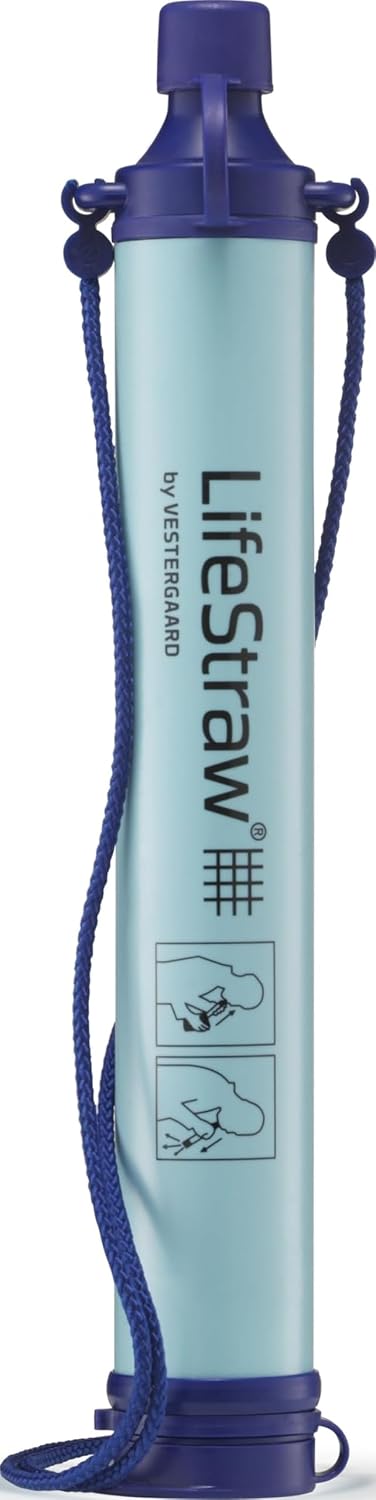
- For 365 days per person: 365 gallons minimum — realistically supplement with a quality water filtration system
- Recommended: Berkey water filter system plus 55-gallon food-grade water barrels plus WaterBOB bathtub bladders for emergency fill
Cooking Without Grid Power:
- Propane camp stove with a minimum 40 lb propane supply
- Rocket stove or wood gasifier stove as backup
- Cast iron cookware — it lasts forever and handles open flame
- Manual grain mill (Country Living or Wonder Junior) if storing whole wheat
Documentation:
- A written inventory spreadsheet or binder tracking quantities, locations, and expiration dates
- Printed recipe cards for cooking from scratch with stored staples

Advanced Tactics: What Separates Prepared from Truly Prepared
Once the foundation is built, these strategies close the gaps that most preppers never address.
- Grow your own to supplement and rotate. A 400-square-foot garden can produce a meaningful percentage of your fresh vegetable needs and gives you seeds — the ultimate renewable resource. Store heirloom seed varieties in a sealed, refrigerated container. Seed Savers Exchange and Baker Creek are reliable sources.
- Learn to preserve food yourself. Home canning, fermentation, smoking, curing, and dehydrating let you process surplus food at home for pennies on the dollar compared to commercial freeze-dried options. A pressure canner and a quality dehydrator are force multipliers for your food storage budget.
- Diversify your protein sources. Chickens for eggs and meat, rabbits for high-efficiency meat production, and fishing equipment are all renewable protein assets. Stored protein runs out. Livestock doesn't — if you know how to raise it.
- Budget hacks that actually work.
- Buy in bulk from wholesale clubs: Costco, Sam's Club, and Restaurant Depot offer significant per-pound savings on rice, beans, oats, and canned goods.
- Watch loss-leaders at grocery stores and stock up aggressively when staples go on deep discount.
- Buy #10 cans from Augason Farms during their 20–30% off sales, which happen multiple times per year.
- LDS (Latter-Day Saints) Home Storage Centers sell staples like wheat, rice, oats, and beans in bulk at near-cost pricing — and they're open to the public.
- Address the psychological component. Food storage means nothing if your family panics, wastes, or refuses to eat stored foods. Cook from your storage monthly. Make it normal. Your family needs to be practiced, not surprised.
- Map your nutrition gaps explicitly. Most grain-and-bean-heavy emergency diets are short on fat-soluble vitamins (A, D, E, K), Vitamin C, and Omega-3 fatty acids. Store cod liver oil capsules, canned salmon (Omega-3s), and multivitamins. These are cheap insurance against long-term deficiency diseases.
- Community is a force multiplier. One household with a 1-year supply is vulnerable. Three households on your block with coordinated, complementary stores and shared skills are a resilient unit. Know your neighbors. Trade skills. Share knowledge.
The Bottom Line: Action Steps to Take This Week
Stop planning and start executing. Here's your immediate action list:
- This week: Do a full inventory of what you currently have. Write it down. Calculate how many calories it represents per person. Face the real number.
- This week: Order 20 food-grade 5-gallon buckets, 20 gamma-seal lids, a box of 7-mil mylar bags, and 500cc oxygen absorbers. This is your storage infrastructure. Nothing gets stored properly without it. Total cost: approximately $80–$120.
- This week: Buy a 50 lb bag of white rice, a 50 lb bag of pinto beans, and a 50 lb bag of rolled oats. Seal them in mylar bags with oxygen absorbers and label them. You just stored roughly 75,000 calories for under $80. That's your proof of concept.
- Next 30 days: Add $20–$50 per week to your food storage budget. Every grocery run, buy double on canned goods you already eat. No special purchases yet — just doubling your existing buying habits.
- Next 90 days: Complete your Tier 1 staple foundation. Hit every bulk item on that list.
- Ongoing: Track, rotate, and cook from your storage every single month. Your stored food is only as good as your ability to prepare it.
The budget reality: A full 1-year supply for one adult can be built for $800–$1,500 over 6–12 months if you're disciplined and strategic. That's $70–$125 per month. Skip two restaurant meals. Cancel one subscription. Reallocate. This is a choice, not a financial impossibility.
The only person responsible for feeding your family when the system fails is the one looking back at you in the mirror — so build the supply, and build it now.
🛒 Essential Survival Gear
As an Amazon Associate I earn from qualifying purchases.