**How to Build a 1-Year Food Storage Supply on a Budget**
Why Most People Get This Wrong
FEMA recommends 72 hours of emergency food. The average American household has less than a week of food on hand. When the supply chain breaks — and history shows it will — that gap becomes a death sentence.
Building a year's worth of food storage sounds overwhelming and expensive. It's neither — if you do it right. The problem is that most people approach this backward, waste money on the wrong products, and quit before they build any real depth. Here's where they fail:
- They buy freeze-dried survival kits first. Those $300 buckets look impressive. They're also the least cost-effective way to store calories. You're paying a massive premium for convenience before you've even laid a foundation.
- They don't calculate actual caloric needs. Storing 500 cans of soup sounds like a lot until you realize most cans are 300–400 calories. You need roughly 2,000 calories per person per day — do the math before you spend a dollar.
- They ignore rotation. Food storage isn't a one-time purchase. It's a system. If you store food you don't eat, you'll end up with expired goods and wasted money. Store what you eat. Eat what you store.
- They skip the basics for the exotic. Quinoa and specialty freeze-dried meals are fine additions — after you've secured 500 pounds of rice and 200 pounds of beans. Calories and macros first. Variety second.
- They have no inventory system. Without tracking what you have, expiration dates, and quantities, your storage will develop blind spots and costly gaps.
- They store food without water. Dry goods require water to prepare. If you're storing rice and beans and have no water plan, you have a pile of useless grain.
The Fundamentals — How to Build Your 1-Year Supply Step by Step
This is a system built on tiers. Start at Tier 1. Don't move to the next tier until the previous one is solid. Every dollar you spend should build on the last.
- Calculate your caloric baseline. A sedentary adult needs roughly 2,000 calories per day. A working adult in a physical situation needs 2,500–3,000. Multiply by 365 days per person. For a family of four with average needs: 4 people x 2,000 calories x 365 days = 2,920,000 calories. That's your target. Write it down.
- Build Tier 1 — The Caloric Foundation. These are the cheapest calories per dollar you can buy with long shelf lives. Prioritize:
- White rice — roughly 1,650 calories per pound, 25+ year shelf life when stored in sealed Mylar bags with oxygen absorbers. Budget: $0.50–$0.80/lb in bulk. Target: 400 lbs per adult per year.
- Dry pinto or black beans — roughly 1,500 calories per pound, 25–30 year shelf life sealed properly. Budget: $0.80–$1.20/lb in bulk. Target: 200 lbs per adult per year.
- Rolled oats — roughly 1,700 calories per pound, 20–30 year shelf life in sealed containers. Budget: $0.60–$1.00/lb. Target: 100 lbs per adult per year.
- Wheat berries — roughly 1,500 calories per pound, 25+ year shelf life. Require a grain mill. Budget: $0.50–$0.90/lb. Target: 200 lbs per adult per year.
- Pasta — roughly 1,700 calories per pound, 8–10 year shelf life in sealed containers. Budget: $1.00–$1.50/lb. Excellent short-to-mid range option.
- Build Tier 2 — Proteins and Fats. Carbohydrates keep you alive. Proteins and fats keep you functional.
- Canned meats — tuna, salmon, chicken, sardines. 3–5 year shelf life. Buy in cases. Target: 3–5 cans per person per week.
- Peanut butter — roughly 2,500 calories per pound, 1–2 year shelf life commercially. Rotate aggressively. Target: 2 jars per person per month.
- Coconut oil and vegetable shortening — critical for high-calorie cooking. Shortening in sealed cans lasts 8–10 years. Target: 10–20 lbs per person per year.
- Powdered whole milk — 1,500+ calories per pound, 20–25 year shelf life when sealed. Target: 50 lbs per adult per year.
- Hard cheeses waxed at home — 2–5 year shelf life when waxed and stored at stable temperatures.
- Build Tier 3 — Nutrition, Flavor, and Morale. This is what makes your food storage survivable long-term.
- Honey — indefinite shelf life, antimicrobial, calorie-dense. Target: 10–20 lbs per person per year.
- Salt — no expiration, critical for preservation and electrolyte balance. Target: 10 lbs per person per year minimum.
- Multivitamins — 1 per day per person. Buy in bulk bottles.
- Spices and bouillon — morale is a survival factor. Bland food causes depression and appetite fatigue, which accelerates physical decline. Stock what your family uses.
- Baking soda, baking powder, yeast, sugar — for cooking versatility and morale.
- Freeze-dried vegetables and fruits — now is when this makes sense. Add variety and micronutrients to your grain base.
- Layer in water storage and purification. Store 1 gallon per person per day minimum. For a family of four, that's 1,460 gallons for a year — not practical in a residential setting. Prioritize: 30-day supply in food-grade containers (240 gallons for four people), plus serious filtration and purification capability to source and treat water ongoing.

What You Need — The Complete Gear and Supply Checklist
Don't store food without the tools to store it properly. Improperly stored food fails early, wastes money, and can make you sick.
- Storage containers: 5-gallon food-grade HDPE buckets with gamma-seal lids. Buy by the case. Plan for 20–40 buckets for a serious supply.
- Mylar bags: 5-gallon Mylar bags (5-mil thickness minimum) for dry goods like rice, beans, wheat, oats. These are non-negotiable for long-term storage.
- Oxygen absorbers: 2,000cc oxygen absorbers for 5-gallon buckets. Use 1–2 per bucket depending on contents. Buy in packs of 50–100.
- Impulse heat sealer: For sealing Mylar bags. A flat iron or hair straightener can work in a pinch, but a proper sealer is more reliable for long-term integrity.
- Grain mill (manual): If you're storing wheat berries, you need a way to grind them. A quality hand-crank grain mill like the Country Living Mill or Diamant No. 525 is an investment, but wheat is worthless without it.
- Food-grade water containers: 55-gallon water barrels, WaterBOB bathtub bladders, and stackable 5-gallon water jugs. Minimum 30-day supply stored.
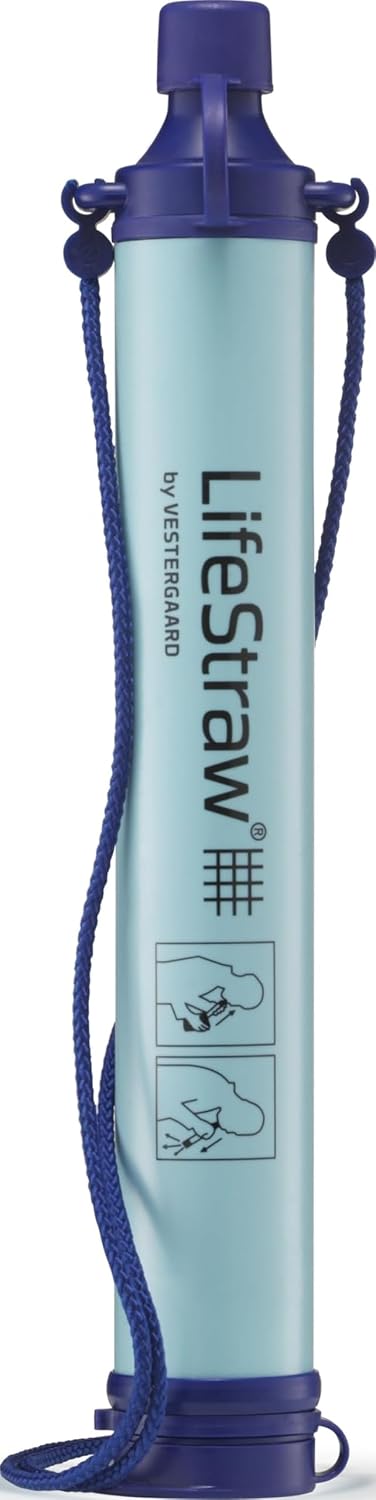
- Water filtration: Berkey water filter system with two or more Black Berkey elements. Supplement with LifeStraw or Sawyer Squeeze for portable needs.
- Water purification tablets: Potable Aqua or Katadyn tablets — backup to your filtration system.
- Digital kitchen scale: For accurately measuring food when portioning and for inventory tracking.
- Inventory spreadsheet: Track item, quantity, purchase date, expiration date, and location. Update every time you add or consume. Use paper backup stored with your supply.
- Thermometer for storage area: Ideal storage temperature is 50–70°F. Every 10°F increase roughly halves shelf life. Know your storage conditions.
- First-in, first-out (FIFO) shelving: Canned goods on a slanted shelf system so oldest items come out first automatically.
Advanced Tactics — What Separates the Truly Prepared
Once your foundation is solid, these strategies multiply your preparedness without multiplying your costs.
- Buy in bulk from restaurant supply stores and food co-ops. Sam's Club, Costco, Azure Standard, and local restaurant supply stores offer dramatically lower per-unit costs than grocery stores. A 50-lb bag of rice from a restaurant supply store often costs the same as 25 lbs at retail.
- Use case-lot sales strategically. Most grocery chains run case-lot sales 2–4 times per year. These are your buying events. Know your prices per unit before you walk in. Buy in quantity only when it's a genuine deal.
- Learn to pressure can your own food. A quality pressure canner (All American or Presto) lets you preserve meat, beans, and vegetables at home. This extends your variety dramatically and lets you store homegrown or bulk-purchased perishables indefinitely. Home-canned food has a minimum 1–5 year shelf life when done correctly.
- Start a garden and dehydrate the surplus. A basic food dehydrator (Excalibur 9-tray is the standard) lets you preserve garden produce, meats, and herbs. Dehydrated foods stored in Mylar with oxygen absorbers last 5–25 years depending on the product.
- Diversify caloric sources intentionally. Don't let rice and beans become more than 60% of your caloric supply. Digestive fatigue is real. Appetite fatigue causes people to under-eat in survival situations, accelerating physical decline. Diversity in your storage is a health and resilience strategy.
- Map your storage to your cooking skills. 200 lbs of wheat berries is useless if no one in your household knows how to make bread. Match your storage to skills you actually have or are actively building. Store what you know how to cook.
- Set a budget and buy consistently. Add $25–$50 per week to your food storage instead of trying to build it all at once. $50/week builds roughly $2,600/year in storage. Consistency beats intensity. At that rate, you can have a serious 6-month supply for a family of four within 12 months without financial strain.
- Conduct a quarterly audit. Pull your inventory every 90 days. Identify what's nearing expiration. Rotate it into your regular meals. Identify gaps and prioritize your next purchasing cycle accordingly.

The Bottom Line — Action Steps to Take This Week
Stop planning and start building. Here's exactly what to do in the next seven days:
- Day 1: Calculate your household's daily caloric needs. Multiply by 365. Write the number on paper and put it on your refrigerator. That's your target.
- Day 2: Audit what you have. Go through your pantry and write down everything that could be part of a food storage supply. Note quantities and expiration dates. This is your starting point.
- Day 3: Set up your inventory system. A simple spreadsheet with columns for item, quantity, purchase date, expiration date, and storage location is all you need. Start logging what you have.
- Day 4: Price rice, beans, oats, and pasta at your nearest bulk or restaurant supply store. Compare to your local grocery. Know your numbers.
- Day 5: Order a starter pack of 5-gallon Mylar bags, oxygen absorbers, and at minimum two 5-gallon food-grade buckets with gamma-seal lids. This is your storage infrastructure.
- Day 6: Make your first bulk purchase. Buy at minimum 50 lbs of white rice and 25 lbs of dry beans. Properly seal in Mylar bags with oxygen absorbers and store in your buckets.
- Day 7: Set a recurring weekly or biweekly budget for food storage additions. Automate it in your head as a non-negotiable household expense, the same as rent or utilities.
That's one week. That's your foundation. Keep building every week until you hit your target. Don't stop.
Self-reliance isn't a destination — it's a discipline you practice every single week until no disaster, shortage, or supply chain failure can threaten the survival of the people under your roof.
🛒 Essential Survival Gear
As an Amazon Associate I earn from qualifying purchases.