Grid-Down Survival: What to Do in the First 72 Hours Before Everything Gets Worse

Why the First 72 Hours Decide Everything
When the power goes out and doesn't come back in 20 minutes, the clock starts. Not a metaphorical clock — a real, brutal countdown. Within 72 hours, unprepared people begin making desperate decisions: leaving home without a plan, burning through resources they can't replace, or worse, sitting frozen waiting for FEMA to show up. The first 72 hours of a grid-down event are the hinge point between controlled survival and a full-blown crisis. Whether it's a major infrastructure attack, a cascading grid failure, a hurricane, or an EMP, the response playbook is largely the same. What you do in hours one through seventy-two will determine whether you're eating, hydrated, informed, and defended — or scrambling. This is that playbook.
Understanding the Grid-Down Threat Landscape
Before you can respond correctly, you need to understand what you're actually dealing with. "Grid down" doesn't mean one thing — it means a spectrum of scenarios, and your response should scale accordingly.
Tier 1 — Localized Outage (1–24 hours): Transformer failure, storm damage, equipment fault. Affects your neighborhood or town. Infrastructure is intact, utilities will likely restore. Minimal action required beyond short-term comfort management.
Tier 2 — Regional Grid Failure (24–72+ hours): Storm systems, wildfires, cyber attacks on utility infrastructure. Affects hundreds of thousands of people across multiple counties or states. Fuel runs out at gas stations within 12–18 hours. Grocery shelves empty within 24. This is where most preppers think they're ready and aren't.
Tier 3 — National or Long-Term Infrastructure Collapse: EMP, coordinated attack, or catastrophic natural disaster. The grid is down indefinitely. Society begins to restructure within days. Everything you've prepared for lives here.
Your immediate actions should begin at Tier 2 assumptions. If it's only Tier 1, you've lost nothing by being prepared. If it's Tier 3, you've bought yourself critical time.
Know this going in: the average American household has less than 3 days of food and water on hand. Your neighbors are not prepared. That matters for your security posture immediately.

The 72-Hour Response Protocol — Step by Step
Execute these in order. Don't skip steps because they seem obvious. Obvious gets forgotten under stress.
- Hour 0–1: Assess and VerifyThe moment power goes out, resist the urge to assume. Check your breaker panel first — rule out a household fault. Then check neighbors. If the whole street is dark, check your battery-powered or hand-crank emergency radio immediately. A Midland ER310 or similar NOAA-capable weather radio should already be in your kit. Tune to local emergency broadcasts and NOAA Weather Radio frequencies (162.400–162.550 MHz). Do not rely on your smartphone as your primary information source — cell towers run on backup batteries that fail within 4–8 hours under heavy load. Write down what you learn. Paper. Pen. Now.
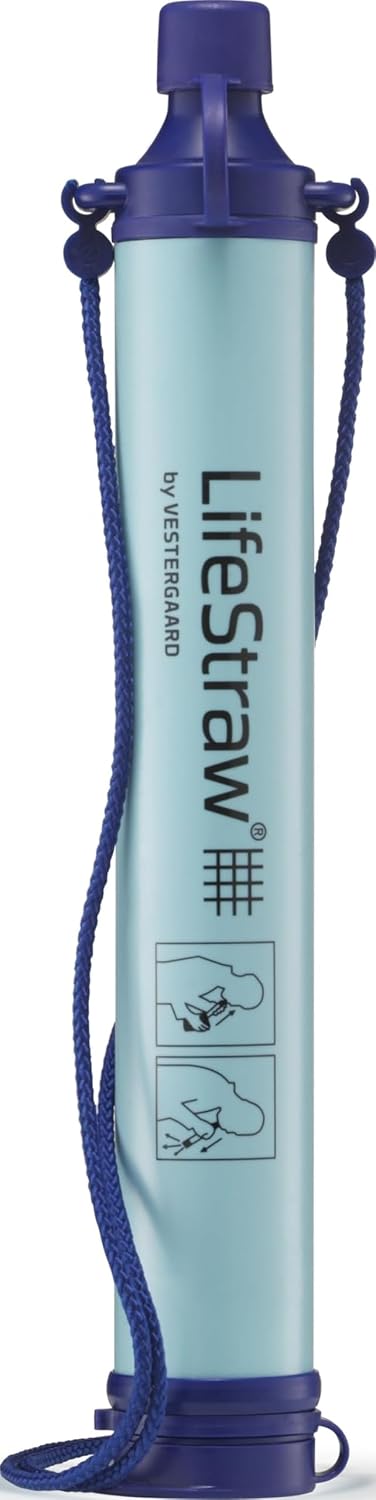
- Hour 1–3: Secure Your Water SupplyWater is your first priority. Municipal water pressure can fail within hours of a grid-down event because pumping stations lose power. Before that happens, fill everything you can. Fill your bathtubs immediately using a WaterBOB bathtub liner (holds 100 gallons) if you have one. Fill every large pot, cooler, and clean container. Standard minimum survival requirement is 1 gallon per person per day — but plan for 2 gallons when you factor in cooking, hygiene, and sanitation. A family of four needs a minimum of 24 gallons for 72 hours, ideally 48 gallons.Locate your water shutoff valve. Know where it is. If your pipes or water source becomes compromised, you'll need to isolate your supply. Have at least one of the following filtration options ready: a Sawyer Squeeze or Berkey countertop filter for extended use, plus water purification tablets (Potable Aqua, 50-tablet bottle) as backup. Boiling requires fuel — plan accordingly.
- Hour 3–6: Audit Your Food Supply and Protect Your RefrigeratorA full refrigerator holds safe temperatures for approximately 4 hours without power. A full freezer holds for 24–48 hours depending on how full it is and ambient temperature. Do not open either unnecessarily. Make a list of what's inside without rummaging. Prioritize eating refrigerated perishables first — dairy, meat, leftovers. Move frozen items to a cooler packed with ice if you have it. Then shift to your shelf-stable preps.Your 72-hour food plan should require zero cooking if possible, to conserve fuel. Think: canned goods, peanut butter, crackers, hard cheeses, dried fruit, jerky, nuts. Caloric target per adult is 1,800–2,200 calories per day minimum. Have a manual can opener — not the cheap $2 kind. A Swing-A-Way or Kuhn Rikon will work when nothing else does.
- Hour 6–12: Establish Communications and Intelligence GatheringInformation is a survival resource. At the 6-hour mark, you need to know: Is this local or regional? Is there a timeline for restoration? Are there civil disturbances forming? A BaoFeng UV-5R or UV-82 handheld ham radio (get your Technician license — it's a weekend of study) lets you monitor local repeaters and emergency services. Even unlicensed listening is legal and valuable. Establish a communication plan with your immediate family and a designated out-of-area contact who can relay information between separated family members.If you're in a neighborhood watch or prepper group, now is the time to make contact. Shared intelligence is a force multiplier.
- Hour 12–24: Fuel, Power, and Light ManagementIf you have a generator, run it strategically — not continuously. Prioritize keeping a chest freezer running by cycling power in 4-hour blocks. This dramatically extends your frozen food life. Never run a generator inside or within 20 feet of any window or door — carbon monoxide kills faster than hunger. Use LED lanterns (goal zero or similar) for interior light. Have at least 30 hours of battery-powered or solar lighting per person. Candles are a fire hazard in high-stress environments — use them as a last resort with strict protocols.Top off all vehicle fuel tanks now if you haven't already. Gas stations without power cannot pump fuel. If you have stored fuel (recommended minimum: 25 gallons of ethanol-free gas with PRI-G or Sta-Bil stabilizer for up to 2 years of storage), this is the time to note your total supply and plan usage carefully.
- Hour 24–48: Security Posture and Community AssessmentAt the 24-hour mark, social dynamics begin to shift. People who have not prepared begin to feel genuine fear. Desperation builds slowly, then quickly. This is not paranoia — it's pattern recognition. Review your home security: Are exterior doors solid core with 3-inch screws in the deadbolt strike plate? Do you have line-of-sight awareness around your property? Have a conversation — calm, private — with your household about who can come inside and under what terms. A household that hasn't discussed this will freeze when tested.If you're in a dense urban area and conditions deteriorate, have your bug-out bag pre-packed and staged near the exit. Each person needs: water (2 liters minimum), 3 days of food (approximately 1,800 calories/day), a first aid kit, fire-starting tools, a change of clothes, important documents in a waterproof bag, $200+ in small bills, and a means of self-defense appropriate to your training and legal context.
- Hour 48–72: Reassess, Resupply, and DecideBy hour 48, you should have enough information to make your first major decision: shelter in place or relocate. The calculus depends on your water supply, food supply, security situation, and any incoming threats (weather, civil unrest, structural issues). If you have 30+ days of food, water filtration capability, and a defensible property, staying put is almost always the right call. Movement is dangerous — roads may be congested, fuel is scarce, and destinations may not be better than your current position.If you must move, move early. By 72 hours, routes get harder, not easier.
Critical Mistakes That Get People Killed in Grid-Down Scenarios
These are the errors that separate the prepared from the casualties. Most of them are psychological, not logistical.
- Normalcy Bias — Waiting for It to "Just Come Back On"The single most dangerous mistake. People sit and wait, taking no action, burning time they cannot recover. The first hour of inaction costs you water pressure, fuel availability, and intelligence. If it comes back on in 2 hours, you lost nothing by acting. If it doesn't, you're already ahead. Act first. Relax later.
- Telling People What You HaveDo not broadcast your preps to neighbors, acquaintances, or on social media. Not because you're selfish — but because at hour 60 when a neighbor's kids are hungry and they remember you mentioning your "stock of food and water," you have created a security problem. Operational security (OPSEC) isn't paranoia. It's common sense that protects your family and theirs from a confrontation neither of you wants.
- Relying on a Single Point of FailureOne water source. One communication method. One fuel type. Grid-down scenarios are defined by system failures cascading into each other. Your plan must have redundancy at every critical node: two ways to filter water, two communication methods, two heat sources, two light sources. The rule is simple: two is one, one is none.
- Underestimating SanitationWhen water pressure fails, toilets stop working after a few flushes. This is a hygiene crisis that becomes a health crisis within days. Have a 5-gallon bucket with a toilet seat lid attachment and heavy-duty bags with kitty litter or sawdust for waste management. Human waste improperly handled spreads disease rapidly in confined spaces. This is not glamorous prep work, but dysentery will end your survival scenario faster than almost anything else.
- No Plan for MedicationsIf anyone in your household requires daily prescription medication — blood pressure, insulin, heart medication, psychiatric medication — a 72-hour grid-down event is a medical emergency for them, not just an inconvenience. Work with your physician in advance to maintain a 30-day emergency supply. This is legal, it's possible, and it may be the single most important prep you do this month.
- Failing to Brief Your HouseholdYou cannot execute a survival plan alone if you have a family. Everyone in your household above age 10 should know where the emergency supplies are, how to use a water filter, how to shut off the gas and water main, and what the communication plan is. Run a drill. It feels awkward. Do it anyway.

What to Practice This Weekend
Sunday morning, flip your main breaker and run a 6-hour grid-down simulation. No grid power. Use only what you have staged and ready. Cook one meal without electricity, locate and test your water supply options, run your emergency radio, and brief your family on the protocol above. You'll find the gaps faster than any checklist will show you. Fix them before it counts.
The grid will fail again. The question is whether you'll be ready when it does — or be one of the millions of people waiting for someone else to save them.
🛒 Essential Survival Gear
As an Amazon Associate I earn from qualifying purchases.