Grid-Down Survival: What the First 72 Hours Will Really Look Like (And How to Be Ready)

The Reality Most People Ignore
The lights go out at 11:47 PM on a Tuesday. No storm warning. No news alert. Just silence — then the slow, creeping realization that this isn't a flipped breaker. Your neighbors are out. The traffic lights are dead. Your phone still has a charge, but the cell towers are already overloading with panicked calls that won't connect. Your family is looking at you. What happens next is determined entirely by what you did before this moment.
Most Americans have never experienced a true grid-down event lasting more than a few hours. A 2021 survey found that roughly 53% of households have less than three days of food on hand, and the average home has less than one gallon of drinkable water stored. FEMA recommends 72 hours of self-sufficiency as a baseline — not a goal. That's the floor, not the ceiling. When the grid goes down — whether from a hurricane, a cyberattack on infrastructure, an EMP event, or cascading equipment failures — the first 72 hours are the most chaotic, the most dangerous, and the most decisive. What you do in those hours either sets your family up for long-term resilience or puts you in a desperate scramble alongside everyone else.
This isn't a fear piece. This is a field manual. Let's get into it.
The Reality Most People Ignore
Here's the hard truth: the grid is far more fragile than most people want to believe. The United States electrical grid is an aging patchwork of infrastructure, some of it decades past its designed service life. In 2003, a software bug and a few untrimmed trees in Ohio triggered a cascading blackout that left 55 million people in the dark across the northeastern U.S. and Canada. It lasted four days. People died. Hospitals ran on generators until they ran out of fuel. Grocery stores sold perishables in the dark until they closed their doors entirely.
Now add to that picture: a targeted cyberattack, a significant geomagnetic storm, or a physical attack on transformer substations. In December 2022, coordinated attacks on substations in Moore County, North Carolina knocked out power to 45,000 people for days — in winter. The FBI investigated. The grid was vulnerable, and the public largely shrugged.
The scenarios that should concern serious preppers include:
- Natural disasters — hurricanes, ice storms, tornadoes, wildfires — all of which can destroy infrastructure for weeks
- Cyberattacks — increasingly sophisticated and increasingly common against utility infrastructure
- EMP or geomagnetic disturbance — a Carrington-level solar event could fry unprotected electronics across entire regions
- Supply chain failures — transformer shortages mean even localized grid damage can take months to repair
- Civil unrest — which often follows any sustained grid-down event, compounding every other challenge
Most people ignore these possibilities because they're uncomfortable. Serious preppers plan for them because they're probable.

Core Principles and Knowledge Breakdown
Survival in the first 72 hours of a grid-down scenario comes down to five non-negotiable pillars. Miss one and you're in trouble. Nail all five and your family has a fighting chance no matter how long the outage extends.
1. Water
Your body can go three weeks without food. It can go three days without water — and cognitive function degrades significantly within the first 24 hours of dehydration. In a grid-down scenario, municipal water pressure often fails within hours as pump stations lose power. You need a minimum of one gallon per person per day, and ideally two to three gallons when accounting for cooking, basic hygiene, and sanitation.
- Store a minimum of 72 gallons for a family of four — that's your 72-hour baseline
- Use HDPE food-grade containers, WaterBOB bathtub bladders, or pre-filled 55-gallon drums
- Know your nearest non-municipal water source — stream, pond, rainwater — and have filtration ready
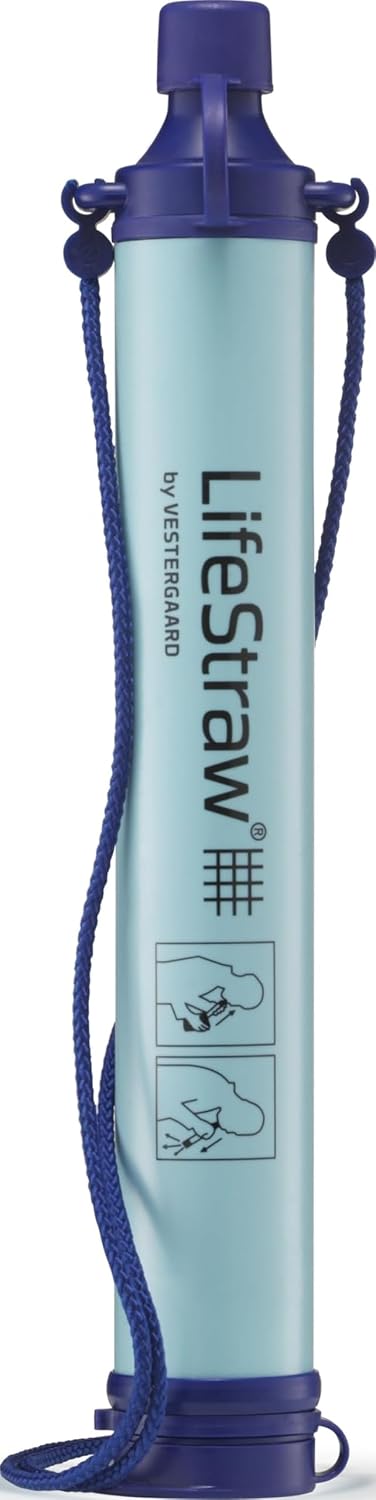
- Invest in a gravity-fed filter like a Berkey or Sawyer Squeeze for emergency filtration, and have water purification tablets as backup
2. Food
72 hours of food storage is achievable for almost any household. This isn't about freeze-dried survival meals (though those are excellent). It's about having a rotating pantry of shelf-stable food your family already eats: canned goods, rice, pasta, peanut butter, honey, oats. Prioritize calorie density and ease of preparation, because your cooking options will be limited.
- A two-burner propane camp stove with extra fuel canisters handles most cooking needs for 72+ hours
- Cast iron cookware doesn't require electricity and lasts generations
- Store a manual can opener — this sounds obvious until you're fumbling in the dark without one
- High-calorie snacks like nuts, jerky, and energy bars keep morale up and require zero preparation
3. Light and Communication
Darkness is disorienting and demoralizing. Within the first hour of a grid-down event, get light sources established and keep them distributed. A headlamp for every family member is non-negotiable. Battery-powered lanterns, solar lanterns, and quality flashlights cover your illumination needs. Know your battery inventory and rotate stock regularly.
For communication, a battery-powered or hand-crank NOAA weather radio is your lifeline to official information. A Baofeng UV-5R handheld radio lets you monitor emergency frequencies and communicate locally. If you have HAM radio certification, your reach expands dramatically.
4. Security
In the first 12 to 24 hours of a grid-down event, most people are in a state of confused wait-and-see. By hour 48, when ATMs are down, gas stations are closed, and grocery store shelves are cleared, the calculus changes. Your security posture needs to reflect this reality. Know your neighborhood. Know your neighbors. Establish a community communication plan before anything happens. And ensure your home is defensible — reinforced door frames, motion-activated lighting on battery backup, and layered situational awareness.
5. Sanitation and Medical
No electricity means no sewage processing at most municipal plants. If city water pressure fails, your toilets won't flush after the tank empties. Have a plan: a portable camping toilet, 5-gallon bucket with toilet seat lid, and heavy-duty waste bags. Waste disposal done wrong in a confined area creates a health crisis fast. Stock a serious first aid kit — not a bandage collection, but a kit with trauma supplies, Israeli bandages, tourniquets, antiseptics, and a first aid manual you've actually read.
Building This Into Your Prep Plan
Knowledge without a plan is trivia. Here's how to translate these principles into an actual prep structure your household can execute under stress.
Create a Grid-Down Binder
Document everything critical in a physical binder, because digital records are useless when the power is out. Include: emergency contacts written out by hand, copies of critical documents, local maps, a household emergency plan with meeting points and protocols, and a grid-down checklist organized by the first hour, first six hours, and first 24 hours.
Run a Drill
Announce a surprise grid-down weekend once a year. Turn off the main breaker Friday night and live on your preps until Sunday evening. What breaks down? Where are the gaps? This is how you find out before it matters. Most families discover three things they didn't know they needed. That's the point.
Build Redundancy Into Everything
One is none, two is one. If your primary light source is a headlamp and the battery dies, what's next? Plan through every system in your house — heat, light, water, communication — and ensure at least two independent options exist for each. This isn't paranoia. This is engineering.
Know Your Neighborhood
In a sustained grid-down event, community is your greatest asset. Know which neighbors have medical skills, mechanical skills, or radio capability. Know who has vulnerable family members who may need support. Build these relationships now — because you will not be building them for the first time at hour 48 of a crisis.

Advanced Level — What Serious Preppers Do Differently
If you've already got your 72-hour basics locked down, here's where you level up your grid-down capability significantly.
- Solar and Battery Backup: A 200-watt portable solar panel paired with a 1,000Wh power station gives you the ability to charge critical devices, run medical equipment, power lighting, and keep communication alive indefinitely. The Goal Zero Yeti and EcoFlow Delta lines are field-proven. This isn't cheap — but it's also not optional if you're serious.
- Generator Protocol: A dual-fuel generator (gasoline and propane) with a transfer switch gives you whole-home backup capability. Store a minimum of 25 gallons of treated fuel — a 5-gallon can with STA-BIL added rotates every 6 to 12 months. Run your generator outside only, away from windows and doors. Carbon monoxide kills more people in grid-down scenarios than almost anything else.
- Ham Radio Certification: A Technician Class license takes a weekend to study for and opens up a communications network that functions completely independently of the internet and cell towers. In a regional disaster, HAM nets are often the only reliable way to get situational awareness from the outside world and communicate across distances.
- Faraday Protection: If EMP is a scenario you're planning for, critical electronics — backup radio, solar charge controller, communication devices — should be stored in a Faraday cage or EMP-shielded container. Quality ammo cans with conductive gaskets or dedicated Faraday bags offer protection for relatively low cost.
- Water Catchment Systems: A 500-gallon IBC tote connected to a rainwater collection system from your roof gutters can sustain a household for weeks. Pair it with a quality filtration system and UV purification, and you've solved one of the hardest long-term grid-down challenges.
Your Action Plan — What to Do in the Next 30 Days
Don't walk away from this article with nothing but information. Information without action is just entertainment. Here is a concrete, executable 30-day action plan to get your household ready for the first 72 hours of a grid-down event.
- Week 1 — Water: Audit your current water storage. Calculate your household's 72-hour minimum. Purchase containers and fill them this week. Order a gravity filter if you don't have one. Identify your nearest local water source and drive to it.
- Week 2 — Food and Light: Build your 72-hour food supply from shelf-stable items your family already eats. Buy a camp stove and two extra fuel canisters. Assign a headlamp and extra batteries to every family member. Buy two quality lanterns.
- Week 3 — Communication and Documentation: Purchase a NOAA hand-crank weather radio. Create your grid-down binder. Write out emergency contacts by hand. Print local maps. Establish a family meeting point and communication protocol.
- Week 4 — Security and Medical: Audit your first aid kit — upgrade to a real trauma kit if you haven't already. Take a Stop the Bleed course (they're free and take two hours). Walk your home's perimeter and assess your security posture. Reach out to two neighbors and start building relationships.
Set a calendar reminder for 90 days from now to audit what you've built, identify the gaps, and plan the next phase. Preparedness isn't a purchase. It's a practice.
The Bottom Line
The grid will fail again. It's not pessimism — it's pattern recognition. And when it does, the difference between families who shelter in place with confidence and families who are lining up outside a FEMA distribution site in desperation comes down to decisions made weeks and months before the lights went out.
Self-reliance is not a political statement. It's not a lifestyle brand. It's the most profound act of love you can perform for the people counting on you. When the world outside gets uncertain and dangerous, your family deserves a home that functions as a fortress — stocked, lit, defended, and led by someone who prepared when it was still optional.
The time to prepare is now. Not when the sirens start. Not when the shelves empty. Now.
🛒 Essential Survival Gear
As an Amazon Associate I earn from qualifying purchases.