Economic Collapse Prep: How to Protect Your Wealth and Food Supply Before the System Breaks
Why Economic Collapse Is the Most Likely SHTF Scenario You'll Face
Economic collapse doesn't look like a movie. It looks like an ATM that won't dispense cash, a grocery store with empty shelves by day three, and a bank account that's technically full but functionally worthless. It happened in Venezuela, Argentina, Zimbabwe, and Weimar Germany — and the conditions that triggered those collapses exist right now in modern economies worldwide. Hyperinflation, sovereign debt crises, supply chain fragility, and banking system instability are not abstract threats. They are live wires. The people who survived those collapses with their lives and dignity intact had one thing in common: they converted abstract wealth into tangible, usable assets before the crisis hit. This article tells you exactly how to do that — for your money and your food supply.
Understanding the Two Pillars of Collapse-Proof Preparation
Preparing for economic collapse requires you to think in two categories simultaneously: wealth preservation and food security. Most preppers focus on one and neglect the other. That's a fatal error.
Wealth preservation means converting digital numbers and paper currency into hard assets that hold value independent of any government or banking institution. When the dollar loses purchasing power — whether gradually through inflation or rapidly through hyperinflation — your savings account and 401(k) can become nearly worthless in weeks. Real assets don't evaporate.
Food security means building a deep larder that can sustain your household for a minimum of 90 days, ideally 12 months or longer, using foods that store long-term without refrigeration. When supply chains collapse, food becomes currency. Having it means you don't have to go without — and you don't have to beg, steal, or trade away your hard assets just to eat.
These two pillars reinforce each other. Preserved wealth lets you barter or rebuild after the storm. A full food supply means your wealth doesn't get drained feeding your family during the crisis. You need both.

Step-by-Step: Building Your Economic Collapse Defense Plan
- Audit your current financial exposure. Log in to every financial account you hold. Write down the total value held in savings accounts, checking accounts, retirement accounts, and investment portfolios. This number represents your current risk. Every dollar sitting in a digital account inside a bank is a dollar that can be frozen, devalued, or inaccessible during a banking crisis. Know exactly what's at stake before you move to the next step.
- Build a physical cash reserve first. Before anything else, withdraw enough physical cash to cover 30–60 days of essential expenses. For most households, that means $1,500–$3,000 in small bills — primarily $20s, $10s, and $5s. Large bills become useless when no one can make change. Store this cash in a fireproof safe bolted to your floor or wall, not a lockbox that can be carried off. A basic residential-grade fireproof safe rated for 1 hour at 1,700°F starts around $150–$200 and is worth every penny.
- Convert a portion of savings into physical precious metals. Gold and silver have functioned as money for 5,000 years. They will continue to hold value when fiat currency fails. The practical breakdown: allocate 10–20% of your liquid savings into physical silver, and 5–10% into gold if your budget allows. Silver is the workhorse metal — it's affordable, divisible, and historically used for everyday transactions. Start with 1-ounce silver rounds or 90% junk silver coins (pre-1965 US dimes, quarters, and half-dollars). A single 1-ounce silver round currently runs approximately $28–$35. Aim for a minimum holding of 50–100 ounces of silver before you touch gold. Gold is for larger wealth storage — a single 1-ounce gold coin currently sits around $2,300–$2,500. Store metals in the same fireproof safe as your cash, or better yet, in a dedicated hidden safe with dual-location storage.
- Invest in barter goods with real-world utility. In a prolonged collapse, the best currency is something people desperately need. Stock a dedicated barter inventory that includes: alcohol (sealed liquor bottles, especially whiskey and vodka in 750ml and 1-liter sizes), cigarettes (even if you don't smoke — they're pure barter gold), disposable lighters (buy 50-count packs from restaurant supply stores), ammunition in common calibers (.22 LR, 9mm, .308, 12-gauge), over-the-counter medications (ibuprofen, antibiotics like fish amoxicillin where legal, antifungal creams), and quality hand tools. These items are compact, storable, and people will trade heavily for them.
- Build your 90-day food reserve — starting this week. The foundation of a collapse-ready food storage system is calories, protein, and shelf stability. Start here and build outward:
- Grains and staples: 25 lbs of white rice per person (sealed in 5-gallon Mylar-lined buckets with oxygen absorbers), 25 lbs of hard red wheat berries per person (requires a hand-crank grain mill — buy one), 10 lbs of rolled oats, 10 lbs of all-purpose flour.
- Protein: Canned tuna, salmon, and sardines — minimum 60 cans per person. Canned chicken and beef — 30 cans per person. Dried pinto, black, and navy beans — 20 lbs per person (sealed in Mylar with oxygen absorbers). Peanut butter — 10 large jars per person.
- Fats: Coconut oil (indefinite shelf life when sealed), olive oil, and ghee. Minimum 3–5 gallons of combined fat storage per person per year.
- Caloric density items: Honey (raw, sealed — never expires), white sugar (25 lbs per person, sealed), salt (critical for preservation — minimum 10 lbs per person).
- Freeze-dried reserves: Budget for at least one 1-month emergency food bucket per household from a reputable supplier (Mountain House, Augason Farms, or Legacy Food Storage). These run $200–$350 and provide a ready-made backup layer.
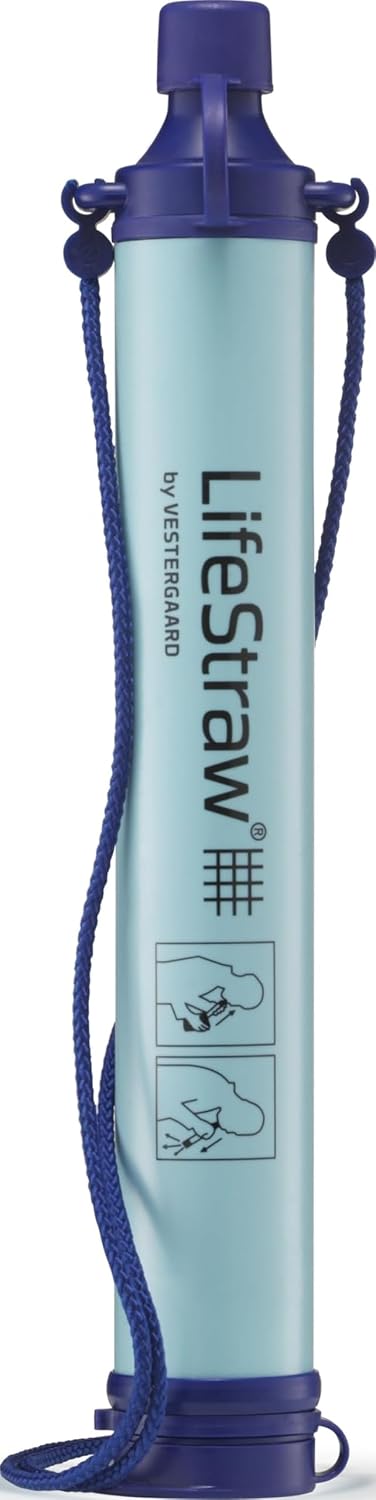
- Establish water security alongside food. Food storage means nothing without water. Store a minimum of 1 gallon per person per day — that's 90 gallons per person for a 90-day supply. Use food-grade 55-gallon barrels ($50–$80 each) treated with a water preserver concentrate (one bottle treats 55 gallons for up to 5 years). Pair your storage water with a high-output gravity filter like the Berkey system, which filters up to 6,000 gallons before element replacement, and backup purification tablets (iodine or sodium hypochlorite).
- Diversify storage locations. Single-point failure kills preppers. Don't keep all your food, water, cash, and metals in one location. Maintain a primary home cache, a secondary cache at a trusted family member's property or a rented storage unit, and a vehicle cache (a 72-hour bug-out bag minimum). If your home becomes inaccessible, your preparation shouldn't disappear with it.
Critical Mistakes That Will Gut Your Preparation
- Storing food you don't eat. The most common prepper mistake. If your family doesn't eat lentils on a normal Tuesday, you won't suddenly enjoy them under stress during a collapse. Rotate what you stock. Buy staples that integrate into your current cooking. Unfamiliar food causes meal fatigue, nutritional neglect, and morale collapse within two weeks. Test your storage food now — cook a week of meals using nothing but your stored supplies. You'll learn exactly what's missing.
- Buying collectible coins instead of bullion. Numismatic coins — rare, collector-grade coins with premiums based on scarcity — are not a survival asset. During a collapse, no one is paying a premium for a 1921 Morgan dollar's rarity. They want silver by weight. Stick to standard 1-ounce silver rounds, silver American Eagles, or 90% junk silver. Skip the collectibles entirely.
- Ignoring the security problem. A full pantry and a safe full of silver is a target. Operational security (OPSEC) is non-negotiable. Don't post your preps online. Don't tell your neighbors, coworkers, or extended acquaintances what you have. In a genuine collapse, loose talk gets people robbed — or worse. Your immediate household should know. That's where it stops. Reinforce exterior doors with 3-inch security strike plate screws, install door barricade bars ($30–$50 per door), and consider a basic security camera system for situational awareness.
- Neglecting skills in favor of gear. Gear can be lost, stolen, or depleted. Skills cannot. If you don't know how to sprout stored seeds for fresh nutrition, cook over an open fire, or can your own food, your supplies have a hard expiration date. A pressure canner ($100–$200) and the knowledge to use it correctly transforms a garden harvest into a year-round food supply. A cast iron Dutch oven and fire-cooking skills mean your generator failure doesn't mean cold meals. Invest in skills as aggressively as you invest in gear.
- Waiting for the perfect financial moment to buy metals. Preppers consistently say they'll buy silver or gold when the price dips. That moment rarely comes before a crisis — and after a crisis, supply dries up and premiums spike 30–50% above spot price. Buy consistently in small amounts. Ten dollars of junk silver per week adds up to a meaningful position over six months. Don't time the market. Stack steadily.
- Zero food production capability. Storage food is a buffer, not a permanent solution. If a collapse extends beyond 12–18 months, your stored supplies will deplete. Anyone who hasn't developed at least a basic ability to grow food is dependent on a system they can't control. Even a 4x8-foot raised garden bed can produce meaningful calories in tomatoes, beans, squash, and greens. Learn to save seeds — open-pollinated heirloom varieties only. Hybrid seeds won't reliably reproduce true to type. Seed banks like the Survival Seed Vault offer 20+ heirloom varieties sealed for long-term storage for under $50.

What to Do This Weekend
Stop reading and start executing. This weekend: withdraw $500 in small bills and put them in a secure location in your home. Then go to your local coin shop or order online and buy 10 ounces of silver rounds — no collectibles, just bullion. While you're out, pick up a 25-lb bag of white rice, two flats of canned tuna, and a 5-gallon food-grade bucket with a gamma seal lid. Seal that rice with a Mylar bag and two 2,000cc oxygen absorbers before Sunday night. That's your first real step. Small, tangible, done. The people who survive what's coming aren't the ones with the best plans on paper — they're the ones who acted before they needed to.
🛒 Essential Survival Gear
As an Amazon Associate I earn from qualifying purchases.