**Dying of Thirst: How to Recognize and Treat Dehydration Before It Kills You in the Field**

The Reality Most People Ignore
Picture this: It's day two of a bug-out scenario. The grid is down, temperatures are climbing, and your group has been moving hard through rough terrain carrying loaded packs. One of your kids says they feel dizzy. Your partner snaps at everyone for no reason. You've got a headache that started two hours ago and you wrote it off as stress. None of you have urinated in the last four hours. You are not stressed. You are not tired. You are dehydrated — and if you don't recognize it right now, that situation is going to spiral into a medical emergency before nightfall.
Dehydration kills quietly. It doesn't announce itself with drama. It erodes your judgment, your coordination, your will to keep moving — and it does it so gradually that most people don't recognize what's happening until they're already in serious trouble. In a survival scenario, compromised judgment is a death sentence. And the brutal truth is that most preppers have invested thousands of dollars in gear and zero hours in truly understanding how water loss affects the human body and what to do about it in the field.
That ends tonight. This is the deep dive you need.
The Reality Most People Ignore
The conventional wisdom is that you need eight glasses of water a day. That's a peacetime, air-conditioned, sedentary baseline. Throw in physical exertion, heat, elevation, stress, or illness — all of which are guaranteed features of any real survival situation — and your water requirements double or triple. The U.S. Army Field Manual recommends a minimum of one quart per hour during heavy activity in hot environments. Most preppers are not storing or sourcing anywhere near that volume.
Here's what compounds the danger: dehydration impairs the very cognitive functions you need to solve the problem. Studies show that as little as 2% body weight loss from fluid causes measurable declines in short-term memory, attention span, and decision-making ability. By the time you hit 4%, you're experiencing significant physical performance degradation. At 8-10%, you are in a life-threatening medical emergency. For a 180-pound adult, that 2% threshold is less than four pounds of fluid — achievable in a single hot afternoon of hard work.
The people most at risk in your group are also the people least likely to tell you something is wrong: children, elderly family members, and anyone who is already under physical stress. Children have higher surface-area-to-body-mass ratios, meaning they lose heat and fluid faster. Elderly individuals have a diminished thirst response — they genuinely don't feel thirsty even when they're severely dehydrated. Know this. Build it into how you manage your group.

Core Principles and Knowledge Breakdown
You need to be able to assess dehydration without any medical equipment, using nothing but observation and a few simple tests. Here is the full clinical picture, broken down for field use.
Early Stage Dehydration (1-2% fluid loss):
- Increased thirst — though this signal is often absent in the elderly
- Slightly darker urine — aim for pale yellow; dark yellow is a warning sign
- Mild headache, beginning fatigue
- Slight decrease in urine output
- Irritability or mood changes — this is frequently the first sign family members notice in each other
Moderate Stage Dehydration (3-5% fluid loss):
- Significantly reduced urine output; urine is dark amber
- Dry mouth, cracked lips
- Muscle cramps, particularly in the legs and abdomen
- Dizziness or lightheadedness, especially when standing
- Rapid heartbeat
- Sunken eyes and reduced skin elasticity
- Cognitive decline — confusion, poor decisions, difficulty concentrating
Severe Dehydration (6%+ fluid loss) — This is a medical emergency:
- No urination for eight or more hours
- Rapid, weak pulse
- Extreme confusion or loss of consciousness
- Sunken fontanelle in infants
- Inability to keep fluids down
- Cool, clammy, or mottled skin
The Skin Turgor Test: Pinch the skin on the back of the hand or the forearm and release. In a well-hydrated person, the skin snaps back instantly. Slow return — more than two seconds — indicates dehydration. This is a reliable field test that requires nothing but your fingers.
Field Treatment Protocol:
- Stop the loss first. Get the person out of direct sun and heat. Remove excess layers if overheated. Reduce physical exertion immediately. You cannot rehydrate someone who is still actively losing fluid faster than they can absorb it.
- Administer fluids slowly and consistently. For mild to moderate cases, small sips every few minutes are far more effective than forcing large amounts at once. Drinking too fast can cause vomiting, which makes everything worse. Target 4-8 ounces every 15-20 minutes.
- Use electrolyte replacement, not plain water alone. This is critical. Drinking large amounts of plain water when severely dehydrated can cause hyponatremia — dangerously low sodium levels — which carries its own set of life-threatening symptoms. You need sodium, potassium, and glucose alongside that water. Oral Rehydration Salts (ORS) packets are inexpensive, lightweight, and should be in every kit. In a pinch, the WHO formula is 1 liter of clean water, 6 teaspoons of sugar, and half a teaspoon of salt.
- Monitor progress. Urination returning to normal color and frequency is your most reliable indicator of recovery. Continue monitoring for two to four hours after treatment begins.
- For severe cases with vomiting or unconsciousness — you are in a crisis that requires evacuation if at all possible. Keep the person lying down with legs elevated. Small sips if they are conscious and can swallow. If they cannot swallow safely, do not force fluids — aspiration is fatal.
Building This Into Your Prep Plan
Knowledge without supplies is incomplete. Your dehydration response plan needs both. Here is how to build this into your existing prep structure at every level.
Water Storage: The absolute minimum is one gallon per person per day, but for any scenario involving physical activity, heat, or illness, plan for two gallons per person per day. If you have children or elderly family members, plan higher. Rotate your stored water every six to twelve months. Store in food-grade containers away from direct sunlight and chemical exposure.
Water Sourcing and Purification: Every member of your group who is old enough should know how to locate, collect, and purify water using multiple methods. Your kit should include:
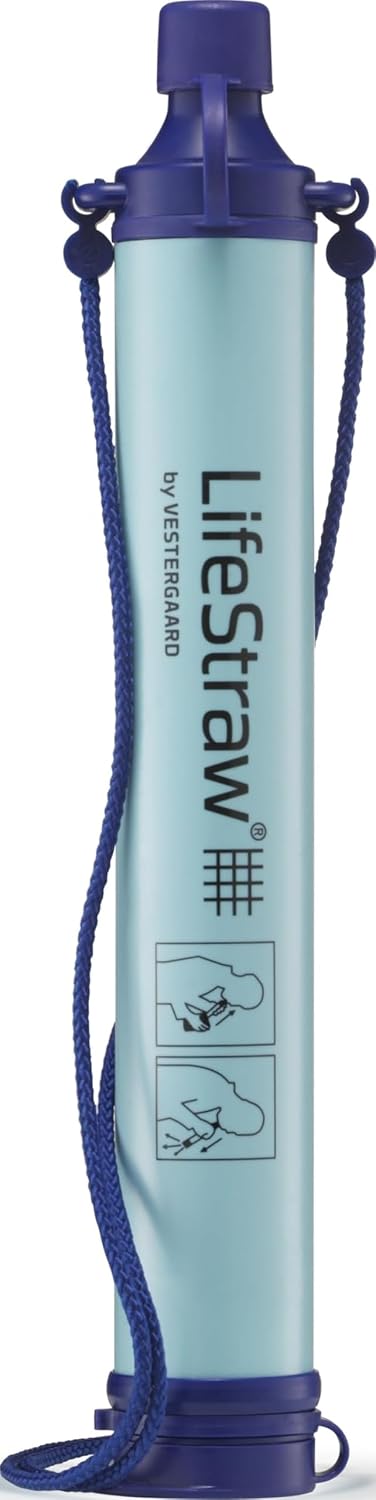
- A quality water filter — Sawyer Squeeze, LifeStraw Mission, or Katadyn BeFree are proven options
- Water purification tablets — iodine or sodium dichloroisocyanurate (NaDCC) as backup
- A metal container capable of boiling — this is the universal backup that requires no consumables
- A solar still setup or knowledge to improvise one for extreme scenarios
Medical Supplies for Dehydration:
- ORS packets — store a minimum of 20-30 per person. They are cheap and weightless.
- Electrolyte powder — brands like Liquid IV, LMNT, or Nuun tablets work well and store for years
- Oral syringes for administering small amounts to children or the semi-conscious
- A urine color chart — printable and laminated, kept in your first aid kit

Advanced Level — What Serious Preppers Do Differently
The average prepper stops at having water and some tablets. The serious prepper builds a complete dehydration management system and trains their entire group to execute it under stress. Here's what that looks like.
Hydration Monitoring Protocols: In any multi-day scenario, implement scheduled hydration checks. Every two hours, each group member reports in. Are you urinating? What color? Any headache or cramping? This is not paranoia — this is how military units and wilderness rescue teams manage group safety. Make it routine before it's necessary so it's automatic when it is.
IV Fluid Administration: This is advanced territory, but legitimate preppers with medical training or medical family members should have IV supplies and know how to use them. A liter of normal saline administered intravenously can reverse moderate dehydration within minutes when oral rehydration is not possible. If you have any medical background, look into wilderness medicine certifications from NOLS or Wilderness Medical Associates — these programs cover IV therapy in remote settings.
Electrolyte Balance Knowledge: Understand that not all electrolytes are equal in urgency. Sodium is the most immediately critical for fluid balance and neural function. Potassium is critical for cardiac and muscle function. Magnesium is important for preventing muscle cramping. Your ORS packets should address all three. If you're mixing improvised solutions, prioritize sodium first.
Physical Conditioning: A physically fit person is significantly more efficient at fluid regulation than a sedentary person. Your sweat response is more effective, your kidneys regulate more efficiently, and your cardiovascular system handles fluid shifts better. Your prep plan should include physical training — not just gear acquisition. Rucking with a loaded pack three days a week is both training and reconnaissance.
Scenario-Specific Planning: Dehydration risk varies dramatically by environment. Desert and high-altitude scenarios require completely different hydration strategies than cold-weather or forest scenarios. In cold weather, you often don't feel thirsty even while losing substantial fluid through respiration. In desert environments, you can lose a liter of fluid per hour through sweat alone. Know your threat environment and calibrate your planning accordingly.
Your Action Plan — What to Do in the Next 30 Days
Information is worthless without execution. Here is your concrete 30-day action plan to make your family genuinely prepared for dehydration in a crisis scenario.
- Week 1 — Audit and Stock: Inventory your current water storage and purification supplies against your actual group size and realistic activity levels. Order ORS packets and electrolyte supplies if you don't have them. Print and laminate a urine color hydration chart and place one in each first aid kit.
- Week 2 — Educate Your Group: Sit down with every capable member of your household and walk through the signs and stages of dehydration. Make it real — use the skin turgor test on each other so everyone knows how to perform it. Assign someone as the group's hydration monitor for any future training exercises.
- Week 3 — Run a Practical Exercise: Take a full-day hike or rucking session with your group and implement actual hydration monitoring. Track water consumption, urine output, and physical signs. This is not about pushing people to dehydration — it's about building the habit of observation and communication before you're in a real crisis.
- Week 4 — Review and Refine: After your practical exercise, sit down and identify gaps. Did you have enough water? Were ORS packets available? Could everyone perform the assessment tests? Update your kit and your plan based on real-world feedback. Then schedule the next exercise.
Consider enrolling in a Wilderness First Responder or Wilderness First Aid course in the next 90 days. Hands-on medical training is one of the highest-return investments any serious prepper can make.
The Bottom Line
Self-reliance is not a feeling — it is a capability built through knowledge, practice, and honest preparation. Your family is counting on you to know what to do when there is no ambulance coming, no ER down the road, and no one else to make the call. Dehydration is one of the most preventable causes of death and incapacitation in survival scenarios, and now you have no excuse for not being ready. Stock the supplies. Learn the signs. Train your people. Because when the moment comes, the only thing standing between your family and a serious crisis is what you know and what you've prepared. Make it enough.
🛒 Essential Survival Gear
As an Amazon Associate I earn from qualifying purchases.