Desert Water: How to Find It, Collect It, and Stay Alive Without a Single Piece of Technology

The Desert Doesn't Care How Prepared You Think You Are
You have 72 hours. That's the outside edge of how long most people survive without water in extreme desert heat — and in direct sun with physical exertion, that window collapses to under 24 hours. Every year, prepared-looking hikers, stranded motorists, and even experienced outdoorsmen die within walking distance of water they never found. The desert is one of the most unforgiving environments on earth, not because it's barren, but because it hides what you need to survive in plain sight. If you don't know how to read it, you die. It's that simple.
The Reality Most People Ignore
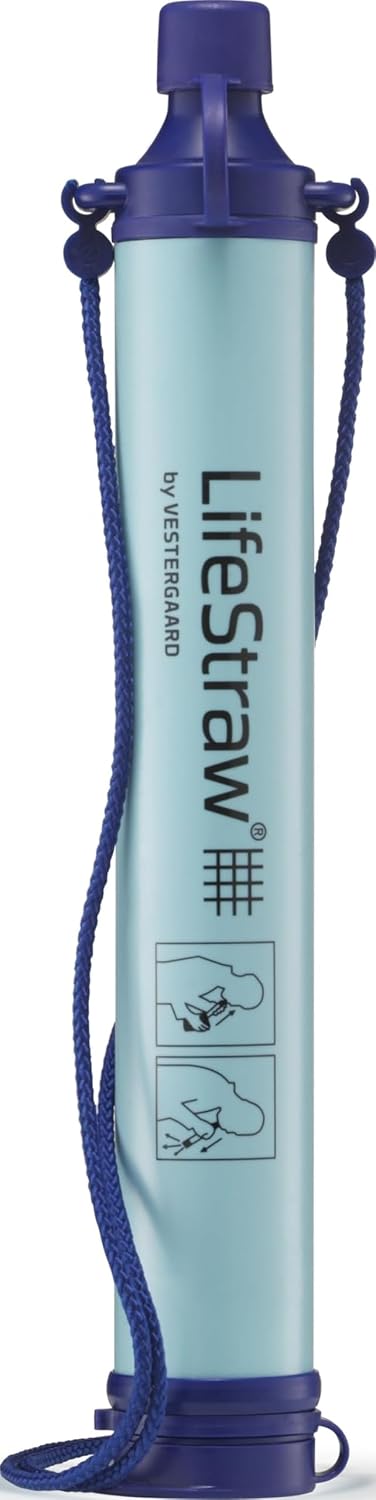
Here's the hard truth: most people treat water survival as a gear problem. They buy a LifeStraw, toss it in their pack, and consider themselves covered. That mentality will get you killed in the desert. A filter is useless when there's nothing to filter. The desert demands a completely different skillset — one built on observation, patience, and deep environmental knowledge that no piece of equipment can replace.
The second uncomfortable reality is that the survival information floating around on social media is dangerously incomplete. Cutting open a cactus and drinking the fluid sounds like a Hollywood solution, but barrel cactus fluid is alkaline and will cause vomiting and diarrhea, accelerating dehydration. The wrong move in the desert doesn't just fail to help — it actively speeds up your death.
Consider what happened in 2016 when two experienced hikers became stranded in the Sonoran Desert after their vehicle broke down on a remote track in Arizona. One of them had water tablets but no water to treat. They were less than four miles from a functioning spring they could not locate because they had no knowledge of desert water indicators. One survived. One did not. The knowledge gap between those two outcomes is exactly what this article is designed to close.
If you are serious about self-reliance — truly serious — you have to internalize that technology fails, but knowledge doesn't. Skills are the only prep you can never lose, never have stolen, and never forget to pack.

Core Principles and Knowledge Breakdown
Finding water in the desert without technology is a discipline built on reading the landscape like a language. Here are the foundational principles every serious prepper needs to understand cold.
Follow Terrain to Its Lowest Points
Water obeys gravity. Always. In desert terrain, your first move is to identify the drainage patterns of the landscape around you. Dry riverbeds, arroyos, and canyon floors are not empty — they are water highways. After rain, water collects in tinajas, which are natural rock basins carved by centuries of erosion. These are your primary targets. In the American Southwest, tinajas can hold water for weeks after a rainfall even in scorching heat because they are shaded by canyon walls and insulated by rock mass.
- Look for canyon bends: The outer edge of a canyon curve is where erosion concentrates, and tinajas form most frequently here.
- Dig in dry streambeds: Water table in desert arroyos is often just one to three feet below the surface at the lowest bend of the channel. Dig on the outer curve of a dry bend. Dig until you hit damp sand, then stop and let it seep. This is slow water but it is real water.
- Identify the shadow zones: North-facing slopes and shaded canyon walls hold moisture far longer. Prioritize these areas when scanning terrain.

Read the Biological Indicators
The desert is not empty. It is teeming with life that knows exactly where water is, and every one of those organisms is a signal to you if you know how to read them.
- Cottonwood and willow trees: These trees cannot survive without a reliable water source within their root reach. If you see a cottonwood or willow in the desert, walk toward it without hesitation. Water is there, likely within a few feet of the surface.
- Cattails and reeds: These are near-absolute indicators of standing or shallow water. They grow directly in or immediately adjacent to water sources.
- Mesquite trees: Their taproots can reach 150 feet deep to find water. They are not a guarantee of near-surface water, but they do indicate that moisture exists in that corridor of the landscape.
- Animal trails converging: Single animal tracks go everywhere. Multiple trails converging into a single direction, especially at dawn or dusk, lead to water. Follow them downhill.
- Bird flight patterns: Birds fly toward water at dawn and away from it as the day heats up. Watch the direction of bird movement in the early morning hours. Grain-eating birds like doves and finches must drink daily. Follow them at first light.
- Insects, especially bees and flies: Bees will not range more than a few miles from water. If you observe consistent bee activity flying in one direction, water is there. Flies cluster near moisture. Both are overlooked indicators that can save your life.
Collect Atmospheric and Plant Moisture
Even in extreme desert environments, moisture exists in the air and in vegetation. You can harvest it with nothing more than a piece of plastic sheeting or even a large trash bag, both of which every serious prepper should have in their bug-out loadout as baseline gear.
- Transpiration bag: Tie a clear plastic bag tightly around a living green leafy branch in the morning. By afternoon, condensation from the plant's transpiration will pool in the bag. You will not get gallons, but you can collect several ounces to a cup of clean water per bag. Set up multiple bags simultaneously.
- Ground solar still: Dig a pit roughly three feet wide and two feet deep, place a container at the bottom, cover the pit with clear plastic sheeting weighted at the edges, and place a small rock in the center to create a low point directly over your container. The sun heats the ground, moisture evaporates upward, condenses on the underside of the plastic, and drips into your container. Output is low — roughly half a liter per day in optimal conditions — but it requires zero ongoing energy from you once constructed.
- Morning dew collection: In many desert regions, morning temperature drops create surface condensation. Tie absorbent cloth or clothing around your ankles and walk through vegetation before sunrise. Wring out the cloth into a container. Repeat the process. This technique has been used for survival for thousands of years.
Building This Into Your Prep Plan
Knowledge that lives only in your head as theory is not a survival skill — it's a hobby. Turning this information into a real capability requires deliberate, progressive training. Here is how to build desert water location into your actual preparedness framework.
Start with your regional map knowledge. If you live in or near desert terrain, you should be able to identify every known spring, seasonal creek, tinaja cluster, and vegetation corridor within 50 miles of your home or bug-out route without using a phone. Purchase physical topographic maps of your region. USGS 7.5-minute quadrangle maps show terrain features, drainage patterns, and sometimes annotated water sources. Study them until you can read terrain in three dimensions from a flat page.
Build a written water source inventory. Document every reliable and seasonal water source you have personally verified within your operational area. Note GPS coordinates, but more importantly, note the landscape features that led you there — the canyon shape, the tree species, the rock formation. The ability to find it using only terrain navigation is the skill. GPS is the backup.
Practice deliberate skills training at least twice per year. Set up transpiration bags and solar stills on training days. Time how long setup takes. Measure yield. Make your mistakes when the stakes are low and the consequence is mild inconvenience rather than death. This is what separates the genuinely prepared from the person who watched a YouTube video and bought some gear.
Advanced Level — What Serious Preppers Do Differently
If you are committed to a truly advanced level of desert water capability, you need to go beyond basic techniques and build a layered knowledge system that functions under cognitive and physical stress.
Understand desert geology. Water in the desert is often trapped in geological formations called aquicludes — layers of porous rock sandwiched between impermeable layers. Where these formations intersect the surface, springs occur. Limestone and sandstone contact zones are historically high-probability spring locations throughout the American Southwest. Learning to identify rock types in the field is a skill that takes time but pays permanent dividends.
Learn indigenous water knowledge for your specific region. Native peoples survived in desert environments for thousands of years without modern technology. Their knowledge of water sources, seasonal water patterns, and biological indicators was encyclopedic and precise. Books like Enduring Seeds by Gary Paul Nabhan or regional ethnobotanical studies can teach you water-related plant knowledge that has been field-tested across millennia. This is not romanticizing the past — it is leveraging a deep repository of hard-won survival intelligence.
Practice movement discipline. In the desert, the difference between finding water and dying looking for it is often how much water you burned in the search. Serious preppers know to move during dawn and dusk, to rest in shade during peak heat hours, and to ration exertion ruthlessly. Every degree of core temperature increase accelerates water loss. Survival is as much about conservation as it is about sourcing.
Build a water cache system. If your bug-out route crosses desert terrain, pre-position water caches along that route in weatherproof containers buried or hidden at GPS-marked intervals. This is advanced logistics, not a beginner skill, but it transforms a survival scenario into a managed emergency. Know where your caches are by terrain feature, not just coordinate, in case your GPS fails.
Your Action Plan — What to Do in the Next 30 Days
Stop reading and start doing. Here is a concrete 30-day action plan to begin building real desert water survival capability starting today.
- Week 1 — Study: Purchase or download USGS topographic maps of your region. Spend 30 minutes every evening studying drainage patterns, terrain features, and identifying potential water source locations on paper. Cross-reference with Google Earth imagery to train your eye to match flat maps with real terrain.
- Week 2 — Field verification: Visit at least two locations you identified on your map as potential water sources. Document what you find. Note biological indicators present or absent. Photograph cottonwoods, willows, drainage channels. This builds your mental library of what real water indicators look like in your specific environment.
- Week 3 — Skill build: Run a transpiration bag test in your backyard or on a training hike. Set up a practice solar still in a sunny location. Time your setup, measure output, refine your technique. Practice your arroyo digging technique in a dry wash. Know before you need to know.
- Week 4 — Integration: Audit your bug-out bag and vehicle emergency kit for water collection gear. Every kit should contain at minimum a clear contractor-grade plastic bag, a collapsible water container, a reliable filter, and water purification tablets. These are supplements to knowledge, not replacements for it. Update your written water source inventory and share it with every member of your family who might need to act on it.
Self-Reliance Is Not a Hobby. It Is a Responsibility.
There are people depending on you. Maybe it's a spouse, children, aging parents, or a core group that looks to you as the prepared one. That trust is not a compliment — it is a weight you carry. The day that weight gets tested will not be convenient, and it will not announce itself in advance. The desert is one of the most honest proving grounds on earth because it has no patience for performance. It rewards deep knowledge and ruthless preparation, and it punishes assumption with a finality that leaves no room for second chances. Build the skills now. Do the field work now. Know your terrain now. Because the moment you need to find water in the desert without technology is not the moment to start learning how.
🛒 Essential Survival Gear
As an Amazon Associate I earn from qualifying purchases.