**Dehydration Will Kill You Before Hunger Does: How to Recognize It and Treat It in the Field**

Why Most People Get This Wrong
The most dangerous thing about dehydration in the field isn't the condition itself — it's how confident people are that they'd recognize it before it became critical. They won't. And that false confidence gets people killed.
Here are the most common mistakes preppers and outdoor survivors make when it comes to dehydration:
- Waiting for thirst. By the time you feel thirsty, you're already 1–2% dehydrated. At 2%, cognitive function starts to degrade. At 5–8%, you're looking at serious physical impairment. Thirst is a lagging indicator — not a warning system.
- Confusing dehydration symptoms with other conditions. Headache? Could be stress. Fatigue? Must be the hike. Dizziness? Maybe the altitude. In the field, people rationalize symptoms away until they collapse. Every one of those symptoms can be early dehydration.
- Drinking too much too fast. Sounds counterintuitive, but chugging large quantities of plain water when severely dehydrated can cause hyponatremia — dangerously low sodium levels — which is a medical emergency in its own right. Rehydration has to be controlled and strategic.
- Ignoring electrolytes. Water alone doesn't cut it when you're sweating heavily, especially in hot climates or during strenuous activity. You lose sodium, potassium, and magnesium alongside fluid. Replacing water without replacing electrolytes leaves you functionally dehydrated even with a full water bottle.
- Underestimating cold-weather dehydration. Most people associate dehydration with heat. In cold environments, your body suppresses thirst even more aggressively, breathing cold air pulls moisture from your lungs, and heavy gear limits sweat evaporation so you don't notice fluid loss. Winter dehydration is silent and fast.
- No plan for water sourcing. They pack one water bottle. They don't know how to find, collect, or purify water in the field. When that bottle runs dry, so does their options.
Stop assuming your body will give you a clear alarm. It won't. You need to know the signs, know the treatment, and have a system before you ever need it.
The Fundamentals: Recognizing and Treating Dehydration Step by Step
Dehydration exists on a spectrum. Your job is to catch it early and treat it aggressively before it becomes a medical emergency. Here's how to read the signs and respond at each stage.
Stage 1: Mild Dehydration (1–3% body weight loss in fluid)
- Dry mouth and increased thirst
- Urine is dark yellow — think apple juice color
- Slight headache or fatigue
- Reduced urine output
- Mild irritability or difficulty concentrating
Treatment:
- Stop activity or reduce exertion. Get into shade if possible.
- Drink 500ml (about 16oz) of water over 15–20 minutes. Don't chug it.
- Add electrolytes. One electrolyte packet (like Liquid IV, Nuun, or a DIY mix of 1/4 tsp salt + 2 tbsp sugar per liter of water) dissolved in your water.
- Monitor urine color. You're aiming for pale yellow within 1–2 hours.
- Continue drinking 250ml every 20 minutes while resting.
Stage 2: Moderate Dehydration (3–6% body weight loss)
- Urine is orange to brown, or no urge to urinate for over 6 hours
- Significant headache, nausea, or vomiting
- Rapid heartbeat and increased breathing rate
- Muscle cramps — especially legs and abdomen
- Sunken eyes, dry skin that doesn't spring back quickly when pinched (skin turgor test)
- Confusion or slowed reaction time
Treatment:
- Stop all non-essential movement immediately. This is now a priority situation.
- Get the person flat on their back. Elevate their legs slightly if no injury prevents it — this supports blood pressure and circulation.
- Administer oral rehydration solution (ORS). The WHO formula: 1 liter of clean water, 1/2 tsp salt, 6 tsp sugar. Stir until dissolved. This is not optional — it works when plain water doesn't.
- Give 100–150ml every 10–15 minutes. Watch for vomiting. If they vomit, reduce to small sips (30–50ml) every 5 minutes.
- Target 1–1.5 liters of ORS over the first hour if they can keep it down.
- Continue monitoring heart rate and mental clarity. Both should improve with rehydration.
- If vomiting prevents oral intake and you cannot evacuate, consider rectal hydration as a last resort (1 liter of water administered slowly via enema). It works. It's not comfortable. It beats dying.
Stage 3: Severe Dehydration (6%+ body weight loss)
- No urination for 8+ hours
- Extreme confusion, delirium, or loss of consciousness
- Rapid, weak pulse
- Pale or mottled skin
- Sunken fontanelle in children
- Person cannot drink on their own
Treatment:
- This is now a life-threatening emergency. Evacuation is the priority.
- If the person is conscious and can swallow, continue ORS in small sips. Do not force fluids on an unconscious person — aspiration risk.
- Keep the person cool, calm, and lying down.
- If you have IV capability and the training to use it, 0.9% Normal Saline or Lactated Ringer's solution is standard fluid resuscitation. 1 liter over 30 minutes for an adult in shock. This requires training and proper supplies.
- Signal for help. Use every resource — emergency beacon (PLB or SPOT device), signal mirror, whistle pattern (3 blasts), orange panel marker.

What You Need: The Dehydration Response Kit
Being prepared means having the right supplies before you need them. This is your minimum loadout for dehydration response in the field.
Water Procurement
- Primary container: 2-liter Nalgene or Hydrapak reservoir minimum. Carry at least one liter per hour of expected activity in warm weather.
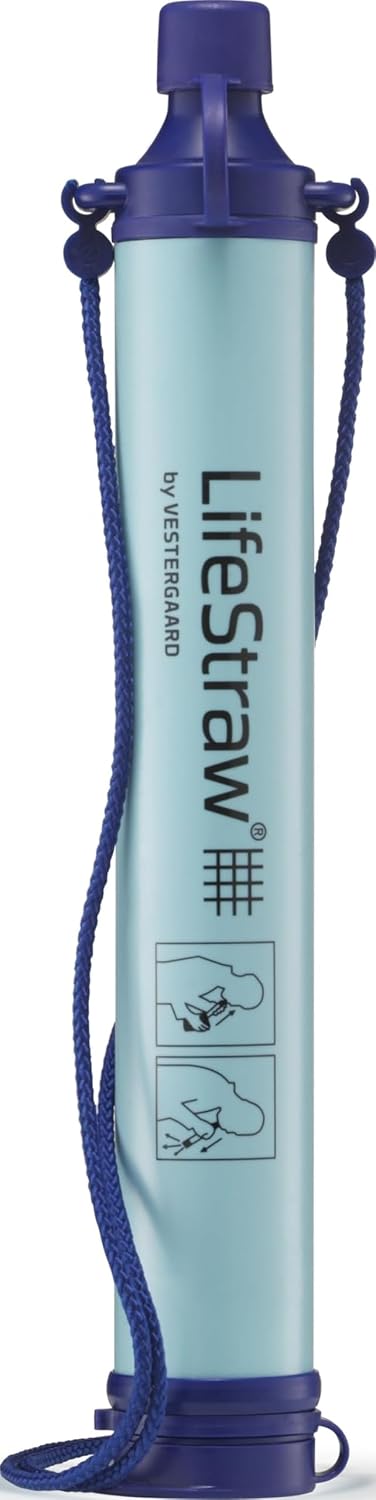
- Filtration: Sawyer Squeeze or Sawyer Mini (filters down to 0.1 micron, handles most biological threats). Backup: iodine tabs or Aquatabs (sodium dichloroisocyanurate).
- Boiling capability: Titanium pot minimum 1.5 liters. Boiling for 1 full minute (3 minutes above 6,500 ft elevation) kills all pathogens.
- Collection tools: Large-mouth collection bags, bandana for pre-filtering sediment, knowledge of natural collection points (rock depressions, plant condensation, solar still construction).
Rehydration Supplies
- Electrolyte packets: Minimum 10 per person in your kit. Liquid IV, Nuun Sport, or Drip Drop ORS. Drip Drop is the closest to medical-grade ORS available over the counter.
- ORS ingredients: A small bag of white sugar and a separate container of salt (non-iodized preferred). Know the formula: 1 liter water + 1/2 tsp salt + 6 tsp sugar.
- Measuring tools: A marked measuring spoon in your kit — don't guess the formula when someone's life depends on it.
Assessment Tools
- Urine color chart: Laminated hydration chart. Cheap. Fits in any kit. Removes guesswork.
- Watch: Tracking urination frequency and rehydration intervals requires timing.
- Small notebook: Log fluid intake, time, and symptoms. In a group scenario, this data keeps decisions objective.
Advanced (Serious Preppers Only)
- IV kit: 18-gauge and 20-gauge IV catheters, IV tubing, 1-liter bags of Normal Saline or Lactated Ringer's, alcohol prep wipes, medical tape, tourniquet for vein access. This requires training. Take a Wilderness First Responder (WFR) course — it's the gold standard for field medical training.
- Enema kit: A 1-liter enema bag. Low-tech last resort for someone who can't keep fluids down orally. Clean water only — no ORS rectally.
Advanced Tactics: What Separates Prepared from Truly Prepared
Anyone can carry a water bottle. Here's what the experienced survival operator knows that most preppers don't.
- Pre-hydrate before exertion. Before a strenuous day, drink 500ml of water with electrolytes 30–60 minutes before you start moving. You're building a buffer. This single habit can prevent mild dehydration from ever developing.
- Know the sweat rate math. In hot conditions with moderate activity, the average adult loses 0.5–1 liter of fluid per hour. In extreme heat with heavy exertion, that can reach 1.5–2 liters per hour. Calculate your expected loss and match your intake before the deficit develops.
- Use the pee test religiously. Every bathroom break is a free diagnostic test. Pale yellow = hydrated. Dark yellow = drink now. Orange or brown = stop everything and rehydrate aggressively. No urine = emergency.
- Protect your team, not just yourself. Dehydration impairs judgment — which means the person who most needs to drink is often the least likely to recognize it. Build hydration check-ins into your group protocol. Every hour, everyone drinks. No exceptions. No arguments.
- Cold weather protocols. Force fluid intake even when you don't feel thirsty. Set a timer if needed — drink 250ml every 45 minutes regardless of thirst signals. Eat small amounts of salty snacks to encourage drinking. Melt snow — never eat it dry, as it cools your core and accelerates fluid loss.
- Manage heat load actively. Shade, wet bandanas on the neck and wrists, reduced exertion during peak heat hours (10am–3pm in summer), and breathable moisture-wicking clothing all reduce fluid loss rate. Prevention is always more efficient than treatment.
- Know your water sources before you need them. Map water sources in your operational area. Study terrain — valleys, drainages, rock faces with moss, and north-facing slopes hold water longer. In arid environments, follow animal tracks and bird flight paths at dawn and dusk — they lead to water.
- Practice your ORS formula until it's automatic. Under stress, people forget. Mix the formula ten times at home until your hands know the measurements without your brain having to engage. In a field emergency, that muscle memory is worth more than any gear.

The Bottom Line: Action Steps to Take This Week
Knowledge without action is just entertainment. Here's what you do in the next seven days to be genuinely prepared for dehydration in the field.
- Day 1: Audit your current water kit. Do you have filtration, collection capability, AND electrolytes? If any piece is missing, order it today. Sawyer Squeeze, a box of Drip Drop ORS packets, and a 2-liter Nalgene are your starting point.
- Day 2: Memorize the ORS formula. Write it on a laminated card and put it in your kit: 1 liter water + 1/2 tsp salt + 6 tsp sugar. Then mix a batch and taste it so you know what it should taste like.
- Day 3: Print or buy a urine color hydration chart. Laminate it. Put one in your bug-out bag and one in your first aid kit.
- Day 4: Practice the skin turgor test on yourself and anyone in your household. Pinch the skin on the back of the hand. In a hydrated person, it snaps back instantly. In a dehydrated person, it tents briefly. Now you know what normal feels like — so you'll recognize abnormal.
- Day 5: Run a full-day hydration protocol during your normal activities. Drink on a schedule. Log your intake and urine color. Most people discover they're mildly dehydrated on a normal day — imagine what happens when stress and physical exertion get added.
- Day 6: Research Wilderness First Responder (WFR) courses in your area. NOLS and Wilderness Medical Associates both offer nationally recognized certification. If a full WFR isn't feasible this year, find a Wilderness First Aid (WFA) weekend course as a minimum standard.
- Day 7: Brief everyone in your household or survival group on the signs of dehydration and the basic treatment protocol. One trained person in a group isn't enough — every member needs to recognize the signs and know how to respond.
🛒 Essential Survival Gear
As an Amazon Associate I earn from qualifying purchases.