Creek and River Water: The Hidden Dangers Preppers Ignore (And How to Stay Alive)

What's Hiding in That 'Clean-Looking' Creek
Most preppers have a water filter in their bag and think that's the end of the conversation. It isn't. Running water looks alive, looks clean, looks trustworthy — and that appearance has killed people. Creek and river water is one of the most complex survival challenges you'll face because the dangers aren't always visible, they aren't always biological, and your standard filtration setup may not handle all of them. If you're bugging out to a wilderness location, sheltering near a waterway, or just training in the backcountry, you need to understand exactly what's in that water before it goes in your body. This article breaks it down — no filler, no fearmongering, just what you need to know to survive.
The Real Threat Profile of Creek and River Water
When most preppers think about contaminated water, they picture bacteria and protozoa. That's valid — but it's only one layer of a four-layer problem. Treat each layer as a separate threat requiring a separate solution.
Layer 1: Biological Contaminants
These are the ones you've heard of. Giardia lamblia, Cryptosporidium parvum, E. coli, Salmonella, Campylobacter, and Leptospira (carried in animal urine, especially rodents and deer). Giardia can incubate for 1–3 weeks before symptoms hit, which means you won't connect your illness to that creek you drank from two weeks ago. Leptospirosis is particularly nasty — it enters through skin abrasions, eyes, or ingestion, and causes everything from flu-like symptoms to organ failure. Never wade in or drink from water where animal activity is high and you have open cuts on your skin.
Layer 2: Viral Contaminants
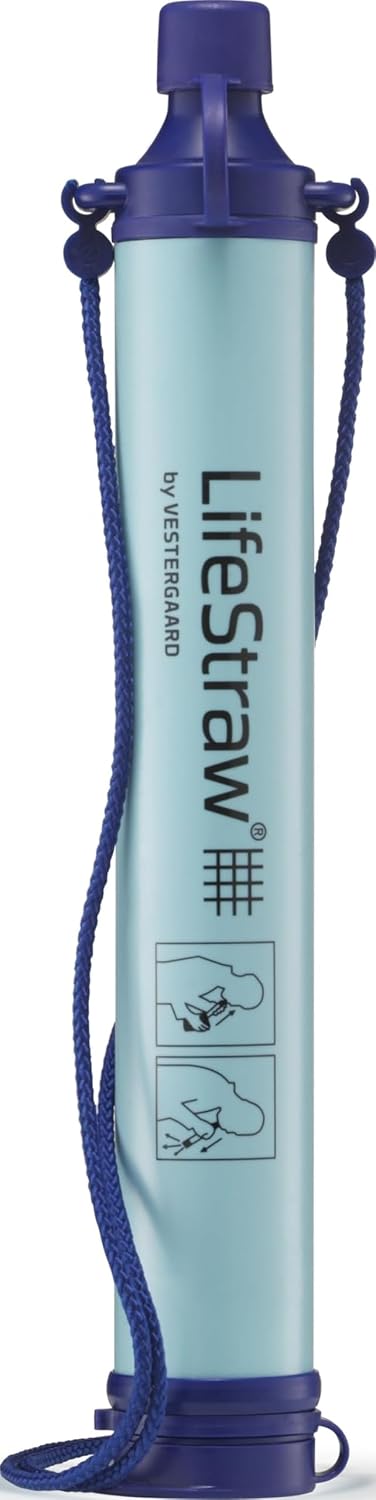
Here's where most preppers get caught. Standard hollow-fiber filters — your Sawyer Squeeze, your LifeStraw — do not filter viruses. Hepatitis A, norovirus, and rotavirus are all present in water contaminated by human or animal fecal matter. In a true SHTF scenario where sanitation has broken down upstream, viral load in rivers and creeks will skyrocket within days. You need either chemical treatment (iodine or chlorine dioxide tablets), UV purification (SteriPen or similar), or a filter rated to remove viruses — like the Sawyer Select S3 or MSR Guardian — to address this threat.
Layer 3: Chemical and Industrial Contaminants
No filter removes everything. Heavy metals — lead, arsenic, mercury — agricultural runoff including pesticides and herbicides, and industrial chemicals can all be present in surface water. This is especially true downstream from farmland, near old mine sites, or in any area that's experienced flooding. Activated carbon filtration addresses some organic chemicals, but it won't touch heavy metals. If you're sourcing water from an area you don't know, look for visual clues: oily sheen on the surface, unusual coloration (orange or red tinting near rocks often indicates acid mine drainage), dead fish, or lack of aquatic insects. These are red flags. Move upstream or find a different source.
Layer 4: Physical and Sediment Hazards
Turbid, silty water clogs filters fast. If you push sediment-heavy water through a hollow-fiber filter without pre-filtering, you'll destroy the filter's flow rate within a single use. High sediment can also interfere with chemical treatment by binding to pathogens and shielding them from iodine or chlorine. Always pre-filter through a bandana, a coffee filter, or a purpose-built pre-filter like the Sawyer Inline Pre-Filter before running water through your primary system.

Step-by-Step: How to Safely Source and Treat River or Creek Water
Follow this sequence every single time. Don't skip steps because the water looks good. It always looks good.
- Scout the source before you collect. Walk upstream at least 100 yards if possible. Look for dead animals in or near the water, evidence of human settlement or latrines, agricultural runoff channels, foam on the surface (can indicate chemical contamination or high organic load), or that orange-red staining on rocks indicating acid mine drainage. If you see any of these, move on or go further upstream.
- Collect from moving water, not the bank. Still water near the edges accumulates sediment, organic debris, and higher bacterial concentrations. Wade out or use a container on a paracord to collect from the main current where water is actively moving. Collect at least 12 inches below the surface — the surface film traps oils, insects, and organic matter.
- Pre-filter immediately. Pour your collected water through a bandana, clean shirt material folded 4–6 layers thick, or a coffee filter into a secondary container. This removes particulates and extends the life of your primary filter by a significant margin. In very turbid water, let the pre-filtered water sit for 30 minutes in a clear container so remaining sediment settles, then carefully decant the clearer top portion.
- Run your primary filter. If you're using a hollow-fiber filter (Sawyer, LifeStraw, BeFree), this handles protozoa and bacteria down to 0.1 microns. This is solid protection but does not cover viruses or chemicals. Know what your filter does and does not do — read the spec sheet, not just the marketing.
- Add chemical or UV treatment for viral kill. If viral contamination is a realistic threat — and in a collapse scenario, it always is — follow your filtration with one of the following:
- Chlorine dioxide tablets (Aquatabs or Potable Aqua Chlorine Dioxide): 1 tablet per 1 liter, wait 30 minutes in clear water, 4 hours in turbid or cold water (below 40°F / 4°C). These are your best chemical option — they work against Crypto, which iodine does not reliably kill.
- Iodine tablets: 2 tablets per 1 liter, 30-minute wait. Not effective against Cryptosporidium. Do not use if pregnant or thyroid issues are present. Backup option only.
- UV purification (SteriPen Adventurer or Ultra): 48 seconds per 0.5 liter, 90 seconds per 1 liter. Requires clear water — turbidity blocks UV penetration, so always pre-filter first. Requires batteries, so carry lithium spares.
- Store treated water in a clean, dedicated container. Cross-contamination is real. If you fill your treated water bottle with your unclean hands, you've just re-contaminated it. Use a dedicated clean vessel. Wipe the threads and cap of your container with a chlorine dioxide solution before sealing. Mark your containers — one for raw collection, one for treated water.
- Boiling as a failsafe. If your filter is compromised, your tablets are used up, and your UV device is dead, boiling works. Bring water to a rolling boil for 1 full minute (3 minutes above 6,500 feet / 2,000 meters elevation). This kills all biological threats. It does not remove chemicals or heavy metals, but it will keep you alive in an acute survival situation. Cool before drinking. A metal canteen cup or titanium pot is non-negotiable kit.
Common Mistakes That Will Get You Sick or Killed
Mistake 1: Trusting fast-moving water as inherently safe. Fast-moving, clear, cold mountain streams look pristine. They aren't sterile. A single dead deer upstream — which you never saw — can contaminate miles of water with Leptospira and other pathogens. Treat all surface water as contaminated, full stop.
Mistake 2: Using a hollow-fiber filter and calling it done. As covered above, no hollow-fiber filter removes viruses. In normal backcountry use in North America, viral risk is generally low. In a SHTF scenario with mass movement of people and breakdown of sewage systems, viral risk becomes severe. Your Sawyer Squeeze is not enough on its own in a collapse situation. Pair it with chlorine dioxide tablets. Period.
Mistake 3: Ignoring filter maintenance and freeze damage. A cracked hollow-fiber membrane from freezing temperatures provides zero filtration — and you can't see the damage. If your filter has been exposed to temperatures below 32°F (0°C), do not trust it until you've properly backflushed and tested it. Store your filter in your sleeping bag or inner pocket in cold conditions. A filter you trust that doesn't work is more dangerous than no filter at all — because no filter makes you cautious, a broken one makes you confident.
Mistake 4: Collecting water downstream from your camp or other people's camps. Human waste, food scraps, and cooking runoff contaminate water. Always collect water upstream from any human activity — your own camp included. A 200-foot upstream rule is the minimum. In high-traffic areas, go further.
Mistake 5: Skipping treatment when you're dehydrated and desperate. This is the hardest one because it's a real dilemma. Severe dehydration is immediately life-threatening. Giardia takes weeks to make you sick. In an acute survival situation — you're out of water, it's hot, you're showing signs of heat exhaustion — yes, drinking untreated water may be the right call. But that's an extreme edge case. The answer is to never let yourself get there. Carry backup chemical tablets in your kit always. They weigh nothing. A full bottle of 30 Aquatabs weighs under one ounce and fits in your shirt pocket. There is no excuse not to have them.
Mistake 6: Relying on a single method. Redundancy is the core principle of survival. Your water purification system should have at minimum three methods: a mechanical filter, a chemical backup, and the knowledge and means to boil. If you're down to one method in the field, that's a crisis. Build your kit with layers.

What to Practice This Weekend
Get out to a local creek or river this weekend with your full water kit. Practice the entire sequence from scouting to storage — not just the filtration step. Time yourself. See how long it actually takes. Test your pre-filtration with silty water. Backflush your hollow-fiber filter and check the flow rate. If you have a UV purifier, make sure the batteries are good and you know the timing. Treat a liter with chlorine dioxide tablets and actually wait the full 30 minutes — build the discipline now, not when you're desperate. Know your system's limits before your life depends on it.
🛒 Essential Survival Gear
As an Amazon Associate I earn from qualifying purchases.