Creek and River Water: The Hidden Dangers Most Preppers Never See Coming

Why Most People Get This Wrong
The number one mistake preppers make with moving water is assuming that fast-moving, clear water is safe water. It isn't. Not even close. A crystal-clear mountain stream can carry Giardia lamblia, Cryptosporidium parvum, heavy metals, agricultural runoff, and industrial chemical leachate — none of which you can see, smell, or taste. People have died or been seriously incapacitated in survival situations because they trusted their eyes instead of their training.
Here are the most dangerous assumptions preppers make about creek and river water:
- "It looks clean, so it is clean." Clarity is not safety. Pathogens and chemical contaminants are invisible. A stream running through pristine wilderness can still carry livestock runoff from a farm 10 miles upstream.
- "Boiling handles everything." Boiling kills biological threats — bacteria, viruses, protozoa. It does not remove heavy metals, nitrates, pesticides, herbicides, or pharmaceutical compounds. If you're downstream from agriculture or industry, boiling alone is not enough.
- "Upstream means upstream from humans." Wildlife defecate directly into water sources constantly. Beaver fever (Giardiasis) gets its name from beavers — one of the most common vectors for Giardia in North American wilderness streams. Wildlife contamination is just as real as human contamination.
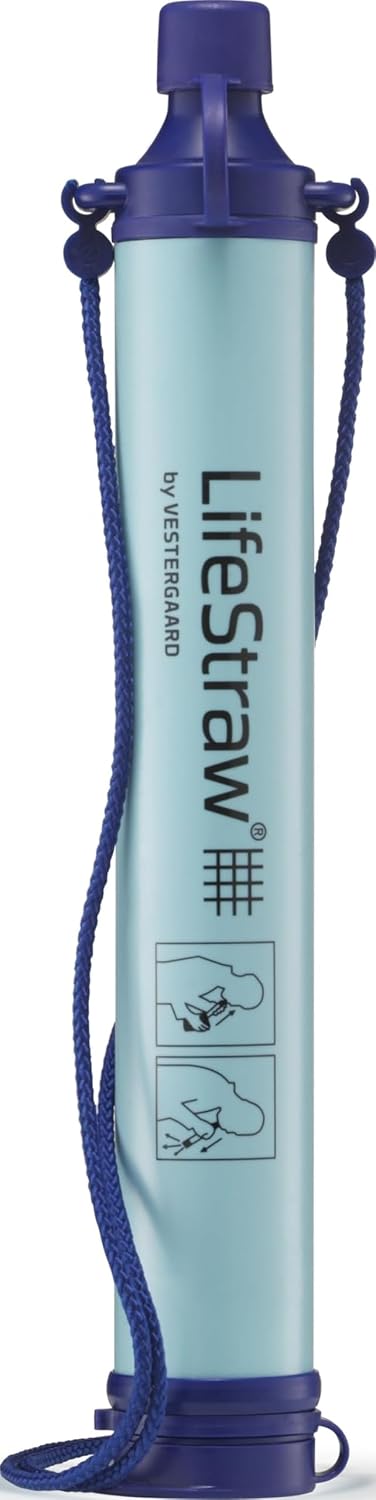
- "Filters handle everything." Standard hollow-fiber filters like the Sawyer Squeeze or LifeStraw are outstanding at removing protozoa and bacteria. They do not filter viruses (in most models) and they do not remove chemical contaminants. Using the wrong tool for the threat is a critical failure.
- "Running water is safer than still water." Moving water dilutes contamination, but it also transports it from much farther away. A still pond's contamination is localized. A river's contamination comes from an entire watershed — hundreds or thousands of square miles of potential input.
- Ignoring seasonal changes. Spring snowmelt flushes enormous quantities of agricultural chemicals, animal waste, and sediment into waterways. Post-flood water is catastrophically contaminated. Summer drought concentrates contaminants in reduced water volume. Every season brings different threats.
The bottom line: complacency kills. Most preppers who die from waterborne illness in a grid-down scenario won't die in the first 24 hours. They'll get sick 48–72 hours in, become dehydrated, and deteriorate fast — right when they need to be at peak operational capacity.
The Fundamentals: A Step-by-Step Water Safety Protocol
Treat every water source as hostile until proven otherwise. Here is the baseline protocol every prepper needs to internalize before they ever need it under stress.
- Assess the source before you touch it. Look upstream as far as visibility allows. Check for dead animals in or near the water. Look for unusual coloration (orange or red tint can indicate acid mine drainage; green or blue-green tint can indicate toxic algae blooms — do NOT use this water). Smell the water from 12 inches away. Chemical odors, sulfur smell, or anything petroleum-based is a hard stop.
- Collect from the right location. Take water from the fastest-moving, most oxygenated section of the source — mid-stream where possible, not from the bank where sediment and surface runoff concentrate. Collect from below the surface, not from the top where biological film accumulates.
- Pre-filter for sediment. Run water through a bandana, cotton T-shirt, or a commercial pre-filter before any other treatment. This extends the life of your primary filter and improves treatment effectiveness. Sediment can physically shield pathogens from UV or chemical treatment.
- Apply primary filtration. Use a quality hollow-fiber filter rated to at least 0.1 microns for protozoa and bacteria removal. The Sawyer Squeeze (0.1 micron), MSR TrailShot (0.2 micron), or Katadyn BeFree are solid options. Follow manufacturer flow rate guidelines — a clogged filter bypasses contamination.
- Apply secondary disinfection for virus coverage. In a wilderness scenario away from human activity, virus risk is lower but never zero. In any scenario involving human settlement, flooding, or unknown upstream conditions, add chemical treatment after filtering. Aquatabs (sodium dichloroisocyanurate) or unscented liquid chlorine bleach (8.25% sodium hypochlorite) at 8 drops per gallon for clear water, 16 drops per gallon for cloudy water. Contact time: 30 minutes minimum before drinking.
- Allow contact time before consuming. This applies to both chemical treatment and UV purifiers. UV purifiers (SteriPen) require adequate contact time and clear water. Turbid water blocks UV penetration. Pre-filter first, then run UV treatment.
- Store treated water in clean containers. Contaminating your treated water through dirty containers undoes everything. Dedicate separate containers for raw and treated water. Label them. Never cross-contaminate.
For chemical contamination: If you have reason to believe agricultural or industrial chemical contamination is present, activated carbon filtration is your only field-expedient option. Squeeze-style filters with activated carbon stages (Sawyer Select S3, MSR Guardian for chemical reduction) or improvised activated charcoal layers in a DIY filter can reduce — not eliminate — chemical load. In heavily contaminated areas, finding an alternative source is always preferable to treating compromised water.

What You Need: The Water Safety Gear and Supply Checklist
There is no single tool that handles every threat. Build a layered system. Here is what should be in every bug-out bag and home prep cache:
- Primary Filter: Sawyer Squeeze (0.1 micron, filters up to 100,000 gallons) — one per person in the group, plus one backup. Cost: $30–$40. Weight: 3 oz. No excuses for not having this.
- Backup Filter: Katadyn BeFree or LifeStraw (for emergency redundancy). Filters fail. Hollow fibers crack in freezing temperatures. Always carry a backup.
- Chemical Treatment Tablets: Aquatabs (50-tablet pack) or Potable Aqua iodine tablets (50-tablet pack). Minimum two packs per person. Tablets treat approximately 25–50 liters depending on brand and water clarity.
- Liquid Bleach (home cache only): Unscented household bleach, 8.25% sodium hypochlorite. One gallon treats approximately 3,800 gallons of water. Rotate every 6–12 months — bleach degrades.
- UV Purifier: SteriPen Adventurer Opti or SteriPen Ultra. Treats 0.5L in 45 seconds, 1L in 90 seconds. Carry extra batteries or the USB rechargeable model. Effective against viruses that filters miss.
- Pre-Filter Material: Two bandanas or a piece of tightly-woven cotton fabric. Alternatively, commercial pre-filter bags designed for hollow-fiber systems.
- Water Storage Containers: Two 2-liter Nalgene-style BPA-free bottles minimum per person — one for raw collection, one for treated water. Platypus collapsible bottles for volume storage at camp (2L–4L capacity, 1.5 oz weight).
- Metal Container for Boiling: A 1-liter stainless steel bottle or titanium pot. Allows boiling as tertiary treatment or primary treatment when filters fail. Double-wall insulated bottles cannot be placed over flame — use single-wall only.
- Water Test Strips: Compact multi-parameter test strips that check for nitrates, nitrites, pH, chlorine, hardness, and bacteria presence (3M Petrifilm or similar). Not perfect but give you field intelligence on source quality.
- Activated Carbon Filter Element: MSR Guardian or a filter with integrated carbon stage for chemical contamination scenarios. Higher cost ($350) but provides the most comprehensive filtration available in a portable unit.
Quantities for a 72-hour bug-out kit (per person): 1 primary filter, 1 backup filter or UV purifier, 50 chemical treatment tablets, 3–4 liters of storage capacity, 1 metal boiling vessel.
Home cache quantities (family of four, 30-day supply): 2 primary filters, 200 chemical tablets, 1 gallon liquid bleach, 1 UV purifier, 20 gallons of pre-stored water minimum.
Advanced Tactics: What Separates the Prepared from the Unprepared
Basic filtration and treatment gets you 80% of the way there. These advanced principles and tactics cover the remaining 20% — the scenarios where standard prep fails.
- Understand your watershed before SHTF. Pull up a topographic map of your bug-out routes and retreat locations right now. Identify every creek, river, and pond within a 10-mile radius. Then cross-reference with agricultural land use maps and EPA facility data (available at epa.gov/enviro) to identify industrial sites, CAFO operations, and hazardous waste locations upstream. This intelligence work done now prevents catastrophic decisions under stress.
- Freeze-proofing your filter system. Hollow-fiber filters fail catastrophically if water freezes inside the membrane — the ice crystals rupture the fibers and the filter will still flow but no longer filter. In cold weather operations, sleep with your filter inside your sleeping bag. Never store a used, wet filter in freezing temperatures. A compromised filter shows no visible signs of failure — it simply stops working. Blow out your Sawyer after each use in cold conditions.
- Build a field gravity filtration system. For camp-based operations where you're collecting large volumes, a gravity-fed system beats manual pumping. Hang a pre-filter bag above a hollow-fiber filter connected to a collection vessel. Set it up, walk away, come back to treated water. Use two Sawyer Squeeze units in a Y-junction to double throughput for group water needs.
- Know the signs of Cryptosporidium failure. Crypto is chlorine-resistant at normal treatment doses. If you're using chemical treatment as your only method — not combined with filtration — Crypto will get through. Symptoms appear 2–10 days after exposure: watery diarrhea, stomach cramps, nausea. In a grid-down scenario, this level of dehydration can be fatal. Filtration (0.1 micron or finer) is the only reliable field method to remove Crypto.
- Solar disinfection (SODIS) as a zero-supply backup. If all equipment fails, fill clear PET plastic bottles (1–2 liter) with pre-filtered water and lay them on a reflective surface in direct sunlight for a minimum of 6 hours (2 days if cloudy). This UV exposure inactivates most pathogens. It does not address chemical contamination. It requires clear water and adequate UV index. Know this technique as a last resort.
- Post-flood water protocols. Flooding is one of the most dangerous water scenarios. Floodwater is a cocktail of raw sewage, agricultural chemicals, fuel, industrial waste, and pathogen load off the charts. Do not use floodwater for any purpose if any other option exists. If you must, triple-treat it: pre-filter aggressively, run through a carbon stage, chemically treat, boil, and test with strips before drinking. Assume all nearby water sources are compromised for a minimum of 72 hours after flood waters recede.
- Toxic algae identification. Blue-green algae (cyanobacteria) blooms are increasing in frequency across North American water bodies. They produce cyanotoxins that cannot be removed by standard filtration or boiling — boiling actually concentrates the toxins. Indicators: bright green, blue-green, or red surface scum or paint-like streaking on water. Musty, earthy, or grassy odor. Dead fish or animals near the water. If you see any of these signs, move to the next water source. This is not a threat you can treat your way out of with standard gear.

The Bottom Line: Action Steps to Take This Week
Knowledge without action is worthless. Here is exactly what to do in the next seven days to fix your water security posture:
- Audit your current water gear today. Pull out every filter, tablet, and purifier you own. Check expiration dates on chemical tablets (replace every 4 years). Test hollow-fiber filters by backwashing and checking flow rate — if it's drastically reduced, replace it. Confirm your metal container is single-wall and field-ready.
- Order your gaps within 48 hours. If you don't have a Sawyer Squeeze per family member, order them now. Add a box of Aquatabs to every kit. If you don't own a UV purifier, add a SteriPen to your next order. Total investment for a solid 4-person system: under $200.
- Map your local water sources this weekend. Drive or hike your primary bug-out routes. Physically locate every creek, river, and pond. Note access points, flow rates, and any upstream land use you can observe. Log this in your prep binder with GPS coordinates.
- Practice your filtration protocol in the next seven days. Don't wait for an emergency to learn your equipment. Fill a container with creek or river water from your local area, run it through your full protocol — pre-filter, primary filter, chemical treatment — and use test strips to verify results. Know your system's performance before your life depends on it.
- Store 30 days of water at your primary location. Minimum one gallon per person per day. Two gallons per person per day accounts for sanitation needs. A family of four needs 120 gallons minimum. Use food-grade 55-gallon barrels (two minimum), WaterBOB bathtub liners, or stackable 5-gallon jugs. Rotate annually.
- Share this protocol with every member of your group. Your prep is only as strong as your least-prepared team member. Walk each person through the identification of contamination signs, the treatment protocol, and the equipment operation. A stored skill in one person's head is a single point of failure.
🛒 Essential Survival Gear
As an Amazon Associate I earn from qualifying purchases.