Bugging Out With Kids: The Family Emergency Plan That Actually Works When It Matters

The Reality Check You Can't Ignore
FEMA data shows the average American family has less than 72 hours of food and water on hand — and zero documented emergency plan. When disaster strikes, most parents are making critical decisions in real time, under stress, with children who are scared and unpredictable. That is a recipe for failure. If you have kids depending on you, winging it is not a strategy.
Why Most Families Get This Wrong
Most preppers with families make the same fatal mistakes. They plan for themselves first and retrofit kids into the equation later — or not at all. Here's where the wheels fall off:
- They treat kids like small adults. Children have different caloric needs, hydration requirements, attention spans, and emotional responses to stress. A 6-year-old cannot carry a 30-pound pack, period. Plan accordingly or suffer the consequences on the trail.
- No buy-in from the family. If your kids have never heard the word "bug out" and your spouse thinks the go-bag is just a hiking backpack, your plan is vapor. A plan only one person knows is not a plan — it's a fantasy.
- Over-reliance on a single route. Families lock onto one destination and one road to get there. When that road is gridlocked or compromised, they freeze. You need at minimum three routes mapped, walked, and understood by every capable adult in your group.
- The bag is packed but never tested. Gear that sits untouched for three years is gear you cannot trust. Kids grow. Food expires. Medications change. A bug-out bag is a living system, not a set-it-and-forget-it solution.
- No communication protocol. Most families have no agreed-upon rally point if members are separated at school, work, or in public during an event. This single gap costs lives.
- Underestimating pace and distance. A healthy adult can cover 15–20 miles per day on foot. A family with a 4-year-old and a loaded stroller? Three to five miles on a good day. Your bug-out radius and timing must account for your actual mobility — not your theoretical mobility.

The Fundamentals: Building Your Family Bug-Out Plan Step by Step
This is where most articles give you a vague framework. We're giving you a working structure you can implement immediately.
- Define your threat matrix. Sit down and list the realistic emergencies in your region — wildfire, flood, chemical plant explosion, civil unrest, extended grid failure. Your plan should be built around your actual threats, not generic scenarios. Prioritize the top three.
- Establish rally points at three tiers.
- Tier 1: A neighbor's house or a location within two blocks of your home — for immediate local emergencies.
- Tier 2: A location within 5–10 miles — outside your immediate neighborhood, reachable on foot in a worst case.
- Tier 3: Your primary bug-out destination — ideally 50–150 miles away, at a trusted family member's property, a prepped secondary location, or a rural retreat.
- Assign age-appropriate roles. Children 8 and older can carry a small personal pack, know your home address, recite a family contact number, and understand basic signals. Children 12 and older can read a paper map, operate a handheld radio, and assist with camp tasks. Give them real responsibility — it reduces panic and builds confidence.
- Conduct a family drill twice per year. Run a no-notice drill. Announce "go" and time how long it takes to get bags, load the vehicle, and reach Tier 1. Then debrief. Where did it break down? Who froze? What was missing? Drill until the friction points disappear.
- Create individual ID cards for each child. Laminated cards with the child's full name, date of birth, blood type, allergies, a parent's photo and contact number, and your out-of-area contact. Sew one into the lining of their bug-out bag. Keep one in your wallet. This is non-negotiable.
- Establish an out-of-area contact. Choose a trusted person outside your region who becomes the communication hub. All family members check in with this person if local lines are jammed. Everyone memorizes this number.
- Map three routes to each destination. Use paper maps — not just phone apps. Drive each route. Note choke points, bridges, fuel stops, and alternate paths. Mark water sources. Know which roads flood and which overpasses are load-rated for heavy vehicles.
What You Need: The Family Bug-Out Checklist
Gear does not save you — skills do. But the right gear in the right hands buys time and reduces suffering. Here is what a properly equipped family of four needs:
Water
- 1 gallon per person per day minimum — store at least 12 gallons for a 72-hour bug-in buffer
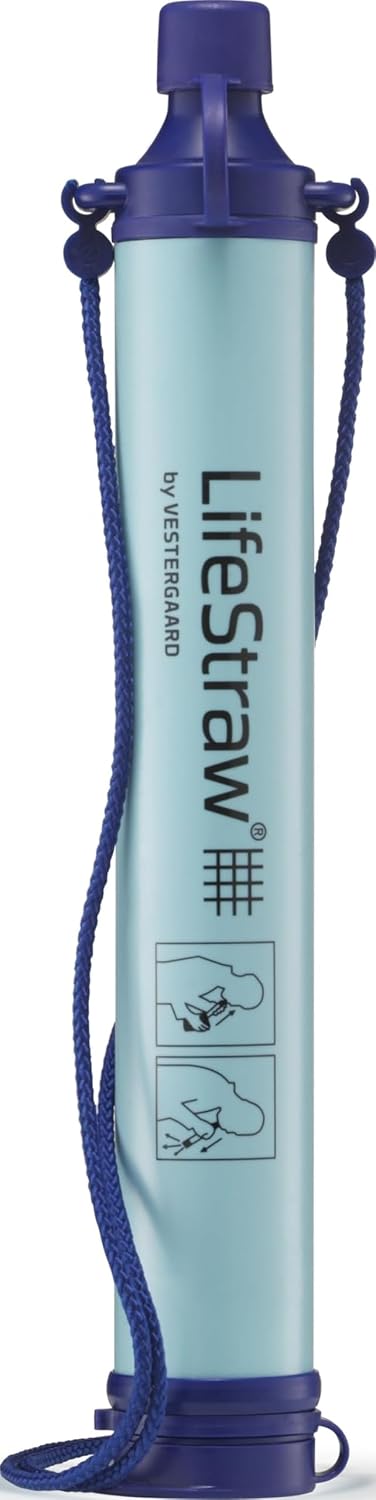
- Portable filtration: One Sawyer Squeeze or LifeStraw per adult, one for shared use by children
- Collapsible 2-liter reservoirs (2 per adult, 1 per older child) for mobile water carry
- Water purification tablets (Aquatabs or iodine) as tertiary backup — 30-tablet pack per person
Food
- 72-hour minimum of calorie-dense, no-cook food per person — 2,000 calories/day for adults, 1,200–1,600 for children depending on age
- Options: Mountain House freeze-dried pouches, Clif bars, peanut butter packets, hard cheese, jerky, trail mix
- Avoid anything requiring extended cooking — fuel is finite and fire is a liability in a mobile situation
- One titanium spork and a 750ml titanium pot per adult — doubles as boiling vessel if needed
Shelter and Sleep
- Lightweight 3-season tent rated for your family's size — minimum 3-person tent for family of four if weight is a factor
- Emergency bivvy bags for each person (SOL Escape Bivvy is a solid choice) — weighs 8.5 oz, packs to fist size
- One sleeping bag per person rated 10°F below your region's lowest expected overnight temperature
- Foam sit pads — cheap, weightless, and invaluable for ground insulation with kids
Medical
- Family first aid kit: Israeli bandages (2), QuikClot gauze (2 packs), nitrile gloves, SAM splint, trauma shears, CPR mask
- 30-day supply of any prescription medications — rotate monthly
- Children's Tylenol and Benadryl — liquid and chewable form
- Moleskin and blister pads — kids get blisters fast on the move
- Written allergy and medication list for each child, sealed in a zip-lock in the bag
Navigation and Communication
- Laminated paper maps of your region and each bug-out route
- Baseplate compass — Silva or Suunto, and the knowledge to use it
- Baofeng UV-5R or similar handheld radio — one per adult, programmed with local NOAA, FRS, and GMRS channels
- Hand-crank emergency weather radio
- Spare lithium AA and AAA batteries — lithium holds charge longer in cold
Children-Specific Items
- A small comfort item per child (stuffed animal, small book) — this is not soft, this is practical; a calm child is a manageable child
- Paracord in bright colors for kids to identify their gear
- Activity cards or small games for morale during extended waits or sheltering
- Spare clothing: two full changes, one rain layer, one warm layer per child — kids go through clothes
- Child carrier frame pack if you have children under 4 — your arms will fail before your back does

Advanced Tactics: What Separates the Prepared from the Truly Prepared
You've got the basics. Now let's talk about the edge cases that most family preppers never consider — until they're living them.
- Rehearse separation scenarios. What if you're at work and the event hits? Who picks up the kids from school? In what order? What is the backup if that person is unreachable? Write it down. Rehearse it verbally with your children. Schools have lockdown protocols — know them and know how to navigate them.
- Stagger your departure window. The most dangerous time to bug out is the same moment everyone else does. Monitor conditions early. If you can leave 30 minutes before the mandatory evacuation order, do it. A 30-minute head start can mean the difference between a clear highway and a 6-hour parking lot.
- Vehicle as bug-out platform. Your vehicle is your first line of shelter and mobility. Keep the tank above half — always. Carry a Jerry can with 5 gallons of treated fuel (use PRI-G stabilizer for storage). Keep a basic tool kit, tire repair kit, jumper cables, and a hi-lift jack. Know how to change a tire with a panicking family watching.
- Financial redundancy. ATMs fail in grid-down events. Keep $300–500 in small bills — fives and twenties — sealed in your go-bag. Cash is king when electronic payments go dark. Add a small bag of pre-1964 silver coins as a secondary barter reserve.
- Practice nighttime movement. Most people only practice during daylight. Run a drill at night. Children navigating unfamiliar terrain in the dark changes everything. Teach them to use a red-light headlamp without being told. Normalize it so it doesn't become a fear trigger under stress.
- Teach kids a distress signal. Every child in your family should know how to signal for help — three whistle blasts, the universal distress signal. Each child should have a Fox 40 whistle clipped to their bag strap. This is not optional.
- Rotate and audit quarterly. Set a calendar reminder every 90 days. Open every bag. Check expiration dates on food, medication, and batteries. Refit clothing for children who have grown. A bug-out bag built for a 7-year-old is useless when they're 11.
The Bottom Line: Action Steps to Take This Week
Stop reading and start executing. Here's your seven-day action plan:
- Day 1: Sit down with every adult in your household and identify your top three regional threats. Write them down.
- Day 2: Establish and document your three-tier rally point system. Drive to each location so every adult knows the route.
- Day 3: Audit your current bug-out bags. If you don't have them, start assembling them. Begin with water, food, and medical — in that order.
- Day 4: Create laminated ID cards for every child. Store them in bags and wallets today.
- Day 5: Designate your out-of-area contact. Call them. Explain their role. Make sure every adult in your family has memorized the number.
- Day 6: Pull out paper maps of your region. Plot three routes to your bug-out destination. Mark fuel stops, water sources, and choke points.
- Day 7: Run a timed drill. Announce "go." Time the family from first alert to loaded vehicle and en route. Debrief without judgment. Fix what broke.
None of this is complicated. All of it takes effort. The families who survive emergencies intact are not the ones with the most gear — they are the ones who did the work before the sirens started.
Self-reliance is not a weekend hobby — it is a daily commitment to the people who depend on you most.
🛒 Essential Survival Gear
As an Amazon Associate I earn from qualifying purchases.