Bug Out vs. Bug In: How to Make the Right Call Before It's Too Late
The Decision That Determines Everything
When disaster hits, the single most critical decision you will make in the first 60 minutes is whether you stay or you go. Get it wrong and you're either trapped in a burning city or stumbling through the woods with no destination and no plan. This is not a debate for the internet — it's a life-or-death operational decision that demands a framework, built in advance, executed with discipline. Most preppers have a bug out bag. Far fewer have a genuine decision matrix for when to actually use it. That gap kills people.
Understanding the Two Options — What They Actually Mean
Let's strip away the fantasy. Bugging out does not mean heroically fleeing into the wilderness to live off the land. Bugging in does not mean hiding in your basement hoping problems go away. Both are legitimate tactical choices with specific conditions that make them correct or catastrophically wrong.
Bugging In (Shelter-in-Place) means you've made the deliberate decision that your current location — your home, your property — is safer than any route or destination you could reach. You're leveraging your stored supplies, your fortified space, your knowledge of the terrain, and your established community relationships. Bugging in is almost always the better option for short-duration events: power outages lasting under 72 hours, civil unrest that's localized, severe weather, or pandemics where movement spreads exposure risk.
Bugging Out means your location has become untenable. The threat is coming to you, or it's already there. Wildfire within 5 miles and moving toward you. Mandatory evacuation order with teeth. Infrastructure collapse that makes your location a death trap — think: no water, no sanitation, surrounded by desperate people, and no resupply possible within 7 days. Bugging out means you have a destination, a route, a secondary route, and the supplies to get there. If you don't have all four of those, you're not bugging out — you're just fleeing, and fleeing gets people killed.
The critical mindset shift: your home is your greatest survival asset. It has walls, a roof, storage, tools, a bed, and familiarity. You abandon it only when staying means dying. That's the standard. Not when things get uncomfortable. Not when it looks bad on TV. When staying means dying.

The Decision Framework: Key Principles for Choosing Correctly
Use these principles as a structured filter. Run through them in order. The answer usually becomes clear fast.
- Identify the Threat Type and TimelineAsk yourself: Is this threat moving toward me, or is it stationary? A hurricane has a track and a timeline — you may have 48 hours. A grid-down event has no movement — it's ambient. A wildfire driven by 40 mph winds is coming for you in hours. Chemical spill one mile upwind is immediate. Map the threat's vector and speed before you do anything else. If you don't know what the threat is doing in the next 6 hours, you're not ready to decide.
- Assess Your Location's ViabilityYour home passes the bug-in test if it meets these criteria: structural integrity (not in a flood zone, not downwind of a chemical or fire hazard), at least 30 days of food and water on hand (minimum 1 gallon of water per person per day, 2,000 calories per person per day), a defensible perimeter, and the ability to manage sanitation without city services. If your location fails any of these in context of the current threat, that's a data point toward bugging out.
- Evaluate Your Bug Out DestinationThis is the filter most people skip and it's the most important one. Do you have a specific, confirmed destination? Not "the woods" or "my uncle's place 400 miles away" vaguely. A real address, with a real person who is expecting you, with resources at that location, reachable by at least two separate routes? If the answer is no, then bugging out may be more dangerous than staying put. A refugee without a destination is just a refugee. You need a retreat location — ideally within 150 miles, reachable on one tank of fuel, or 72 hours on foot if it comes to that.
- Calculate the Route RiskBugging out puts you on the road or on foot — exposed, mobile, carrying finite supplies. Highways become parking lots in mass evacuations. I-10 out of Houston during Hurricane Rita in 2005 saw people sitting in traffic for 12+ hours, running out of gas, some dying of heat exposure. If everyone else is bugging out at the same time on the same route, that route becomes the threat. Identify at least two alternate routes using paper maps — not GPS. Know which roads flood, which bridges fail, which areas will see the most human desperation.
- Assess Group Readiness and Physical CapabilityBugging out with a 70-year-old with a bad hip, a nursing infant, or a group member who refuses to leave slows your movement and increases your risk. This is cold math. If your group cannot move at 3 miles per hour on foot with 40-pound packs for 8 hours, your bug out plan on foot is broken. Either fix the plan, fix the physical readiness, or weight your decision more heavily toward bugging in.
- Apply the 72-Hour RuleIn general, for any event expected to resolve or stabilize within 72 hours, bug in. You have supplies, you have shelter, you have security. Leaving exposes you to every risk on the road with minimal gain. For events that will last longer than 72 hours with no clear end state — extended grid-down, full-scale civil collapse, biological event — start your bug out calculations immediately, because roads and resources get worse every hour you wait.
Common Mistakes That Will Get You Killed
These are the errors that show up repeatedly — in after-action analysis of disasters, in case studies of survival failures, and in the thinking patterns of underprepared people who mean well but haven't stress-tested their plans.
- Mistake #1: Bugging Out Too Early With No DestinationThis is the most common fatal error. People feel the anxiety of a developing situation, grab their bag, and drive. They hit gridlock. They run low on fuel. They end up at a shelter or on the side of the road with no plan and dwindling supplies. If you don't have a confirmed destination with pre-positioned or available resources, stay put and reassess. Movement without direction burns calories, fuel, and morale while increasing exposure to every threat on the road.
- Mistake #2: Waiting Too Long to Bug OutThe flip side is paralysis. Some preppers are so committed to bugging in that they stay when they should have left 12 hours ago. The window to move closes fast. Roads congest. Fuel stations run dry — in most suburban areas, gas stations will be empty within 4 hours of a mass evacuation trigger. If the threat is a wildfire, flood surge, or incoming military-level civil unrest, you needed to leave before it was obvious. Monitor early indicators: emergency broadcasts, scanner traffic, neighbor behavior, smoke on the horizon. Leave while leaving is still possible.
- Mistake #3: No Paper Maps and Over-Reliance on GPSCell networks go down. GPS devices lose signal or battery. Your phone dies. Every bug out vehicle should have a full state road atlas and detailed county-level topographic maps for your primary bug out corridor — minimum 150-mile radius. Know your routes cold. Drive them before you need them. Note fuel stops, water sources, bridge locations, and choke points where traffic will stack up.
- Mistake #4: A Bug Out Bag With No Bug Out PlanA bag is gear. A plan is the thing that saves your life. I've seen people with $3,000 in kit and no idea where they're going or what triggers their departure. Your bug out plan should be written down, memorized, and practiced. It should include: departure triggers (specific, not vague), primary and secondary routes, rally points for family members separated at time of event, communications protocol (pre-arranged check-in times on a specific radio frequency or with a specific out-of-area contact), and a destination with a backup destination.
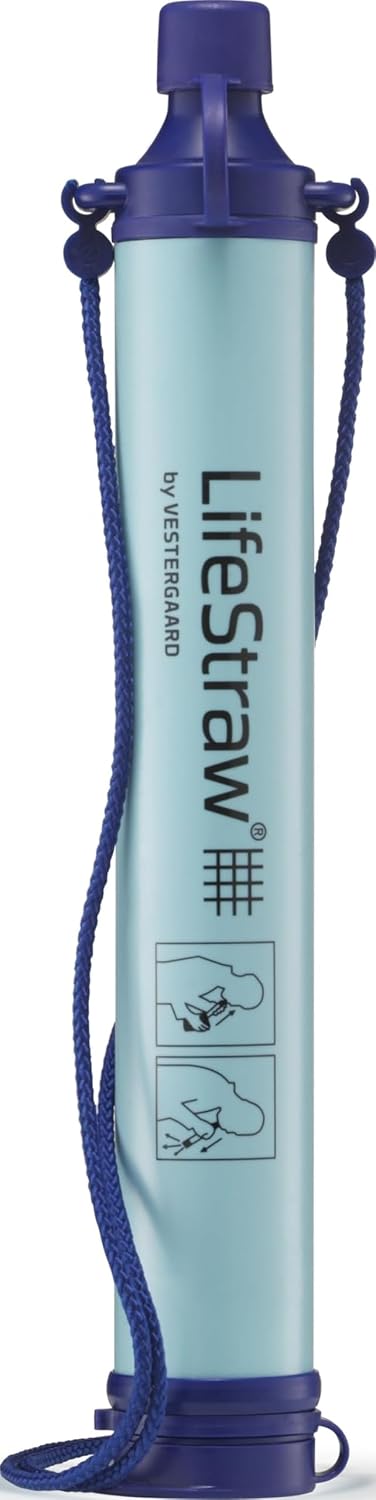
- Mistake #5: Insufficient Bug-In SuppliesMost people who correctly decide to bug in fail because they under-stored. Thirty days minimum. Ninety days is better. That means for a family of four: 120 gallons of stored water minimum (or a confirmed gravity-fed source plus filtration — a quality gravity filter handles 100,000 gallons), 240,000+ calories of shelf-stable food, sanitation supplies, medical supplies including prescription medications stockpiled where possible, and the means to defend the location. If you can't sustain 30 days without resupply, your bug-in position is not a position — it's a waiting room.
- Mistake #6: No Communication Plan With FamilyDisasters happen when your kids are at school and your spouse is at work. What is your rally protocol? Pre-designate a primary meeting point and a secondary. Establish an out-of-state contact everyone checks in with, since local lines clog while long-distance often works. Give every family member a laminated card with the plan, radio frequencies (FRS/GMRS radios minimum, one per vehicle), and the address of the bug out destination. Practice it twice a year minimum.

What to Practice This Weekend
Do this: Sit down with a paper map and draw your bug out routes — primary, secondary, and tertiary — to your designated retreat location. Time each route in your head. Then inventory your home against the 30-day bug-in standard. Count your actual calories, your actual gallons of water, your actual sanitation capacity. Write down the five specific triggers that would make you leave. Not feelings. Specific, observable conditions. Then put the plan on paper and brief every member of your household. That's one weekend. That's the difference between a decision and a guess.
🛒 Essential Survival Gear
As an Amazon Associate I earn from qualifying purchases.