Bug Out Bag Weight — How Light Is Light Enough

Why Most People Get This Wrong
Walk into any prepper forum or Facebook group and you'll find two camps: the guy who's packed a 75-liter pack with enough gear to survive a nuclear winter, and the ultralight minimalist who thinks a space blanket and a lighter counts as a bug out bag. Both are wrong. Both will get people killed.
Here are the most common mistakes preppers make when it comes to BOB weight — and they're more dangerous than most people realize:
- Packing for every scenario simultaneously. Your BOB is not a survival warehouse. It's a 72-hour lifeline designed to get you from Point A to Point B. Every extra pound you add narrows your margin for error in a real emergency.
- Buying cheap, heavy gear to save money. That $25 tent weighs 6 lbs. A quality ultralight shelter weighs 1.5 lbs and costs more upfront but could literally save your life when your knees give out on mile 12.
- Never actually wearing the pack. Most preppers assemble a bag, zip it up, put it in a closet, and call it done. If you haven't worn your fully loaded BOB for at least 5 miles on varied terrain, you have no idea what you're actually carrying.
- Ignoring body weight and fitness as variables. A 180 lb man in good shape and a 220 lb man with bad knees cannot carry the same load safely. Your pack weight must scale to your personal physical capacity — not to some generic internet checklist.
- Duplicating gear without purpose. Three fire-starting methods makes sense. Three flashlights with no shared batteries does not. Every item must justify its place by either being irreplaceable or having no lighter alternative.
- Forgetting that weight compounds over distance. That extra 10 lbs feels like nothing in your living room. After 8 miles on a gravel road carrying stress, fear, and a full pack — it feels like 40 lbs. Cumulative fatigue is a force multiplier that most preppers never account for.
The Fundamentals — Breaking Down BOB Weight the Right Way
The military uses a well-established rule of thumb: a soldier's combat load should not exceed 33% of their body weight for a fighting load, and no more than 45% for an approach march load. For civilian preppers in a bug out scenario — untrained, potentially injured, moving with family — the target is more conservative: 15–20% of your body weight, maximum.
Let's do the math:
- 150 lb person: target pack weight = 22–30 lbs
- 180 lb person: target pack weight = 27–36 lbs
- 200 lb person: target pack weight = 30–40 lbs
These are ceilings, not goals. If you can accomplish your mission at 15 lbs, carry 15 lbs. Lighter is faster. Faster is safer.
Here's how to build your weight budget from the ground up:
- Start with the Big Four. Shelter, water, fire, and food represent the core survival priorities. These four categories should account for no more than 60–65% of your total pack weight. Everything else fills the remaining budget.
- Weigh every single item before it goes in the bag. A digital kitchen scale costs $12 and takes 5 minutes. Use it. Build a spreadsheet. Know your exact weight down to the ounce. You cannot manage what you do not measure.
- Apply the "one-in, one-out" rule. Every time you want to add something new to your BOB, something else must come out or be replaced with a lighter alternative. Your weight ceiling is law.
- Audit your bag every 90 days. Seasonal changes affect your gear needs. A wool hat in July is dead weight. A rain layer in the desert Southwest might be unnecessary. Re-evaluate quarterly and adjust accordingly.
- Separate "nice to have" from "need to survive." Comfort items are weight luxuries. A paperback novel, extra clothing beyond functional layers, or a full-sized camp pillow have no place in a true bug out bag.

What You Need — The BOB Weight-Optimized Gear Checklist
This is not an exhaustive gear list. This is a framework built around weight discipline. Target weights are listed where relevant.
Shelter (Target: 1.5–3 lbs total)
- Ultralight bivy sack or emergency bivy (SOL Escape or similar) — 8–14 oz
- Tarp or ultralight shelter (Zpacks, Gossamer Gear, or similar) — 12–24 oz if you carry one
- 550 paracord, 50 ft — 4 oz
- Optional: Hammock with integrated bug net for forested regions — 16–20 oz
Water (Target: 1–2 lbs gear weight, water weight calculated separately)
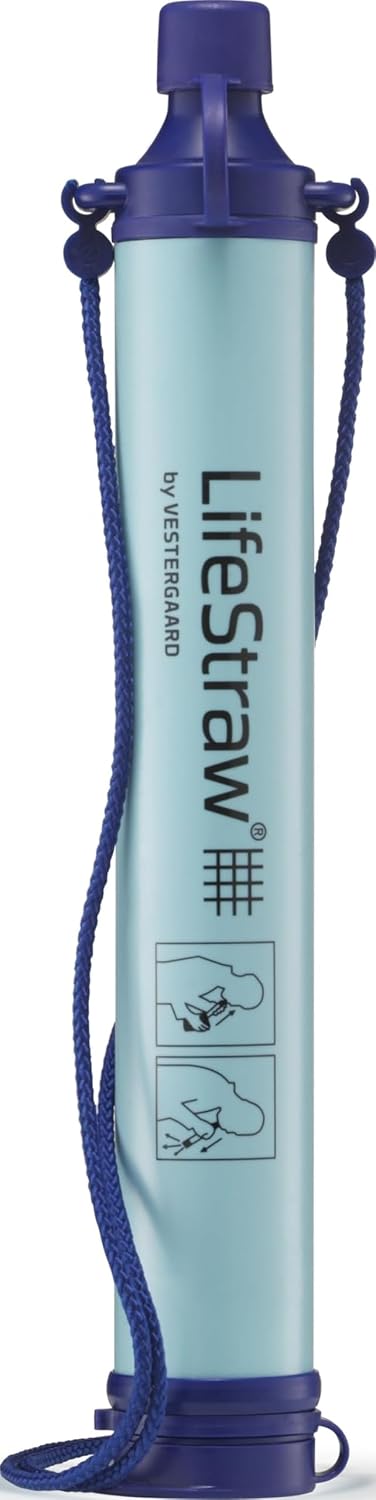
- Sawyer Squeeze or Katadyn BeFree filter — 3–4 oz
- 1-liter collapsible water reservoir (Hydrapak or Platypus) — 1.5 oz
- Water purification tablets (Aquatabs) as backup — 1 oz for 30 tablets
- Stainless steel 32 oz single-wall bottle for boiling — 5–6 oz
- Carry 2 liters of water minimum at all times — 4.4 lbs, non-negotiable weight
Fire (Target: under 6 oz total)
- BIC lighter ×2 — 1 oz each
- Ferrocerium rod with striker — 1–2 oz
- Waterproof tinder (Wetfire cubes ×6 or petroleum-soaked cotton balls in sealed bag) — 1 oz
Food (Target: 1.5–2 lbs for 72 hours)
- Calorie-dense bars: Clif, Datrex, or Mountain House bars — 200–400 calories per bar, 2–3 per day
- 2–3 freeze-dried single-serve meals for hot food morale — 3–4 oz per pouch
- Electrolyte packets ×10 (Liquid IV or Nuun) — under 2 oz total
- Target minimum: 1,800–2,200 calories per day for 3 days
Navigation (Target: under 8 oz)
- Baseplate compass (Suunto A-10 or Silva Ranger) — 2–3 oz
- Laminated topographic maps of your bug out routes — 2 oz
- No GPS as a primary. Electronics fail. Paper doesn't.
First Aid (Target: 10–14 oz)
- CAT tourniquet — 2.7 oz
- Israeli bandage ×2 — 3 oz each
- Chest seals (Hyfin or similar) ×2 — 1 oz each
- QuikClot gauze — 2 oz
- Nitrile gloves ×4, medical tape, blister treatment, ibuprofen, antihistamine, prescription meds for 7 days
The Pack Itself
- Target pack weight (empty): under 4 lbs
- Look at: 5.11 RUSH24, Osprey Exos, Mystery Ranch Coulee — quality suspension matters more than brand
- The pack must fit your torso length properly. A misfit pack on a long haul will destroy your back regardless of weight.
Advanced Tactics — What Separates the Truly Prepared
Gear lists are the entry level. Real preparedness lives in the details that most people never think about until they're in the field — exhausted, scared, and making decisions under pressure.
- Build a tiered load system. Your BOB should have three internal categories: always accessible (first aid, water, fire), frequently needed (food, navigation, shelter), and emergency only (backup comms, cash, documents). Pack accordingly — heaviest items centered and close to your back, frequent-access items in top lid or hip belt pockets.
- Train with your actual load, not a stand-in. Ruck your fully loaded BOB at least once per month. Start with 3 miles. Build to 10. If you can't complete 10 miles with your bag in under 3 hours, you are not ready to bug out on foot. No exceptions.
- Know your critical failure points. Blisters, chafing, knee pain, shoulder pain — these will emerge under real load and distance. Address them before they address you. Merino wool socks, properly fitted boots worn in over 50+ miles, and anti-chafe balm are not luxury items in a serious BOB context.
- Pre-position weight reduction options. If you have a vehicle bug out route, consider pre-staging a resupply cache at your 24-hour mark. This allows you to carry a lighter initial load and resupply critical consumables — water, food, fuel — mid-route rather than hauling everything from day one.
- Account for group dynamics. If you're bugging out with family, distribute shared gear by ability. The strongest person carries shelter and group water filtration. Kids carry their own snacks and sleeping bag. Your elderly parent carries zero unless they're physically capable. Assign pack roles before you need them — not during the crisis.
- Use weight as a decision filter for every purchase. Before buying any piece of survival gear, ask: Does this replace something heavier? Does this serve two or more functions? Can I achieve the same result with something I already carry? If the answer to all three is no, you don't need it in your bag.

The Bottom Line — Action Steps to Take This Week
Knowledge without action is just entertainment. Here's what you do in the next 7 days:
- Day 1: Pull out your current BOB and empty it completely. Weigh the empty pack. Then weigh every single item individually and log it on paper or a spreadsheet.
- Day 2: Calculate your target weight ceiling using the 15–20% body weight formula. Compare it to your current total pack weight. Write down the gap in big numbers.
- Day 3: Identify your three heaviest non-water items. For each one, research whether a lighter alternative exists at equivalent or better quality. Order replacements if the weight savings justify the cost — and they usually do.
- Day 4: Remove every item that duplicates function without adding redundancy value. Consolidate. A multi-tool replaces three separate tools. A Sawyer Squeeze replaces both a pump filter and tablets. Cut the dead weight.
- Day 5: Repack the bag with proper load organization. Heaviest items vertically centered and close to your spine. Emergency items in top lid. Navigation and comms on your person or in a chest rig, not buried in the main compartment.
- Day 6: Put the pack on and walk 3 miles. Pay attention to what hurts, what shifts, what you wish you could reach more easily. Adjust accordingly.
- Day 7: Document your final loadout, photograph it, and store a copy off-site or digitally. Schedule your next 90-day audit. Then do it again. Preparedness is a practice, not a destination.
Your BOB is only as useful as your ability to carry it when your life depends on it. A perfectly curated 45-lb pack sitting in the closet of a burned-down house is worth exactly nothing. A disciplined, tested, weight-optimized 22-lb bag on your back when the grid goes dark — that's a different story entirely.
🛒 Essential Survival Gear
As an Amazon Associate I earn from qualifying purchases.