Boiling vs Filtering vs Chemical Treatment: Which Water Purification Method Actually Keeps You Alive
Why Your Water Purification Choice Is a Life-or-Death Decision
Contaminated water kills faster than almost any other survival threat. Giardia, Cryptosporidium, E. coli, Vibrio cholerae — these aren't abstract threats. They're waiting in every stream, lake, and mud puddle you might be forced to drink from when the grid goes down, when you're three days into a bug-out, or when a flood compromises your municipal supply. The problem isn't that people don't know water needs treatment. The problem is that they grab whichever method is most convenient without understanding what each one actually does — and doesn't — kill. One wrong choice and you're vomiting, dehydrated, and combat-ineffective within 48 hours. This article breaks down boiling, mechanical filtration, and chemical treatment so you know exactly when to use each one, how to do it right, and where most people screw it up.
Understanding What You're Actually Fighting in Untreated Water
Before you pick a method, you need to understand the enemy. Waterborne threats fall into four categories, and not every purification method handles all four.
- Protozoa (Giardia, Cryptosporidium): Tough cysts that survive in cold water for months. Relatively large — 4 to 15 microns. Most filters catch them.
- Bacteria (E. coli, Salmonella, Cholera): Smaller than protozoa — 0.2 to 2 microns. Filters with 0.2-micron absolute ratings catch them. Boiling and chemicals kill them.
- Viruses (Hepatitis A, Norovirus, Rotavirus): Tiny — 0.02 to 0.2 microns. Most standard mechanical filters do NOT remove viruses. This is the critical gap most preppers miss.
- Chemical contaminants and heavy metals: Pesticides, fuel runoff, arsenic, lead. Boiling concentrates these. Standard filters miss most of them. Activated carbon is your primary defense here.
That list tells you something critical right away: no single method is a silver bullet. A Sawyer Squeeze filter is excellent against protozoa and bacteria but will not protect you from viral contamination in areas with poor sanitation or post-disaster flooding. You need to match your method to your threat environment.

Breaking Down Each Method: Capabilities, Limits, and Gear
Boiling
Boiling is the oldest, most reliable method for biological contamination. Heat destroys pathogens by denaturing their proteins and disrupting cell membranes. Done correctly, it kills protozoa, bacteria, and viruses — all three biological threat categories.
The actual temperature requirement: Most pathogens die at 140°F (60°C). At a full rolling boil — 212°F (100°C) at sea level — you have a significant safety margin. The CDC and WHO recommend bringing water to a rolling boil and holding it there for one minute at elevations below 6,500 feet. At elevations above 6,500 feet, boil for three minutes because the lower atmospheric pressure reduces boiling temperature to around 194°F (90°C).
What boiling does NOT fix: Chemical contamination, heavy metals, and radiological threats. If your water source is downstream from an industrial site, a flooded gas station, or agricultural fields, boiling will not remove those contaminants. It may actually concentrate them as water evaporates.
Gear requirements: Any heat-safe container works — stainless steel is preferred. A one-liter stainless steel bottle like the Nalgene Cantene or a titanium pot works well. Avoid aluminum if you're boiling regularly over long periods. You also need a reliable fire source or a camp stove with adequate fuel.
Fuel cost: This is the hidden tax of boiling. Bringing one liter to a rolling boil on a butane canister stove takes roughly 3 to 5 minutes of burn time. A standard 230g gas canister gives you approximately 60 minutes of burn time. If you're treating 3 liters per person per day for a group of four, fuel becomes a serious logistics problem within days.

Mechanical Filtration
Modern hollow fiber filters like the Sawyer Squeeze, Sawyer Mini, MSR Guardian, and Katadyn BeFree have transformed field water treatment. They work by physically forcing water through microscopic pores, trapping pathogens on the filter membrane.
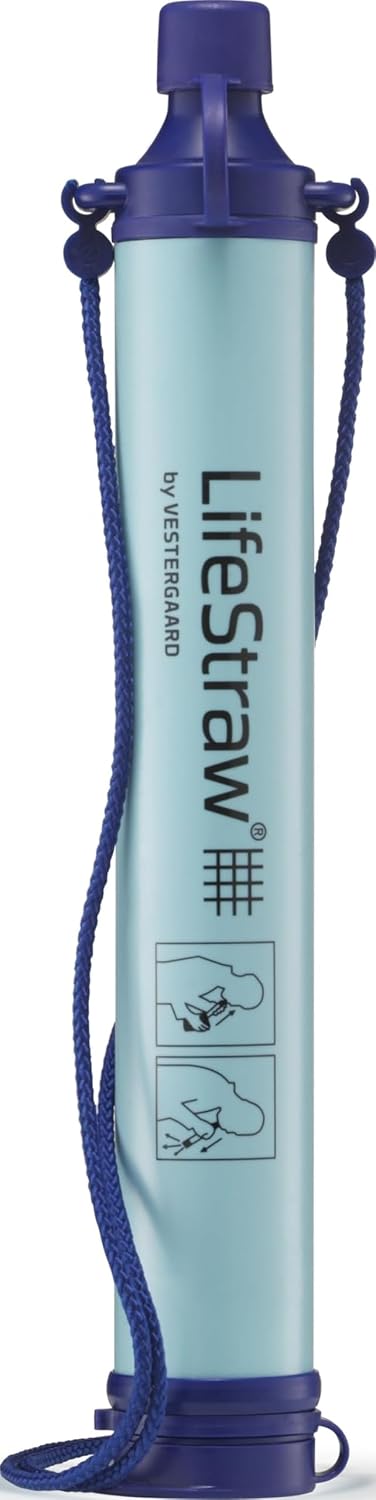
Key specification to understand: Filter rating is measured in microns. A filter rated at 0.1 micron absolute (like the Sawyer Squeeze) will remove protozoa and bacteria reliably. A filter rated at 0.02 micron absolute (like the MSR Guardian) will also remove viruses. The difference in cost is significant — a Sawyer Squeeze runs about $30, while an MSR Guardian runs $350 or more — but in a high-risk viral environment, that difference matters.
Flow rate and capacity: The Sawyer Squeeze has a rated capacity of 100,000 gallons. In practical terms, that's a lifetime supply under normal use. The Katadyn BeFree flows faster — up to 2 liters per minute — but has a smaller capacity before replacement. For bug-out bags, the Sawyer Squeeze is the best value. For base camp or homestead use, the MSR Guardian's virus protection and fast flow rate justify the price.
What filtration does NOT fix: Standard filters (0.1 micron) miss viruses. All mechanical filters miss chemical contaminants unless paired with an activated carbon stage. Turbid (muddy) water will clog filters rapidly and must be pre-filtered through a bandana or coffee filter first.
Chemical Treatment
Chemical treatment uses disinfectants — primarily iodine, sodium hypochlorite (household bleach), or chlorine dioxide — to kill pathogens in water.
Iodine tablets (Potable Aqua, Coghlan's): Effective against protozoa and bacteria. Limited effectiveness against Cryptosporidium. Not recommended for pregnant women, people with thyroid conditions, or shellfish/iodine allergies. Effective contact time is 30 minutes in clear water at room temperature. In cold water (below 40°F/4°C), effectiveness drops significantly and contact time should be extended to 60 minutes or more. Taste is unpleasant.
Household bleach (sodium hypochlorite): Use unscented bleach with 6–8.25% sodium hypochlorite concentration only. Dose is 8 drops (approximately 0.5ml) per gallon of clear water, 16 drops per gallon of cloudy water. Mix and wait 30 minutes. If water doesn't smell faintly of chlorine after 30 minutes, repeat the dose and wait another 15 minutes. Bleach loses potency over time — bottles older than 6 months are less reliable. Effective against bacteria and viruses. Limited effectiveness against Cryptosporidium.
Chlorine dioxide tablets (Aquatabs, Katadyn Micropur): The gold standard for chemical treatment. Effective against protozoa including Cryptosporidium, bacteria, and viruses at proper doses. Contact time is critical — follow manufacturer instructions precisely. For Cryptosporidium, Katadyn Micropur requires 4 hours of contact time. In cold water, extend that to 8 hours. This is a major operational limitation in fast-moving scenarios.
What chemicals do NOT fix: Heavy metals, sediment, chemical contamination. Taste remains an issue with all chemical methods except chlorine dioxide, which has minimal aftertaste.
Step-by-Step: Building a Layered Water Treatment Protocol
The professionals don't rely on a single method. They layer them. Here's a practical field protocol for serious situations.
- Pre-filter for turbidity: Pour water through a bandana, shirt fabric, or commercial pre-filter into a collection container. This removes sediment and visible debris that clogs filters and reduces chemical effectiveness. If you have time, let water settle for 30 minutes and decant the clearer top layer.
- Assess your threat environment: Are you in a wilderness area with low human activity? Protozoa and bacteria are your primary threats. Are you in a post-disaster urban environment, a region with poor sanitation, or a developing country? Viral contamination moves to the top of your threat list.
- Apply primary treatment: For low-viral-risk environments, run water through a 0.1-micron filter like the Sawyer Squeeze. For high-viral-risk environments, boil for one minute or use chlorine dioxide tablets per manufacturer instructions.
- Add activated carbon stage if available: Many filter systems like the Grayl GeoPress include activated carbon. If yours doesn't, a small activated carbon inline filter or a portable activated carbon tablet (like Brita filters for bottles) will significantly improve taste and remove some chemical contaminants.
- Verify and store properly: Treated water should be stored in a clean, covered container. Don't contaminate it by drinking directly from the container if others will use it. Mark the time of treatment on the container if using chemicals with contact time requirements.
Common Mistakes That Will Make You Sick or Leave You Without Water
- Thinking a basic filter is a complete solution: A Sawyer Squeeze is outstanding gear. It will not protect you from viral contamination in a flood scenario or post-disaster urban environment where sewage contamination is likely. Know your threat environment and plan accordingly.
- Not backflushing your filter: The Sawyer Squeeze comes with a cleaning syringe for a reason. A clogged filter flows slowly and can crack if you freeze it. Backflush after every significant use — push clean water backward through the filter. Never let a hollow fiber filter freeze in the field. A frozen and thawed filter may appear intact but will have compromised membranes that no longer filter effectively.
- Using old bleach: Sodium hypochlorite degrades over time. Bleach that's been sitting in your storage room for a year may have dropped to 3% concentration or less — half the disinfecting power. Rotate your supply. Date the bottles when you buy them. Replace annually for critical storage.
- Skipping contact time with chemical treatment: People add a chlorine dioxide tablet, wait 10 minutes, and drink. The tablet says 4 hours for full effectiveness against Cryptosporidium. Shortcutting this in an environment where Crypto is present means you're gambling with a pathogen that causes severe, weeks-long diarrheal illness and is notoriously resistant to treatment.
- Boiling in a dirty container: If your pot has residue, sediment, or contamination from previous use, you're reintroducing contaminants into your treated water. Clean your containers. Rinse with a small amount of treated water before filling.
- Not having a backup method: Filters break, clog, or get lost. Chemical tablets get wet. Fires can't always be built in the rain. Every serious prepper carries at minimum two methods of water treatment. A Sawyer Squeeze paired with a small bottle of chlorine dioxide tablets weighs less than 4 ounces and covers nearly every scenario you'll face.
- Treating water from obviously compromised sources without additional precautions: If your water source is directly downstream from a flooded industrial site, a dead animal carcass, or visible fuel sheens on the surface, standard treatment protocols may be insufficient. Relocate your water source upstream or uphill. If that's not possible, layer all available methods and consider the risk of chemical contamination that no field method will fully address.
Practice This Weekend
This weekend, pull out every water treatment method you own. Boil a liter with your field kit and time it. Run your filter until it slows, then backflush it. Mix a proper bleach dose and actually smell the result after 30 minutes. If you only own one method, fix that before Monday. Your life and your family's lives may depend on muscle memory you build before you need it — not during the emergency. Get comfortable with the process now, so when the water coming out of the tap runs brown or stops entirely, you don't hesitate. You just work.
🛒 Essential Survival Gear
As an Amazon Associate I earn from qualifying purchases.