Boiling vs Filtering vs Chemical Treatment: The Water Purification Truth Every Prepper Must Know

Why Most People Get This Wrong
Waterborne illness kills faster than starvation. You can survive three weeks without food. Without clean water, you're looking at three days — and in a high-stress survival scenario, dehydration and dysentery can incapacitate you in hours. Most preppers think they have this handled. Most preppers are wrong.
Here are the most dangerous mistakes people make when it comes to water purification — and they're more common than you think:
- Assuming one method handles everything. Boiling kills biologicals. It does nothing for heavy metals, pesticides, or chemical runoff. If your water source is downstream from agricultural land or an industrial site, boiling alone could still leave you sick — or worse.
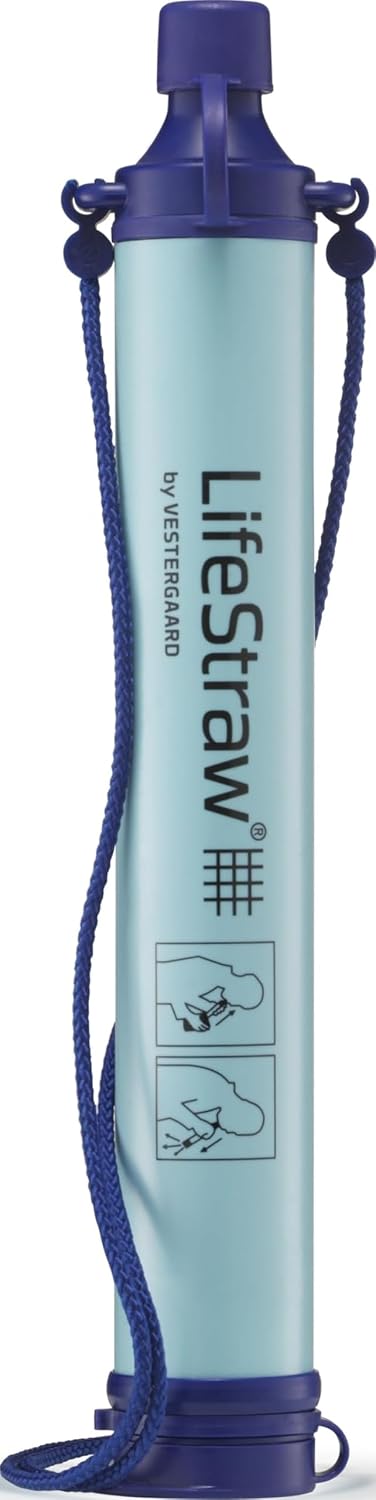
- Using filters past their rated capacity. That LifeStraw or Sawyer filter has a rated lifespan. Many people keep using it long after it's compromised. A cracked or clogged filter membrane can pass pathogens straight through without any visible sign of failure.
- Improper chemical dosing. Iodine and chlorine tablets work — but only at the right dosage, contact time, and water temperature. Cold, murky water requires longer contact times and higher concentrations. Skipping this step makes the treatment nearly useless.
- Skipping pre-filtration. Pouring silty, turbid water directly into a chemical treatment or through a fine filter is one of the most common errors. Sediment and organic matter bind to purification chemicals and physically clog filter pores, dramatically reducing effectiveness.
- Relying on a single method. Any single purification method has failure points. Redundancy isn't paranoia — it's strategy. The prepared person layers their methods.
The Fundamentals — Breaking Down Each Method
Let's cut through the noise and get precise. Each method has a job. Understanding what that job is — and what it isn't — determines whether you survive or spend three days hunched over a ditch.

Boiling
Boiling is the most universally reliable method for killing biological contaminants — bacteria, viruses, and protozoa. It requires no special equipment beyond a heat source and a container, making it the bedrock of emergency water treatment.
- Pre-filter your water first. Use a bandana, t-shirt, or coffee filter to remove sediment and large particulates before boiling.
- Bring water to a rolling boil. At elevations below 6,500 feet, one full minute of rolling boil is sufficient to kill all pathogens. Above 6,500 feet, boil for three minutes to compensate for the lower boiling point of water at altitude.
- Let it cool in a covered container. Contaminating your purified water during cooling is a real risk. Cover it. Don't drink straight from the pot — transfer it to a clean, sealed container.
- Know the limits. Boiling does not remove heavy metals, nitrates, volatile organic compounds (VOCs), or chemical contaminants. If your source is a questionable industrial or agricultural area, boiling is necessary but not sufficient.
Filtration
Mechanical filtration physically removes particles, protozoa, and bacteria by passing water through a porous medium. The effectiveness depends entirely on the filter's pore size — rated in microns.
- 0.1 micron filters (e.g., Sawyer Squeeze, Sawyer Mini) remove bacteria and protozoa. They do not remove viruses.
- 0.02 micron filters (e.g., Katadyn Pocket, MSR Guardian) can remove viruses in addition to bacteria and protozoa. These are your gold standard for international or high-risk environments.
- Activated carbon filters (e.g., Brita-style, many gravity filters) improve taste and remove some chemicals and heavy metals, but offer minimal pathogen removal on their own.
- Pre-filter turbid water through a cloth or bandana to extend filter life.
- Backflush your filter regularly per the manufacturer's instructions to maintain flow rate and effectiveness.
- Never let a hollow fiber filter freeze — ice crystals rupture the membrane and the filter will look functional while passing contaminants.
- Track your usage. The Sawyer Squeeze is rated for 100,000 gallons. The LifeStraw Personal is rated for 1,000 gallons. Know your gear's limits.

Chemical Treatment
Chemical treatment uses disinfectants — most commonly chlorine dioxide, iodine, or sodium hypochlorite (bleach) — to kill pathogens. It's lightweight, packable, and effective when used correctly.
- Chlorine Dioxide Tablets (e.g., Aquatabs, Katadyn Micropur MP1): The best all-around chemical option. Effective against bacteria, viruses, and Cryptosporidium when given adequate contact time (4 hours for Crypto). One tablet treats 1 liter of clear water.
- Iodine Tablets (e.g., Potable Aqua): Effective against bacteria and viruses. Not effective against Cryptosporidium. Not recommended for pregnant women or those with thyroid conditions. Contact time: 30 minutes in warm, clear water.
- Unscented Household Bleach (6–8.25% sodium hypochlorite): Use 8 drops per gallon of clear water, 16 drops per gallon of cold or cloudy water. Wait 30 minutes before drinking. Bleach degrades — replace your supply every 6–12 months.
- Always pre-filter turbid water before chemical treatment. Cloudy water requires higher doses and longer contact times.
- Temperature matters. Cold water (below 40°F) requires doubled contact time for most chemical treatments.
- Store tablets in a cool, dry location. Iodine tablets have a 4-year shelf life; chlorine dioxide tablets last 4+ years if unopened.
What You Need — The Prepper's Water Purification Kit
Stop improvising. Build a layered system now, before you need it. Here is the core kit every serious prepper should have staged and ready:
- Pre-filtration layer: A supply of coffee filters or a reusable bandana. Nothing high-tech. Just the first line of defense against sediment.
- Mechanical filter: Sawyer Squeeze (lightweight, 0.1 micron, 100,000 gallon rating) for everyday preparedness. MSR Guardian (0.02 micron, removes viruses) for high-risk or international scenarios.
- Chemical treatment: Katadyn Micropur MP1 chlorine dioxide tablets (30-tablet box minimum). These are your backup when your filter fails, freezes, or gets lost.
- Boiling capacity: A stainless steel or titanium pot — minimum 1-liter capacity. Avoid aluminum in survival contexts. A Kelly Kettle or rocket stove makes boiling efficient with minimal fuel.
- Storage containers: Two 1-liter Nalgene or stainless steel bottles. One for untreated water, one for treated. Label them. Cross-contamination is how people get sick after doing everything else right.
- Bleach supply: One sealed bottle of unscented household bleach (6–8.25%). Rotated every 6–12 months. Stored in a cool, dark location.
- Testing option: A basic water test kit or strips (tests for bacteria, nitrates, pH, hardness) — valuable for assessing source water quality before deciding on treatment approach.
Advanced Tactics — What Separates Prepared from Prepared
Basic knowledge keeps you alive. Advanced knowledge keeps you healthy, mobile, and functional. This is where most preppers stop growing — don't be that person.
- Layer your methods for comprehensive coverage. The gold standard protocol: pre-filter → mechanical filtration → chemical treatment. This addresses biological threats at every level. For chemically suspect water, add a quality activated carbon filter to the sequence.
- Know your local threats before the crisis. Pull your municipal water quality report now. Identify industrial sites, farms, and landfills within 10 miles of your water sources. This intelligence tells you what you're actually dealing with — and whether boiling alone is ever sufficient for your area.
- Solar disinfection (SODIS) as a zero-input backup. Fill a clear PET plastic bottle (clean, no scratches) with pre-filtered water and leave it in direct sunlight for 6 hours (or 2 days under cloudy conditions). UV radiation kills most biological pathogens. This is a last-resort method, but knowing it could save your life when everything else fails.
- Improvised filtration in a true emergency. A DIY gravity filter can be constructed using layered materials in a container or improvised tube: coarse gravel (bottom), fine sand (middle), activated charcoal from a hardwood fire (top). This is not a complete purification system — always follow with boiling or chemical treatment — but it removes turbidity and improves chemical treatment effectiveness dramatically.
- Water source selection is purification step zero. Moving water is generally better than stagnant. Water from a spring or upstream source is better than downstream of human activity. High-altitude sources are typically cleaner. The cleaner your source, the more effective your purification. Never skip this assessment.
- Treat more than you think you need. The average adult needs a minimum of 1 gallon (3.8 liters) per day for drinking and basic sanitation in a survival scenario. Factor in physical exertion, heat, illness, and you're looking at 2 gallons. Plan your treatment capacity accordingly. Dehydration impairs judgment — and impaired judgment gets you killed.
- Cache purification supplies in multiple locations. Your bug-out bag, your vehicle, your home cache, and any secondary location should each have independent water purification capability. If you lose your bag, you can't also lose your only means of clean water.
The Bottom Line — Action Steps to Take This Week
Information without action is worthless. Here is exactly what you need to do in the next seven days to ensure you are never dependent on a compromised water source:
- Audit your current water purification gear. Check expiration dates on all chemical tablets. Inspect filters for cracks, damage, or evidence of freezing. Verify you have a boiling-capable container in your kit.
- Purchase any gaps in your layered system. If you don't have chlorine dioxide tablets, order Katadyn Micropur MP1 today. If your filter is past its rated capacity, replace it. Don't wait for a sale.
- Practice the full protocol on a non-emergency source. Go to a creek, pond, or river near your home this weekend. Run through the complete pre-filter → filter → chemical treatment sequence. Time it. Identify your failure points now.
- Stage your water treatment supplies. Pack a minimum of one Sawyer Mini and 10 chlorine dioxide tablets in every bug-out bag, vehicle kit, and home emergency cache.
- Identify and map three water sources within two miles of your home. Know what's upstream. Know the terrain. Know how you'll access them when roads are blocked or utilities are down.
- Rotate your bleach supply. If you have household bleach older than 12 months, replace it. Mark the replacement date on the new bottle with a permanent marker.
- Print and laminate a water treatment reference card. Include boil times by altitude, chemical dosing measurements, and filter capacity for your specific gear. Attach it to your kit. When stress spikes, fine motor skills and memory degrade. Reference cards save lives.
Clean water is not a luxury — it is the absolute foundation of every other survival capability you have. Your food storage is worthless if you're too sick to eat it. Your shelter is pointless if you're too dehydrated to think clearly. Your medical kit can't fix dysentery that your laziness caused.
No method is perfect in isolation. Boiling is reliable but situationally limited. Filtration is convenient but has failure modes. Chemical treatment is lightweight but requires discipline and patience. Together, layered correctly, they form a system that handles virtually any water challenge you will face.
Build the system. Practice the system. Trust the system — because on the day you need it, there will be no substitute for having done the work in advance.
Self-reliance isn't a philosophy — it's a daily discipline, and today is the day you either build it or make excuses.
🛒 Essential Survival Gear
As an Amazon Associate I earn from qualifying purchases.