Bleach Water Purification: The Emergency Method That Could Save Your Life Today

What This Skill Is and Why You Need It Right Now
When the grid goes down, when floods contaminate your well, when a hurricane wipes out municipal water treatment, or when you're three days into a bug-out and your filter breaks — you need a backup. Chlorine bleach water purification is one of the most reliable, widely available, and dirt-cheap emergency water treatment methods on the planet. It's been used by disaster relief organizations, military units, and survival-minded individuals for decades. The problem isn't the method — it works. The problem is that most people either don't know the correct dosages, use the wrong type of bleach, or skip critical steps that make the difference between safe water and a gut-wrenching infection in the field. This article fixes that. Read it, memorize the numbers, and practice it before you ever need it.
Understanding What Bleach Actually Does to Contaminated Water
Before you start pouring chemicals into your water supply, you need to understand what you're actually doing — and just as importantly, what bleach cannot do.
Household bleach contains sodium hypochlorite, which is a powerful oxidizing agent. When introduced to water at the correct concentration, it destroys the cell walls and metabolic processes of most bacteria and viruses, rendering them unable to reproduce or cause infection. We're talking about pathogens like E. coli, Salmonella, Vibrio cholerae (the cholera bacterium), and most common viral threats like hepatitis A and norovirus.
Here's the critical limitation you must burn into your brain: bleach does not reliably kill protozoa like Giardia lamblia or Cryptosporidium parvum. These microscopic parasites have tough protective cysts that sodium hypochlorite simply cannot penetrate at safe concentrations. If your water source may be contaminated with animal feces — a creek near grazing land, a pond in a wilderness area, floodwater — you need to filter or boil first, then use bleach as a secondary disinfectant, not a standalone solution.
Think of bleach purification as your primary defense against biological contamination in clear water, and a secondary layer when combined with physical filtration. It is not a magic bullet. It is a powerful, proven tool — used correctly.

The Right Bleach, the Right Concentration, the Right Dosage
This is where most people go wrong, and where the difference between effective purification and wasted effort lives entirely.
Step 1: Get the right bleach.
You need unscented liquid chlorine bleach with a sodium hypochlorite concentration of either 6% to 8.25%. This is standard, regular household bleach — the kind you find at any grocery store or big box retailer. Common brands like Clorox Regular-Strength Bleach fall right in this range.
Do NOT use:
- Scented bleach — fragrances contain chemicals you do not want to drink
- Color-safe bleach — this is a different chemical formulation entirely
- Splashless bleach — contains thickening agents not suitable for water treatment
- Concentrated bleach above 10% — requires different dosing math and increases margin-of-error risk
- Bleach that is more than one year old — sodium hypochlorite degrades over time, losing potency and becoming unreliable
Step 2: Check your water clarity before adding anything.
Turbid or cloudy water — water with visible particles, sediment, or color — will consume the chlorine before it can do its job. The suspended organic material neutralizes the sodium hypochlorite chemically, leaving your water under-treated. If your water is not clear, you must address this first. Options include:
- Let water sit undisturbed for 30 to 60 minutes so sediment settles, then carefully pour the clear top portion into another container
- Pour water through a clean cloth, coffee filter, or improvised filter (layers of sand and gravel in a container) to remove particulates
- Use a commercial pre-filter if you have one in your kit
After pre-treatment, your water should be as clear as possible before chlorination. Clear water requires a lower dose to treat effectively. Cloudy water requires a higher dose — and even then, results are less reliable.
Step 3: Apply the correct dosage.
The following dosages are based on 6% to 8.25% sodium hypochlorite bleach, per the CDC and EPA guidelines for emergency water disinfection:
- 1 liter of clear water: 2 drops of bleach
- 1 liter of cloudy water: 4 drops of bleach
- 1 quart (approximately 1 liter) of clear water: 2 drops
- 1 gallon of clear water: 8 drops (approximately 1/8 teaspoon)
- 1 gallon of cloudy water: 16 drops (approximately 1/4 teaspoon)
- 5 gallons of clear water: 40 drops (approximately 1/2 teaspoon)
- 5 gallons of cloudy water: 80 drops (approximately 1 teaspoon)
Memorize those numbers. Write them on a piece of tape and stick it to your water container. Put them in your phone and your bug-out binder. These are the numbers that matter when you're exhausted, stressed, and operating in crisis mode.
Step 4: Mix and wait.
- Add the correct amount of bleach to your water using a clean dropper or measuring spoon.
- Stir or shake the container vigorously for 30 seconds to ensure even distribution.
- Loosen the lid slightly and let the treated water sit for 30 minutes minimum in clear water conditions. If your water is cold (below 40°F / 4°C) or very cloudy, extend the contact time to 60 minutes.
- After the wait time, smell the water. You should detect a faint but noticeable chlorine odor. If you can't smell any chlorine at all, repeat the dosage and wait another 15 minutes.
- If the smell is overwhelming, let the container sit open for a few minutes or pour it between two containers several times to off-gas some of the chlorine before drinking.
Step 5: Store and label.
Treated water stored in a clean, sealed container in a cool, dark place will remain safe to drink for 24 hours. After that, residual chlorine dissipates and the water is vulnerable to re-contamination. If you're not using it within 24 hours, re-treat it or store it in a manner that prevents re-contamination.
Critical Mistakes That Will Get You Sick — or Worse
People follow the general idea of this process and still get it wrong. Here are the specific failure points that turn a reliable survival skill into a gut-wrenching lesson learned the hard way.
Mistake #1: Using expired or degraded bleach.
Bleach has a shelf life. Sodium hypochlorite breaks down into salt and water over time, especially when exposed to heat, light, or air. A bottle of bleach that's been sitting in your garage for two summers in Texas heat might be nearly inert. The rule of thumb: replace your bleach supply every 12 months, and store it in a cool, dark location in its original sealed container. Some preppers rotate a fresh bottle into their emergency kit annually on a set schedule — treat it like any other perishable supply.
Mistake #2: Skipping pre-filtration on turbid water.
We covered this above, but it bears repeating because people under stress skip steps. Pouring bleach into murky brown floodwater and calling it safe is wishful thinking. The organic matter consumes the chlorine. You drink treated-looking water with active pathogens still in it. Pre-filter. Always.
Mistake #3: Not waiting the full contact time.
Thirty minutes is not a suggestion — it's the minimum time sodium hypochlorite needs to work at room temperature. People treat the water, wait five minutes because they're thirsty and impatient, and drink it. The chlorine hasn't finished its work. Set a timer. Wait the full time. Your life is worth 30 minutes.
Mistake #4: Using the wrong type or concentration of bleach.
If you're using a concentrated bleach product at 10% or higher, the standard dosage will over-chlorinate your water and under-treat it at the same time — you'll taste chlorine strongly but the math is off because the volume relationship has changed. If you have concentrated bleach, you need to adjust your dosage downward accordingly. The safest approach for emergency use is to stock standard 6-8.25% unscented bleach and avoid the guesswork entirely.
Mistake #5: Contaminating the container or the bleach supply.
If you pour treated water into a dirty container, or if you dip a contaminated measuring tool into your bleach bottle, you've undermined the entire process. Keep your bleach container clean and capped. Use a dedicated dropper or small measuring spoon that lives in your water treatment kit and nothing else. Wipe the rim of your water containers with a small amount of the treated water before sealing. Cross-contamination is a silent killer in field sanitation.
Mistake #6: Assuming bleach handles everything.
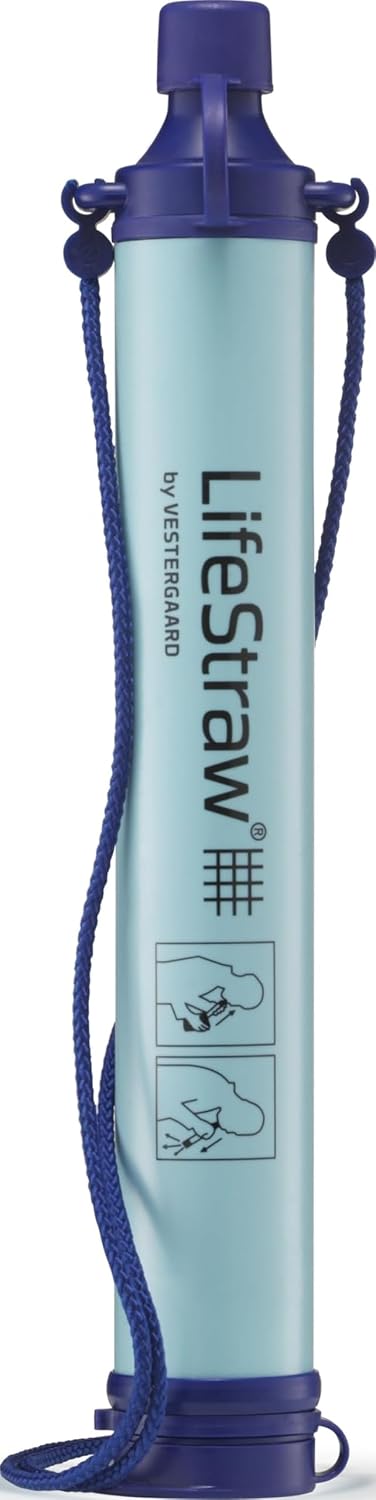
Bleach is not a full-spectrum solution. As stated earlier, protozoan cysts laugh at sodium hypochlorite. If you're in the backcountry, near agricultural runoff, dealing with floodwater, or any scenario where Giardia or Cryptosporidium is a realistic threat, bleach is your finishing step — not your only step. Filter with a quality water filter (Sawyer Squeeze, LifeStraw Mission, MSR Guardian) or boil the water first, then apply bleach to catch anything that survived or came from the container itself.
Mistake #7: Not having bleach in your kit at all.
This one stings because it's so preventable. A standard 32-ounce bottle of bleach costs under two dollars, treats thousands of gallons of water, and takes up almost no space. There is no excuse for not having bleach as a backup in your emergency water kit, your bug-out bag resupply cache, or your home preparedness supplies. At two drops per liter, a single bottle represents an enormous amount of treated water. Stock it. Now.

Your Weekend Practice Challenge
This weekend, pull out a bottle of bleach from under your sink and actually run through this process start to finish. Treat a gallon of water. Time the 30 minutes. Smell it when the clock runs. Then do it again with cloudy water — stir some dirt in — and practice your pre-filtration using a cloth or coffee filter. Check the date on your bleach. If you don't know when you bought it, replace it. Write the dosage chart on a piece of tape and stick it to the bottle itself. Then do a quick inventory: how many gallons could you treat with what you currently have on hand? If the answer makes you uncomfortable, buy another bottle before the weekend is over. Skills without practice are just reading. Practice it once and you own it.
🛒 Essential Survival Gear
As an Amazon Associate I earn from qualifying purchases.